

The Road to Hana Maui is not just a drive. It is one of the most beautiful journeys on the island, filled with waterfalls, rainforest views, black sand beaches, coastal cliffs, and quiet local stops along the famous Hana Highway.
But this trip needs smart planning. With so many Road to Hana stops, sharp curves, one-lane bridges, food stands, hikes, and photo spots, it is easy to feel unsure about where to stop and what to skip.
This guide will help you plan the best Road to Hana itinerary with the top things to do on Road to Hana, driving tips, safety advice, packing ideas, and honest suggestions for making the most of your day without rushing.
Quick Answer: Is the Road to Hana Worth It?
Yes, the Road to Hana Maui is worth it if you enjoy scenic drives, waterfalls, beaches, rainforest views, and local food stops. The journey along the Hana Highway feels different from the rest of Maui because the road takes you through lush valleys, coastal cliffs, one-lane bridges, and quiet East Maui towns.
However, this trip is not for everyone. If you dislike long drives, sharp curves, narrow roads, or motion sickness, the drive may feel tiring. The best way to enjoy it is to start early, choose your top Road to Hana stops, and avoid trying to see everything in one day.
With good planning, the Road to Hana becomes one of the most memorable things to do in Maui.
What Is the Road to Hana?
The Road to Hana is a famous scenic drive on Maui that follows the Hana Highway toward the small town of Hana in East Maui. It is known for its natural beauty, winding roads, waterfalls, rainforest, beaches, and local roadside stands.
The road is not just about reaching Hana. The real experience is the journey itself. Along the way, you will pass 600+ curves, many one-lane bridges, ocean views, jungle trails, and peaceful stops that show Maui’s wilder side.
Most visitors plan this as a full-day trip because the drive takes time, especially with stops. A good Road to Hana itinerary helps you enjoy the best places without rushing or driving back too late.
Where Does the Road to Hana Start and End?
The Road to Hana Maui usually starts near Paia Town or Kahului, depending on where you are staying. Most travelers fill up gas, grab snacks, and begin the drive from Paia before entering the winding part of the Hana Highway.
The main route leads to Hana Town, but many visitors continue farther to Waiʻanapanapa State Park, Hamoa Beach, Wailua Falls, Pipiwai Trail, and the Kipahulu District of Haleakalā National Park.
You can turn around at Hana, continue to Kipahulu, or stay overnight in Hana. For most first-time visitors, the safest choice is to return the same way before dark instead of driving the backside road.
Road to Hana Route Overview
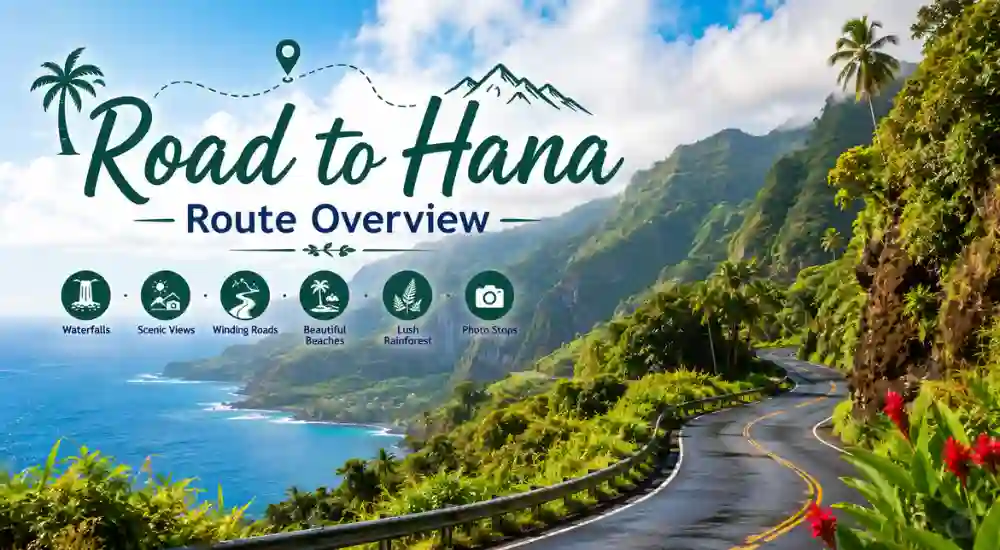
The classic Road to Hana route begins near Paia and follows the Hana Highway along Maui’s northeast coast. This road passes through rainforest, small bridges, ocean cliffs, fruit stands, waterfalls, and hidden viewpoints before reaching Hana Town.
Most travelers follow a simple route: Paia to Hana, then Hana to Kipahulu if time allows. After that, many return the same way. This is the most common option because the backside road can be rough, remote, and sometimes not allowed by rental car companies.
A smart route should include fewer, better stops instead of trying to see every waterfall and viewpoint. This makes your Road to Hana itinerary more relaxed, safer, and easier to enjoy.
Road to Hana Map and Mile Marker Guide
A Road to Hana map is very helpful because many stops are marked by mile markers instead of large signs. Some waterfalls, trails, and viewpoints appear quickly, so it is easy to miss them if you are not prepared.
Mile markers along the Hana Highway help travelers plan stops in order. This is useful for places like Twin Falls, Keʻanae Peninsula, Upper Waikani Falls, Waiʻanapanapa State Park, and Wailua Falls.
Before you go, save an offline map because cell service can be weak or disappear completely. You can also use an audio guide or printed stop list. This helps you stay focused on the road while still enjoying the best Road to Hana stops safely.
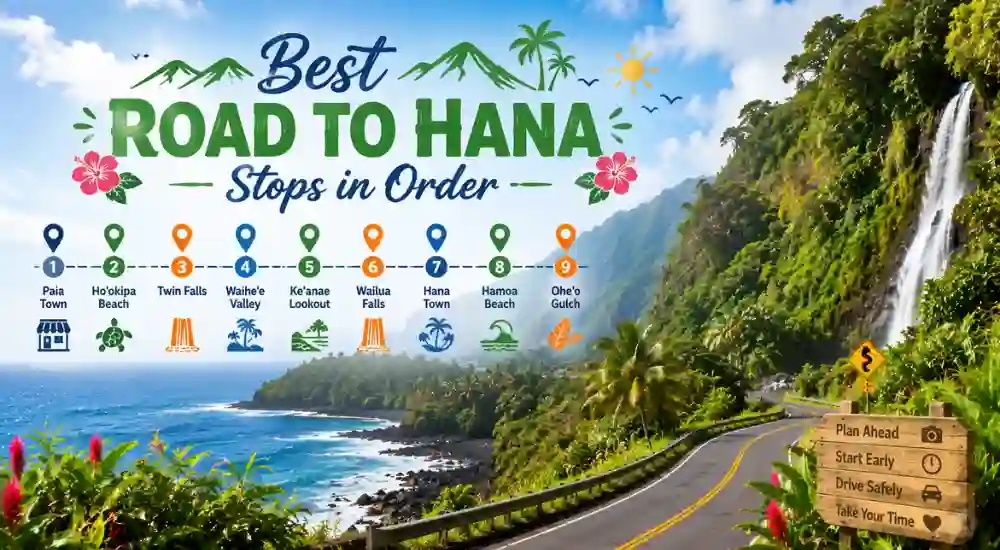
Best Road to Hana Stops in Order
The best way to enjoy the Road to Hana Maui is to visit stops in order instead of jumping around. This saves time, lowers stress, and helps you understand the flow of the Hana Highway.
You do not need to visit every stop. In fact, trying to do too much can make the day feel rushed. Choose the places that match your travel style, such as waterfalls, beaches, hikes, food stops, or viewpoints.
The following Road to Hana stops in order include popular places, scenic breaks, local food areas, and nature spots. Some are quick photo stops, while others need more time. Plan your day around your energy, weather, and return drive.
Paia Town
Paia Town is one of the best places to start your Road to Hana itinerary. It sits near the beginning of the Hana Highway and gives you a chance to get gas, breakfast, coffee, snacks, and last-minute supplies before the road becomes more remote.
This small North Shore town has a relaxed Maui feel with colorful shops, local cafés, and surf-town charm. It is also a smart place to use the restroom and check your route before driving deeper into East Maui.
Do not rush through Paia if you need anything important. After this point, gas stations and easy services become limited. Starting prepared from Paia makes your Road to Hana Maui day smoother and less stressful.
Twin Falls
Twin Falls is one of the first popular waterfall stops on the Road to Hana. It is easy to reach, which makes it a common choice for first-time visitors, families, and travelers who want a quick rainforest experience early in the drive.
The area has walking paths, flowing water, and a farm stand where you may see fresh fruit or drinks. Because it is near the start of the Hana Highway, it can get crowded, especially later in the morning.
Twin Falls is a good stop if you start early. If parking is full or you are short on time, it is okay to skip it and save your energy for less crowded Road to Hana stops farther ahead.
Waikamoi Ridge Trail
Waikamoi Ridge Trail is a peaceful rainforest stop for travelers who want a short walk on the Road to Hana Maui. It gives you a break from driving and lets you enjoy the quiet green side of the Hana Highway.
The trail can be muddy, especially after rain, so good shoes are helpful. This is not usually the biggest highlight of the day, but it is a nice stop if you enjoy trees, nature sounds, and shaded walking paths.
If you are planning a full Road to Hana itinerary, keep this stop short. It works best as a quick stretch break before moving on to bigger stops like Keʻanae Peninsula, Waiʻanapanapa, or Wailua Falls.
Garden of Eden Arboretum
The Garden of Eden Arboretum is a paid stop on the Hana Highway with tropical plants, ocean views, walking paths, and photo spots. It is a good option for families, garden lovers, and visitors who want a clean, organized break from the road.
This stop gives you a softer, easier way to enjoy Maui’s rainforest beauty without hiking through rough trails. You may see colorful flowers, large trees, and views connected to famous Maui scenery.
Because it takes time and has an entry fee, it is not a must-do for everyone. If your goal is waterfalls and beaches, you may skip it. But for a relaxed Road to Hana stop, it can be worth it.
Rainbow Eucalyptus Trees
The Rainbow Eucalyptus trees are one of the most photographed sights along the Road to Hana Maui. Their colorful bark looks painted, with shades of green, orange, red, and purple. They are beautiful, but this stop needs extra care.
Many trees are close to the road, and parking can be unsafe in some areas. Do not stop suddenly, block traffic, or stand in the road for photos. The Hana Highway is narrow, and local drivers need space to pass.
If you can stop safely, the trees are a quick and memorable photo opportunity. If not, enjoy them from the car and continue to the next Road to Hana stop.
Keʻanae Peninsula
Keʻanae Peninsula is one of the best stops on the Road to Hana because it offers dramatic ocean views, black lava rock, crashing waves, and a peaceful village setting. It feels like a true break from the curves of the Hana Highway.
This is also a great place to try famous banana bread, take photos, and enjoy the coastline. The views are powerful, but the waves can be dangerous, so stay back from wet rocks and rough surf.
Keʻanae is worth adding to almost any Road to Hana itinerary. It gives you scenery, food, culture, and a slower moment before continuing toward Hana Town and Waiʻanapanapa State Park.
Halfway to Hana
Halfway to Hana is a classic stop on the Hana Highway and a popular place for banana bread, snacks, drinks, and a quick rest. As the name suggests, it gives travelers a feeling of progress on the long drive.
This stop is not only about food. It is also a helpful pause after many curves and one-lane bridges. If you are traveling with kids or anyone who gets motion sickness, a short break here can make the rest of the drive easier.
Because there are limited food options along the Road to Hana Maui, it is smart to stop when something is open. Keep cash or card ready and continue once refreshed.
Upper Waikani Falls
Upper Waikani Falls, also known as Three Bears Falls, is one of the most beautiful waterfall views on the Road to Hana. The falls are close to the road, which makes them easy to see, but parking can be tricky.
Many visitors want to stop here for photos, but safety matters more than the picture. Do not block traffic, park illegally, or stand in unsafe areas. The Hana Highway is narrow, and conditions can change quickly.
If you can stop safely, this is a lovely waterfall stop. If not, admire it as you pass and continue to other waterfalls like Wailua Falls, which is easier for many travelers.
Wailua Valley State Wayside
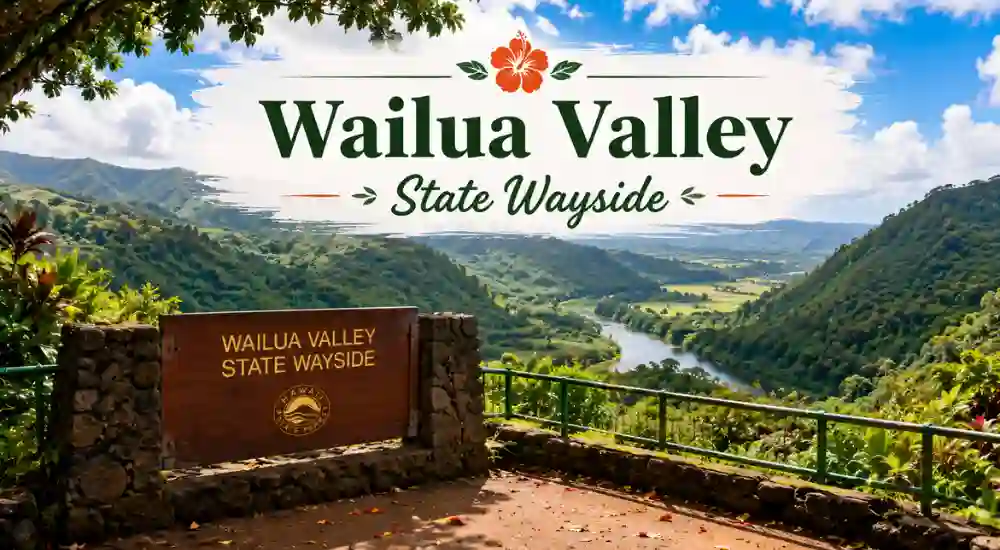
Wailua Valley State Wayside is a quick viewpoint that gives you a higher look at Maui’s green valleys, coastline, and surrounding mountains. It is a small stop, but it can be a refreshing break during your Road to Hana Maui drive.
This is not a long activity. Most visitors only need a few minutes to enjoy the view, take photos, and stretch their legs. Because the Hana Highway can feel intense after many curves, short stops like this help break up the day.
Add Wailua Valley State Wayside if you enjoy scenic overlooks and simple photo stops. It works well between bigger attractions on your Road to Hana itinerary.
Nahiku Marketplace
Nahiku Marketplace is a useful food and rest stop on the Road to Hana. Depending on what is open, you may see local food, snacks, coffee, fruit, or handmade items. It is a nice place to support small Maui vendors.
This stop is especially helpful because food options along the Hana Highway can be limited and hours may change. Do not wait until you are too hungry, especially if you are traveling with kids or planning to continue past Hana.
Nahiku Marketplace may not always be busy or fully open, but it is still worth keeping on your route as a flexible stop for food, drinks, and a short break.
Waiʻanapanapa State Park
Waiʻanapanapa State Park is one of the most important Road to Hana stops. It is famous for its black sand beach, sea caves, lava rock coastline, and strong ocean views. For many visitors, this is the highlight of the drive.
Non-residents usually need a reservation, so do not arrive without checking the rules first. Your reservation time should shape your Road to Hana itinerary because this stop is too important to miss.
Give yourself enough time here to walk, take photos, and enjoy the scenery without rushing. The beach is beautiful, but the ocean can be rough, so be careful and follow posted signs.
Hana Town
Hana Town is the quiet destination at the end of the classic Road to Hana Maui drive. It is not a big city or a busy resort area. Instead, it feels calm, local, and removed from the faster pace of other Maui towns.
Many travelers stop here for food, restrooms, fuel if available, or a quiet break before deciding whether to continue to Hamoa Beach, Wailua Falls, Pipiwai Trail, or Kipahulu. Hana is also a good place to slow down and reset after the long drive.
Do not expect Hana Town to be the main attraction. The beauty of the Hana Highway is in the journey, not only the destination.
Hamoa Beach
Hamoa Beach is one of the most beautiful beach stops near Hana. It has soft sand, clear water, and a peaceful setting that feels different from the rainforest and waterfall stops earlier on the Road to Hana.
This beach is a great choice if you want a relaxing break before the return drive. However, ocean conditions can change, so swim only if it is safe and follow local warnings. If the waves are strong, enjoy the view from shore instead.
Hamoa Beach is best for travelers with extra time. If your Road to Hana itinerary is already full, you may need to choose between this beach, Wailua Falls, or Pipiwai Trail.
Wailua Falls
Wailua Falls is one of the easiest waterfall stops past Hana. It is close to the road and does not require a long hike, which makes it a favorite for visitors who want a beautiful waterfall without using too much time.
Because it is one of the most accessible Road to Hana stops, it can be busy. Park only where allowed and be careful around wet areas. The waterfall is especially pretty after rain, but heavy rain can also make conditions less safe.
If you continue beyond Hana, Wailua Falls is a strong stop to include. It gives you a classic Maui waterfall view before heading toward Kipahulu or turning back.
Pipiwai Trail
Pipiwai Trail is one of the best hikes near the end of the Road to Hana Maui route. It is located in the Kipahulu District of Haleakalā National Park and is known for its bamboo forest, stream views, and Waimoku Falls.
This hike takes more time and energy than most stops, so plan carefully. If you want to hike Pipiwai Trail, you may need to skip several smaller stops earlier in the day. It is not ideal if you start late or feel tired from driving.
For active travelers, this can be one of the best things to do on Road to Hana. Wear proper shoes and check conditions first.
ʻOheʻo Gulch
ʻOheʻo Gulch, often called the Seven Sacred Pools, is located in the Kipahulu District of Haleakalā National Park. It is a famous stop beyond Hana and is often paired with the Pipiwai Trail.
The area is beautiful, but access and swimming conditions can change. Pools may be closed due to safety risks, high water, or park rules. Always check current conditions before planning this as a major part of your Road to Hana itinerary.
Even if swimming is not allowed, the scenery and nearby trails can still be worth the trip. This stop is best for travelers who have enough time and do not mind continuing well past Hana Town.
Best Things to Do on the Road to Hana
The best things to do on the Road to Hana include seeing waterfalls, walking through rainforest trails, eating banana bread, visiting a black sand beach, stopping at ocean viewpoints, and enjoying local food stands. This drive is full of small moments, not just big attractions.
You can swim in some places when conditions are safe, but never enter water during heavy rain, flash flood risk, or rough surf. Safety should always come before photos or bucket-list plans.
A good day on the Road to Hana Maui includes a mix of scenery, food, short walks, and rest breaks. Choose the experiences you care about most instead of trying to copy every stop from someone else’s itinerary.

One Day Road to Hana Itinerary
A one-day Road to Hana itinerary works best when you start early and keep your stop list realistic. You should not try to visit every waterfall, beach, trail, and food stand in one trip. The drive takes time, and the return can feel long.
The goal is to enjoy the best Road to Hana stops without rushing or driving back in the dark. Choose around six to eight main stops, with a few quick photo breaks if parking is easy and safe.
For many visitors, the best one-day plan includes Paia, Keʻanae Peninsula, Upper Waikani Falls, Waiʻanapanapa State Park, Hana Town, Hamoa Beach or Wailua Falls, and maybe Pipiwai Trail if you are active and started very early.
Early Morning
Start your Road to Hana Maui day as early as possible. Many travelers leave before or around sunrise so they can reach popular stops before crowds build. This also gives you more daylight for the return drive.
Before entering the busiest part of the Hana Highway, stop in Paia or Kahului for gas, breakfast, water, snacks, and any last-minute items. Do not begin the drive with a low fuel tank or no food.
Early morning is also the best time to set expectations with your group. Decide which stops matter most, confirm your Waiʻanapanapa reservation if you have one, and agree that safety and timing are more important than seeing everything.
Morning Stops
Your morning Road to Hana stops should be scenic but not too slow. Good choices include Twin Falls, Keʻanae Peninsula, Halfway to Hana, and Upper Waikani Falls if parking is safe. These stops give you waterfalls, food, coastline, and rainforest views.
Try not to spend too much time at the first few places. Many travelers lose hours early and then feel rushed near Hana, where some of the best stops are located. Keep each stop focused unless it is one of your top priorities.
The morning is also when the drive feels fresh and exciting. Enjoy it, but remember that the Hana Highway still has many curves, bridges, and miles ahead.
Midday Stops
By midday, you should be getting close to Hana or Waiʻanapanapa State Park. This is one of the most important parts of your Road to Hana itinerary, especially if you booked a reservation for the black sand beach.
Plan enough time at Waiʻanapanapa to enjoy the beach, lava rocks, sea caves, and coastal views. After that, Hana Town can be a good place to rest, eat, use the restroom, or decide how much farther you want to go.
If you are feeling tired, do not force extra stops. A smart Road to Hana Maui day is about enjoying the journey safely, not checking every place off a list.
Afternoon Stops
In the afternoon, decide whether to continue beyond Hana or begin your return. If you still have time and energy, choose between Hamoa Beach, Wailua Falls, Pipiwai Trail, or ʻOheʻo Gulch. These are great stops, but they add time.
Wailua Falls is the easiest option for many travelers because it is close to the road. Pipiwai Trail is best for hikers who planned ahead and started early. Hamoa Beach is better if you want a calmer beach break.
Do not underestimate the return drive on the Hana Highway. Curves, rain, fading daylight, and tiredness can make the afternoon feel harder than the morning.
Evening
Your evening goal should be simple: return safely before it gets too dark. The Road to Hana Maui is beautiful, but driving the Hana Highway at night can be stressful because of narrow roads, curves, bridges, and limited visibility.
Leave enough time to drive back slowly. If you are hungry, you can stop in Paia or another town after the drive for dinner. This feels better than trying to rush food stops while still deep on the route.
Use the evening to rest, not to squeeze in more attractions. A safe return is part of a successful Road to Hana itinerary, especially after a full day of driving and walking.
Half-Day Road to Hana Itinerary
A half-day Road to Hana itinerary is best for travelers who want a taste of the drive without spending the entire day on the Hana Highway. You will not reach every famous stop, but you can still enjoy rainforest scenery, waterfalls, and coastal views.
Good turnaround points include Keʻanae Peninsula, Halfway to Hana, or an earlier stop if traffic and timing are difficult. If you have a Waiʻanapanapa reservation, you may need more than a half day because it is farther along the route.
For a short trip, choose only a few stops. Paia, Twin Falls, Garden of Eden, and Keʻanae Peninsula make a simple half-day plan. This option is easier for families, nervous drivers, or visitors with limited Maui time.
2 Day Road to Hana Itinerary
A 2 day Road to Hana itinerary is the best choice if you want to enjoy the drive slowly. Instead of rushing to Hana and back in one long day, you can stay overnight in Hana and visit more places with less stress.
On day one, drive from Paia toward Hana with stops like Keʻanae Peninsula, Upper Waikani Falls, Nahiku Marketplace, and Waiʻanapanapa State Park. Spend the night in or near Hana if your budget allows.
On day two, visit Hamoa Beach, Wailua Falls, Pipiwai Trail, and ʻOheʻo Gulch before returning. This plan gives you more time for hiking, photos, food, and rest. It also makes the Road to Hana Maui feel less rushed and more meaningful.
What to Skip on the Road to Hana
One of the smartest Road to Hana tips is knowing what to skip. You do not need to stop everywhere to have a great day. In fact, skipping low-priority or unsafe stops often makes the trip better.
Skip any stop with illegal parking, blocked roads, unsafe shoulders, or private property signs. Do not chase hidden waterfalls if access is unclear. Also skip risky swimming holes during rain or strong water flow.
If time is short, skip smaller early stops and save energy for Keʻanae Peninsula, Waiʻanapanapa State Park, Hana Town, Wailua Falls, or Pipiwai Trail. A focused Road to Hana itinerary is better than a rushed day full of stressful stops.
Road to Hana Safety Tips
Safety is very important on the Road to Hana Maui. The Hana Highway has narrow lanes, sharp curves, one-lane bridges, changing weather, and many distracted visitors. Drive slowly and stay focused.
At one-lane bridges, yield when needed and be patient. Let faster local drivers pass by pulling over safely. Do not stop in the road for photos, and never block bridges, driveways, or narrow shoulders.
Rain can make trails muddy and waterfalls risky. Flash floods can happen quickly, so avoid swimming when water is high or moving fast. If you feel tired, turn around earlier. The best Road to Hana experience is one where everyone returns safely.
Road to Hana Local Etiquette
Good local etiquette makes your Road to Hana Maui trip better for both visitors and residents. The Hana Highway passes through real communities, not just tourist areas. People live, work, and drive this road every day.
Show respect by driving calmly, letting locals pass, parking only in legal areas, and staying off private property. Do not leave trash, pick fruit from private land, or enter places marked as closed. Small choices matter on a road this narrow and busy.
Support local vendors when you can, but be patient if service is slow or places are closed. The Road to Hana is not a theme park. It is a beautiful, living part of Maui that deserves care.
Do You Need Reservations for the Road to Hana?
You do not need a reservation to drive the Road to Hana itself. The Hana Highway is a public road, and visitors can drive it without booking a general entry pass. However, some major stops do require planning.
The most important reservation is usually Waiʻanapanapa State Park, especially for non-residents who want to visit the black sand beach. You should book your time slot before your trip and plan your drive around it.
If you continue to the Kipahulu District for Pipiwai Trail or ʻOheʻo Gulch, park entry rules may apply because it is part of Haleakalā National Park. Always check current rules before you go.
Road to Hana Parking Rules
Parking can be one of the hardest parts of the Road to Hana Maui. Many stops have small pullouts, limited spaces, or no safe parking at all. Just because you see other cars stopped does not always mean it is legal or safe.
Never park on bridges, in traffic lanes, in front of driveways, or on narrow shoulders where cars cannot pass. If a lot is full, continue to the next stop instead of forcing a risky situation.
Popular stops like Twin Falls, Upper Waikani Falls, and Waiʻanapanapa can get busy. Starting early helps, but patience is still needed. Safe parking protects you, local drivers, and everyone using the Hana Highway.
Road to Hana Food Stops
Food is part of the fun on the Road to Hana Maui. Along the route, you may see banana bread stands, fruit stalls, food trucks, coffee stops, and small local markets. These places make the drive feel more personal and relaxed.
Popular food areas include Paia, Keʻanae Peninsula, Halfway to Hana, Nahiku Marketplace, Hana Farms, and Hana Town. Hours can change, so do not depend on one single stop for your meal.
Bring snacks and water even if you plan to buy food. The Hana Highway is remote, and some places may be closed when you arrive. A mix of packed food and local treats is the safest plan.
Where to Get Gas on the Road to Hana

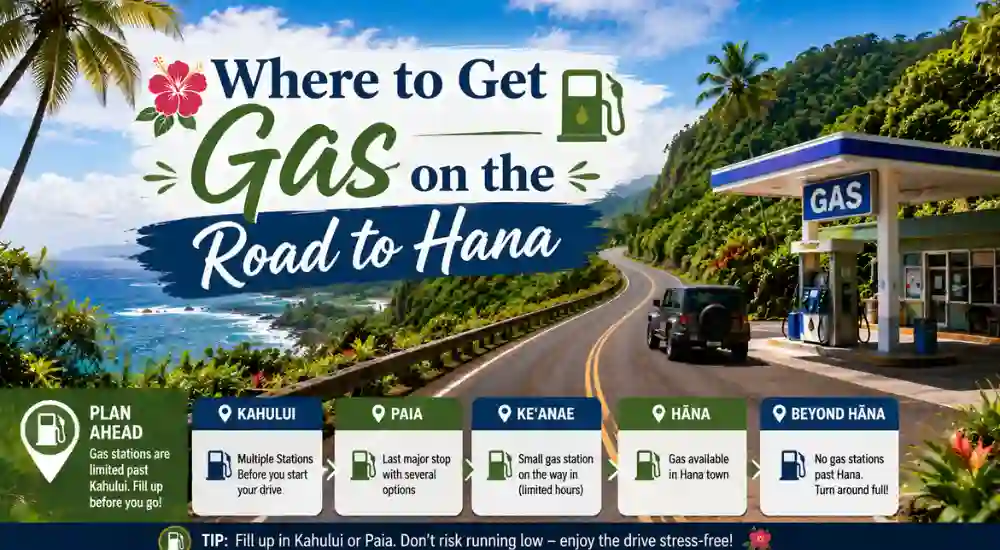
Before starting the Road to Hana, fill your gas tank in Kahului or Paia. This is one of the most important planning steps because gas options become limited once you are deep on the Hana Highway.
Do not assume you can easily fill up along the route. Even if gas is available in or near Hana, hours and access may not match your schedule. Starting with a full tank gives you peace of mind.
This is especially important if you plan to continue beyond Hana to Wailua Falls, Pipiwai Trail, or ʻOheʻo Gulch. A full tank helps you enjoy your Road to Hana itinerary without worrying about fuel.
What to Pack for the Road to Hana
A smart Road to Hana packing list makes the day easier. Bring water, snacks, sunscreen, bug spray, a towel, swimsuit, rain jacket, comfortable shoes, motion sickness medicine, and a phone charger.
You should also download an offline map because cell service can be weak or missing along the Hana Highway. Keep screenshots of reservations, especially for Waiʻanapanapa State Park, in case you cannot load them later.
Pack a small trash bag so you can carry out anything you bring. Cash can be helpful for local food stands, though many places accept cards. Good packing helps you enjoy the best things to do on Road to Hana with less stress.
Road to Hana Self-Drive vs Guided Tour
A self-drive Road to Hana trip gives you freedom. You can choose your own stops, move at your own pace, and adjust your itinerary based on weather, crowds, and energy. This is great for confident drivers.
A guided tour is better if you do not want to handle narrow roads, curves, parking, or planning. It also lets everyone in your group enjoy the views instead of focusing on the road. Nervous drivers may enjoy the trip more this way.
An audio guide is a good middle option. It gives directions and stories while you drive yourself. Choose the style that makes your Road to Hana Maui day feel safe and enjoyable.
Common Road to Hana Mistakes
Many visitors make the same Road to Hana mistakes. The biggest one is leaving too late. A late start can lead to crowded stops, rushed decisions, and driving back in the dark.
Another mistake is planning too many stops. The Hana Highway is slow, and even short stops add up quickly. Choose your must-see places before you go and allow extra time for traffic, rain, food, and parking.
Other common mistakes include forgetting gas, skipping Waiʻanapanapa reservations, ignoring motion sickness, wearing poor shoes, and parking illegally. Avoiding these problems can turn a stressful day into a smooth and memorable Road to Hana Maui experience.
FAQs
How Long Does the Road to Hana Take?
The Road to Hana can take a full day when you include stops. The basic drive may look short on a map, but the Hana Highway is slow because of curves, bridges, traffic, and scenic pullouts.
Most visitors spend around 8 to 12 hours on the full experience. This includes driving, eating, taking photos, walking trails, visiting Waiʻanapanapa State Park, and possibly continuing past Hana to Wailua Falls or Pipiwai Trail.
If you only drive partway, you can make it a half-day trip. If you want a relaxed experience, consider staying overnight in Hana. The best plan depends on your travel style, energy, and how many Road to Hana stops you want to enjoy.
Is the Road to Hana Dangerous?
The Road to Hana Maui is not extremely dangerous if you drive carefully, but it does require attention. The Hana Highway has many sharp curves, one-lane bridges, narrow sections, and changing weather conditions.
Most problems happen when drivers speed, stop in unsafe places, ignore local traffic, or get distracted by views. Rain can also make roads slippery and trails muddy. Waterfalls and streams can become risky during flash flood conditions.
Drive slowly, stay alert, and do not rush. Let local drivers pass when safe. If you are a nervous driver, a guided tour may be a better option. With patience and respect, the Road to Hana can be safe and enjoyable.
Can You Drive the Road to Hana in One Day?
Yes, you can drive the Road to Hana in one day, and many visitors do. However, you need to start early, choose your stops carefully, and avoid trying to see everything.
A one-day Road to Hana itinerary works best with a clear plan. Focus on top stops like Keʻanae Peninsula, Waiʻanapanapa State Park, Hana Town, Wailua Falls, or Pipiwai Trail if you have enough time. Skip stops that are crowded, unsafe, or low priority.
The main challenge is the return drive. You should avoid driving back too late or in the dark. If you want a slower trip, staying overnight in Hana is a better choice.
What Is the Best Stop on the Road to Hana?
The best stop on the Road to Hana Maui, depends on what you enjoy. For many travelers, Waiʻanapanapa State Park is the top stop because of its black sand beach, lava rocks, sea caves, and dramatic coastline.
If you love coastal views and local flavor, Keʻanae Peninsula is a must. If you want an easy waterfall, Wailua Falls is a strong choice. If you enjoy hiking, Pipiwai Trail may be the highlight of your day.
Instead of looking for one perfect stop, choose a mix of waterfalls, beach views, food, and short walks. That gives you the best overall Road to Hana itinerary.
Is Hana Highway the Same as the Road to Hana?
Yes, the Hana Highway is the main road used for the famous Road to Hana drive. When people say “Road to Hana,” they usually mean the scenic journey along Hana Highway from Central or North Maui toward Hana Town.
The name Road to Hana describes the travel experience, while Hana Highway is the actual road. This route includes rainforest, waterfalls, bridges, curves, local stands, and coastal views.
Some travelers continue beyond Hana to places like Hamoa Beach, Wailua Falls, Pipiwai Trail, and ʻOheʻo Gulch. So while Hana is the main destination, the full Road to Hana Maui experience often includes stops before and after Hana Town.
Should You Stay Overnight in Hana?
Staying overnight in Hana can make the Road to Hana Maui much easier and more enjoyable. Instead of rushing through every stop in one long day, you can slow down, rest, and visit more places with less pressure.
An overnight trip is especially helpful if you want to hike Pipiwai Trail, visit Hamoa Beach, spend time at Waiʻanapanapa State Park, or enjoy Hana Town calmly. It also reduces the stress of driving back late.
The downside is cost and limited lodging. If your budget allows, a 2 day Road to Hana itinerary is one of the best ways to enjoy East Maui without feeling rushed.
What Time Should You Start the Road to Hana?
You should start the Road to Hana early in the morning. Many travelers leave around sunrise or shortly after, especially if they plan to visit Waiʻanapanapa State Park, Hana Town, Wailua Falls, or Pipiwai Trail.
An early start helps you avoid some crowds, gives you more daylight, and makes the return drive safer. It also gives you extra time for food stops, parking delays, and changing weather.
Do not start late unless you are only doing a short half-day route. The Hana Highway is slow, and rushing can make the trip stressful. Early planning leads to a calmer and better Road to Hana Maui experience.
Can Kids Do the Road to Hana?
Yes, kids can do the Road to Hana, but the day needs to be planned carefully. The drive is long, curvy, and slow, so snacks, water, breaks, and motion sickness planning are important.
Family-friendly stops include Paia, Garden of Eden, Keʻanae Peninsula, Waiʻanapanapa State Park, Hana Town, and Hamoa Beach if conditions are safe. Avoid risky trails, unsafe waterfalls, and too many stops in one day.
For kids, a shorter Road to Hana itinerary may be better than a full route to Kipahulu. Keep the day flexible and focus on comfort. With the right plan, the Road to Hana can be a great family adventure.
Is the Backside Road to Hana Safe?
The backside road past Hana can be more remote, rough, and unpredictable than the classic Hana Highway route. Some sections may have narrow roads, fewer services, changing conditions, and limited help if something goes wrong.
Many rental car companies do not allow drivers to take this route, so you should check your rental agreement before going. Even if the road is open, it may not be the best choice for first-time visitors or nervous drivers.
For most travelers, the safest option is to return the same way on the main Road to Hana route. Only consider the backside road if conditions are good and you are fully prepared.
Do You Need a 4×4 for the Road to Hana?
You do not need a 4×4 for the main Road to Hana route. A regular rental car can handle the classic Hana Highway when conditions are normal and you drive carefully.
The main road is paved, but it has sharp curves, one-lane bridges, wet areas, and limited parking. A smaller car can sometimes feel easier than a large vehicle because the road is narrow in many places.
A 4×4 may only become a question if you are thinking about remote areas or the backside road, but rental rules still matter. For the standard Road to Hana Maui itinerary, careful driving is more important than having a special vehicle.
Final Verdict
The Road to Hana Maui is one of the best experiences on the island when you plan it with care. It offers waterfalls, rainforest, black sand beach views, coastal cliffs, food stops, hikes, and peaceful moments along the famous Hana Highway.
The key is to keep your plan realistic. Choose your top Road to Hana stops, start early, reserve Waiʻanapanapa if needed, bring food and water, and respect local roads and communities. Do not try to do everything in one day.
For most visitors, the Road to Hana is worth it. Whether you self-drive, take a tour, or stay overnight in Hana, the journey can become one of your most memorable Maui travel days.