
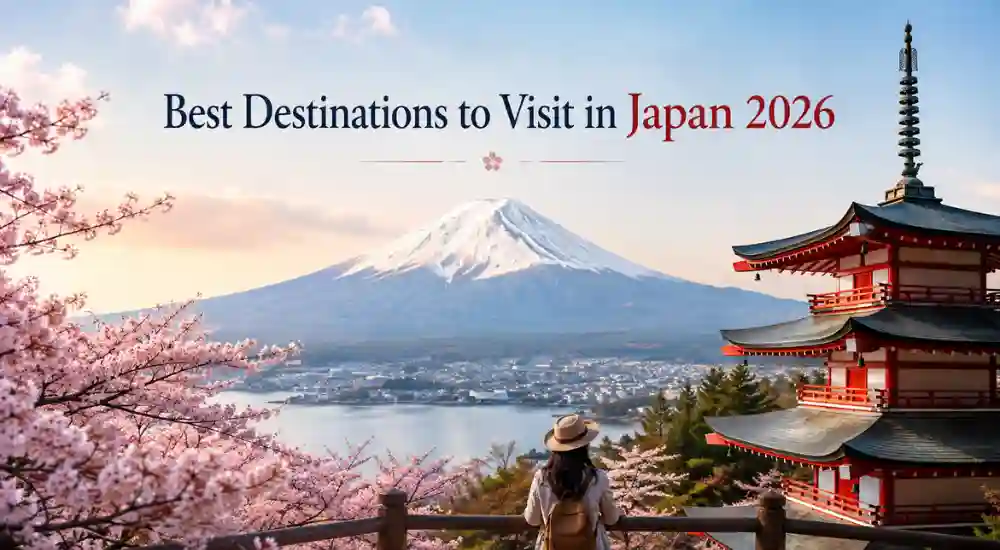
Japan gets easier to plan once you accept one simple truth: you do not need to see the entire country on your first trip. The best destinations to visit in Japan range from Tokyo’s neighborhood-by-neighborhood energy and Kyoto’s temple districts to snowy Hokkaido, subtropical Okinawa, forest trails, art islands, and preserved mountain towns.
For most first-time visitors, Tokyo and Kyoto deserve a place on the itinerary. What comes next should depend on your interests, season, available time, and appetite for moving hotels.
Quick Answer: Where Should You Visit in Japan?
For a first Japan trip, build your route around Tokyo and Kyoto, then add Osaka, Nara, Hakone, the Fuji Five Lakes, or Hiroshima.
With more time, consider Kanazawa, Takayama, Hokkaido, Naoshima, Fukuoka, Okinawa, Kiso Valley, or Yakushima. The best rule is simple: choose fewer bases and better contrasts.
Japan Destinations at a Glance
Use this comparison to narrow your choices before building the itinerary. Suggested stays are planning recommendations rather than fixed rules.
| Destination | Best For | Suggested Stay | Strongest Season | Car? | Cost Level |
|---|---|---|---|---|---|
| Tokyo | First trips, food, city life | 4–5 nights | Spring, fall, winter | No | $$–$$$ |
| Kyoto | Temples, history, culture | 3–4 nights | Spring, fall | No | $$–$$$ |
| Osaka | Food, nightlife, families | 2–3 nights | Most of year | No | $$ |
| Nara | Temples, history, day trips | 1 day–1 night | Spring, fall | No | $–$$ |
| Fuji Five Lakes | Fuji views, photography | 1–2 nights | Fall, winter, spring | Optional | $$ |
| Hakone | Ryokans, onsen, couples | 1–2 nights | Fall–spring | No | $$–$$$ |
| Hiroshima & Miyajima | History, culture, island scenery | 2 nights | Spring, fall | No | $$ |
| Kanazawa | Gardens, crafts, culture | 2 nights | Spring, fall, winter | No | $$ |
| Takayama & Shirakawa-go | Mountain towns, heritage | 2–3 nights | Fall, winter, spring | Optional | $$ |
| Hokkaido | Snow, food, outdoors | 4–7 nights | Winter, summer | Sometimes | $$–$$$ |
| Nikko | Shrines, forests, fall color | 1–2 nights | Fall, spring | No | $$ |
| Kiso Valley | Walking, post towns | 1–2 nights | Spring, fall | No | $$ |
| Naoshima & Setouchi | Art, architecture | 1–2 nights | Spring, fall | No | $$–$$$ |
| Fukuoka | Food, nightlife, Kyushu | 2–3 nights | Spring, fall | No | $$ |
| Okinawa | Beaches, diving, islands | 4–7 nights | Season-dependent | Helpful | $$–$$$ |
| Yakushima | Forests, hiking, nature | 3–4 nights | Spring, fall | Helpful | $$–$$$ |
How to Choose the Right Japan Destination
The “best” place changes depending on what you want your days to feel like. Start with your travel style instead of trying to copy somebody else’s itinerary.
🏙 City Energy
Choose Tokyo for neighborhoods, shopping, museums, nightlife, and endless food choices.
⛩ Culture & Heritage
Choose Kyoto when temples, gardens, historic streets, and traditional culture matter most.
♨ Onsen Escape
Pick Hakone for a ryokan-and-onsen night between larger cities.
🗻 Fuji Views
Choose the Fuji Five Lakes if photographing Mount Fuji matters more than resort-style sightseeing.
❄ Snow & Wilderness
Travel to Hokkaido for winter sports, wide landscapes, seafood, and cooler summer adventures.
🌊 Island Escape
Head to Okinawa for beaches, coral water, diving, and Ryukyu culture.
Tokyo: Best for First-Time Visitors
Tokyo is not one experience. It is dozens of neighborhoods stitched together by an enormous urban transport network.
Spend a morning around Asakusa, an afternoon near Harajuku and Omotesando, and an evening in Shibuya or Shinjuku, and the city can feel different every few hours.
What Makes Tokyo Worth Visiting?
- Asakusa and Senso-ji provide a historic contrast to modern Tokyo.
- Shibuya works well for shopping, nightlife, and city views.
- Pair Meiji Shrine with Harajuku and Omotesando.
- Ginza suits design, department stores, and polished dining.
- Shinjuku combines nightlife with useful regional connections.
- Try Koenji, Kichijoji, or Yanaka for a slower neighborhood day.
Kyoto: Best for Temples, Gardens, and Traditional Culture
Kyoto rewards travelers who slow down. Its best experiences combine headline temples with quieter lanes, gardens, workshops, and early mornings.
Crowd planning matters, especially around famous districts. Build each day geographically rather than trying to collect landmarks across the entire city.
Build Kyoto by Area, Not by Checklist
- Eastern Kyoto: Kiyomizu-dera, Higashiyama, Gion, Yasaka Shrine.
- Southern Kyoto: Fushimi Inari.
- Western Kyoto: Arashiyama and nearby temples.
- Northern Kyoto: Kinkaku-ji and quieter temple districts.
Osaka: Best for Food, Nightlife, and Kansai Day Trips
Osaka feels more informal than Kyoto and easier to digest than Tokyo. It is especially good for travelers who prioritize food, nightlife, entertainment, and regional day trips.
Stay around Namba for nightlife and food, or consider Umeda when transport connections matter more.
- See Dotonbori after dark, then explore streets beyond the canal.
- Try okonomiyaki, takoyaki, kushikatsu, ramen, and izakaya dining.
- Visit Osaka Castle grounds for a history-focused break.
- Use Osaka as a practical base for Kyoto, Nara, and Kobe.
- Families can add aquarium or theme-park days.
Nara: Best for Ancient History Without Another Hotel Change
Nara is one of Japan’s easiest high-value additions because it works naturally from both Kyoto and Osaka.
Its main historic sights cluster around Nara Park, making a satisfying day possible without spending half your time in transit.
- Visit Todai-ji for its monumental temple complex.
- Continue to Kasuga Taisha through wooded paths.
- Explore Nara Park while treating the deer as wild animals.
- Walk through Naramachi for quieter merchant streets.
- Stay overnight only if calmer mornings and evenings matter to you.
Fuji Five Lakes: Best for Mount Fuji Views
The Fuji Five Lakes are often a better choice than Mount Fuji itself when your real goal is scenery rather than climbing.
The lakes include Kawaguchiko, Yamanakako, Saiko, Shojiko, and Motosuko. For many first-time visitors, Kawaguchiko is the easiest base.
Stay Around the Lakes If You Want
- Mount Fuji photography.
- Cycling and lake walks.
- Scenic hotels and ryokans.
- Forest and outdoor time.
- More than one chance to see Fuji if cloud cover changes.
Hakone: Best for Ryokans and Onsen
Hakone is one of the easiest ways to slow down between Tokyo and Kansai. Instead of another packed city day, the experience can revolve around a ryokan, onsen, mountain scenery, and good food.
Art lovers can also visit the Hakone Open-Air Museum and other museums scattered around the area.
Hakone vs Fuji Five Lakes
Choose Hakone For
- Onsen.
- Ryokan stays.
- Couples trips.
- Art museums.
Choose Fuji Five Lakes For
- Fuji photography.
- Lakeside scenery.
- Cycling.
- Outdoor time.
Hiroshima and Miyajima: Best for History With Island Scenery
Hiroshima deserves more than being treated as a quick rail stop. Give the Peace Memorial area meaningful time, then experience the modern city and its food culture.
Use the following day for Miyajima, where Itsukushima Shrine, Mount Misen, forest paths, temples, and waterfront scenery create a completely different atmosphere.
A Better Two-Day Plan
- Day 1: Peace Memorial area and Hiroshima city.
- Try Hiroshima-style okonomiyaki.
- Day 2: Miyajima and Itsukushima Shrine.
- Add Mount Misen when weather and energy allow.
- Check the tide when a particular torii-gate view matters.
Kanazawa: Best for Gardens, Crafts, and Slower Culture
Kanazawa is sometimes called an alternative to Kyoto, but that comparison misses its own identity.
Its appeal comes from Kenrokuen, samurai districts, teahouse architecture, gold leaf, ceramics, seafood, and contemporary art.
- Walk through Kenrokuen and Kanazawa Castle Park.
- Explore Nagamachi Samurai District.
- Visit the historic Higashi Chaya area.
- Look for gold leaf and Kutani ceramic crafts.
- Try seafood from the Sea of Japan.
Takayama and Shirakawa-go: Best for Mountain Heritage
Takayama’s merchant streets, morning markets, regional food, and wooden buildings feel far removed from Japan’s large metropolitan corridor.
Nearby Shirakawa-go adds traditional gassho-zukuri farmhouses and a dramatic mountain setting.
- Stay at least one night in Takayama when possible.
- Explore the old town before larger day groups arrive.
- Visit local morning markets.
- Try Hida-region specialties.
- Check bus connections before travel days.
- Prepare for snow and changing road conditions in winter.
Hokkaido: Best for Snow, Summer Outdoors, and Big Landscapes
Hokkaido deserves its own portion of the itinerary rather than being squeezed into a side trip.
Japan’s northern island combines Sapporo, ski regions, national parks, volcanic landscapes, seafood, hot springs, and flower country.
Pick the Right Hokkaido Trip
- First visit: Base in Sapporo and add Otaru.
- Winter sports: Build around a ski destination.
- Summer scenery: Look toward Furano and Biei.
- Deeper nature: Consider eastern Hokkaido.
- A rental car becomes more useful away from major rail corridors.
Nikko: Best for Shrines, Forests, and Autumn Color
Nikko is one of Tokyo’s strongest cultural-and-nature escapes. Its sacred mountain setting combines ornate shrines with forests, waterfalls, lakes, and national-park landscapes.
A day trip works for the central heritage area, while an overnight opens the door to a slower look at Lake Chuzenji, Kegon Falls, hiking, and onsen.
Kiso Valley: Best for Historic Walking Trails
Kiso Valley gives travelers something the large cities cannot: time spent moving through the landscape rather than between attractions.
The region preserves sections of the historic Nakasendo route, including post towns such as Magome and Tsumago.
Who Will Love Kiso Valley?
- Travelers who enjoy walking.
- Fans of traditional inns.
- Visitors interested in historic towns.
- Nature lovers seeking forest scenery.
- Anyone wanting a break from large-city crowds.
Naoshima and Setouchi: Best for Contemporary Art
Naoshima is more than a collection of museums. Architecture, outdoor installations, ferry travel, small villages, and the Seto Inland Sea become part of the experience.
The wider Setouchi region makes it possible to add neighboring art islands and ferry gateways such as Takamatsu.
Fukuoka: Best for Food and Starting a Kyushu Trip
Fukuoka offers big-city convenience without Tokyo’s scale. Hakata and Tenjin provide strong transport, restaurants, nightlife, and shopping without requiring an exhausting schedule.
Food is a major reason to stay. Look for Hakata-style tonkotsu ramen, seafood, izakaya dining, and yatai food stalls.
- Use Fukuoka as a gateway into Kyushu.
- Continue toward Nagasaki, Beppu, or Kumamoto.
- Explore both Hakata and Tenjin.
- Allow two or three nights before moving deeper into Kyushu.
Okinawa: Best for Beaches and Ryukyu Culture
Okinawa is not simply “Japan with beaches.” Its Ryukyu history, subtropical climate, coral-rich seas, food traditions, and distant islands give the prefecture a distinct travel identity.
The most important planning decision is choosing the right island rather than treating all of Okinawa as one destination.
Which Okinawa Island Should You Choose?
Okinawa Main Island
Best for Naha, culture, road trips, and a varied first visit.
Miyako Islands
Best when beaches and relaxed coastal time dominate the trip.
Ishigaki & Yaeyama
Best for island hopping, reefs, and farther southwestern islands.
Mainland Alternative
If you want another Mediterranean-style beach trip later, explore our guide to the best beaches in Greece .
Yakushima: Best for Ancient Forests and Hiking
Yakushima is for travelers who want nature to be the trip, not simply a break between cities.
Forests, mountain trails, waterfalls, coastal areas, frequent rainfall, and rural transport make it more demanding than an urban destination.
Plan Yakushima Around Conditions
- Choose hikes that match your actual fitness.
- Carry reliable rain protection.
- Check current trail and weather information.
- Research bus or rental-car arrangements beforehand.
- Start longer hikes early.
- Keep a backup plan for poor mountain conditions.
Best Japan Destinations by Travel Style
If the main destination list still feels overwhelming, choose according to the way you actually prefer to travel.
👋 First-Time Visitors
- Tokyo
- Kyoto
- Osaka
- Nara
- Hakone or Fuji Five Lakes
❤️ Couples
- Kyoto
- Hakone
- Naoshima
- Kanazawa
- Okinawa
👨👩👧 Families
- Tokyo
- Osaka
- Nara
- Hokkaido
- Okinawa
🎒 Solo Travelers
- Tokyo
- Kyoto
- Fukuoka
- Kanazawa
🌲 Nature Lovers
- Yakushima
- Hokkaido
- Fuji Five Lakes
- Nikko
- Kiso Valley
🍜 Food Travelers
- Osaka
- Tokyo
- Fukuoka
- Hokkaido
- Kanazawa
Best Japan Destinations by Season
Japan stretches from snowy northern regions to subtropical southern islands, so the best destination changes dramatically with the month.
Spring
- Tokyo
- Kyoto
- Nara
- Kanazawa
- Fuji Five Lakes
Summer
Consider Hokkaido and mountain regions when you want a break from central Japan’s summer heat.
If you are planning other summer journeys too, compare our where to travel in August guide and best places to travel in August .
Autumn
- Kyoto
- Nikko
- Kiso Valley
- Kanazawa
- Takayama
For more fall-trip inspiration, see our best places to visit in September and best places to visit in October .
Winter
- Hokkaido for snow and skiing.
- Takayama and Shirakawa-go for winter scenery.
- Hakone for a cold-weather onsen stay.
- Tokyo for flexible city sightseeing.
Planning a winter vacation outside Japan as well? Browse our best places to travel in December 2026 .
Japan Itinerary Ideas: 7, 10, and 14 Days
The best Japan itinerary usually removes unnecessary hotel changes. Efficient transport does not mean every destination belongs on one trip.
7-Day Japan Route for First-Timers
- Tokyo: roughly three days.
- Kyoto: roughly three days.
- Final day: Osaka or Nara.
Skip Osaka and add Hakone if a ryokan and onsen matter more than nightlife.
10-Day Japan Route
- Tokyo: three to four nights.
- Fuji or Hakone: one night.
- Kyoto: around three nights.
- Osaka or Nara: remaining time.
Replace Osaka with Hiroshima if history and Miyajima matter more than nightlife.
14-Day Japan Route
A strong alternative for traditional-town travelers is: Tokyo → Kanazawa → Takayama → Kyoto → Osaka/Nara.
Getting Around Japan Without Overbuying Transport Passes
Japan’s rail system makes many city-to-city routes straightforward, but do not buy the nationwide Japan Rail Pass automatically.
Compare the cost of your actual long-distance journeys first. Regional passes or individual tickets can make more sense when your trip stays concentrated in one area.
When a Car Usually Isn’t Needed
- Tokyo
- Kyoto
- Osaka
- Nara
- Hiroshima
- Fukuoka
When a Car Can Help
- Rural Hokkaido.
- Parts of Okinawa.
- Yakushima.
- Countryside routes with limited rail access.
Destinations That Just Missed the Main 16
Japan has far more than 16 worthwhile destinations. These places become especially useful when they match a specific route or travel interest.
Kamakura
Choose Kamakura for temples, coastal scenery, and an easy cultural escape from Tokyo.
Koyasan
Choose Koyasan if a temple stay and Buddhist heritage matter more than another large city.
Matsumoto
Choose Matsumoto for its historic castle and access to the northern Japanese Alps.
Nagasaki
Choose Nagasaki for international history and a deeper Kyushu route.
Beppu
Choose Beppu when hot springs are one of the main reasons for your Kyushu trip.
Shikoku
Choose Shikoku for slower travel, pilgrimage routes, valleys, cycling, and lesser-visited regional experiences.
Common Japan Planning Mistakes to Avoid
Trying to See Too Much
Japan’s transport is efficient, but travel time is still travel time. Five strong destinations often create a better two-week trip than nine rushed stops.
Staying Only Near Major Stations
Station areas are convenient, but they are not automatically the most enjoyable neighborhoods. Think about how you want to spend your evenings.
Assuming Every Famous Place Needs a Full Day
Nara can work as a day trip. Osaka can be shortened on a culture-heavy itinerary. Hakone may only need one night.
Treating Weather as a Minor Detail
Fuji visibility, island ferries, hiking routes, outdoor art, snow travel, and beach plans can all be weather-sensitive.
Assuming a Rail Pass Always Saves Money
Calculate your major journeys before buying transportation passes. Choose the pass around the itinerary, not the itinerary around the pass.
FAQs About the Best Destinations to Visit in Japan
What are the best places to visit in Japan for a first trip?
For most first-time travelers, Tokyo and Kyoto create the strongest foundation. Then add Osaka or Nara, plus Hakone or Fuji Five Lakes if you want a nature break.
Is 10 days enough for Japan?
Yes. Ten days is enough for a strong first trip if you avoid trying to cross the entire country.
A realistic route can include Tokyo, Hakone or Fuji, Kyoto, and Osaka or Nara.
How many days should I spend in Japan?
For a first visit, 10 to 14 days gives much more flexibility than a single week.
Two weeks also allows room for Hiroshima, Kanazawa, Takayama, or another contrasting destination.
Is Tokyo, Kyoto, or Osaka better?
Choose Tokyo for city energy, shopping, food, and neighborhoods. Choose Kyoto for temples, gardens, heritage, and traditional culture.
Choose Osaka for food, nightlife, entertainment, and a useful Kansai base.
Should I visit Hakone or Fuji Five Lakes?
Choose Hakone for an onsen, ryokan, art, and relaxed overnight stay.
Choose Fuji Five Lakes when Mount Fuji scenery and photography are the priority.
Do I need a car in Japan?
Not for a classic Tokyo, Kyoto, Osaka, Nara, or Hiroshima route.
A car becomes more useful in rural Hokkaido, parts of Okinawa, Yakushima, and less-connected countryside.
Is the Japan Rail Pass always worth buying?
No. Compare your actual long-distance journeys before purchasing it.
Regional passes or ordinary tickets can be better for travelers who remain within one part of Japan.
Where should I go in Japan to avoid the busiest tourist route?
Consider Kanazawa, Kiso Valley, Fukuoka, Shikoku, parts of Hokkaido, or regional Kyushu.
No destination is crowd-free, but leaving the main Tokyo–Kyoto–Osaka corridor can produce a noticeably different trip.
What is the best season to visit Japan?
There is no single best season for the entire country. Spring and fall suit many classic city routes, while winter is excellent for Hokkaido and onsen travel.
Choose the Japan Trip That Fits You
The best destinations to visit in Japan are not necessarily the places you can squeeze into one itinerary. They are the destinations that create the right balance for your trip.
For a first visit, start with Tokyo and Kyoto, then add contrast: Osaka for food, Hakone for onsen, Fuji Five Lakes for scenery, Hiroshima for history, or Kanazawa for slower cultural travel.
Repeat visitors can go farther into Hokkaido, Okinawa, Naoshima, Kiso Valley, Fukuoka, Yakushima, Kyushu, or Shikoku.