

France gives travelers far more than famous landmarks and postcard views. The best places to visit in France include lively cities, quiet villages, wine regions, Mediterranean beaches, mountain towns, and historic countryside. You can explore Paris for art and culture, enjoy the lavender fields of Provence, relax along the French Riviera, or discover castles in the Loire Valley. Every region offers a different experience, which makes France one of the most rewarding travel destinations in Europe.
This guide covers the best places in France for first-time visitors, couples, families, food lovers, history fans, and nature seekers. You will also find useful ideas for France travel planning, including where to go besides Paris, when to visit, and how to choose the right destination for your trip.
Quick Answer
The best places to visit in France depend on the kind of trip you want. Paris is ideal for first-time visitors, while Provence offers lavender fields, villages, and relaxed countryside. Choose the French Riviera for Mediterranean beaches, the Loire Valley for castles, and Normandy for history and dramatic coastlines. Food lovers should consider Lyon, while Bordeaux and Champagne suit wine lovers.
For nature, Annecy, Corsica, and the French Alps stand out. Travelers looking for quieter France travel destinations can explore Brittany or Dordogne. France works well for city breaks, romantic escapes, family vacations, road trips, and longer European adventures.
TL;DR — Best Places in France at a Glance
If you want to compare the best places in France quickly, start with this guide:
| Destination | Best For | Ideal Stay |
| Paris | First-time visitors, art | 3–5 days |
| Provence | Villages, countryside | 3–5 days |
| French Riviera | Beaches, coastal towns | 3–5 days |
| Loire Valley | Castles, history | 2–3 days |
| Normandy | History, coastline | 2–4 days |
| Lyon | Food, culture | 2–3 days |
| Bordeaux | Wine, architecture | 2–4 days |
| Annecy | Couples, nature | 2–3 days |
| Alsace | Storybook villages | 2–4 days |
| Corsica | Beaches, adventure | 5–7 days |
Best Places to Visit in France
- 🗼 Paris: Best for first-time visitors, famous landmarks, museums, art, cafés, and classic French culture.
- 💜 Provence: Best for lavender fields, charming villages, local markets, vineyards, and relaxed countryside trips.
- 🌊 French Riviera: Best for beaches and Mediterranean scenery, with Nice, Menton, Antibes, Èze, and Cannes as popular stops.
- 🏰 Loire Valley: Best for French châteaux, gardens, history, cycling, and peaceful countryside.
- 📜 Normandy: Best for D-Day history, coastal scenery, medieval towns, and dramatic cliffs.
- 🍽️ Lyon: Best for French food and gastronomy, historic neighborhoods, markets, and an easy city break.
- 🍷 Bordeaux: Best for wine lovers, elegant architecture, vineyards, and trips to Saint-Émilion.
- 🏔️ Annecy: Best for couples and nature lovers, thanks to its Alpine lake, mountains, canals, and romantic old town.
- 🏘️ Alsace: Best for storybook villages, with Strasbourg, Colmar, Eguisheim, and Riquewihr among the highlights.
- 🍇 Burgundy: Best for wine, food, vineyards, scenic drives, and slow countryside travel.
- 🏖️ Corsica: Best for beautiful beaches, road trips, hiking, mountains, and outdoor adventures.
- ⛰️ French Alps & Chamonix: Best for hiking, skiing, mountain views, and nature-focused trips.
- 🌅 Brittany: Best for rugged coastlines, historic towns, seafood, and travelers looking for a quieter side of France.
- 🏰 Dordogne: Best for medieval villages, castles, caves, family adventures, and scenic road trips.
- 🥂 Champagne: Best for vineyards, cellar tours, Reims, and wine-focused trips from Paris.
- ⭐ Best overall tip: For a first trip, combine Paris with one or two regions instead of trying to visit too many places in a short vacation.
How to Choose the Best Place to Visit in France
Choosing among the many places to go in France becomes easier when you focus on your interests. First-time travelers often enjoy Paris plus one contrasting region, such as Normandy, Provence, or the Loire Valley. Couples may prefer Annecy or the French Riviera, while families can enjoy castles, beaches, and outdoor activities.
Also think about season, trip length, budget, and transportation. Major cities work well without a car, but rural Provence, Dordogne, and parts of Corsica become easier to explore when you drive. Avoid trying to fit every famous destination into one short vacation.
Best France Destinations by Travel Style
| Travel Style | Good Choices |
| First trip | Paris, Loire Valley, Normandy |
| Couples | Annecy, Paris, Provence |
| Families | Dordogne, Loire Valley, Paris |
| Food | Lyon, Burgundy |
| Wine | Bordeaux, Champagne, Burgundy |
| Beaches | Corsica, French Riviera |
| History | Normandy, Paris, Loire Valley |
| Nature | Chamonix, Annecy, Corsica |
| Train travel | Paris, Lyon, Bordeaux, Strasbourg |
1. Paris — Best for First-Time Visitors

Paris remains one of the essential places to visit in France for first-time visitors. Start with the Eiffel Tower, walk beside the Seine, explore Montmartre, and leave enough time for the Louvre and the historic heart of the city. Cafés, markets, gardens, museums, and neighborhoods give Paris much more depth than its famous monuments.
Plan at least three full days if possible. During busy periods, reserve major attractions early. For example, the Louvre requires reservations for most visitors from July 1 through August 31, 2026. Paris also makes a useful base for trips to Versailles, Giverny, and Champagne.
2. Provence — Best for Lavender Fields and Countryside
Provence represents the slower side of France. Think lavender fields, stone villages, outdoor markets, vineyards, olive groves, and warm summer evenings. Avignon, Aix-en-Provence, Gordes, and the Luberon give travelers several different ways to experience the region.
Provence works especially well for couples, photographers, food lovers, and travelers planning a France road trip. A car gives you more freedom when visiting small villages and rural areas. Lavender adds famous summer color, but Provence remains attractive outside peak bloom because of its historic towns, landscapes, markets, and food. Stay several nights instead of rushing through the region on a single day trip.
3. French Riviera — Best for Beaches and Mediterranean Scenery
The French Riviera, or Côte d’Azur, combines Mediterranean water with elegant cities and colorful coastal towns. Nice makes one of the most convenient bases because you can enjoy its old town and waterfront while taking trips to Antibes, Èze, Menton, and Cannes.
The Riviera suits travelers searching for the best places in southern France, especially those interested in beaches, restaurants, art, and coastal scenery. Trains make several coastal towns surprisingly easy to combine without a car. Summer brings the warmest beach weather but also larger crowds. Spring and early fall can provide a more relaxed balance between sightseeing and time by the sea.
4. Loire Valley — Best for Castles and French History
The Loire Valley is one of the best destinations in France for travelers who dream of grand French châteaux, gardens, wine, and peaceful countryside. Château de Chambord and Château de Chenonceau are famous highlights, while Amboise and Villandry add more history and character.
You can explore parts of the region by train and organized tour, but a car provides more flexibility when visiting several castles. Cycling also gives active travelers a slower way to enjoy the landscape. Allow at least two days if castles form an important part of your trip. The Loire Valley pairs particularly well with Paris for travelers spending one week in France.
5. Normandy — Best for History and Dramatic Coastlines
Normandy blends powerful history with seaside towns, green countryside, and dramatic cliffs. Many travelers come for the D-Day beaches, Bayeux, and World War II sites, but the region offers much more. Honfleur has a picturesque harbor, Rouen carries deep medieval history, and Étretat attracts visitors with striking coastal cliffs.
Normandy ranks among the most rewarding places to visit in France besides Paris because it feels completely different from the capital while remaining relatively accessible. Give yourself two to four days if you want to combine history and coastline. Driving makes it easier to reach rural memorials, smaller villages, and widely spread coastal sights.
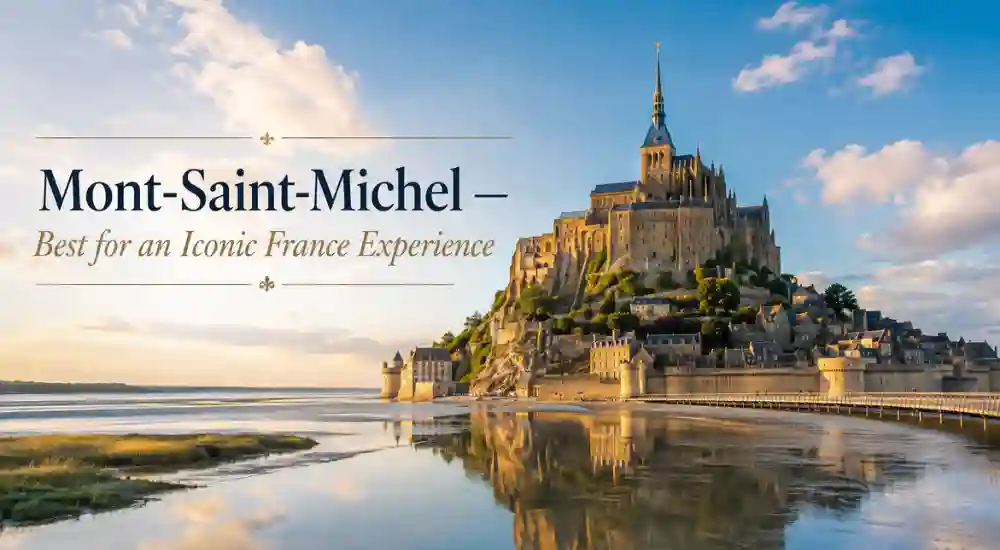
6. Mont-Saint-Michel — Best for an Iconic France Experience
Rising above tidal flats, Mont-Saint-Michel creates one of France’s most recognizable views. Walk through the medieval lanes toward the abbey, explore the ramparts, and watch how the surrounding landscape changes with the tides.
Many people visit on a day trip, but staying nearby or overnight can give you a quieter experience after daytime crowds leave. Mont-Saint-Michel works well as part of a Normandy or Brittany road trip, rather than as an isolated stop. Check current access and tide information before visiting. If you enjoy medieval architecture, religious history, and unusual landscapes, this deserves a high position on your list of must-see places in France.
7. Lyon — Best for Food Lovers
Lyon should be high on your list if food shapes the way you travel. Traditional bouchons, bakeries, markets, and Les Halles de Lyon Paul Bocuse help explain why the city holds such a strong place in French gastronomy.
Food isn’t Lyon’s only strength. Explore Vieux Lyon, walk along the Rhône and Saône, and climb toward Fourvière for broad city views. Lyon also works extremely well for travelers exploring France by train. SNCF lists high-speed Paris–Lyon journeys from under two hours on some services. Two or three days usually give visitors enough time for major sights without rushing through meals.
8. Bordeaux — Best for Wine and Elegant Architecture
Bordeaux combines an elegant historic center with access to one of the world’s best-known wine regions. Walk beside the Garonne, explore central squares and markets, then use another day to visit vineyards around Saint-Émilion or other nearby wine areas.
The city appeals even to travelers who aren’t serious wine enthusiasts because architecture, restaurants, riverfront walks, and museums create a complete city break. Bordeaux also fits naturally into a France train itinerary; SNCF lists some Paris–Bordeaux TGV journeys at just over two hours. Stay two to four days if you want to combine city sightseeing with a proper French wine region experience.
9. Annecy — Best for Romance and Alpine Scenery
Annecy offers a beautiful combination of an Alpine lake, canals, mountains, and a compact old town. Spend your time walking through the historic center, cycling beside Lake Annecy, taking a boat ride, or simply enjoying the waterfront.
The destination works especially well for couples and travelers searching for romantic places in France, but outdoor lovers will also find plenty to do. Summer brings swimming and water activities, while spring and early fall can feel calmer. Two or three days give you enough time to enjoy both town and lake. Annecy also makes a gentle introduction to the landscapes of the French Alps.
10. Alsace — Best for Storybook Villages
Alsace feels different from many other France travel destinations. Strasbourg and Colmar combine colorful buildings, canals, historic streets, regional food, and a blend of French and German influences. Smaller places such as Eguisheim and Riquewihr add the storybook villages many travelers imagine before visiting.
The Alsace Wine Route makes the region particularly attractive for road trips, although Strasbourg and Colmar remain accessible by rail. Fall suits travelers interested in vineyard scenery, while the Christmas season transforms many towns with markets and decorations. Alsace works especially well for travelers who enjoy architecture, food, wine, and beautiful villages rather than major metropolitan attractions.
11. Burgundy — Best for Wine, Food, and Slow Travel
Burgundy rewards travelers who prefer vineyards, long meals, historic towns, and slower days. Dijon and Beaune make useful bases for discovering regional cuisine, wine culture, medieval streets, and surrounding countryside.
The region belongs on any list of the best places in France for wine lovers, but you don’t need deep wine knowledge to enjoy it. Scenic drives, cycling routes, local markets, and historic buildings provide plenty of alternatives. Burgundy works best when you avoid rushing from vineyard to vineyard. Spend two or three nights, choose a comfortable base, and give yourself time to enjoy the landscapes and food that make this part of France distinctive.
12. Corsica — Best for Beaches and Outdoor Adventure
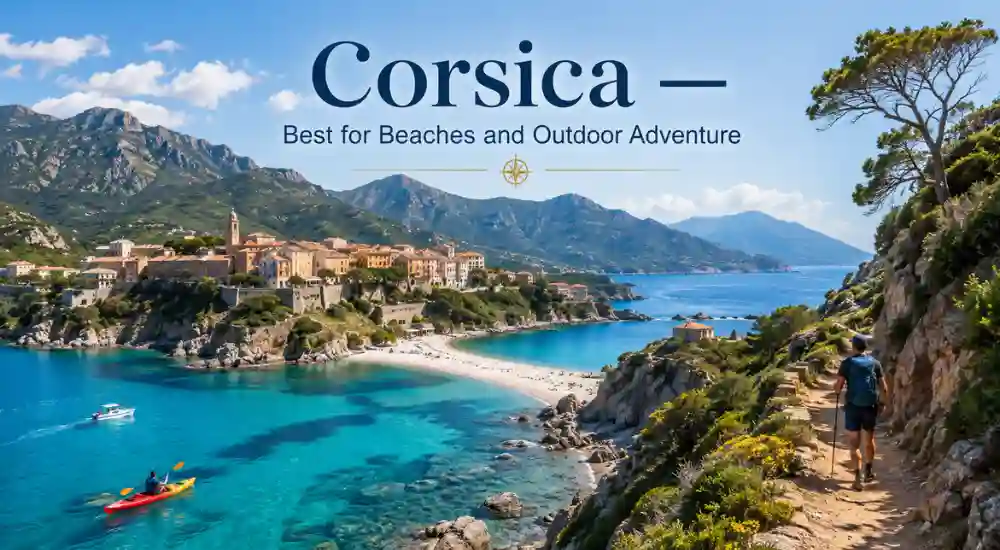
Corsica combines clear water, rugged mountains, coastal roads, historic towns, and some of the most memorable beaches in France. Bonifacio attracts visitors with its dramatic cliffside setting, while Ajaccio provides history, restaurants, and access to the western coast.
The island suits travelers who want more than a standard beach vacation. Hiking, swimming, boat trips, and road trips can all become part of the same journey. A car often makes exploring easier because many scenic areas sit beyond the main towns. Give Corsica five to seven days if possible. It is especially rewarding for travelers who want nature, beaches, and outdoor adventure in one destination.
13. French Alps and Chamonix — Best for Mountains and Hiking
For dramatic mountain scenery, head toward Chamonix and the French Alps. Chamonix sits beneath the Mont Blanc massif and gives travelers access to hiking trails, mountain viewpoints, cable-car experiences, and winter sports.
Summer attracts hikers and nature lovers, while winter brings skiers and snowboarders. Weather can change quickly in mountain environments, so check local conditions before outdoor activities and choose routes that match your experience. The region provides a strong contrast to Paris, Provence, and coastal France. Travelers searching for the best nature destinations in France should consider spending at least two or three days here rather than treating the Alps as a quick sightseeing stop.
14. Brittany — Best for Rugged Coastlines and Fewer Crowds
Brittany deserves more attention from travelers looking for unique places to visit in France. The region offers fortified towns, fishing harbors, beaches, rugged cliffs, and a strong local identity. Saint-Malo and Dinan make excellent starting points, while the Pink Granite Coast provides memorable seaside scenery.
Brittany can feel more relaxed than some famous Mediterranean destinations, especially for travelers interested in coastal walks and road trips. Try local crêpes and seafood while exploring smaller communities. The weather can change quickly near the coast, so pack layers even in warmer months. Brittany is a strong choice for repeat visitors who want to discover France beyond Paris.
15. Dordogne — Best for Castles, Villages, and Road Trips
The Dordogne brings together medieval villages, castles, caves, rivers, and green countryside. Sarlat-la-Canéda makes a popular base, while prehistoric sites around Lascaux add another layer of history. Canoeing along the Dordogne River provides a completely different view of the landscape.
This region works especially well for families and travelers searching for underrated places in France. A car makes exploring much easier because many villages and attractions sit in rural areas. Stay several nights and avoid changing hotels every day. Dordogne rewards slower travel, making it an excellent alternative for visitors who want castles and historic villages without focusing only on France’s most famous cities.
16. Champagne — Best for Wine Lovers and Easy Trips from Paris
The Champagne region offers vineyards, historic towns, underground cellars, and one of France’s most famous food-and-drink traditions. Reims and Épernay make convenient bases for visiting Champagne houses and learning how the region’s sparkling wine is produced.
Reims also adds important architecture and history through its famous cathedral. Champagne works as a day trip from Paris, but an overnight stay allows a more relaxed visit and makes it easier to explore beyond one city. Reserve popular cellar experiences ahead during busy periods. For travelers interested in French wine regions, Champagne offers an easy combination of culture, countryside, and tasting experiences.
Best Places to Visit in France Besides Paris
Travelers often focus heavily on Paris, but many of the most beautiful places in France lie outside the capital. Choose Provence for villages and countryside, Normandy for history, the Loire Valley for castles, and Bordeaux for wine. Lyon offers excellent food, while Annecy combines mountains with lake scenery.
For beaches, consider the French Riviera or Corsica. Alsace suits travelers who love small historic towns, and Brittany provides rugged Atlantic scenery. If you have seven to ten days, pairing Paris with one or two regions usually creates a more balanced trip than trying to race through five or six destinations.
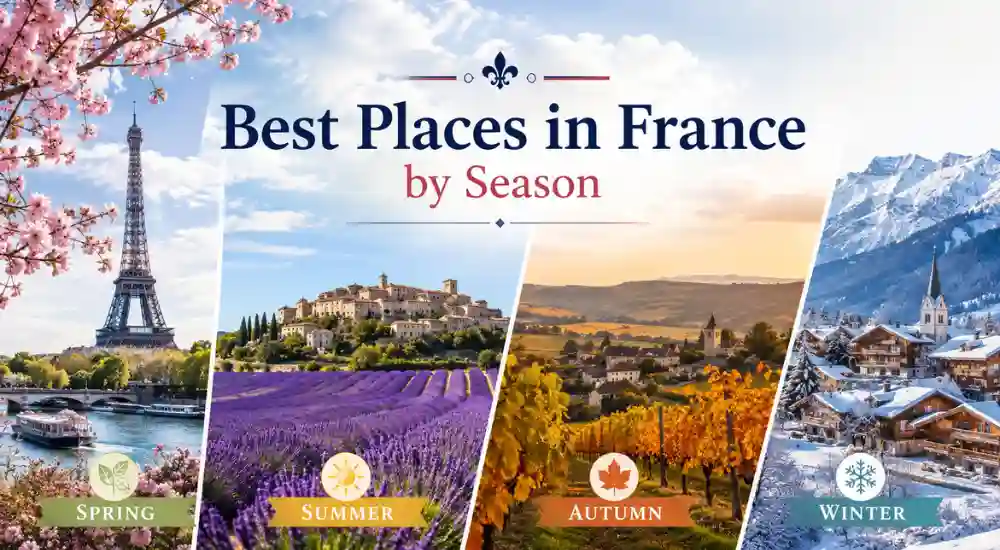
Best Places in France by Season
France changes significantly through the year, so the best time to visit France depends on your destination and interests.
Spring
Paris, Provence, and the Loire Valley work particularly well in spring. Gardens return to life, sightseeing can feel more comfortable than during peak summer heat, and countryside trips become appealing.
Summer
Choose Corsica, Brittany, Annecy, or the French Alps for beaches and outdoor adventures. Summer brings high demand, so reserve popular accommodation and major attractions early.
Fall
Bordeaux, Burgundy, Champagne, and Alsace fit naturally into fall trips, especially for travelers interested in wine regions, food, and changing landscapes.
Winter
Visit Strasbourg and Alsace for festive atmosphere or head to Chamonix and the Alps for winter sports.
How Many Days Do You Need in France?
There is no perfect number of days for a France itinerary, but fewer bases usually create a better trip. With five days, focus on Paris and perhaps one nearby excursion. With seven days, combine Paris with one region such as Normandy or the Loire Valley.
A 10-day France itinerary gives you enough time for Paris plus two well-connected destinations. With two weeks, you can explore three or four bases at a more comfortable pace. Avoid treating travel days as full sightseeing days. France may look compact on a map, but transfers, hotel changes, meals, and local transportation all take valuable time.
Best Places to Visit in France Without a Car
You can visit many of the best places in France without a car. Paris, Lyon, Bordeaux, Strasbourg, Reims, Nice, and several other cities connect well by rail. SNCF says its TGV network serves more than 200 cities across France and Europe.
A car becomes more useful when you want to explore rural Provence, Dordogne, remote Alpine areas, Corsica, or small wine villages. Build your itinerary around rail-friendly bases if you dislike driving. From those bases, you can use local trains, buses, tours, or occasional taxis for shorter excursions. This approach also removes the stress of parking in busy historic centers.
France by Train vs Car — Which Is Better?
Choose train travel in France when your itinerary focuses on major cities. High-speed services make routes such as Paris–Lyon and Paris–Bordeaux practical, and SNCF allows travelers to search and book tickets online. Trains also remove parking and city-driving problems.
Choose a rental car for rural areas where villages and attractions sit far apart. Provence, Dordogne, Brittany, Burgundy, and parts of Corsica often become easier with your own transport. A mixed approach can work even better: travel between major cities by train, then rent a car only for the countryside portion of your France road trip.
Best Time to Visit France
For many travelers, spring and early fall provide a comfortable balance of sightseeing weather and manageable crowds, but no single season works best everywhere. Summer makes sense for Corsica, Brittany, Alpine hiking, and beach trips, although popular destinations become busier.
Winter can be excellent for Alpine skiing, Christmas markets, museums, and city breaks. Always consider the region rather than treating France as one climate zone. Mediterranean Provence can feel very different from Brittany or Chamonix on the same date. If flexible dates are possible, the shoulder season in France often gives travelers a calmer experience than the busiest summer weeks.
Common Mistakes First-Time Visitors Make in France
The biggest mistake is trying to visit too much. A packed itinerary may look impressive, but repeated hotel changes can quickly reduce your actual sightseeing time. Choose fewer destinations and explore them properly.
Another mistake involves transport. Use trains when they make sense, but don’t expect them to reach every countryside village. Reserve high-demand attractions before arrival when required or strongly recommended. For example, the Louvre currently requires reservations for most visitors during July and August 2026, while official Eiffel Tower tickets can sell out online for particular dates. Finally, check local opening days because museums, restaurants, and smaller businesses may close on different days.
FAQs About Places to Visit in France
What are the best places to visit in France for first-time visitors?
Paris, the Loire Valley, Normandy, Provence, and the French Riviera make excellent choices. For a first trip, combine Paris with one or two regions instead of trying to see the entire country.
What is the most beautiful part of France?
Beauty depends on your interests. Provence offers lavender and villages, the French Alps provide mountain scenery, while Corsica and the French Riviera offer dramatic coastal landscapes.
Where should I go in France besides Paris?
Consider Lyon, Bordeaux, Annecy, Provence, Normandy, Alsace, Loire Valley, Brittany, or Corsica. Each offers a different side of French culture and landscape.
What are the best cities to visit in France?
Some of the best cities in France include Paris, Lyon, Bordeaux, Nice, Strasbourg, Marseille, and Avignon. Choose based on food, history, beaches, nightlife, and nearby day trips.
Can you travel around France without a car?
Yes. France by train works especially well between major cities, and the TGV network reaches a large number of destinations. A car becomes more useful for rural regions and small villages.
How many days do you need in France?
Allow at least seven to ten days for a first trip if possible. This gives you time for Paris plus one or two additional destinations without constantly moving between hotels.
What is the best month to visit France?
There is no universal best month, but May, June, September, and early October can suit many sightseeing trips. Your ideal timing changes if your priority is skiing, lavender, beaches, Christmas markets, or wine regions.
Final Thoughts
The best places to visit in France go far beyond one famous city. Paris delivers art and iconic landmarks, while Provence and the French Riviera offer warmer landscapes. Normandy and the Loire Valley bring history, Lyon and Bordeaux shine for food and wine, and Annecy, Corsica, and the French Alps reward nature lovers.
Build your trip around what you actually enjoy rather than the number of destinations you can fit on a map. Whether you want beautiful villages, French wine regions, beaches, castles, historic cities, or mountain adventures, choosing fewer places and giving them more time usually creates a richer and more memorable France vacation.