
The best travel destinations in 2026 range from Route 66-era Santa Fe and America’s 250th-anniversary celebrations in Washington, DC, to Dominica’s rainforests, Cádiz’s Atlantic waterfront, Botswana’s Okavango Delta, and Ishikawa’s craft-rich side of Japan. Some have a clear 2026-only reason to visit; others earned their place because they remain unusually strong choices for a specific traveler.
This guide goes beyond inspiration. You’ll find ideal trip lengths, seasonal trade-offs, transportation realities, relative budget levels, who each place suits, and reasons you might choose somewhere else.
Quick Answer: Where Are the Best Places to Travel in 2026?
For a U.S. traveler, Santa Fe is one of 2026’s strongest short cultural trips, while Washington, DC has a uniquely timely year because of America’s 250th-anniversary programming. Dominica excels for active Caribbean travel, Cádiz for beach-and-history combinations, Ishikawa for a slower Japan itinerary, and Botswana for a major wildlife trip.
Travelers watching their budget should look closely at Uzbekistan, Fez, and Cádiz, while travelers willing to spend more for remote nature may prefer Botswana. For a road trip, the Oregon Coast remains difficult to beat.
Best Travel Destinations 2026 at a Glance
Budget levels below compare day-to-day travel costs and accommodation broadly; they do not include international airfare.
| Destination | Best For | Ideal Stay | Best Timing | Budget Level | Car? |
| Santa Fe, New Mexico | Art, food, Route 66 | 3–4 days | Spring, fall | Mid-range | Helpful for day trips |
| Washington, DC | Museums, U.S. history | 3–5 days | Spring, fall | Mixed | Usually no |
| Oregon Coast | Road trips, scenery | 4–7 days | Summer, early fall | Mid-range | Yes |
| Theodore Roosevelt NP | Wildlife, badlands | 2–3 days | Late spring–fall | Mid-range | Yes |
| Québec | Culture + wilderness | 4–8+ days | Summer, fall, winter | Mid-range | Depends on route |
| Mexico City | Food, museums, neighborhoods | 4–5 days | Dry-season months | Mixed | Usually no |
| Dominica | Hiking, rainforest | 5–7 days | Drier months | Mid-range | Helpful |
| Cádiz, Spain | Beaches + history | 2–3 days | Spring, early fall | Mid-range | No in city |
| Sardinia, Italy | Coast, villages, hiking | 5–8 days | June, September | Mid-range–premium | Very helpful |
| Fez, Morocco | Medina culture, crafts | 2–3 days | Spring, fall | Budget–mid-range | No in medina |
| Uzbekistan | Silk Road cities | 7–10 days | Spring, fall | Budget–mid-range | Not essential |
| Ishikawa, Japan | Crafts, gardens, slower Japan | 3–5 days | Spring, fall | Mid-range | Usually no in Kanazawa |
| Abu Dhabi | Museums, architecture | 3–4 days | Late fall–spring | Mid-range–premium | Helpful |
| Botswana | Safari, wilderness | 5–8+ days | Depends on safari goals | Premium | Organized transfers |
| Uruguay | Coast, wine, slow travel | 7–10 days | Southern summer/fall | Mid-range | Helpful outside cities |
| Adelaide, Australia | Food, wine, regional trips | 4–7 days | Spring or fall | Mid-range–premium | Helpful regionally |
TL;DR
- Santa Fe is ideal for art, food, Route 66 history, and short U.S. trips.
- Washington, DC stands out in 2026 for museums and America’s 250th anniversary events.
- Dominica is best for rainforest hikes, waterfalls, diving, and active Caribbean travel.
- Cádiz and Sardinia combine beaches, culture, history, and slower coastal experiences.
- Uzbekistan and Fez offer strong cultural value for history and architecture lovers.
- Ishikawa is a great choice for travelers seeking a quieter, culture-rich Japan trip.
- Botswana suits wildlife-focused travelers planning a premium safari experience.
- Oregon Coast is one of the best options for scenic road trips and outdoor adventures.
- Mexico City works well for food, museums, neighborhoods, and car-free city exploring.
- Choose your 2026 destination based on budget, season, trip length, transportation, and travel style.
How These 2026 Destinations Were Chosen
This isn’t a list of places selected simply because another publication called them trendy. Each destination had to offer a clear travel advantage for at least one type of traveler.
Priority went to destinations with a strong combination of distinct experiences, realistic trip-planning value, seasonal appeal, transportation practicality, cultural or natural depth, and a reason to consider them now.
A destination did not need a one-off 2026 festival to qualify. Forcing every location into a “go now before it’s gone” narrative would be misleading. Instead, genuine 2026 developments are highlighted where they materially change the trip.
Santa Fe, New Mexico — Best for Art, Food and Route 66 History

Best for: Couples, culture lovers, food-focused weekends and road-trippers
Ideal stay: 3–4 days
Biggest advantage: A compact cultural city with an unusually strong 2026 hook
Santa Fe already makes a compelling long weekend with its adobe architecture, Canyon Road galleries, Museum Hill, New Mexican cuisine, Native American arts, historic Plaza, and high-desert landscape. In 2026, however, there is a more specific reason to go.
Route 66 turns 100 in 2026, and Santa Fe sat on the highway’s original alignment before the road was later rerouted. The city’s official tourism organization is running centennial-related programming and exhibitions throughout the year.
Why Santa Fe Works Especially Well in 2026
You don’t need to turn your vacation into a full Chicago-to-California road trip. A Santa Fe stay lets you combine the centennial story with places that matter independently of Route 66.
Walk around the Plaza, explore Canyon Road, make time for Museum Hill, and then use a car for excursions toward northern New Mexico. The compact core keeps the trip manageable even when you only have a few vacation days.
Smart planning move: Spend your first two days mostly on foot, then rent or use a car only when you leave central Santa Fe.
Trade-off: Santa Fe sits at substantial elevation. Give yourself a calmer first day if altitude usually affects you, and take sun exposure seriously in the high desert.
Washington, DC — Best for Museums and a Once-in-a-Generation History Trip
Best for: Families, museum lovers, history travelers and car-free city breaks
Ideal stay: 3–5 days
Biggest advantage: Many major attractions can be combined without renting a car
Washington is always one of America’s strongest museum destinations, but 2026 is genuinely different. July 4 marked the 250th anniversary of the Declaration of Independence, and anniversary-related exhibitions, cultural programs and events continue across the city.
Several major museum and public-space developments were also tied to 2026, including work around the Tidal Basin and National Mall institutions.
How to Plan DC Without Burning Yourself Out
Don’t build the trip by writing down every Smithsonian museum you recognize. Group each day geographically.
One day can focus on the National Mall and nearby museums. Another can combine Capitol Hill with surrounding neighborhoods. Georgetown, Dupont Circle and other areas help keep the trip from feeling like one long history lesson.
Metrorail plus walking works well for most first-time sightseeing.
If you’re visiting during a major 2026 event weekend, verify transportation changes and access before leaving your hotel. For example, special anniversary programming continues to affect parts of the capital’s event calendar.
Trade-off: Trying to see six major museums in one day usually makes the city less enjoyable, not more.
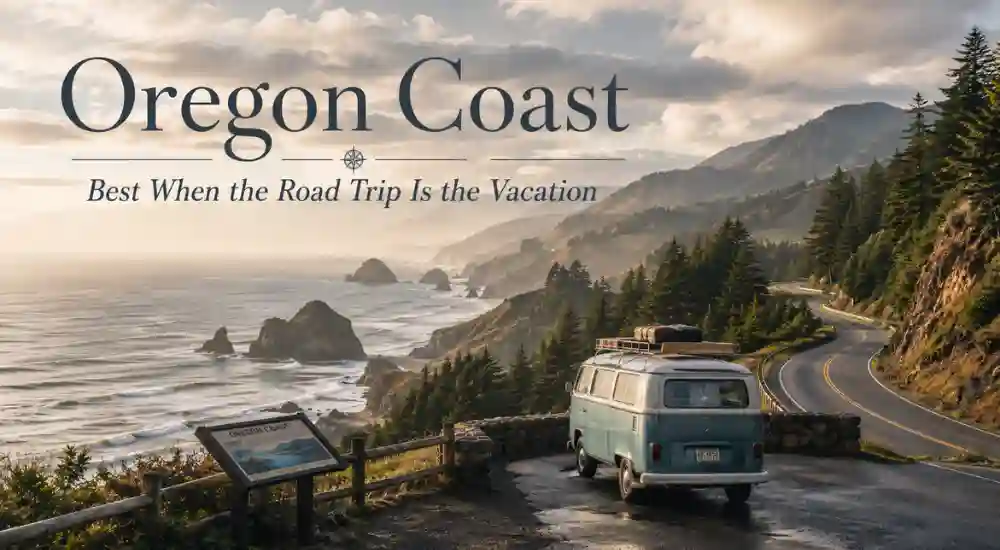
Oregon Coast — Best When the Road Trip Is the Vacation
Best for: Road-trippers, photographers, couples and outdoor families
Ideal stay: 4–7 days
Biggest advantage: Beaches, forests, headlands and small towns on one driving route
The Oregon Coast isn’t a destination where you should race from attraction to attraction. Its strength comes from the spaces between them: sea stacks, headlands, dune country, fishing towns, lighthouses and spontaneous viewpoints along the coast.
Travel Oregon specifically highlights the region for coastal drives, beaches and hiking, making a car the practical choice for travelers who want more than one town.
Build the Trip Around Regions, Not Checkpoints
Instead of trying to sleep somewhere different every night, choose two or three bases.
You might pair the northern coast around Cannon Beach with a central or southern stretch. That creates time for hiking, seafood stops and weather delays without turning each morning into another hotel checkout.
Remember that the Pacific here stays cold. A sunny beach afternoon doesn’t automatically mean comfortable swimming conditions.
Travelers using Portland as a gateway in September or October 2026 should also check current road conditions; Travel Oregon has flagged major regional road work during parts of that period.
Trade-off: This is a much weaker choice if you dislike driving or want guaranteed hot beach weather.
Theodore Roosevelt National Park — Best for Badlands Without a Packed Itinerary
Best for: Wildlife watchers, hikers, photographers and national park road trips
Ideal stay: 2–3 days
Biggest advantage: Scenic badlands and wildlife in a manageable park visit
Theodore Roosevelt National Park gives you something different from America’s alpine and desert headline parks. The landscape here is rolling badlands, prairie, Little Missouri River country and broad open sky.
Its North and South Units offer scenic drives, hiking and wildlife viewing, while Medora makes a logical base for the South Unit.
Why 2026 Is a Better Year for the South Unit
A major rehabilitation of the South Unit Scenic Loop Road was completed in late 2025. The National Park Service now describes a paved 36-mile scenic drive through the South Unit and recommends allowing at least two hours before stops and hikes.
That makes 2026 a particularly sensible year for travelers who previously postponed a visit because of road work.
Wildlife should be enjoyed at a distance. Never approach bison or other animals for photographs.
Smart pairing: Combine the park with a broader North Dakota or northern Great Plains road trip rather than flying in for one park day.
Trade-off: The two main park units are separated, so seeing both requires more driving than the map may initially suggest.
Québec, Canada — Best for Pairing City Culture With Indigenous-Led Wilderness
Best for: Travelers who want culture and nature in the same trip
Ideal stay: 4–6 days for cities; longer for northern Québec
Biggest advantage: One province can support completely different travel styles
Québec is more useful as a 2026 destination when you stop thinking of it as one trip.
You can build an easy urban vacation around Montréal or Québec City, or travel much farther north into Eeyou Istchee Baie-James for wilderness and Indigenous cultural experiences. Québec’s tourism authority highlights Indigenous-led experiences in the north, including Corporation Nibiischii.
The Important Planning Distinction
A Montréal weekend and a Nibiischii wilderness trip should not share the same itinerary.
Corporation Nibiischii offers nature activities and cultural interpretation around the Waconichi, Albanel and Mistassini lake region, but reaching northern Québec requires far more advance planning than a city stay.
For most first-time visitors, Montréal provides the easiest car-light base. Travelers heading north should confirm seasonal operating dates, lodging and transportation directly before committing.
Trade-off: Don’t add a remote northern experience as an afterthought to a four-day Montréal vacation. The distances deserve their own trip time.
Mexico City — Best for Travelers Who Want Every Day to Feel Different

Best for: Food lovers, museum travelers, couples, solo travelers and repeat visitors to Mexico
Ideal stay: 4–5 days
Biggest advantage: Extraordinary variety within one city
Mexico City doesn’t need a temporary event to justify a place on a 2026 travel list.
Few cities let you spend one day moving between monumental history and major museums, then make the next day almost entirely about neighborhood cafés, parks, markets, architecture and food. Mexico’s official tourism platform continues to feature national cultural, culinary and event-based travel across the country in 2026.
Plan by Neighborhood, Not by Attraction Ranking
A common first-trip mistake is zigzagging across the city.
Build one day around Centro Histórico, another around Chapultepec and nearby museums, and another around areas such as Roma, Condesa or Coyoacán.
The National Museum of Anthropology deserves enough time that it should not be squeezed between several distant stops.
Metro, Metrobús, walking and reputable ride services can handle much of a first visit, so a rental car is usually unnecessary for central sightseeing.
Trade-off: The city’s scale can turn badly planned sightseeing into hours of transportation.
Before traveling internationally, U.S. travelers should check the latest destination-specific State Department information rather than relying on an old blog’s entry or security advice.
Dominica — Best for a Caribbean Trip Built Around Adventure
Best for: Hikers, divers, active couples and nature-focused travelers
Ideal stay: 5–7 days
Biggest advantage: The landscape, not the resort, becomes the main attraction
Dominica is not the Caribbean island to choose if your entire plan is a wide white-sand resort beach.
Choose it for rainforest, volcanic terrain, waterfalls, river valleys, diving, hiking and the Waitukubuli National Trail. The island’s official tourism organization positions outdoor adventure at the center of the visitor experience.
Boiling Lake Requires More Planning Than a Casual Hike
The Boiling Lake trail must be hiked with a licensed local guide, according to Discover Dominica. The trail crosses challenging volcanic and rainforest terrain, so this is one place where guide requirements should be treated as part of the trip rather than an inconvenience.
Wet footwear and mud are normal possibilities. Leave flexibility around demanding hiking days instead of stacking strenuous excursions back-to-back.
Dominica also sits within the Atlantic hurricane region. The official Atlantic hurricane season runs June 1 through November 30, so late-summer and fall travelers should monitor forecasts and maintain flexible plans even when seasonal outlooks appear favorable.
Trade-off: Travelers wanting effortless resort infrastructure may prefer another Caribbean island.
Cádiz, Spain — Best for a Spain Trip With Beach Time and History
Best for: Couples, food travelers, slower Spain itineraries and beach-city combinations
Ideal stay: 2–3 days
Biggest advantage: Historic sightseeing and Atlantic beaches share the same compact city
Cádiz gives you the unusual pleasure of finishing a morning of old-city sightseeing and reaching the beach without rebuilding your day around transportation.
Spain’s official tourism site describes Cádiz as a Phoenician-founded city with a long commercial history, major cultural heritage and beaches on the Costa de la Luz.
Why Cádiz Can Be Smarter Than Adding Another Big City
For travelers already doing Madrid or Seville, Cádiz changes the rhythm.
Walk the old quarters, visit the cathedral area, trace the waterfront and spend time at La Caleta rather than adding another dense museum-heavy city stop. Spain’s tourism authority specifically recommends exploring Cádiz on foot through its seafront and traditional neighborhoods.
You won’t need a car for the historic center. A vehicle becomes more interesting if the trip expands across Cádiz province or the wider Costa de la Luz.
Late spring and early fall usually make more sense for travelers who want beach time without building the trip around the hottest weeks.
Trade-off: Cádiz is a weaker fit if your priority is blockbuster nightlife or a long list of famous monuments.
Sardinia, Italy — Best for Travelers Who Want More Than a Beach Resort
Best for: Couples, coastal road trips, hikers and travelers with at least a week
Ideal stay: 5–8 days
Biggest advantage: Beaches, archaeology, villages and rugged interior landscapes on one island
Sardinia becomes much more rewarding when you stop treating it as one giant beach.
Italy’s official tourism site emphasizes the island’s coastline, nuraghi, archaeological heritage, traditional villages and inland landscapes, while routes such as the 100 Towers Walk show how much of the island can be experienced actively.
The Smartest First-Trip Strategy
Pick one or two regions, not the entire island.
A northern beach trip, a Cagliari-centered southern itinerary, and an inland hiking-and-village trip can feel like three different vacations. Trying to combine everything in five days creates more windshield time than memories.
A car is very useful outside the main cities and transport corridors. Some celebrated coves and protected natural areas also require more planning than simply arriving at a parking lot.
June and September can offer a useful balance between coastal weather and peak-season intensity.
Trade-off: Sardinia is not ideal for travelers who want to stay car-free and see several different parts of the island quickly.

Fez, Morocco — Best for Travelers Who Want History That Still Feels Lived In
Best for: Cultural travelers, photographers, architecture lovers and craft-focused trips
Ideal stay: 2–3 full days
Biggest advantage: The old city functions as a living urban environment, not a museum set
Fez is a destination for people who enjoy discovery at walking speed.
The Moroccan National Tourist Office describes Fez el-Bali as the core historic medina, with Bab Boujloud serving as a common gateway into its network of streets, crafts and architecture. The medina is recognized by UNESCO for its cultural value.
Don’t Try to Navigate the Medina Like Manhattan
The pleasure of Fez comes partly from accepting that the old city is not built around a neat grid.
Traditional workshops, religious buildings, courtyards, markets and food spaces sit within a dense pedestrian network. A knowledgeable local guide can be particularly useful during your first deeper exploration—not because every traveler needs hand-holding, but because context changes what you’re looking at.
If you have additional days, Fez pairs naturally with Meknes or the Middle Atlas.
Trade-off: Travelers who strongly prefer wide streets, predictable navigation and modern urban layouts may find the medina intense.
Uzbekistan — Best for a Multi-City Silk Road Journey
Best for: History lovers, architecture travelers, photographers and value-conscious international trips
Ideal stay: 7–10 days
Biggest advantage: Several major historic cities can fit into one coherent itinerary
Uzbekistan is a rare destination where moving between cities strengthens the trip rather than fragmenting it.
Tashkent, Samarkand, Bukhara and Khiva create a natural cultural route through Islamic architecture, trading history, bazaars, courtyards and historic neighborhoods. Uzbekistan’s official tourism platform promotes routes linking these major destinations, including multi-day itineraries that use rail for parts of the journey.
Seven Days Is the Minimum I Would Plan
Trying to “do” Samarkand, Bukhara and Khiva over a rushed long weekend defeats much of the appeal.
A better plan gives each historic city breathing room and leaves time for Tashkent at the start or finish. Official tourism material highlights Samarkand, Bukhara, Shakhrisabz and Khiva among the country’s major heritage cities.
Spring and fall generally make long outdoor sightseeing days easier than the height of summer.
Trade-off: Uzbekistan works best when you’re willing to change hotels several times. Travelers wanting a one-base vacation should look elsewhere.
Check current passport and entry requirements before booking; international rules can change independently of travel articles.
Ishikawa, Japan — Best for Japan Beyond the Tokyo–Kyoto Rush
Best for: Repeat Japan visitors, cultural travelers, craft lovers and slower itineraries
Ideal stay: 3–5 days
Biggest advantage: Major cultural depth without requiring another megacity stay
Ishikawa gives Japan travelers a different tempo.
Kanazawa combines gardens, samurai history, contemporary art, markets, cuisine and traditional crafts within a city that is easier to digest than Tokyo. Elsewhere in the prefecture, Kaga and Hakusan add hot springs, mountain scenery and outdoor experiences.
Start With Kanazawa, Then Decide How Far to Expand
First-time visitors can comfortably build several days around Kenrokuen Garden, historic districts, markets, museums and craft experiences.
The Noto Peninsula requires more care. Ishikawa’s official tourism site still maintains a dedicated update page following the 2024 earthquake and directs travelers to current maps of open attractions, accommodation and transportation.
That means the responsible approach in 2026 is simple: don’t assume old itineraries are current. Check what is open before adding Noto.
For hiking, Mt. Hakusan’s main season runs during the warmer months, with mountain facilities and reservations requiring additional planning.
Trade-off: If this is your only Japan trip and you have just five days, Tokyo or Kyoto may still make more sense.
Abu Dhabi — Best for a Museum-Focused Winter Escape
Best for: Museum lovers, architecture travelers, families and winter-sun trips
Ideal stay: 3–4 days
Biggest advantage: Several major cultural institutions now sit close together
Abu Dhabi’s Saadiyat Cultural District has changed the balance of a city trip.
Visitors can now combine Louvre Abu Dhabi, Zayed National Museum, Natural History Museum Abu Dhabi and teamLab Phenomena Abu Dhabi within the same cultural district. Abu Dhabi’s official tourism site confirms the current museum cluster and notes that the institutions are close to one another.
Why 2026 Is Particularly Strong for Culture Travelers
This is no longer a trip where one headline museum carries the entire arts itinerary.
Zayed National Museum explores the UAE’s history and cultural development, while the Natural History Museum spans natural and planetary history. teamLab adds an immersive digital-art experience, giving families and adult travelers very different ways to use the same district.
Give Saadiyat at least a full day if museums are a priority.
Outdoor sightseeing is generally more comfortable outside the harshest summer heat.
Trade-off: Abu Dhabi can become expensive quickly if luxury hotels, premium dining and private experiences dominate your itinerary.
Always verify current museum hours and ticketing before travel rather than relying on a fixed schedule published months earlier.
Botswana — Best for a Major Wildlife Trip
Best for: Safari travelers, wildlife photographers, honeymooners and once-in-a-few-years trips
Ideal stay: 5–8 days minimum
Biggest advantage: An extraordinary wetland safari environment
Botswana sits at the opposite end of the spectrum from a cheap spontaneous city break.
The Okavango Delta is a UNESCO-recognized inland wetland system and one of Botswana’s flagship wildlife areas. Botswana Tourism highlights safari experiences that can include game drives, mokoro excursions, boating and other wilderness activities, depending on location and season.
Choose the Season Based on the Experience, Not a Generic “Best Month”
Water levels, wildlife movement and access patterns change the character of an Okavango trip.
That means the right question isn’t simply, “When is Botswana best?” It is, “Do I care most about water-based Delta experiences, wildlife concentrations, birding or lower-demand travel?”
Many safari camps have limited capacity, so this is one destination where early planning can matter considerably.
Wildlife sightings are never guaranteed, and instructions from guides around animals and waterways should always take priority over getting a photograph.
Trade-off: Botswana is generally among the higher-budget destinations on this list. If value is your primary concern, Uzbekistan, Fez or Cádiz may fit better.

Uruguay — Best for a Relaxed South America Trip
Best for: Couples, wine travelers, coastal road trips and slower vacations
Ideal stay: 7–10 days
Biggest advantage: City, wine country, colonial history and Atlantic coast without a frantic itinerary
Uruguay is easy to overlook between Argentina and Brazil, which is precisely why it can work.
A first trip can combine Montevideo, historic towns, wine experiences and the Atlantic coast without requiring constant long-haul flights within the country. Uruguay’s tourism ministry highlights Montevideo, coastal regions and experiences such as Cabo Polonio across its destination platform.
Build the Trip Around Variety, Not Speed
Spend enough time in Montevideo to enjoy the city instead of treating it as an airport stop.
Then choose between historic Colonia, wine-focused excursions, resort areas or a more nature-oriented coastal journey. Uruguay’s tourism platform also promotes wine experiences around Montevideo and Canelones.
A rental car becomes increasingly useful once the itinerary moves beyond the major urban corridors.
Trade-off: Atlantic beach areas have a much stronger seasonal rhythm than the capital. If the coast is your priority, your travel dates matter.
Adelaide and South Australia — Best for Food, Wine and an Easy Regional Extension
Best for: Food travelers, couples, wine trips and Australia repeat visitors
Ideal stay: 4–7 days
Biggest advantage: A manageable city sits close to several very different regions
Adelaide gives travelers something Australia’s biggest cities sometimes struggle to provide: an easy transition from city break to regional trip.
Adelaide Central Market, galleries, city beaches and a strong restaurant scene can anchor the urban portion. Nearby options include the Adelaide Hills, Barossa, McLaren Vale and other South Australian regions. Tourism Australia highlights Adelaide’s markets, festivals, beaches and wine regions as major parts of the visitor experience.
Choose One Regional Extension Instead of Collecting Wine Regions
Four days is enough for Adelaide plus a taste of the surroundings. A week gives you more room for an overnight outside the city.
South Australia’s official tourism site currently provides dedicated trip-planning resources for food and drink, road trips, Aboriginal cultural experiences, wildlife, accessible travel and regional itineraries.
Accessibility planning is also better documented here than for many destinations; South Australia’s tourism authority maintains specific accessible-travel resources covering transportation, stays and attractions.
Remember that Australian seasons run opposite those in the continental United States.
Trade-off: If this is your first and only Australia trip, Sydney or Melbourne may outrank Adelaide depending on your priorities.
Best 2026 Travel Destinations by Trip Type
Still undecided? Start with the trip you want rather than the country.
Best for a Short U.S. Getaway
• Santa Fe — food, art and Route 66 history
• Washington, DC — museums and 2026 anniversary programming
• Theodore Roosevelt National Park — wildlife and badland scenery
Best for Beaches Plus Culture
• Cádiz — historic center with Atlantic beaches
• Sardinia — coastline plus villages and archaeology
• Uruguay — beach time paired with wine and city travel
Best for Adventure
• Dominica — rainforest hiking, diving and volcanic terrain
• Botswana — wildlife and wetland safari
• Oregon Coast — driving, hiking and coastal landscapes
Best for Culture
• Fez — medina life and traditional crafts
• Uzbekistan — Silk Road architecture and multi-city history
• Ishikawa — Japanese crafts, gardens and samurai heritage
Best for Families
• Washington, DC — museums and public transportation
• Abu Dhabi — museums, beaches and family attractions
• Adelaide — manageable city plus regional day trips

Best Destinations by Budget
No destination has one fixed daily cost. Season, airfare, hotel standard and booking time can completely change the total.
Still, relative categories can help narrow the list.
Better Choices for Cost-Conscious Travelers
Uzbekistan, Fez and Cádiz can offer strong day-to-day value compared with luxury safari destinations or high-end island trips.
Flexible Mid-Range Trips
Santa Fe, Washington, Mexico City, Ishikawa, Uruguay and Adelaide can be adapted significantly depending on accommodations and dining choices.
Trips Where Budget Matters More
Botswana deserves especially careful planning. Safari accommodation, remote transfers and limited-capacity camps can move the trip into a much higher spending bracket.
Sardinia and Abu Dhabi can also become premium trips quickly, although neither requires a luxury budget.
How Far Ahead Should You Book a 2026 Trip?
There is no useful single answer such as “book six months ahead.”
For the remaining months of 2026, act sooner when your trip involves:
• limited-capacity safari camps
• holiday travel
• remote wilderness accommodation
• highly seasonal islands
• special events
• protected-area permits
• popular museums or timed attractions
• limited regional transportation
Flexible city trips usually give you more room to compare dates.
Before paying for international travel, U.S. travelers should check passport validity, entry requirements and the current destination Travel Advisory. The U.S. State Department specifically recommends reviewing those items during trip planning because requirements vary by destination and can change.
The CDC also maintains current Travel Health Notices for international destinations and major health events.
How to Choose the Right Destination in Five Minutes
If sixteen places still feel like too many, use this filter.
1. Start With Your Available Days
Have 3–4 days? Look first at Santa Fe, Washington, Cádiz, Fez or Abu Dhabi.
Have one week or more? Sardinia, Uruguay, Uzbekistan, Dominica and Botswana become much more realistic.
2. Decide Whether You Want a Car
If you hate driving, Washington, Cádiz, Fez, central Mexico City and Kanazawa are easier choices.
If driving is part of the fun, prioritize the Oregon Coast, Sardinia or regional South Australia.
3. Decide What You Want to Remember
Want food and neighborhoods? Choose Mexico City.
Want wildlife? Botswana or Theodore Roosevelt National Park.
Want history and architecture? Uzbekistan or Fez.
Want beaches without making beaches the whole trip? Cádiz or Sardinia.
Want museums? Washington or Abu Dhabi.
4. Look at the Trade-Off
A destination becomes easier to choose when you ask why you shouldn’t go.
If the drawback doesn’t bother you, the destination may be a strong fit.
Frequently Asked Questions
What is the best travel destination in 2026?
There is no single destination that works for everyone. Santa Fe is particularly timely because of the Route 66 centennial, while Washington, DC has a unique anniversary year tied to America’s 250th.
For nature, consider Dominica or Botswana. For culture, Ishikawa, Fez and Uzbekistan stand out.
What are the best places to travel in the U.S. in 2026?
Among the strongest choices in this guide are Santa Fe, Washington, DC, the Oregon Coast and Theodore Roosevelt National Park.
Santa Fe and Washington have particularly clear 2026-specific reasons to visit, while Theodore Roosevelt’s completed South Unit road rehabilitation improves the park experience.
What are the best international travel destinations in 2026?
For different trip styles, consider Mexico City, Dominica, Cádiz, Sardinia, Fez, Uzbekistan, Ishikawa, Abu Dhabi, Botswana, Uruguay and Adelaide.
Don’t choose solely by popularity. Compare flight burden, season, trip length and transportation before deciding.
Which 2026 destinations are best for couples?
Santa Fe, Cádiz, Sardinia, Ishikawa, Uruguay and Adelaide all work especially well for couples because they combine sightseeing with food, scenery or slower experiences.
For a major splurge, Botswana can also make a memorable wildlife-focused trip.
Which destinations are best for solo travel?
Urban destinations with strong public transportation or compact sightseeing are generally easier to manage independently.
Washington, Mexico City, Cádiz, Fez and Kanazawa can all work well, although individual neighborhoods, nighttime transportation and personal comfort levels should always be considered.
Never interpret a general travel recommendation as a guarantee of safety.
Where should I travel in 2026 if I hate crowds?
Look beyond peak season first.
Cádiz, Ishikawa, Uruguay, Theodore Roosevelt National Park and parts of Québec can provide alternatives to the world’s most heavily visited headline routes, but no destination is crowd-free during major holidays, festivals or peak beach periods.
What is the best month to travel in 2026?
There is no universal best month.
September can work well for places such as Sardinia and parts of Europe, while winter is usually more comfortable for outdoor exploration in Abu Dhabi. Botswana’s ideal timing depends heavily on the type of safari experience you want.
Choose the destination first, then choose its best season.
Do I need travel insurance for an international trip?
Travel insurance can help with certain covered disruptions, medical situations or trip losses, but coverage depends on the exact policy and exclusions.
Compare policies carefully and never assume a policy automatically covers weather, pre-existing conditions, cancellations or adventure activities.
Important 2026 Travel Planning Checks
Travel information changes faster than most destination descriptions.
Before an international trip, check:
• passport validity
• destination entry and visa requirements
• current U.S. State Department guidance
• CDC Travel Health Notices
• airline schedule changes
• attraction reservation requirements
• weather and seasonal access
• park and trail closures
• local transportation changes
The State Department maintains destination-specific international travel guidance, while the CDC updates health notices as conditions change.
For Caribbean trips during hurricane season, monitor official weather information rather than relying on a seasonal prediction. NOAA confirms that Atlantic hurricane season runs from June 1 through November 30.
Final Thoughts
The best travel destinations in 2026 aren’t simply the places receiving the most attention. They’re the destinations that give you the strongest return on your particular mix of vacation days, budget, season and travel style.
Choose Santa Fe if you want a short U.S. trip with a real 2026 story. Pick Washington, DC for museums and America’s anniversary year. Go to Dominica when the adventure matters more than the resort, Cádiz when you want Spain with beach time, Ishikawa for a slower side of Japan, or Botswana when you’re ready to make wildlife the entire purpose of the journey.
The most useful next step is simple: pick your top two destinations, compare the season, flight burden, daily budget and ideal stay, then build the itinerary around the winner.