

Miami brings together beautiful beaches, colorful neighborhoods, Cuban culture, street art, nightlife, and tropical nature in one exciting destination. Whether you want to relax on South Beach, explore Little Havana, admire murals in Wynwood, or enjoy the waterfront around Biscayne Bay, you will find plenty of memorable places to visit in Miami.
This guide covers the best places to visit in Miami, including famous Miami attractions, hidden gems, cultural neighborhoods, outdoor escapes, and must-see landmarks. You will also find practical tips to help you choose the right areas, organize your days, and enjoy the best things to do in Miami without wasting valuable vacation time.
Quick Answer — What Are the Best Places to Visit in Miami?
For most first-time visitors, the top Miami tourist attractions include South Beach, Ocean Drive, Little Havana, Wynwood, Vizcaya Museum and Gardens, Key Biscayne, Coconut Grove, Brickell, and Biscayne Bay. These places show very different sides of the city, from beaches and nightlife to Cuban heritage and contemporary art.
| Place | Best For | Suggested Time |
| South Beach | First-time visitors | Half day |
| Little Havana | Culture and food | 2–4 hours |
| Wynwood | Art and nightlife | 2–3 hours |
| Vizcaya | History and gardens | 2–3 hours |
| Key Biscayne | Beaches and nature | Half day |
| Biscayne Bay | Waterfront sightseeing | 2–3 hours |
TL;DR — Best Places to Visit in Miami
- 🏖️ South Beach is best for first-time visitors who want beaches, lively energy, and classic Miami scenery.
- 🌴 Ocean Drive and the Art Deco Historic District are perfect for colorful architecture, photography, and sightseeing.
- 🇨🇺 Little Havana and Calle Ocho offer Cuban food, coffee, music, murals, and authentic local culture.
- 🎨 Wynwood is one of the best places in Miami for street art, galleries, restaurants, and nightlife.
- 🏛️ Vizcaya Museum and Gardens is ideal for history, architecture, gardens, couples, and photography.
- 🌊 Key Biscayne offers quieter beaches, parks, cycling, and outdoor activities away from busy South Beach.
- 🚤 Biscayne Bay is perfect for boat tours, skyline views, Star Island, and waterfront sightseeing.
- 🌿 Coconut Grove and Coral Gables provide relaxed neighborhoods, beautiful streets, dining, and local charm.
- 🌆 Downtown Miami and Brickell are best for modern city life, shopping, rooftop dining, and nightlife.
- 🐊 Everglades National Park makes an excellent nature-focused day trip from Miami, while Biscayne National Park is great for snorkeling and marine adventures.
- 💰 Travelers looking for free things to do in Miami can explore beaches, South Pointe Park, Ocean Drive, Little Havana, and Wynwood’s public art.
- 📅 Most first-time visitors should plan at least three days in Miami and group nearby attractions together to reduce driving and travel time.
- 🚆 You can visit Miami without a car by combining walking, rideshares, the Metromover, and local trolley services in central areas.
- ☀️ The best time to visit Miami depends on your budget and weather preferences, but the cooler and drier months usually offer more comfortable sightseeing.
- ⭐ For the best overall trip, combine famous Miami attractions with cultural neighborhoods, beaches, nature, and a few hidden gems in Miami.
1. South Beach — Best for First-Time Miami Visitors
South Beach remains one of the most famous places to visit in Miami Beach, especially if this is your first trip. Wide sandy beaches, colorful lifeguard towers, palm trees, cafés, and Art Deco buildings create the classic Miami atmosphere many travelers expect.
Spend time swimming, walking along the beachfront, or exploring nearby Ocean Drive. Early morning usually feels calmer, while afternoons bring more energy. South Beach also works well for couples, groups of friends, and travelers looking for lively Miami nightlife after sunset.
South Pointe Park — Best for Waterfront Views
At the southern end of Miami Beach, South Pointe Park offers a calmer break from the busiest parts of South Beach. You can walk along waterfront paths, watch boats enter and leave the harbor, relax on grassy areas, or enjoy views toward the Miami skyline.
It is also one of the best free places to visit in Miami for sunset. Combine South Pointe Park with South Beach and Ocean Drive so you can explore several nearby attractions without spending much time traveling between them.
2. Ocean Drive and the Art Deco Historic District — Best for Iconic Miami
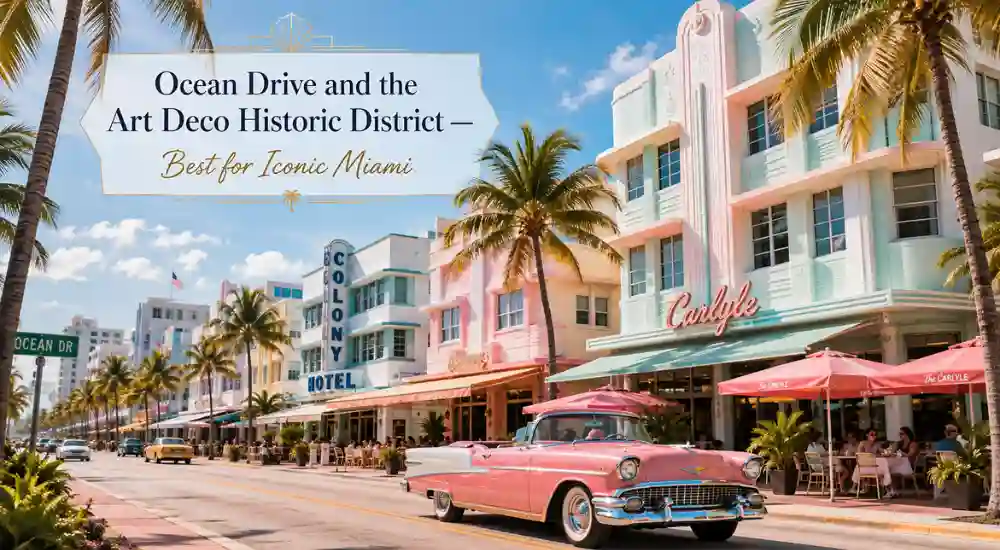
Few streets represent Miami as clearly as Ocean Drive. Pastel-colored hotels, neon signs, restaurants, palm trees, and historic buildings make this one of the most photographed Miami attractions.
Walk through the Art Deco Historic District to appreciate the architecture instead of simply driving past it. You can also continue toward Española Way, another attractive pedestrian-friendly area filled with restaurants and Mediterranean-style details. This part of Miami Beach works especially well for first-time visitors interested in architecture, photography, history, and classic sightseeing.
3. Little Havana — Best for Cuban Culture, Food and Music
Little Havana gives visitors one of Miami’s richest cultural experiences. The neighborhood reflects generations of Cuban influence through food, music, murals, cafés, cigar shops, and community traditions.
Walk along Calle Ocho, order Cuban coffee, try a Cuban sandwich, listen for live Latin music, and explore local shops. Little Havana feels especially lively when music and social activity fill the streets. If you want to experience something beyond the beaches, this is easily one of the must-visit places in Miami.
Calle Ocho — Where to Start in Little Havana
Calle Ocho forms the heart of Little Havana and makes an easy starting point for exploring the neighborhood. Walk slowly so you can notice murals, bakeries, cafés, small galleries, cigar stores, and gathering places.
Food tours and guided walks can add historical context, but you can also explore independently. Travelers interested in Cuban culture in Miami, Latin food, music, and local atmosphere should allow at least a couple of hours instead of treating Calle Ocho as a quick photo stop.
4. Wynwood — Best for Street Art and Creative Culture
Wynwood turned former warehouse streets into one of Miami’s best-known creative districts. Large murals cover buildings throughout the neighborhood, while galleries, restaurants, breweries, shops, and cafés give visitors plenty to explore between artworks.
Wynwood Walls remains a major attraction, but the surrounding streets also deserve attention. Visit during the day if street art and photography matter most to you, then stay later if you want restaurants and nightlife. Wynwood ranks among the best things to do in Miami besides the beach.
5. Vizcaya Museum and Gardens — Best for History and Beautiful Architecture
Vizcaya Museum and Gardens feels completely different from Miami’s modern skyline and beach neighborhoods. The historic waterfront estate combines European-inspired architecture, decorated rooms, art, formal gardens, and peaceful outdoor spaces.
Allow enough time to explore both the house and gardens instead of rushing through them. Couples often enjoy Vizcaya for its romantic setting, while architecture and history lovers can appreciate the details throughout the property. It is also one of the most beautiful places in Miami for photography and a quieter afternoon.
6. Key Biscayne — Best for Beaches and Outdoor Adventure
Travelers who want nature without going far from central Miami should consider Key Biscayne. This barrier island offers beaches, parks, cycling opportunities, water views, and a slower atmosphere than busy South Beach.
Spend a half day here if you simply want a beach break, or make it a full-day outdoor escape. Crandon Park attracts families and beachgoers, while the southern end of the island offers more natural scenery. Key Biscayne works especially well for families, couples, cyclists, and anyone looking for outdoor things to do in Miami.
Bill Baggs Cape Florida State Park and Lighthouse
At the southern tip of Key Biscayne, Bill Baggs Cape Florida State Park combines beach time, walking, cycling, picnicking, and historic scenery. The Cape Florida Lighthouse gives the area a recognizable landmark and adds another reason to explore beyond the sand.
This park suits travelers who prefer quieter beaches and open spaces. Bring sun protection and water, especially during hot weather. Pairing the park with other Key Biscayne stops creates one of the easiest nature-focused days near central Miami.
7. Biscayne Bay — Best for Seeing Miami From the Water
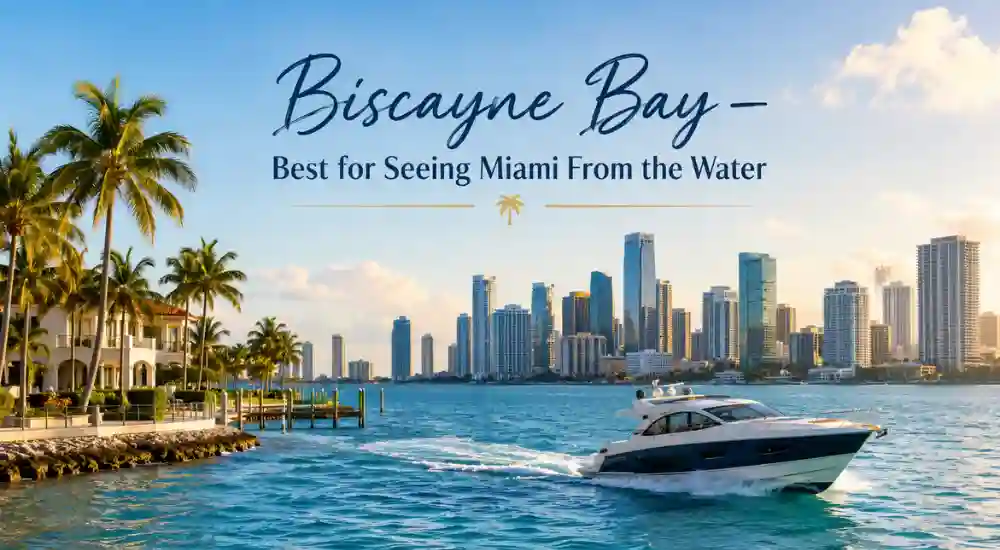
Miami looks very different from Biscayne Bay. Boat tours and cruises can provide views of the skyline, islands, luxury homes, PortMiami, and waterfront neighborhoods that you cannot fully appreciate from land.
Popular sightseeing trips may pass areas associated with Star Island and Millionaire’s Row, while other experiences focus on sailing, speedboats, or sunset views. If you enjoy photography or simply want a break from walking, a Biscayne Bay boat tour can become one of the most memorable things to do during a Miami vacation.
8. Coconut Grove — Best for a Relaxed Local Side of Miami
Coconut Grove offers leafy streets, cafés, restaurants, boutiques, marinas, and waterfront spaces in a setting that feels calmer than South Beach or Downtown. It is one of the best neighborhoods to visit if you want to slow down between busier sightseeing days.
Spend a few hours walking, eating, and exploring nearby parks. Couples may enjoy its relaxed dining scene, while families can appreciate the open spaces. Coconut Grove also pairs naturally with Vizcaya Museum and Gardens, helping you build an efficient day without crossing the entire city.
9. Coral Gables — Best for Architecture and a Slower Pace
Coral Gables attracts travelers with tree-lined streets, Mediterranean-inspired buildings, restaurants, shops, and historic character. It provides a quieter alternative to Miami’s high-rise districts while still offering plenty to see.
Walk around Miracle Mile, stop for lunch, and admire the architecture before visiting nearby attractions. Coral Gables works well for couples and travelers who enjoy attractive neighborhoods more than crowded tourist zones. It is also a useful addition if you want to explore some non-touristy places in Miami alongside the famous highlights.
Venetian Pool — One of Miami’s Most Unique Places
The historic Venetian Pool gives Coral Gables one of its most unusual attractions. Its Mediterranean-style design, rock features, water, and tropical setting make it feel very different from a normal public swimming pool.
Because entry conditions and schedules can change, check current visitor information before planning your day. Even travelers who do not swim may find Coral Gables worth visiting for its architecture and atmosphere. Venetian Pool fits particularly well into an itinerary focused on unique places to visit in Miami.
10. Downtown Miami and Brickell — Best for Modern City Life
For Miami’s modern side, spend time in Downtown Miami and Brickell. High-rise buildings, waterfront views, restaurants, shopping, cultural attractions, and easy transit connections create a very different experience from the beach.
Brickell attracts visitors interested in restaurants, rooftop venues, and upscale city life, while Downtown gives you access to parks, museums, and Biscayne Bay. The free Metromover can help you cover parts of these districts without driving. Visit during the afternoon, then stay into the evening if you want to experience Miami nightlife.
11. Miami Design District — Best for Art, Architecture and Luxury Shopping
The Miami Design District blends striking architecture, designer stores, public art, galleries, and restaurants into a compact neighborhood. Even travelers who do not plan to shop can enjoy walking around and viewing the installations and modern buildings.
It works particularly well for art lovers and photographers, and you can easily combine it with nearby Wynwood. Spend most of your time exploring the streets instead of moving quickly between stores. Together, Wynwood and the Design District create one of Miami’s strongest days for art, design, and contemporary culture.
12. Biscayne National Park — Best for Snorkeling and Marine Nature
Biscayne National Park shows visitors a natural side of South Florida that many city-focused Miami guides overlook. Much of the park experience revolves around water, including boating, snorkeling, paddling, and learning about coastal and marine ecosystems.
This destination suits travelers who love reefs, wildlife, and outdoor adventure more than shopping or nightlife. Because many experiences require boats or organized activities, plan ahead rather than arriving without a clear idea. Biscayne National Park is one of the best nature places near Miami for travelers who want something beyond the beach.
13. Everglades National Park — Best Nature Day Trip From Miami
The Everglades make one of the most popular day trips from Miami. This huge wetland ecosystem supports alligators, birds, fish, and many other species, creating a landscape unlike the city’s beaches and neighborhoods.
You can explore different parts of the park through trails, wildlife viewing, paddling, or nearby airboat experiences. A half-day trip works if your schedule is tight, but a full day gives you more time to appreciate the landscape. Nature lovers should strongly consider adding the Everglades to a longer Miami itinerary.
14. Hidden Gems and Unique Places to Visit in Miami
Miami also rewards travelers who look beyond the famous attractions. Lesser-known historic sites, gardens, underwater landmarks, and unusual communities add variety to a trip filled with beaches and neighborhoods.
Instead of trying to visit every hidden attraction, choose one or two that match your interests. These hidden gems in Miami work particularly well for repeat visitors or travelers who enjoy unusual stories. They can also make your itinerary feel more personal than a checklist built only around South Beach, Wynwood, and Little Havana.
The Kampong
The Kampong offers tropical gardens and a peaceful setting that contrasts sharply with Miami’s busy urban areas. Plant lovers and travelers looking for a quieter experience may particularly enjoy it.
Because gardens often operate differently from open public parks, check current visitor arrangements before going. The location works well when combined with Coconut Grove and other nearby attractions.
Ancient Spanish Monastery
The Ancient Spanish Monastery stands out for its historic architecture and peaceful grounds. It appeals to travelers interested in history, architecture, photography, and unusual Miami stories.
Its location makes it less convenient than central attractions, so include it only if it fits your route. That extra effort can reward visitors who want something far removed from Miami’s familiar beach image.
Neptune Memorial Reef
Neptune Memorial Reef offers one of the area’s most unusual marine experiences. Unlike a traditional museum or landmark, visitors typically experience this underwater memorial through diving.
It is not suitable for every traveler, but experienced divers may find it fascinating. Treat it as a specialized attraction rather than a standard Miami must-see, and plan through appropriate operators if you decide to visit.
Stiltsville
Stiltsville consists of historic structures standing over the waters of Biscayne Bay. Its unusual setting has made it one of the area’s most recognizable hidden attractions.
You usually view the structures from the water rather than walking through them, so boat-based sightseeing makes the most sense. It pairs naturally with travelers already planning a Biscayne Bay or Biscayne National Park experience.
15. Best Places to Visit in Miami by Trip Type
The best Miami itinerary depends on how you like to travel. Families may prefer museums, parks, and calmer beaches, while couples might prioritize waterfront views and romantic neighborhoods. Nightlife travelers often enjoy South Beach, Brickell, and Wynwood.
For art and culture, focus on Wynwood, Little Havana, the Design District, and PAMM. Budget travelers can build full days around beaches, neighborhoods, parks, public art, and free transportation. Choosing places by travel style helps you avoid wasting time on attractions that do not match your interests.
Best for Families
Families can combine Frost Science, Zoo Miami, Key Biscayne, South Pointe Park, and family-friendly beaches. Choose a mix of indoor and outdoor attractions so younger travelers do not spend the entire day walking in the heat.
Best for Couples
Couples may enjoy Vizcaya, Coconut Grove, Key Biscayne, South Pointe Park, and sunset cruises. Add dinner in Brickell or another waterfront area if you want a relaxed evening after sightseeing.

Best for Nightlife
For nightlife, focus on South Beach, Brickell, Wynwood, and Little Havana. Each area offers a different atmosphere, from clubs and rooftop bars to Latin music and casual neighborhood venues.
Best Free Places
Great free things to do in Miami include walking Ocean Drive, visiting South Pointe Park, exploring Little Havana, viewing public art around Wynwood, and spending time on public beaches.
Best for Art and Culture
Art lovers should prioritize Wynwood, the Design District, Little Havana, PAMM, and the Art Deco Historic District. Together, these places show both historic and modern sides of Miami’s creative identity.
16. Plan Your Miami Visit Without Wasting Time
Miami spreads across a large area, so poor planning can turn a sightseeing day into hours of driving. Group nearby attractions whenever possible and avoid crossing between Miami Beach and mainland neighborhoods several times in one day.
Build one day around the beach, another around cultural neighborhoods, and another around nature or waterfront activities. This approach makes a Miami itinerary feel more relaxed and leaves time for meals, spontaneous stops, and traffic delays. It also works especially well for first-time visitors with only two or three days.
Pair Nearby Neighborhoods on the Same Day
Combine South Beach, Ocean Drive, and Española Way on one day. Pair Wynwood with the Design District, or explore Little Havana and Vizcaya together.
You can also combine Brickell and Downtown Miami because they sit close to each other. Planning this way makes your sightseeing more efficient and reduces unnecessary travel across the city.
What to Book Ahead and What You Can Decide Last Minute
Book popular boat tours, guided experiences, special museums, and high-demand restaurants ahead when possible, especially during busy travel periods. Nature activities that depend on boats or guides also benefit from advance planning.
You can usually stay more flexible with beaches, public neighborhoods, parks, and self-guided walks. Always check current official information before visiting attractions because schedules and reservation rules can change.
Best Indoor Places When Miami Is Too Hot or Rainy
Miami’s heat, humidity, and sudden rain can make indoor attractions especially useful. Frost Science, PAMM, galleries, museums, and indoor shopping areas can keep your sightseeing day enjoyable when outdoor plans become uncomfortable.
Keep at least one indoor backup option in your itinerary. That simple strategy can save an afternoon without forcing you to remain at your hotel.
Miami Beach Safety Basics Before You Swim
Miami beaches can look calm while still presenting natural risks. Swim near lifeguarded areas when possible, follow posted warnings, and pay attention to changing water conditions.
Bring water, sunscreen, and shade protection because strong sun and heat can become tiring quickly. If thunderstorms approach, leave the water and follow local safety guidance instead of trying to continue your beach day.
Best Time to Visit Miami
Many travelers prefer Miami during the cooler, drier months because walking, beaches, and outdoor sightseeing feel more comfortable. Winter and early spring can also bring larger crowds and higher demand.
Summer often feels hotter and more humid, with frequent rain and storms, but some travelers appreciate fewer crowds or seasonal deals. Hurricane season also overlaps with part of the warmer period, so monitor weather forecasts when traveling then. The best time to visit Miami ultimately depends on whether you prioritize weather, budget, events, or crowd levels.
How Many Days Do You Need in Miami?
For most first-time travelers, three days in Miami provides a good balance. You can spend one day around Miami Beach, one exploring cultural neighborhoods such as Little Havana and Wynwood, and another visiting Key Biscayne, Biscayne Bay, or a major museum.
With four or five days, you can add the Everglades, Biscayne National Park, hidden gems, or slower neighborhood exploration. One day only gives you the highlights, while two days can work for a weekend trip if you group nearby attractions carefully.
Miami vs Miami Beach — What’s the Difference?
Miami and Miami Beach are separate cities, even though travelers often group them together when planning a Miami vacation. Miami includes areas such as Downtown, Brickell, Coconut Grove, Little Havana, and Wynwood.
Miami Beach sits across Biscayne Bay and includes South Beach, Ocean Drive, and the Art Deco Historic District. First-time visitors usually want to experience both. Understanding the difference helps you choose accommodation and plan transportation more efficiently, especially if your itinerary includes attractions on both sides of the bay.
How to Get Around Miami
The best way to get around Miami depends on your itinerary. Rideshares and rental cars offer flexibility, especially for Key Biscayne, Coral Gables, or attractions farther from the center. However, parking and traffic can make driving inconvenient in busy areas.
In central districts, public transportation can help. The Metromover is useful around Downtown and Brickell, while local trolley services may serve additional neighborhoods. Walking works well within individual areas such as South Beach, Wynwood, or Little Havana. Grouping attractions by neighborhood remains the easiest way to reduce travel time.
FAQs About Visiting Miami
What Is the Number One Place to Visit in Miami?
For many first-time visitors, South Beach ranks as the number one place because it combines the beach, classic Miami scenery, Ocean Drive, and easy access to the Art Deco district. However, Little Havana may feel more rewarding if culture and food matter more to you.
What Should First-Time Visitors Not Miss in Miami?
First-time travelers should try to experience South Beach, Ocean Drive, Little Havana, Wynwood, and Biscayne Bay. Adding either Vizcaya or Key Biscayne gives the itinerary more variety beyond the city’s best-known neighborhoods.
What Are the Best Free Places to Visit in Miami?
Some of the best free places in Miami include South Pointe Park, Ocean Drive, public beaches, Little Havana, and public art around Wynwood. Free sightseeing can easily fill much of a day if you group nearby areas.
Is Miami Worth Visiting If You Don’t Like Nightlife?
Yes. Miami offers far more than bars and clubs. You can explore beaches, gardens, museums, historic neighborhoods, Cuban culture, art districts, national parks, wildlife, and water activities without focusing on nightlife at all.
How Many Days Are Enough for Miami?
Three days works well for a first visit, while four or five days lets you explore at a slower pace and include nature-focused day trips. Travelers with only two days should focus on Miami Beach and a few mainland highlights.
Is Miami Beach the Same as Miami?
No. Miami Beach is a separate city from Miami. South Beach and Ocean Drive sit in Miami Beach, while Brickell, Downtown, Little Havana, Wynwood, and Coconut Grove are in Miami.
Can You Visit Miami Without a Car?
Yes, especially if you stay near major attractions and group sightseeing by area. Use walking, rideshares, public transportation, the Metromover, and local trolley services. A car becomes more useful when visiting farther-away parks or attractions.
Final Thoughts
The best places to visit in Miami go far beyond one famous beach. South Beach delivers the classic Miami experience, while Little Havana, Wynwood, Coconut Grove, Coral Gables, Key Biscayne, Biscayne Bay, and the Everglades reveal completely different sides of South Florida.
Build your itinerary around the experiences you actually enjoy instead of trying to see everything. Combine nearby attractions, leave room for weather changes, and mix famous Miami tourist attractions with a few hidden gems. With thoughtful planning, Miami can offer beaches, culture, art, food, nature, and memorable city experiences in the same trip.