

I moved to Denver for a two-year work contract and never left. Eight years later, I still can’t decide whether I love this city more for its downtown murals or for the fact that I can be standing on a 14,000-foot summit ninety minutes after finishing breakfast. That tension — city on one side, mountains on the other — is the entire story of visiting Denver, and it’s the thing most guides get wrong.
Most “things to do near Denver” lists just stack fifty attractions on top of each other with no sense of what fits together or how much time anything actually takes. I’ve watched more than one visiting friend try to “do” the Denver Art Museum, Red Rocks, and Rocky Mountain National Park in a single day, only to end up sitting in I-70 traffic at 9 p.m., having really seen none of it properly.
This guide is the version I wish someone had handed me. It covers what’s genuinely worth your time, what you can skip without guilt, exact costs and hours where I could verify them, and the logistics — parking, altitude, timed-entry systems — that separate a smooth trip from a frustrating one.
Quick Answer
The best things to do near Denver split naturally into two categories: walkable downtown attractions (the Denver Art Museum, Larimer Square, Union Station, RiNo’s murals) and mountain day trips (Golden, Boulder, Rocky Mountain National Park, and a string of old mining towns along I-70). Give yourself at least three full days — two for the city, one for a single mountain excursion — and aim for May, June, or September if weather and crowd levels matter to you. If you only remember one piece of practical advice from this whole guide, let it be this: don’t schedule a major mountain drive on your first day. Denver sits at 5,280 feet, and most visitors underestimate how tired that elevation makes them feel before they’ve even left the city.
Top Attractions in Downtown Denver
Downtown Denver is compact enough that a determined visitor can cover most of its headline sights on foot in a day and a half. Nearly everything below sits within a 20-minute walk of Union Station, which makes it the natural anchor point for your first day.
The Denver Art Museum is where I send almost every first-time visitor. Its angular, titanium-clad building (designed by Daniel Libeskind) is a landmark in itself, and the museum holds one of the strongest Indigenous art collections in the country. Plan on 2 to 3 hours, and if you’re visiting on a weekend, grab timed tickets online in advance — the museum has started limiting walk-up entry during peak hours. General admission runs in the range most major US art museums charge; check the current price on the museum’s own site before you go, since it’s adjusted more than once in recent years.
A few blocks away, Larimer Square is Denver’s oldest commercial block, dating back to the 1870s. It’s touristy, I’ll admit that upfront, but it’s touristy for a reason: the Victorian storefronts now house some of the city’s better restaurants, and it’s genuinely lovely at dusk when the string lights come on overhead.
Denver Union Station deserves its own stop, not just a walk-through. What used to be a working train depot is now a food hall, a boutique hotel (the Crawford), and one of the more architecturally striking public spaces in the American West. It’s free, it’s air-conditioned, and it’s a smart place to regroup between other stops.
Here’s the rest of the downtown core worth building a day around:
| Attraction | Time Needed | Cost | Best For |
| Denver Art Museum | 2–3 hours | Paid; timed tickets recommended | Art and architecture fans |
| Larimer Square | 1–2 hours | Free to walk | Photos, dining, evening stroll |
| Denver Union Station | 30–60 min | Free | Food hall, meeting point |
| 16th Street corridor | Ongoing | Free shuttle | Getting between downtown stops |
| Molly Brown House Museum | 45–60 min | Paid, guided tours only | Titanic history, Victorian Denver |
| Colorado State Capitol | 45 min | Free weekday tours | Architecture, city views |
| RiNo Art District | 2+ hours | Free to walk | Murals, breweries, galleries |
| Denver Mint | 45 min | Free, six tours daily | History, kids curious about money |
| Confluence Park | 1 hour | Free | River views, kayaking |
A note on the Denver Mint: it’s one of only two US Mints (alongside Philadelphia) that offers public tours, and it’s free — but the tours are 45 minutes long, run six times daily starting around 8 a.m., and they fill up. If a Mint tour is on your list, book it before you plan the rest of your day around it, not after.
How I’d Sequence a Downtown Day
If I only had one day downtown, here’s the order I’d actually walk it in: start at the Capitol steps for the mile-high marker and skyline view, head to the Art Museum for the late morning, grab lunch in the Golden Triangle, wander through Larimer Square in the afternoon, and end the day with dinner in RiNo. This route never doubles back on itself, which matters more than people expect once you’ve spent six hours on your feet at altitude.
Free Things to Do in Denver
Denver has a genuinely unusual amount of free stuff to do, and it’s not padding — it’s a real reason budget-conscious travelers pick this city over comparable Western destinations.
The most photographed free spot is probably the Colorado State Capitol steps, where a marker on the 18th step indicates you’re standing at exactly one mile above sea level (5,280 feet). It’s a cliché tourist photo, but I still stop there with every visitor who comes through.
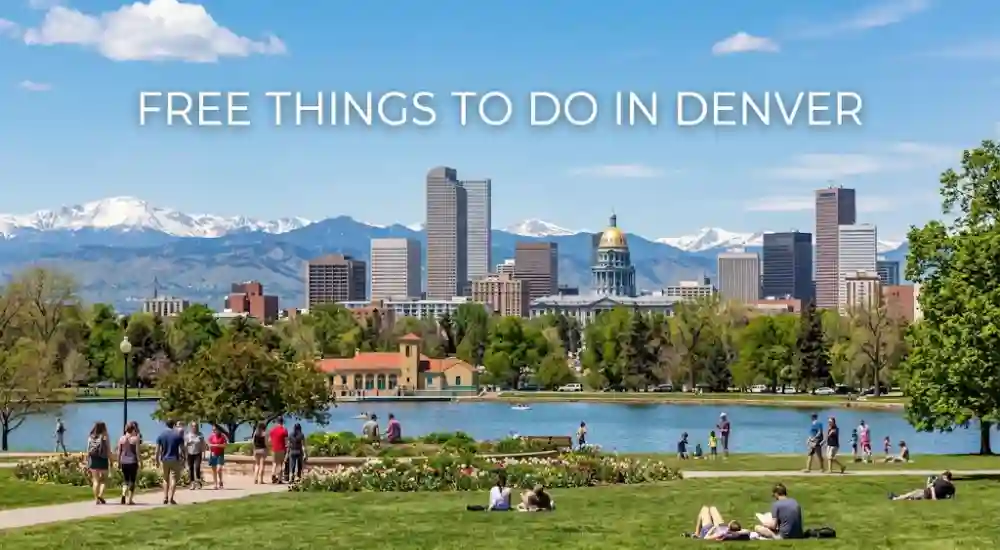
City Park is Denver’s largest park and completely free to explore — the walking loop around Ferril Lake is flat, shaded in places, and popular with locals doing an evening lap. Pair it with a free wander through the Cherry Creek Trail, a paved path that runs from downtown out toward the Cherry Creek shopping district and works equally well on foot or by bike.
A few more free experiences worth building into your itinerary:
- Denver Botanic Gardens free-admission days, which occur several times a year — check the Gardens’ official calendar before your trip, since dates shift annually
- Red Rocks Park during daytime hours, when the amphitheater grounds are open for hiking and photography outside of concert times
- Civic Center Park, which hosts free summer concerts on a lawn framed by the Capitol and the City & County Building
- The RiNo mural walk, a completely self-guided tour through blocks of large-scale street art
- First Friday Art Walks in the Santa Fe Arts District, when galleries open their doors free to the public on the first Friday of every month
- Skyline Park’s outdoor ice rink in winter, where entry is typically low-cost or free and skate rental is the only real expense
One honest caveat: free doesn’t always mean spontaneous. The Botanic Gardens’ free days and the Mint tour both run on limited schedules, so don’t build your whole day around them without checking the current calendar first — I’ve had a friend show up to a “free Tuesday” that had quietly moved to a different week.
Best Museums and Indoor Attractions
Denver’s museums earn their keep on days when the weather turns, or when the altitude has genuinely worn you out and you just want to sit somewhere air-conditioned. Several of the best ones sit close enough together that you can hit two or three in a single day without much backtracking.
The Denver Museum of Nature & Science anchors City Park alongside the zoo. It’s home to dinosaur fossils, a planetarium, and an IMAX theater, and adult admission runs up toward $20, with the planetarium and IMAX priced as add-ons — worth confirming exact current pricing on their site since museums tend to adjust ticket tiers yearly.
For something quieter, the Clyfford Still Museum holds a focused collection from one major American abstract expressionist, and it rarely feels crowded even on a Saturday. Right next door in the Golden Triangle Museum District, the History Colorado Center does a genuinely good job making state history interactive rather than just text-on-a-wall.
If you’re traveling with teenagers or just enjoy something stranger, Meow Wolf Denver’s Convergence Station is an immersive, surreal art installation that’s become one of the city’s most talked-about newer attractions. It’s not for everyone, but I haven’t met anyone who left it feeling lukewarm.
Other indoor stops worth knowing about:
- Children’s Museum of Denver at Marsico Campus — built specifically for kids age 8 and under, with admission historically in the low-to-mid teens per person
- Museum of Contemporary Art Denver — a compact, rotating-exhibit space in the heart of downtown
- Colorado Railroad Museum — historic locomotives on display just outside the city in Golden
- Denver Firefighters Museum — small and family-friendly, housed in a converted 1909 firehouse
- Kirkland Museum of Fine & Decorative Art — a design-focused collection covering the early to mid-20th century
Practical tip: the Museum of Nature & Science and the Denver Zoo share City Park, which means one parking spot and one entry point can cover both — a detail that saves real time if you’re trying to fit a lot into one day.
Family-Friendly Things to Do
Traveling with kids in Denver is genuinely easier than in a lot of cities, mostly because so much of the best family content clusters inside City Park. If I were planning a single family day, I’d build it entirely around that park and not feel like I was missing anything.
The Denver Zoo houses roughly 4,000 animals across several hundred species, spread over a layout that’s walkable but large enough to genuinely tire out younger kids by mid-afternoon — plan on a mini-train or the carousel as a built-in rest stop rather than an optional extra. Right next door, the Denver Museum of Nature & Science hands out a printed scavenger hunt sheet at the front desk that’s kept more than one restless eight-year-old engaged for a solid hour.
Beyond City Park, here’s where family time is genuinely well spent:
- Children’s Museum of Denver — role-play exhibits and a hands-on art room built for kids under 8
- Downtown Aquarium — combines fish tanks with a restaurant, which makes it an easy rainy-afternoon fallback
- Elitch Gardens Theme & Water Park — seasonal rides best suited to school-age kids and older
- Wings Over the Rockies Air & Space Museum — retired aircraft in a former hangar, a strong pick for kids fascinated by planes or space
- Water World in Federal Heights — a large seasonal water park just north of the city, worth the drive on a hot July day
A Real Piece of Advice From Someone Who’s Hosted Family Visitors
Keep each outdoor block shorter than you would at sea level. I’ve watched visiting nieces and nephews hit a wall by early afternoon on their first day here, not from exhaustion exactly, but from the altitude quietly draining their energy faster than usual. Build in an indoor pause — the Aquarium, the Children’s Museum, even just the air-conditioned Museum of Nature & Science — rather than pushing straight through a full outdoor day.
Outdoor Adventures Near Denver
This is where Denver genuinely separates itself from other US cities. Being at the literal foot of the Rockies means hiking, biking, and paddling options exist within the metro area itself, not just as far-flung day trips.
South Table Mountain and North Table Mountain, both near Golden, offer moderate hikes with skyline views back toward Denver — a good introduction to Front Range hiking if you haven’t adjusted to the altitude yet. For something with a little more adrenaline, Clear Creek in Golden runs Class II–III whitewater, suited to beginner rafters and tubers during the warmer months, typically peaking in June with snowmelt.
Cherry Creek State Park, entirely inside the metro area, combines biking, paddling, and a reservoir beach, which makes it one of the easiest “real outdoors” experiences to reach without a long drive. If you want quieter trails, Golden Gate Canyon State Park sits about 30 to 45 minutes from downtown and sees noticeably fewer visitors than the closer-in options.

For a true high-altitude experience, Mount Blue Sky (formerly Mount Evans) offers a scenic drive to over 14,000 feet — but I want to be direct about this one: the summit road’s opening date changes every year depending on snowpack, and it’s typically not fully open until sometime in June. Don’t build a spring trip around reaching the summit without checking current road status first.
A few more worth knowing:
- Waterton Canyon — a flat, easy trail south of the city, popular for spotting bighorn sheep without much elevation gain
- 850+ miles of paved bike trails citywide, connecting most major parks and neighborhoods
- Bear Creek Lake Park — hiking, fishing, and a swim beach close to the city, good for a half-day without much driving
A genuine safety note: altitude affects physical performance more than most visitors expect, even on a trail that looks easy on paper. Carry more water than feels necessary, and if you notice a headache or unusual shortness of breath, treat it seriously rather than pushing through — mild altitude symptoms are common and usually resolve with rest and hydration, but they’re worth taking seriously.
Hidden Gems Locals Actually Recommend
Every guidebook sends you to the same ten spots in LoDo. What I actually tell friends visiting me to check out sits a little further off that well-worn path — not secret exactly, just less obvious.
Confluence Park, where Cherry Creek meets the South Platte River, is a genuine local favorite for kayaking and quiet evening walks, and I’m consistently surprised how many multi-day visitors never make it there. The Buckhorn Exchange, Denver’s oldest restaurant, is worth a meal just for the taxidermy-lined walls and the Wild West atmosphere — it’s been serving since 1893.
If you’ve got kids or just enjoy the strange and specific, the Denver Museum of Miniatures, Dolls & Toys, tucked near Cheesman Park, is a small collection that nobody plans an entire trip around but almost everyone remembers afterward. Rockmount Ranch Wear, a historic Western-wear shop, doubles as an unofficial rock-and-roll museum thanks to decades of memorabilia on display from musicians who’ve shopped there.
For neighborhoods rather than single stops:
- Washington Park (Wash Park) — the locals’ go-to for morning runs and weekend brunch, noticeably less crowded than City Park
- South Broadway in Baker — vintage shops and unpretentious dive bars that don’t chase trends
- Golden Triangle — a compact cluster of art and history museums, easy to underestimate if you only know it as a “museum district” on a map
- Alderfer/Three Sisters Park in Evergreen — wide-open hiking trails about 45 minutes out, far quieter than anything closer to downtown
Neighborhood hopping is genuinely the easiest way to find your own version of this list. Curtis Park, Baker, and Capitol Hill each have a distinct enough character that a slow afternoon walk through any of them tells you more about Denver than a checklist ever will.
Best Day Trips Near Denver
Denver’s location puts an unusual amount of variety within a couple hours’ drive — old mining towns, a genuine national park, and a university town all sit inside what’s a realistic single-day radius.
A word of caution before the list: every drive time below is an estimate for normal daytime traffic. Add real buffer time during ski season, summer weekend afternoons, or anything involving a mountain pass, since Colorado weather can turn a 45-minute drive into a 90-minute one with little warning.
| Destination | Approx. Drive Time | Highlights | Best Season |
| Golden | 25–30 min | Coors Brewery, Clear Creek tubing, Lookout Mountain | Year-round |
| Red Rocks Park | ~20 min | Hiking, iconic sandstone amphitheater | Year-round |
| Boulder | ~1 hour | Pearl Street Mall, Flatirons hiking | Spring–fall |
| Idaho Springs | ~45 min | Hot springs, gold panning, Mount Blue Sky access | Summer |
| Evergreen | 35–55 min | Ice skating, mountain-town downtown | Winter for skating |
| Georgetown | ~1 hour | 1880s narrow-gauge railway, mining history | Year-round |
| Black Hawk & Central City | 45 min–1.25 hr | Historic casinos, Victorian architecture | Year-round |
| Fort Collins | ~1 hour | Craft breweries, riverside downtown | Spring–fall |
| Rocky Mountain National Park | 1.5–2 hours | Alpine tundra, wildlife, Trail Ridge Road | Summer (fully open) |
| Colorado Springs (Garden of the Gods) | ~1 hr 20 min | Free sandstone rock formations, paved trails | Year-round |
Rocky Mountain National Park deserves extra attention because it’s simultaneously the most rewarding and the most planning-intensive option on this list. The National Park Service has run a timed-entry reservation system during peak season in recent years, and the exact rules — which entrances require it, which months it applies to — change from year to year. Before you build a day around RMNP, check the current reservation requirements directly on the NPS Rocky Mountain National Park site, not on a third-party blog that might be repeating last season’s rules.
Garden of the Gods, part of the Colorado Springs day trip, is free to enter and typically open from around 5 a.m. to 10 p.m. in warmer months — one of the better values on this entire list, since the paved Perkins Central Garden Trail is wheelchair accessible and works well for visitors who don’t want a strenuous hike.
Scenic Drives and Mountain Towns
If a full hiking day isn’t what you’re after, a scenic drive delivers most of the visual payoff in a fraction of the time. Several of these routes loop back to Denver comfortably within a single afternoon.
The Lariat Loop Scenic Byway threads through Evergreen, Morrison, and Golden with a string of foothill overlooks — it’s the drive I recommend most often to visitors who only have half a day free. The Peak to Peak Highway, Colorado’s oldest designated scenic byway, is genuinely spectacular during fall aspen season, which typically peaks in a narrow window during late September between Black Hawk and Estes Park.

For something higher and more dramatic, Trail Ridge Road inside Rocky Mountain National Park climbs through alpine tundra above 12,000 feet, though it’s only open seasonally — generally late May through mid-October, weather permitting. Guanella Pass near Georgetown offers a quieter alternative with excellent alpine lake views and considerably less traffic than Trail Ridge Road on a busy weekend.
One important winter caution: mountain roads in this region can close or add chain requirements with very little notice once snow starts falling, typically from October through April. If you’re driving any of these routes in that window, check the Colorado Department of Transportation’s real-time road conditions before you leave, not the night before.
Romantic Things to Do
Denver pairs its outdoor scenery with enough upscale dining and quiet corners to work genuinely well for a couples’ trip — the trick is balancing one active outing with one slower evening rather than packing every hour.
Sunset at Lookout Mountain, above Golden, is the single most reliable “wow” moment I send couples to — city and plains views stretching out below, especially striking in the twenty minutes right before dusk. The Denver Botanic Gardens offers a genuinely peaceful walk through themed garden rooms, and in winter the evening light displays add a different kind of atmosphere entirely.
For an evening out, Larimer Square’s restaurant patios feel built for exactly this kind of trip, especially in warmer months. A show at Red Rocks Amphitheatre is hard to overstate — the setting itself, carved into natural sandstone monoliths, is unlike almost any other concert venue in the country.
A few more pairings worth considering:
- Cherry Creek for upscale shopping and a slower-paced dinner
- Indian Hot Springs in Idaho Springs, an easy half-day soak that doubles as a mini day trip
- Small-batch wine tasting rooms scattered through Golden and Evergreen
- A golden-hour walk along Confluence Park, quiet and close enough to downtown that it doesn’t eat your whole evening
If you’re staying overnight, I’d pair a Cherry Creek evening with a next-day drive to Evergreen or Golden — it keeps the pace relaxed instead of feeling like you’re chasing a checklist.
Where to Stay: Denver Neighborhoods Compared
Choosing a neighborhood shapes your whole trip more than people expect, since it determines how much of your day gets eaten up by getting from your hotel to whatever you actually want to see.
| Neighborhood | Best For | Vibe | Walkability |
| LoDo (Lower Downtown) | First-timers, sports fans | Historic, central, energetic | Excellent |
| RiNo (River North) | Food, art, nightlife | Trendy, mural-covered, creative | Very good |
| Cherry Creek | Luxury travelers, shopping | Upscale, polished | Good |
| Capitol Hill | Budget travelers, local feel | Relaxed, residential | Good |
| Washington Park | Families, outdoor time | Green, quiet, community-oriented | Moderate |
LoDo is where I point almost every first-time visitor, and not just out of habit — it puts you within walking distance of Union Station, Coors Field, and Larimer Square, and it’s the neighborhood best connected to the light rail and airport train. RiNo has the highest concentration of breweries, galleries, and mural-covered walls, and it’s my personal favorite base for a second or third visit once someone’s already covered the standard downtown checklist.
Cherry Creek suits travelers prioritizing fine dining and boutique shopping over nightlife, though accommodations here run noticeably higher than LoDo. Capitol Hill and Uptown offer a more residential, budget-friendly base within walking distance of downtown, while Washington Park works best for families who’d rather be near green space than bars.
On safety: downtown neighborhoods like LoDo, the Golden Triangle, and Uptown are generally considered comfortable for tourists on foot, day or evening. As in any city, stick to well-lit, busier streets after dark and use standard travel common sense — I wouldn’t describe any neighborhood here as risk-free, and neither would any honest local.
Best Time to Visit Denver
Denver’s weather shifts noticeably by season, and because the city sits at elevation, conditions can also change fast within a single day — I’ve genuinely experienced 40-degree temperature swings between morning and afternoon in the same week.
Season-by-Season Breakdown
| Season | Months | Weather | Crowds | Best For |
| Spring | March–May | Mild, occasional rain (especially May) | Light | Wildflowers, lower hotel rates |
| Summer | June–August | Warm, sunny, occasional afternoon storms | Heaviest (July peak) | Full event calendar, mountain access |
| Fall | September–October | Comfortable, crisp mornings | Light | Aspen color, hiking, fewer tourists |
| Winter | November–February | Cold, snow possible | Light in the city | Ski access, holiday events, lower rates |
If your priority is mountain access, aim for June through September, since high-altitude roads like Mount Blue Sky and Trail Ridge Road are most reliably open in that window. If your priority is avoiding crowds and heat, May and September are the sweet spot — my personal favorite time to host visitors, honestly, since the weather is comfortable and you’re not fighting July-level tourist volume at every attraction.
Winter visitors shouldn’t write the season off entirely. Denver’s own snowfall tends to be lighter than people assume (the mountains get hit far harder than the city itself), and hotel rates in Denver proper drop noticeably, even while nearby ski resorts stay busy.

A Realistic Weekend Itinerary
Two days works well split between the city and a single mountain excursion — trying to fit more than one mountain day trip into a short visit is the single most common planning mistake I see.
Day 1 — Downtown, on foot:
- Morning: Union Station, Larimer Square, Capitol steps
- Afternoon: Denver Art Museum or History Colorado Center (both in the Golden Triangle)
- Evening: Dinner and a stroll through RiNo’s mural-covered streets
Day 2 — One mountain loop:
- Morning: Drive to Golden (about 25 minutes) for Clear Creek and Lookout Mountain views
- Afternoon: Continue to Idaho Springs, or loop back through Evergreen depending on your pace
- Evening: Return to Denver for dinner in Cherry Creek or back in LoDo
This structure keeps day one entirely car-free and walkable, then uses day two for a mountain loop that returns you to the city before dark — which matters more than it sounds, since unfamiliar mountain roads at night aren’t where you want to be figuring out a wrong turn.
Want the extended version? If you have three or four days instead of two, add either a full Rocky Mountain National Park day (book the timed-entry pass in advance) or split day two between Golden in the morning and Boulder’s Pearl Street Mall in the afternoon.
Budget Travel and What Things Actually Cost
Denver stretches a travel budget further than a lot of comparable US cities, mostly because so many of its best experiences genuinely are free (see the section above). But it helps to have a rough sense of what a real day looks like cost-wise.
A realistic budget day might include: free morning exploring City Park and the Capitol steps, a paid museum in the afternoon (typically $15–25 per adult depending on the museum), a casual lunch ($12–18), and dinner in a mid-range restaurant ($20–35 per person) — treat these as ballpark figures rather than fixed prices, since restaurant and museum pricing genuinely does shift year to year.
Ways to stretch that budget further:
- Walk the Cherry Creek Trail and City Park loop instead of paying for a guided tour
- Time your Art Museum visit to a discounted or free admission day, if the museum is currently offering one
- Take the free 16th Street shuttle instead of driving or hailing a ride downtown
- Tour the Denver Mint for free, but plan ahead since slots fill up
- Hike South Table Mountain or Waterton Canyon instead of booking a paid outdoor excursion
- Catch a free concert at Civic Center Park during summer
- Pack a picnic for City Park instead of dining out for every meal
- Visit during shoulder season (spring or fall) for meaningfully lower hotel rates
- Ask about library-linked museum discount passes — many US cities, including Denver, partner with public libraries for reduced or free museum entry
On parking, downtown lots and garages commonly run $15–30 for a full day, which adds up fast if you’re driving between attractions rather than walking or taking transit — one more reason LoDo’s walkability is worth factoring into your budget, not just your itinerary.
Nightlife and Live Music
Denver’s nightlife spreads across a handful of distinct districts, and each one has a genuinely different energy — picking one area for the evening tends to work better than trying to bounce between them.
Red Rocks Amphitheatre is the headline act, and rightly so — it’s one of the most famous outdoor concert venues in the country, carved directly into natural sandstone. Larimer Square offers rooftop bars and restaurant patios in a historic setting, while RiNo has the densest cluster of breweries in the city if that’s more your evening.
For live music beyond Red Rocks:
- Cervantes’ Masterpiece Ballroom — a well-established venue for touring acts
- Mission Ballroom — a larger, modern concert space north of downtown
- Ball Arena — home to Denver’s NBA and NHL teams, and a stop for major touring concerts
- Comedy Works — a long-running downtown comedy club worth checking for a lineup on your travel dates
A genuinely useful tip: if your schedule bends at all, grab a weeknight Red Rocks ticket instead of a Saturday one. Same venue, same skyline view from the top row, a fraction of the parking headache.
What to Pack for Denver’s Altitude and Weather
This is the section most guides skip entirely, and it’s the one I get asked about the most from visiting friends.
Layers matter more here than almost anywhere else in the US. Denver’s dry climate and elevation mean temperature swings of 30-plus degrees between morning and afternoon aren’t unusual, especially in spring and fall. A light packable jacket, even in July, has saved more than one summer visitor from an uncomfortable evening.
Sun protection is not optional at this elevation. UV exposure increases roughly 4% for every 1,000 feet of elevation gain, which means Denver’s UV intensity is noticeably higher than a sea-level city at the same latitude — sunscreen and sunglasses matter even on overcast days.
Hydration gear is worth the small extra bag space. The combination of dry air and altitude dehydrates visitors faster than they expect, and it’s the single biggest contributor to that “unexpectedly exhausted” feeling first-day visitors describe. A reusable water bottle and genuinely drinking more than feels necessary makes a real difference.
Quick packing checklist:
- Layered clothing (base layer, insulating layer, packable rain or wind jacket)
- Broad-spectrum sunscreen and sunglasses, even for city days
- Comfortable walking shoes with real tread if you’re doing any of the day trips
- A reusable water bottle
- Lip balm with SPF (the dry air is rougher on lips than most visitors expect)
- Layers appropriate for your season — winter visitors need genuine cold-weather gear if venturing toward the mountains, not just a city coat
Getting Around Without a Car
Denver is considerably more transit-friendly than its car-centric reputation suggests, at least within the downtown core. The Regional Transportation District (RTD) runs the metro area’s light rail and bus network, and it connects the airport, downtown, and several surrounding suburbs.
The A Line train runs between Denver International Airport and Union Station in about 37 minutes, with departures roughly every 15 minutes during peak hours and every 30 minutes off-peak. The current one-way fare is $10, though RTD does periodically adjust fares — check RTD’s official fare page before you travel rather than relying on a figure from an older article, this one included.
From Union Station, the free 16th Street shuttle covers the downtown pedestrian corridor, and RTD’s broader light rail network reaches Golden, Aurora, and other metro suburbs. Walking and biking work well within LoDo, RiNo, and the Golden Triangle specifically, but reaching most of the mountain day trips in this guide still requires a car, a tour, or a rideshare.
My honest recommendation: if your entire trip stays within the city, skip the rental car completely — you’ll spend more on downtown parking than you would on transit and the occasional rideshare. If mountain day trips are part of your plan, rent a car for just those specific days rather than the whole stay.
Denver Airport Layover Guide
If you’re passing through DEN on a long layover rather than visiting Denver properly, the A Line makes a downtown detour genuinely feasible for layovers of 5 hours or longer. Budget 37 minutes each way on the train, plus enough buffer for TSA re-screening on your return — I generally tell layover travelers to aim for at least a 6-hour window if they want to see Union Station and grab a meal without stress. For shorter layovers, DEN itself has a reasonable selection of dining and a yoga/rest area inside the terminal, which is often the more realistic option.
Frequently Asked Questions
Is Denver worth visiting for a few days?
Yes. Denver has enough downtown attractions to comfortably fill two full days on its own, and its location makes it an easy base for one or two mountain day trips beyond that. A three- to four-day stay covers both without feeling rushed, which is the sweet spot I recommend to most first-time visitors.
What is the best month to visit Denver?
September and May tend to offer the best balance of mild weather and smaller crowds, based on both climate averages and my own experience hosting visitors across different seasons. Summer has the fullest event calendar but also the biggest crowds and highest hotel rates, while winter suits travelers focused specifically on nearby skiing.
Is Denver safe for tourists?
Denver is generally considered safe for tourists, particularly in the well-trafficked downtown neighborhoods like LoDo, the Golden Triangle, and Uptown. As with any city, it’s smart to stay aware of your surroundings, stick to busier and well-lit streets after dark, and take normal travel precautions — no destination anywhere is entirely risk-free, and any guide that tells you otherwise isn’t being straight with you.
Is Denver an expensive city to visit?
Denver sits in a mid-range bracket compared to major US destinations — more affordable than cities like San Francisco or New York, but not a budget destination on the level of, say, a smaller Midwestern city. The free attractions covered earlier in this guide genuinely help offset costs, and shoulder-season travel (spring or fall) brings hotel rates down noticeably.
Do you need a car in Denver?
Not for downtown itself. LoDo, RiNo, and the Golden Triangle are walkable, and RTD’s light rail connects the airport and nearby suburbs efficiently. A car or organized tour becomes genuinely useful once you start planning mountain day trips like Rocky Mountain National Park or Georgetown.
Is Rocky Mountain National Park doable as a day trip?
Yes — it’s roughly a 1.5- to 2-hour drive from Denver, making it one of the most popular single-day excursions from the city. Some entrances have used timed-entry reservations during peak season in recent years, so check the current requirements directly on the NPS website before you go, since the system has changed from year to year.
Is Denver good for families?
Denver works genuinely well for families, largely thanks to City Park, which groups the zoo, the science museum, and multiple playgrounds within a short walk of each other. Many attractions also offer discounted family admission on select days, though it’s worth checking current pricing directly with each attraction ahead of time.
Where should first-time visitors stay?
LoDo is the most common recommendation for first-timers because of its central location, strong walkability, and direct transit access to the airport. Cherry Creek suits travelers who prioritize upscale shopping and dining over nightlife and don’t mind being slightly further from the downtown core.
How many days do you need in Denver?
Two to four days covers most visitors well: two days is enough for a solid downtown experience, while three or four days lets you add one or two mountain day trips without feeling rushed. If Rocky Mountain National Park specifically is a priority, I’d lean toward four days to give that excursion its own unhurried day.
What should first-time visitors know before arriving?
Denver’s elevation of about a mile above sea level can cause mild altitude effects — fatigue, headaches, or shortness of breath — for the first day or two, even in visitors who consider themselves fit. Staying well-hydrated and pacing outdoor activities gently on day one helps most people adjust noticeably faster.
Can you visit Rocky Mountain National Park without a car?
Realistically, no — RMNP has no public transit connection from Denver, so you’ll need a rental car, a guided tour, or a rideshare arrangement for the full round trip. Several tour companies run day trips from downtown Denver specifically for travelers who’d rather not drive mountain roads themselves.
What is Denver actually known for?
Beyond the obvious “Mile High City” nickname, Denver is known for its easy access to the Rocky Mountains, a genuinely strong craft beer scene (particularly in RiNo), a robust outdoor and cycling culture, and a downtown arts district that’s grown considerably over the past decade. It’s less a single-landmark city and more a base camp — which, honestly, is exactly its appeal.
Conclusion
Denver works because it genuinely offers two different trips in one: a walkable city stacked with museums, free parks, and solid nightlife, plus remarkably easy access to the Rockies for day trips and scenic drives that most cities its size simply can’t match. The real planning decision isn’t which of the fifty attractions to squeeze in — it’s how you want to split your time between downtown and the mountains.
For most visitors, two days downtown paired with one mountain day trip strikes the right balance, and it’s the structure I still recommend to every friend who visits me here. Start with the neighborhood that actually matches your travel style, pick one or two day trips from the options above, and build the rest of your things to do near Denver around that simple frame rather than trying to do everything at once.
If this guide helped you plan, I’d genuinely love to hear how your trip went — and if you’re debating between the mountain day trips, Golden versus Rocky Mountain National Park is the question I get asked most, so feel free to start there.