
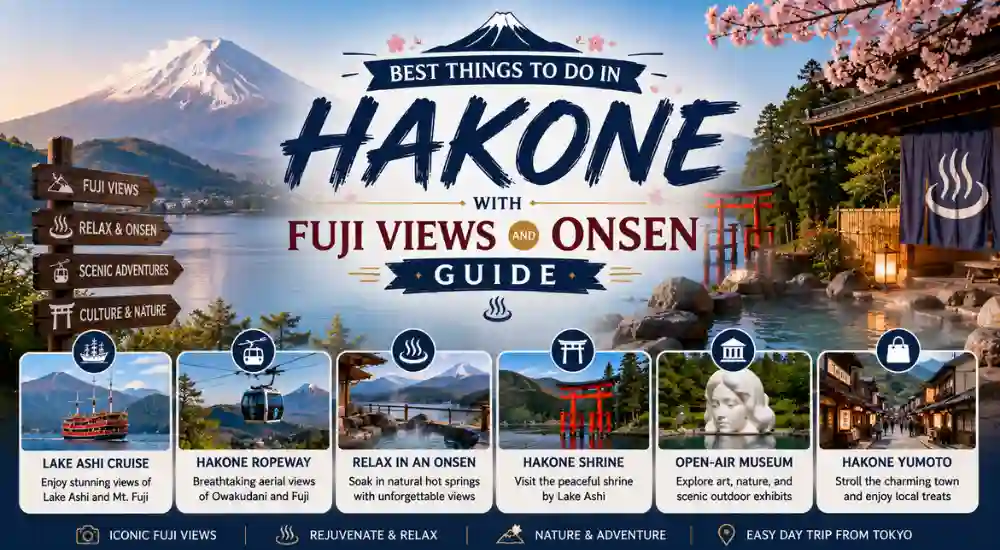
Hakone is one of the best places in Japan for travelers who want nature, culture, hot springs, and Mt Fuji views without going too far from Tokyo. If you are searching for the best things to do in Hakone, this guide will help you plan your trip in a simple and useful way.
Many visitors come for a Hakone day trip from Tokyo, but the area also works beautifully as an overnight escape. You can ride the Hakone Ropeway, see the volcanic valley of Owakudani, cruise across Lake Ashi, visit Hakone Shrine, and relax in a traditional Hakone onsen.
This guide is made for first-time visitors who want more than a basic list. You will get the best attractions, the right route, travel tips, and easy itinerary ideas.
Quick Answer: What Are the Best Things to Do in Hakone?
The best things to do in Hakone include riding the Hakone Ropeway, seeing the volcanic valley of Owakudani, taking a Lake Ashi cruise, and visiting the peaceful Hakone Shrine. These are the main highlights most first-time visitors should not miss.
Hakone is also famous for hot springs, traditional ryokan stays, mountain views, art museums, and scenic transport. If the weather is clear, you may also see Mt Fuji from Hakone, especially near Lake Ashi, Owakudani, and the ropeway.
For a short visit, follow the Hakone Loop. For a better experience, stay overnight and enjoy a relaxing Hakone onsen after the crowds leave.
Why Visit Hakone?
Hakone is worth visiting because it gives you a peaceful break from busy Tokyo. It has nature, culture, art, hot springs, and mountain views in one easy trip. This makes it one of the best places for a Tokyo to Hakone day trip.
The area is also great for slow travel. You can ride trains through the mountains, cruise across a lake, walk near old roads, and relax in a warm onsen. It feels very different from Japan’s big cities.
Hakone is best for first-time visitors, couples, families, and anyone who wants a mix of scenery and comfort. It is not only about attractions. It is about enjoying a calm Japanese mountain experience.
Hakone Travel Map by Area
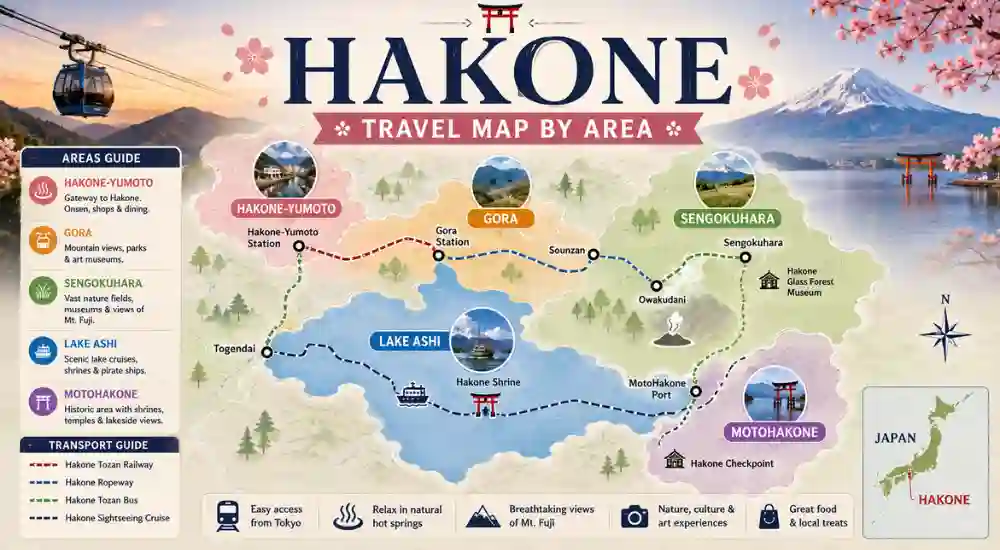
Hakone is easier to understand when you divide it into areas. This helps you plan the best route and avoid wasting time. Most visitors start from Hakone-Yumoto, then move toward Gora, Owakudani, Lake Ashi, and Moto-Hakone.
The main travel route is often called the Hakone Loop. It connects trains, cable cars, ropeways, buses, and boats. This is why the Hakone Free Pass can be useful for many travelers.
Each area has a different feel. Hakone-Yumoto is best for arrival and onsens. Gora is known for museums. Owakudani has volcanic views. Lake Ashi is best for cruises, shrines, and possible Mt Fuji views.
Hakone-Yumoto Area
Hakone-Yumoto is the main gateway to Hakone. Most travelers arrive here from Tokyo by train, especially from Shinjuku or Odawara. It is a good place to start your Hakone itinerary.
This area has many ryokan, souvenir shops, cafes, and bathhouses. If you want an easy Hakone onsen experience without going far, Hakone-Yumoto is a smart choice.
It is also good for travelers with luggage because transport is simple here. You can stay overnight, enjoy a hot spring, and begin the Hakone Loop the next morning. For first-time visitors, this is one of the most convenient bases in Hakone.
Gora Area
Gora is one of the most popular areas in Hakone for museums, ryokan, and easy access to the mountain route. It connects to the Hakone Tozan Railway, cable car, and ropeway.
The biggest highlight here is the Hakone Open-Air Museum, which is one of the best attractions in Hakone. You can also visit Gora Park, small cafes, and nearby onsen stays.
Gora is a good base if you want a mix of culture and comfort. It feels quieter than Hakone-Yumoto but still has good transport links. For a 2 days in Hakone plan, Gora is a strong place to stay.
Owakudani and Ropeway Area
The Owakudani and Ropeway area is one of the most dramatic parts of Hakone. Here, you can see steam rising from the volcanic valley and enjoy wide mountain views from the Hakone Ropeway.
Owakudani is famous for its black eggs, which are cooked in natural hot spring water. Many travelers also come here hoping to see Mt Fuji, though the view depends on the weather.
This area is a key stop on the Hakone Loop itinerary. It connects Gora with Togendai near Lake Ashi. If you only have one day in Hakone, try not to miss this section.
Lake Ashi Area
Lake Ashi, also called Lake Ashinoko, is one of Hakone’s most beautiful places. It is famous for the Hakone pirate ship cruise, calm water, forested hills, and views of Mt Fuji on clear days.
Around the lake, you can visit Hakone Shrine, Moto-Hakone, Hakone Checkpoint, and several viewpoints. This area is perfect for photos and slow walks.
Lake Ashi is also one of the best places to understand why Hakone is so popular. It combines nature, history, and scenery in a simple way. For many visitors, this becomes the most memorable part of their Hakone travel guide experience.
Sengokuhara Area
Sengokuhara is a quieter area of Hakone known for nature, museums, and open landscapes. It is not always included in short day trips, but it is worth adding if you stay overnight.
The area is famous for the Sengokuhara Pampas Grass Field, especially in autumn. It also has popular art spots like the Pola Museum of Art and Hakone Venetian Glass Museum.
Sengokuhara is best for travelers who want fewer crowds and a slower pace. It works well for a relaxed 2-day Hakone itinerary, especially if you enjoy art, nature, and peaceful scenery.
Best Things to Do in Hakone by Experience Type
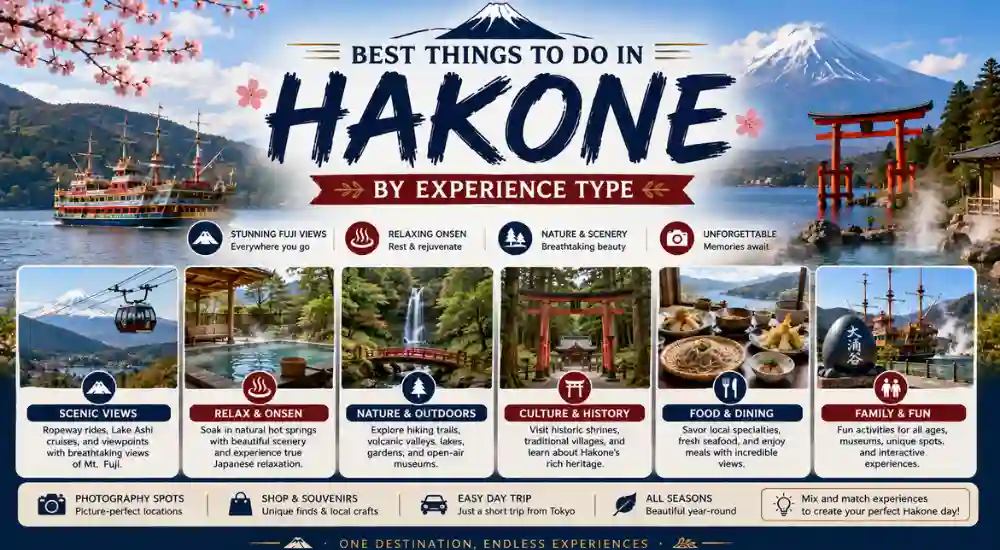
Hakone has many attractions, but the best way to enjoy them is by experience type. Some visitors care most about scenery. Others want culture, onsens, food, or museums.
This structure makes your Hakone guide more useful because it helps people choose based on their travel style. A family may prefer museums and easy transport. Couples may prefer a ryokan and private onsen. First-time visitors may want the classic Hakone Loop.
The best plan usually combines a few scenic spots, one cultural stop, and one relaxing experience. This gives you a balanced trip without rushing through too many places in one day.
Best Scenic Experiences
The best scenic experiences in Hakone are the Hakone Ropeway, Lake Ashi cruise, Owakudani, and the viewpoints around Moto-Hakone. These places show the natural beauty that makes Hakone special.
The ropeway gives you mountain views from above, while Lake Ashi gives you calm water, forest views, and possible Mt Fuji views from Hakone. Owakudani adds volcanic steam and a more dramatic landscape.
For the best chance of clear views, start early in the day. Mt Fuji is often easier to see in cooler months, especially winter. Even without Fuji, these scenic places are still worth visiting.
Hakone Ropeway
The Hakone Ropeway is one of the top attractions in Hakone. It connects Sounzan and Togendai, passing over volcanic scenery near Owakudani. The ride is short, but the views can be amazing.
On a clear day, you may see Mt Fuji, Lake Ashi, and the smoking valley below. This is why the ropeway is often included in almost every Hakone day trip itinerary.
Before you go, check for weather or safety updates because volcanic activity can sometimes affect access. If the ropeway is open, it is one of the easiest and most memorable ways to enjoy Hakone’s mountain scenery.
Lake Ashi Cruise
A Lake Ashi cruise is one of the most relaxing things to do in Hakone. Many visitors take the famous pirate-style sightseeing boat between Togendai, Hakone-machi, and Moto-Hakone.
The cruise is popular because it connects major attractions while giving you beautiful lake views. On clear days, you may see Mt Fuji behind Lake Ashi, which is one of Hakone’s classic views.
This cruise fits naturally into the Hakone Loop route. It is not only for photos; it also helps you move around the area. For first-time visitors, it is both scenic and practical.
Mt Fuji Viewpoints
Seeing Mt Fuji from Hakone is a big reason many people visit. The best viewpoints include Lake Ashi, the Hakone Ropeway, Owakudani, Moto-Hakone, and Narukawa Art Museum.
However, Fuji views are never guaranteed. Clouds, rain, and haze can hide the mountain even when the weather feels fine. This is why it is better to treat Fuji as a bonus, not the only reason to visit.
Winter often gives the clearest views, while summer can be cloudy. If Fuji is visible, take photos early because the mountain can disappear quickly behind clouds.
Sengokuhara Pampas Grass Field
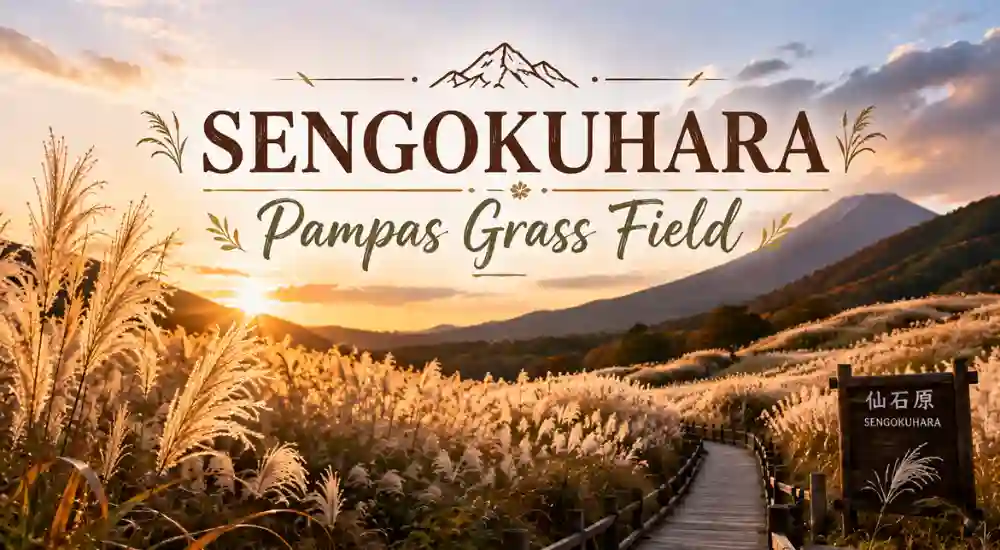
The Sengokuhara Pampas Grass Field is one of Hakone’s best nature spots, especially in autumn. The tall golden grass creates a soft and peaceful landscape that feels different from the busy Hakone Loop.
This area is best for travelers who enjoy quiet walks and natural photo spots. It is also a good choice if you have already visited the main attractions and want something less crowded.
Sengokuhara is not always easy to fit into a short Hakone day trip from Tokyo, but it works well for an overnight plan. Visit in late afternoon for softer light and better photos.
Best Cultural Experiences
Hakone has many cultural experiences that connect visitors with Japan’s history and traditions. The most important ones include Hakone Shrine, the Old Tokaido Road, Hakone Checkpoint, and Amazake Tea House.
These places help your trip feel deeper than just sightseeing. You can see old travel routes, peaceful shrine grounds, and traditional rest stops that were once used by travelers.
If you want a balanced Hakone itinerary, include at least one cultural stop. Hakone Shrine is the easiest choice for first-time visitors, while the Old Tokaido Road and Amazake Tea House are better for slow travelers.
Hakone Shrine
Hakone Shrine is one of the most famous attractions in Hakone. It sits near Lake Ashi, surrounded by tall trees and quiet paths. The red torii gate by the water is one of the most photographed spots in the area.
Many travelers visit the shrine after the Lake Ashi cruise. It is a peaceful place, but the floating torii gate can get crowded. If you want a photo, go early or be ready to wait.
Even without the photo spot, the shrine is worth visiting. It adds culture, calmness, and beauty to your things to do in Hakone Japan list.
Hakone Checkpoint
Hakone Checkpoint is a historic site near Lake Ashi. During the Edo period, it was part of the old route between Tokyo and Kyoto. Today, visitors can see restored buildings and learn about travel control in old Japan.
This stop is useful for travelers who enjoy history. It also fits well with a visit to Hakone-machi or the Lake Ashi cruise route.
While it may not be as exciting as the ropeway or onsen, it adds context to the area. If you want your Hakone travel guide to feel complete, this is a good cultural stop to include.
Old Tokaido Road
The Old Tokaido Road is a historic walking route that once connected Edo, now Tokyo, with Kyoto. In Hakone, parts of the old stone path still remain, giving visitors a quiet and meaningful walk.
This is a good activity if you want to slow down and enjoy nature. The path can be uneven, so comfortable shoes are important.
The Old Tokaido Road is not for everyone, especially if you only have one day in Hakone. But for travelers staying overnight, it offers a deeper look at Japan’s travel history and local landscape.
Amazake Tea House
Amazake Tea House is a traditional stop along the Old Tokaido Road. It serves amazake, a sweet rice drink, along with simple snacks in a warm wooden setting.
This place is special because it feels connected to old Japan. Travelers have rested in this area for centuries, and the tea house keeps that feeling alive.
It is best for visitors who enjoy quiet cultural experiences instead of only big attractions. If you are writing a complete Hakone guide, this is a great place to mention because many basic competitor articles do not explain why it matters.
Best Relaxing Experiences
Hakone is one of Japan’s best places to relax. The area is famous for hot springs, peaceful ryokan, mountain air, and slow travel. This is why many people choose Hakone after busy days in Tokyo.
The best relaxing experiences include soaking in a Hakone onsen, staying in a traditional ryokan, enjoying a private bath, or simply walking around a quiet area like Gora or Lake Ashi.
If your schedule allows, stay one night. A day trip is possible, but an overnight stay gives you time to enjoy Hakone’s slower side. This is where Hakone feels most special.
Hakone Onsen
A Hakone onsen is one of the top reasons to visit the area. Onsens are natural hot spring baths, and Hakone has many public baths, hotel baths, and private options.
After walking, sightseeing, and riding transport all day, soaking in an onsen feels very refreshing. Some baths have mountain views, garden views, or open-air settings.
Before entering, follow basic onsen rules. Wash before bathing, do not wear swimwear unless allowed, and check tattoo policies if needed. For many travelers, an onsen becomes the most relaxing part of their Hakone itinerary.
Traditional Ryokan Stay
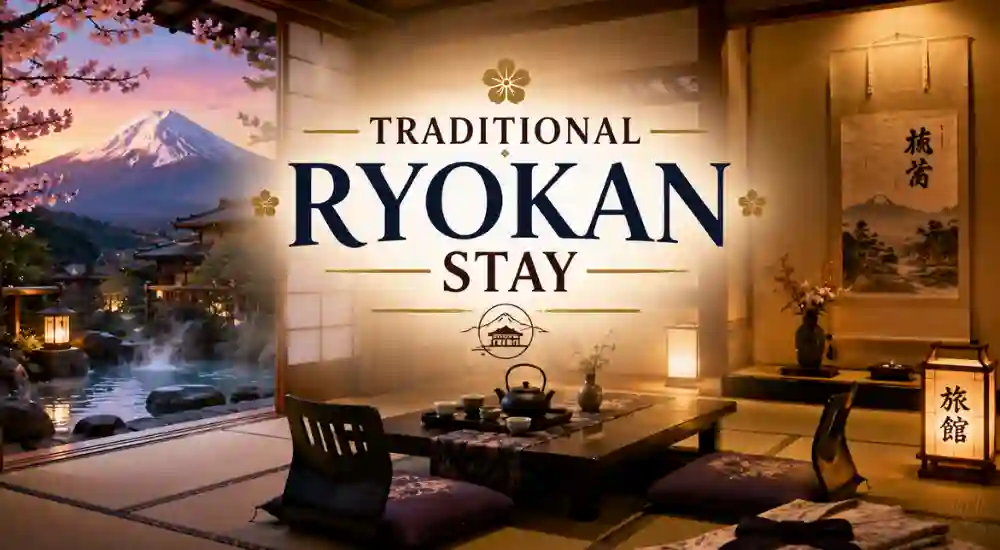
A Hakone ryokan stay is one of the best overnight experiences in Japan. A ryokan is a traditional inn, often with tatami rooms, futon bedding, Japanese meals, and access to hot spring baths.
Staying in a ryokan makes Hakone feel more complete. You can enjoy kaiseki dinner, a peaceful bath, and a slower evening after day-trip visitors leave.
Ryokan prices can be higher than regular hotels, but the experience is special. If you are choosing between a Hakone day trip and overnight stay, the ryokan is the strongest reason to stay.
Private Onsen Experience
A private onsen in Hakone is perfect for travelers who want more comfort and privacy. Some ryokan offer private baths inside rooms, while others have reservable family baths.
This is a good choice for couples, families, or visitors who feel shy about public bathing. It is also useful for travelers with tattoos, since some public onsens may have rules.
Private onsens often cost more, but they can make the trip feel more peaceful. If your budget allows, booking a ryokan with a private bath is one of the best luxury experiences in Hakone.
Best Art and Museum Experiences
Hakone is not only about nature and hot springs. It is also one of Japan’s best mountain areas for art museums. The most famous is the Hakone Open-Air Museum, but there are several other strong options.
Museums are especially useful when the weather is rainy or Fuji is hidden by clouds. They also add variety to your Hakone travel guide.
If you have one day, choose one museum. If you stay overnight, you can add two. Art lovers may enjoy Gora and Sengokuhara the most because many museums are located around these areas.
Hakone Open-Air Museum
The Hakone Open-Air Museum is one of the best things to do in Hakone for first-time visitors. It combines outdoor sculptures, mountain views, gardens, and indoor galleries.
This museum is easy to enjoy even if you are not an art expert. The open space makes it relaxing, and families often like it because children can move around more freely.
It is close to the Hakone Tozan Railway, so it fits well into a day trip or overnight itinerary. If you only choose one museum in Hakone, this is usually the best option.
Pola Museum of Art
The Pola Museum of Art is located in the quiet Sengokuhara area. It has a peaceful forest setting and a strong collection of Japanese and Western art.
This museum is best for travelers who want a calm indoor activity. It is also a good choice on rainy days or when you want to avoid crowded attractions.
Because it is not directly on the main Hakone Loop, it may be harder to fit into a fast day trip. However, for a relaxed 2-day Hakone itinerary, Pola Museum is a very worthwhile stop.
Narukawa Art Museum
The Narukawa Art Museum is near Lake Ashi and is known for both art and views. From the museum, you may see Lake Ashi, the red torii gate, and Mt Fuji on a clear day.
This makes it a smart stop for travelers who want a mix of culture and scenery. Even if Fuji is not visible, the lake view is still beautiful.
Narukawa Art Museum is easy to pair with Hakone Shrine and Moto-Hakone. It is a good choice if you want a quieter place near the lake area.
Hakone Venetian Glass Museum
The Hakone Venetian Glass Museum is a pretty museum in Sengokuhara. It has glass art, garden paths, decorative displays, and a European-style atmosphere.
This museum is best for travelers who enjoy unique photo spots and slower sightseeing. It can also be a good rainy-day activity in Hakone.
It is not the top must-see for every first-time visitor, but it adds variety to an overnight trip. If your article wants to cover more than the basic attractions, this museum helps broaden the content.
Best Food Experiences
Food is an important part of any Hakone travel guide, but many articles do not cover it deeply. Hakone is known for black eggs, soba, amazake, ryokan meals, and small local sweets.
The food experience depends on your route. Owakudani is best for black eggs. The Old Tokaido Road is best for amazake. Ryokan stays are best for kaiseki meals.
You do not need to plan your whole trip around food, but adding a few local items makes the trip more memorable. It also helps your article feel more complete and helpful.
Black Eggs at Owakudani
The famous black eggs at Owakudani are one of Hakone’s most well-known foods. They are regular eggs boiled in hot spring water, which turns the shells black.
Many travelers try them because they are linked to local tradition. They are simple, but the experience is fun because you eat them while looking at the volcanic valley.
This is a small stop, not a full meal, but it adds character to your Hakone trip. If you visit Owakudani, trying the black eggs is part of the classic experience.
Soba Noodles
Soba noodles are a great food choice in Hakone, especially for lunch. They are simple, filling, and easy to enjoy during a day of sightseeing.
You can find soba restaurants around Hakone-Yumoto, Gora, Moto-Hakone, and other visitor areas. Cold soba is refreshing in warmer months, while hot soba is comforting in winter.
Soba fits the calm mountain feel of Hakone. It is not flashy, but it is practical and satisfying. For a simple Hakone itinerary, plan one easy soba lunch between attractions.
Kaiseki Dinner
A kaiseki dinner is often included with a traditional Hakone ryokan stay. It is a multi-course Japanese meal with seasonal dishes, careful presentation, and local ingredients.
This is one of the best reasons to stay overnight in Hakone. Instead of rushing back to Tokyo, you can enjoy a slow dinner after a hot spring bath.
Kaiseki may feel formal for first-time visitors, but it is part of the ryokan experience. If your budget allows, choose a ryokan with dinner included for a more complete Hakone trip.
Amazake Tea
Amazake tea is a sweet, warm rice drink often served at Amazake Tea House. It is comforting, especially after walking part of the Old Tokaido Road.
This experience is simple but very local. It gives travelers a break from busy sightseeing and connects them with Hakone’s old travel history.
Amazake is usually not the main reason people visit Hakone, but it adds a human touch to the trip. For visitors who like culture and quiet stops, this is a lovely addition.
Best Hakone Loop Route
The Hakone Loop route is the easiest way to see the main attractions without backtracking too much. A common route starts at Hakone-Yumoto, then goes to Gora, Sounzan, Owakudani, Togendai, Lake Ashi, Moto-Hakone, and back.
This route uses the Hakone Tozan Railway, cable car, ropeway, cruise, and buses. That is why many travelers buy the Hakone Free Pass.
The best route depends on where you start and where you stay. For a day trip, begin early and keep your plan simple. For an overnight trip, split the loop into two days so you can enjoy each place without rushing.
Perfect 1-Day Hakone Itinerary from Tokyo
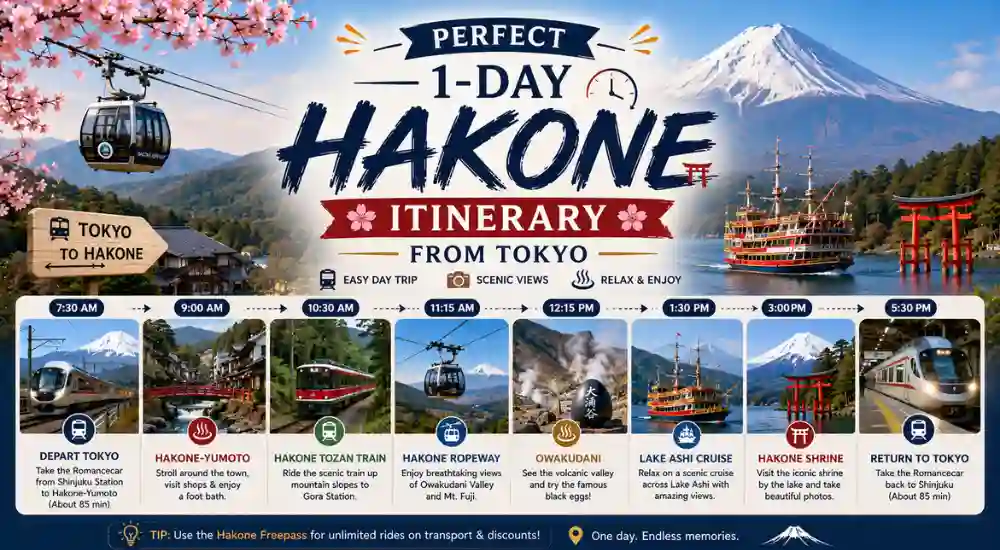
A Hakone day trip from Tokyo is possible if you start early. Take the train from Shinjuku or Tokyo area to Hakone-Yumoto, then move toward Gora and the Hakone Open-Air Museum.
After that, continue by cable car and Hakone Ropeway to Owakudani. Spend time seeing the volcanic valley and trying black eggs. Then ride to Togendai and take the Lake Ashi cruise.
End your day near Moto-Hakone with Hakone Shrine and the lakeside view. Return by bus and train. This itinerary is busy, so do not add too many extra stops. Focus on the main highlights.
Relaxed 2-Day Hakone Itinerary
A 2-day Hakone itinerary is better if you want a calmer experience. On day one, arrive from Tokyo, visit the Hakone Open-Air Museum, walk around Gora, then check into a ryokan.
Spend the evening enjoying a Hakone onsen and a kaiseki dinner. This is the part day-trippers usually miss.
On day two, ride the cable car and ropeway to Owakudani, continue to Lake Ashi, take the cruise, visit Hakone Shrine, and stop at Hakone Checkpoint or Amazake Tea House if you have time. This plan feels smoother and gives you more time to enjoy the area.
Hakone Day Trip or Overnight Stay?
A Hakone day trip is best if you have limited time in Japan and want to see the major highlights from Tokyo. You can cover the ropeway, Owakudani, Lake Ashi, and Hakone Shrine in one long day.
An overnight stay is better if you want a ryokan, onsen, slower meals, and fewer crowds. This is the best way to enjoy Hakone’s relaxing side.
If your Japan itinerary is tight, one day is enough for the main sights. If you want the full experience, stay one night. For most first-time visitors, one night in Hakone is the best balance.
How to Get to Hakone from Tokyo
The easiest way to get from Tokyo to Hakone is from Shinjuku to Hakone-Yumoto using Odakyu trains. The Romancecar is the most comfortable direct option, while regular Odakyu trains are cheaper.
Another route is using JR to Odawara, then changing to local transport for Hakone. This can be useful for some JR Pass users, but local Hakone transport is still separate.
Most travelers should compare time, comfort, and pass value before choosing. If you plan to do the full Hakone Loop, the Hakone Free Pass may make travel easier and more organized.
Getting Around Hakone Without a Car
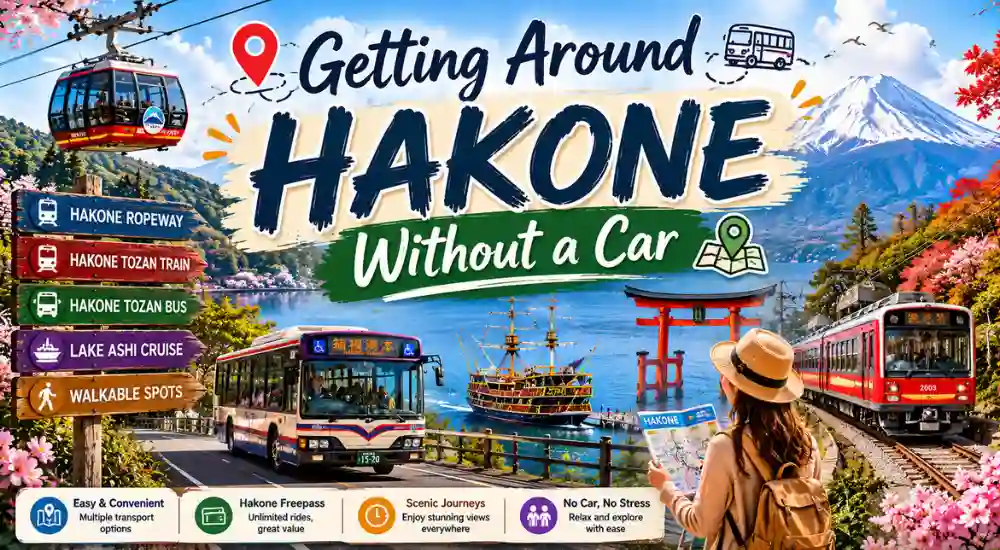
You do not need a car to visit Hakone. The area is built around public transport, including trains, buses, cable cars, ropeways, and boats.
The key is to follow a logical route. If you jump between random attractions, travel can feel confusing and slow. The Hakone Loop helps because it connects the main sights in a clear order.
Buses are useful but can get crowded during weekends and holidays. Pack light and avoid carrying large luggage around the loop. If you stay overnight, ask about luggage storage or forwarding services.
Hakone Free Pass Guide
The Hakone Free Pass is useful for many visitors because it covers several types of transport in the Hakone area. It is especially helpful if you plan to ride the train, cable car, ropeway, buses, and Lake Ashi cruise.
It is usually worth it for travelers doing the full Hakone Loop or staying overnight. It may not be worth it if you only visit one or two places.
The main benefit is convenience. You do not need to buy separate tickets again and again. Before buying, check your route and compare whether the pass fits your actual plan.
Best Time to Visit Hakone
The best time to visit Hakone depends on what you want. Winter often gives the clearest Mt Fuji views, while autumn is beautiful for red and gold leaves.
Spring is popular for flowers and mild weather. Summer is green and fresh, but Fuji views can be harder because of clouds and haze. Rainy days are also possible, especially around early summer.
Hakone can be visited all year, but your experience changes by season. For photography, winter and autumn are strong choices. For a relaxed onsen trip, any season can work well.
Rainy Day Things to Do in Hakone
Rain does not have to ruin your Hakone trip. If the weather is cloudy, choose indoor and relaxing activities instead of chasing Fuji views.
Good rainy-day options include the Hakone Open-Air Museum if rain is light, Pola Museum of Art, Narukawa Art Museum, Hakone Venetian Glass Museum, onsens, cafes, and ryokan time.
This is why an overnight stay can be helpful. If one day is rainy, you may still have another chance for views. Always keep a flexible plan because mountain weather can change quickly.
Best Photo Spots in Hakone
Hakone has many beautiful photo spots. The most famous is the Hakone Shrine floating torii gate by Lake Ashi. It looks especially nice with the lake behind it, but it often has a line.
Other great photo spots include the Hakone Ropeway, Owakudani steam vents, Lake Ashi cruise, Narukawa Art Museum viewpoint, Sengokuhara Pampas Grass Field, and Hakone Open-Air Museum.
For the best photos, start early and check the weather. Clear mornings are usually better for Mt Fuji views from Hakone. Even if Fuji is hidden, Hakone still has many scenic places.
Common Hakone Mistakes to Avoid
The biggest Hakone mistake is arriving too late. Many attractions and transport routes take time, so a late start can make your day feel rushed.
Another mistake is expecting guaranteed Mt Fuji views. Hakone is beautiful, but Fuji depends on weather. You should plan the trip for Hakone itself, not only for the mountain.
Also avoid carrying big luggage around the loop, adding too many museums in one day, or ignoring transport times. Check ropeway updates before visiting Owakudani. Book ryokan early if traveling in busy seasons. A simple plan is usually better than an overpacked one.
What to Pack for Hakone
For Hakone, pack comfortable walking shoes, a light jacket, cash, a small day bag, and a camera or phone with enough battery. The weather can change quickly in the mountains.
If you plan to use an onsen, check what your hotel provides. Most ryokan offer towels and basic items, but it is still good to bring personal care products.
Avoid bringing large luggage on the Hakone Loop if possible. Use luggage storage or forwarding when available. A smaller bag makes trains, buses, ropeways, and the Lake Ashi cruise much easier.

Suggested Article Keyword Targets
For SEO, your article should naturally use things to do in Hakone as the main keyword. Secondary keywords should include best things to do in Hakone, Hakone travel guide, Hakone attractions, and things to do in Hakone Japan.
For planning intent, include Hakone itinerary, Hakone day trip itinerary, 1 day in Hakone, 2 days in Hakone, and Hakone Loop.
For transport and experience keywords, use Tokyo to Hakone, Hakone Free Pass, Hakone Ropeway, Lake Ashi cruise, Owakudani black eggs, Hakone onsen, Hakone ryokan, and Mt Fuji views from Hakone.
FAQs
Is Hakone worth visiting from Tokyo?
Yes, Hakone is worth visiting from Tokyo because it is easy to reach and offers a strong mix of nature, hot springs, lake views, culture, and possible Mt Fuji views. It works well as a day trip, but it is better as an overnight stay if you want a ryokan and onsen experience.
What should I not miss in Hakone?
Do not miss the Hakone Ropeway, Owakudani, Lake Ashi cruise, Hakone Shrine, and a Hakone onsen. If you enjoy art, add the Hakone Open-Air Museum. These stops give you the best mix of scenery, culture, and classic Hakone experiences.
Is one day enough for Hakone?
One day in Hakone is enough for the main highlights if you start early and follow the Hakone Loop. However, it can feel rushed. If you want to enjoy a ryokan, private onsen, museums, and slower meals, one night is much better.
Should I stay overnight in Hakone?
Yes, staying overnight in Hakone is worth it if your budget and schedule allow. The best reason is the ryokan and onsen experience. You also get a slower pace and can enjoy the area after many day-trippers return to Tokyo.
What is the best route around Hakone?
The best route is usually the Hakone Loop. Start from Hakone-Yumoto, go to Gora, continue to Sounzan, ride the ropeway to Owakudani and Togendai, cruise Lake Ashi, visit Moto-Hakone, then return by bus or train.
Is the Hakone Free Pass worth it?
The Hakone Free Pass is worth it if you plan to use several types of transport and complete the Hakone Loop. It is useful for day trips and overnight stays. If you only visit one attraction, it may not save much money.
Can I visit Hakone without a car?
Yes, you can visit Hakone without a car. Public transport is part of the experience. Trains, buses, cable cars, ropeways, and boats connect the main attractions. Most first-time visitors do not need to rent a car.
What is the best month to visit Hakone?
The best months are often November for autumn colors and January or February for clearer Mt Fuji views. Spring is also lovely for flowers and mild weather. Hakone is open year-round, but weather can affect views.
What can I do in Hakone when it rains?
When it rains in Hakone, visit museums, enjoy an onsen, relax at your ryokan, try cafes, or visit indoor art spots like Pola Museum and Narukawa Art Museum. Rainy days are also good for slow travel and hot springs.
Conclusion
Hakone is one of the best places in Japan for travelers who want nature, culture, hot springs, art, and easy access from Tokyo. It is more than a simple attraction list. The real value is in planning the right route.
If you only have one day, follow the Hakone Loop and focus on the ropeway, Owakudani, Lake Ashi, and Hakone Shrine. If you have more time, stay overnight in a ryokan and enjoy a peaceful onsen.
For first-time visitors, Hakone is at its best when you keep the plan simple, start early, and leave room for slow moments.