
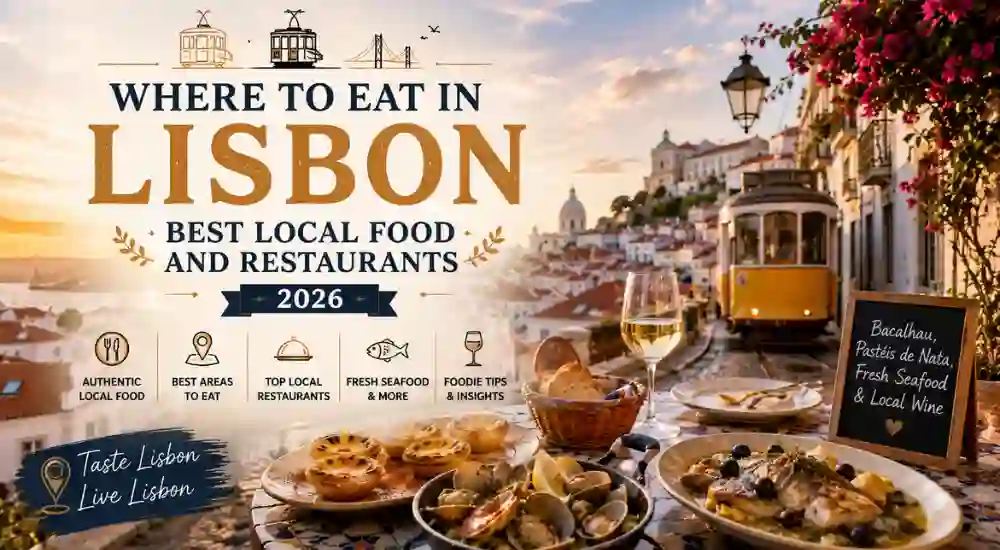
Lisbon is one of those cities where food becomes part of the trip, not just a break between sightseeing. From warm pastel de nata in Belém to fresh seafood restaurants in Lisbon, every meal gives you a taste of the city’s culture, history, and local life.
If you are wondering where to eat in Lisbon, this guide will help you choose the best restaurants, traditional tascas, food markets, bakeries, wine bars, and cheap local spots without feeling confused. You will also know what to eat in Lisbon, including bacalhau, grilled sardines, bifana, octopus, and ginjinha.
Whether this is your first visit or you want to eat more like a local, this Lisbon food guide will make it easier to plan every meal with confidence.
Quick Answer
If you are looking for the best places to eat in Lisbon, start with traditional tascas, seafood restaurants, pastry shops, and local wine bars. First-time visitors should eat in Chiado, Baixa, Alfama, and Cais do Sodré because these neighborhoods offer a good mix of local food, classic Lisbon dishes, and easy access to attractions.
For must-try foods, order pastel de nata, bacalhau, grilled sardines, bifana, octopus, and Portuguese wine. If you want a quick and easy experience, visit Time Out Market Lisbon. For a more local atmosphere, choose small family-run restaurants and neighborhood cafés away from the busiest tourist streets.
Lisbon is also excellent for cheap eats, seafood dinners, romantic restaurants, and casual wine bars, making it one of the best food cities in Europe for all travel styles.
Best Places to Eat in Lisbon at a Glance
If you want a quick answer, the best places to eat in Lisbon are a mix of old tascas, seafood spots, bakeries, markets, and modern Portuguese restaurants. For traditional food, choose a local tasca. For seafood, look for places serving grilled fish, octopus, or arroz de marisco. For sweets, try pastel de nata at a bakery in Belém or Chiado.
For first-time visitors, Time Out Market Lisbon is easy, but local restaurants in Alfama, Baixa, Chiado, and Cais do Sodré often feel more authentic. Lisbon is also great for cheap eats, wine bars, and relaxed dinner spots. The best choice depends on your budget, area, and the type of food you want.

What to Eat in Lisbon
Lisbon food is simple, rich, and full of local flavor. Before choosing restaurants, it helps to know what to eat in Lisbon. The city is famous for seafood, codfish, pastries, sandwiches, wine, and small local dishes that are easy to enjoy without spending too much.
Pastel de Nata
Pastel de nata is Lisbon’s most famous sweet. It is a warm custard tart with flaky pastry and a soft, creamy center. Try it with coffee for breakfast or as an afternoon snack.
Bacalhau
Bacalhau is salted cod and one of Portugal’s most loved foods. In Lisbon, you may see it grilled, baked, or served as bacalhau à Brás with eggs and potatoes.
Grilled Sardines
Grilled sardines are popular in Lisbon, especially in summer. They are simple, smoky, and often served with bread, potatoes, or salad.
Bifana
A bifana is a pork sandwich with tender meat and simple seasoning. It is one of the best cheap eats in Lisbon.
Prego
Prego is a beef sandwich, usually served in bread with garlic flavor. It is filling, quick, and easy to eat while sightseeing.
Ginjinha
Ginjinha is a sweet cherry liqueur. Many visitors try it in small local bars as a classic Lisbon food experience.
Best Areas to Eat in Lisbon
Choosing the right area is important when deciding where to eat in Lisbon. Each neighborhood has a different food style, so your location can shape your meal.
Baixa and Chiado
Baixa and Chiado are easy areas for first-time visitors. You will find cafés, bakeries, seafood restaurants, wine bars, and modern Portuguese restaurants close to main attractions.
Alfama
Alfama is best for traditional food, fado restaurants, and cozy local streets. It is a good area if you want a classic Lisbon atmosphere.
Bairro Alto
Bairro Alto is ideal for dinner, drinks, and nightlife. It has many restaurants, bars, and casual places to eat late.
Cais do Sodré
Cais do Sodré is great for food markets, trendy restaurants, seafood, cocktails, and wine bars.
Belém
Belém is famous for pastries, especially pastéis de nata, and is perfect for a food stop during sightseeing.
Best Traditional Portuguese Restaurants in Lisbon
Traditional restaurants are the heart of the Lisbon food guide experience. These places often serve simple dishes, big portions, and local flavors. Look for tascas where menus include bacalhau, grilled meat, octopus, sardines, soup, and daily lunch specials.

A good traditional restaurant in Lisbon does not need to be fancy. Many of the best meals are served in small rooms with paper menus, local wine, and friendly service. This is where you can eat more like a local and avoid over-polished tourist menus.
When searching for traditional restaurants in Lisbon, choose places with clear prices, local dishes, and steady customer flow. These restaurants are best for travelers who want real Portuguese food without spending too much.
Best Seafood Restaurants in Lisbon
Lisbon is one of the best cities in Europe for seafood. Since the city is close to the Atlantic, you can enjoy fresh fish, shellfish, octopus, clams, and seafood rice. If you love seafood, this should be one of your top food priorities.
The best seafood restaurants in Lisbon often serve grilled fish by weight, so always check the price before ordering. Popular dishes include octopus, clams à Bulhão Pato, grilled sardines, prawns, and arroz de marisco.
For a better experience, avoid restaurants with pushy staff near tourist squares. Choose places where locals are eating and where the menu is clear. Seafood can be affordable, but some dishes can become expensive if priced by weight.
Best Cheap Eats in Lisbon
Lisbon can be a great city for budget travelers if you know what to order. Some of the best cheap eats in Lisbon are simple, local, and filling. Bifanas, pregos, soup, pastries, and daily lunch menus are all good options.
A bifana is one of the easiest cheap meals in Lisbon. It is quick, tasty, and usually costs much less than a full restaurant meal. Bakeries are also useful for breakfast, snacks, and light lunches.
For affordable meals, look for local cafés, small tascas, and restaurants offering “prato do dia,” which means dish of the day. Food markets can also be good, but prices are not always cheaper. Always compare before ordering.
Best Places for Pastel de Nata in Lisbon
No Lisbon food guide is complete without pastel de nata. This small custard tart is crispy outside, creamy inside, and best eaten warm with cinnamon or powdered sugar.

Pastéis de Belém
Pastéis de Belém is the most famous place to try this dessert. It is popular with visitors because of its history and location near major Belém attractions.
Manteigaria
Manteigaria is a great choice if you want a fresh pastel de nata in central Lisbon. It is easy to visit and very popular.
Fábrica da Nata
Fábrica da Nata is another convenient option for travelers. It is good for a quick sweet stop while walking around the city.
If you have time, try more than one place. Each bakery has a slightly different texture, sweetness, and pastry style.
Best Food Markets in Lisbon
Food markets are helpful when you want variety in one place. They are good for groups, first-time visitors, and travelers who want to try several Lisbon dishes without visiting many restaurants.
Time Out Market Lisbon
Time Out Market Lisbon is the most famous food market in the city. It has many stalls, famous chefs, desserts, drinks, and casual seating. It is easy but can feel busy and touristy.
Mercado da Ribeira
Mercado da Ribeira is connected with Time Out Market and gives visitors a mix of local market history and modern food options.
Campo de Ourique Market
Campo de Ourique Market feels calmer and more local. It is a good choice if you want a relaxed market meal away from the busiest tourist areas.
Best Wine Bars and Cocktail Bars in Lisbon
Lisbon is not only about food. It is also a great city for wine bars, cocktail bars, and relaxed evening drinks. Portuguese wine is often high quality and more affordable than in many other European cities.

For wine, look for places that serve local reds, whites, Vinho Verde, and port. A good Lisbon wine bar can help you try different regions of Portugal without leaving the city. Many also serve cheese, tinned fish, bread, and small plates.
For cocktails, Bairro Alto, Cais do Sodré, and Príncipe Real are strong areas. These neighborhoods have stylish bars, rooftop Bar spots, and late-night energy. If your article targets where to eat and drink in Lisbon, this section is very important.
Best Restaurants in Lisbon for First-Time Visitors
First-time visitors should choose restaurants that are easy to reach, reliable, and close to the main sightseeing areas. Baixa, Chiado, Alfama, Cais do Sodré, and Príncipe Real are useful neighborhoods because they have many strong food options.
The best restaurants in Lisbon for first-timers should offer clear menus, friendly service, and classic Portuguese dishes. Good choices include traditional tascas, seafood restaurants, bakeries, and food markets.
If you are visiting during a busy season, book popular dinner spots in advance. For a simple plan, try pastel de nata in the morning, seafood for lunch, and dinner at a traditional Portuguese restaurant. This gives you a balanced taste of Lisbon in one day.
Best Restaurants in Lisbon for Couples
Lisbon is a beautiful city for couples, especially at dinner. The hills, river views, tiled streets, and soft evening light make meals feel special. For couples, the best choices are cozy restaurants, rooftop spots, wine bars, and modern Portuguese restaurants.
Look for romantic restaurants in Lisbon in Chiado, Príncipe Real, Alfama, and Bairro Alto. These areas have good food, nice walking streets, and plenty of places for drinks before or after dinner.
Seafood restaurants are also a strong choice for couples, especially if you enjoy sharing dishes. For a relaxed date night, choose a wine bar with small plates. For something more special, book a fine dining or modern Portuguese restaurant in advance.
Best Restaurants in Lisbon for Solo Travelers
Lisbon is friendly for solo travelers because many meals can be casual and relaxed. Food markets, cafés, bakeries, wine bars, and small tascas are all easy places to eat alone without feeling uncomfortable.
The best restaurants in Lisbon for solo travellers are usually places with counter seats, quick service, simple menus, and a welcoming atmosphere. Time Out Market is easy for solo dining, but smaller local cafés can feel more authentic.
Solo travelers should also try breakfast at a bakery, lunch at a local tasca, and dinner at a wine bar or casual restaurant. These places make it easy to enjoy Lisbon’s food without needing a group. Always save a few nearby options in case one place is full.
Best Restaurants Near Lisbon Attractions
Eating near attractions can be convenient, but you need to choose carefully. Some restaurants near busy landmarks are overpriced or made mainly for tourists. A little planning can help you avoid weak meals.

Near Praça do Comércio
Near Praça do Comércio, walk a few streets away from the square for better prices and more local food.
Near Rossio
Near Rossio, you can find cafés, bakeries, bifana shops, and casual restaurants good for lunch.
Near Belém Tower
Near Belém Tower, focus on pastries, cafés, and relaxed lunch spots after sightseeing.
Near Jerónimos Monastery
Near Jerónimos Monastery, try pastel de nata or a simple Portuguese lunch.
Near São Jorge Castle
Near São Jorge Castle, Alfama restaurants are a good choice for traditional food.
Lisbon Food Budget Guide
Lisbon can fit many budgets. You can eat cheaply with bakeries, sandwiches, local cafés, and dish-of-the-day menus, or spend more on seafood, wine bars, and fine dining.
For budget meals, choose bifana, prego, soup, pastries, or lunch specials. These are usually affordable and filling. Mid-range meals often include a main dish, drink, and dessert. Seafood can cost more, especially when fish or shellfish is priced by weight.
A smart Lisbon food budget guide should remind readers to check menus before sitting down. Also check cover charges for bread, olives, or cheese. These may be brought to the table but are not always free. Simple planning helps you enjoy Lisbon without overspending.
Lisbon Restaurant Booking Tips
Restaurant booking in Lisbon depends on where and when you want to eat. Casual cafés and bakeries usually do not need reservations, but popular dinner restaurants often do.
If you want to eat at one of the best restaurants in Lisbon, book ahead, especially on weekends, holidays, and summer evenings. For seafood restaurants, wine bars, and romantic dinner spots, reservations can save time and stress.
Dinner in Lisbon often starts later than in some countries, but tourist-friendly places may open earlier. Always check opening days because some restaurants close on Sunday or Monday. If a restaurant is very popular, try lunch instead of dinner. It can be easier to get a table and sometimes costs less.
Tourist Traps to Avoid in Lisbon
Lisbon has amazing food, but tourist traps do exist. The easiest way to avoid them is to be careful around major squares, viewpoints, and busy sightseeing streets.
Avoid restaurants where staff push menus at you too strongly. Be careful with menus that show too many food photos, unclear prices, or many unrelated international dishes. These places often focus more on tourists than food quality.
For seafood, always check if the price is per portion or by weight. This is very important because the final bill can be higher than expected. Also, do not assume every “traditional” restaurant is local. Look for simple menus, local dishes, steady customers, and clear pricing before choosing where to eat.
Lisbon Food Map Suggestions
A food map can make your article more useful and easier to follow. Since Lisbon is hilly, readers will appreciate restaurants grouped by neighborhood instead of one long list.
Create a map with categories like traditional restaurants, seafood restaurants, pastel de nata shops, cheap eats, food markets, wine bars, and cocktail bars. Use different markers for each type so readers can quickly plan meals near their hotel or attractions.
Group places by Baixa, Chiado, Alfama, Cais do Sodré, Belém, Bairro Alto, Príncipe Real, and Mouraria. This also helps SEO because it supports neighborhood keywords like Alfama restaurants, Chiado restaurants, and Cais do Sodré restaurants naturally.
One Day Lisbon Food Itinerary
A one-day Lisbon food itinerary should be simple, balanced, and easy to follow. Start with a classic pastry, enjoy seafood or traditional food for lunch, and finish with dinner in a lively neighborhood.
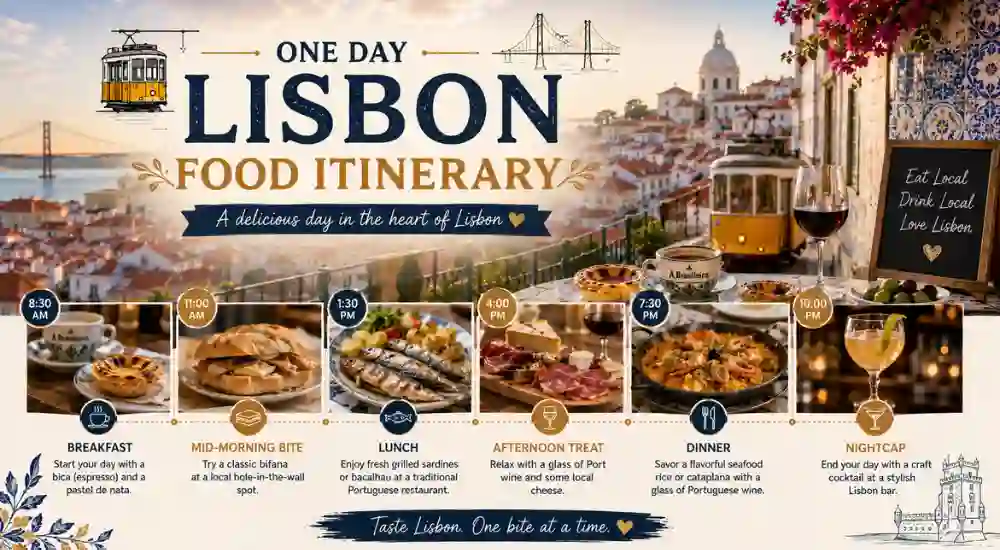
Breakfast: Pastel de Nata and Coffee
Begin with pastel de nata and coffee at a bakery in Belém, Chiado, or Baixa.
Lunch: Seafood or Tasca
For lunch, choose grilled fish, octopus, bacalhau, or a local tasca dish.
Snack: Ginjinha or Tinned Fish
In the afternoon, try ginjinha or visit a tinned fish shop for a small Lisbon snack.
Dinner: Modern Portuguese Restaurant
End the day with a modern Portuguese restaurant or a cozy traditional dinner.
Late Night: Wine Bar or Cocktail Bar
Finish with a wine bar in Bairro Alto or Cais do Sodré.
3 Day Lisbon Food Plan
A three-day Lisbon food plan gives you enough time to enjoy classic dishes, seafood, markets, and modern restaurants without rushing.
Day 1: Classic Lisbon Foods
Start with pastel de nata, then try bacalhau, bifana, ginjinha, and a traditional dinner in Alfama or Baixa.
Day 2: Seafood and Markets
Focus on seafood restaurants in Lisbon. Eat grilled fish, clams, octopus, or seafood rice. Add Time Out Market or Campo de Ourique Market for variety.
Day 3: Modern Restaurants and Wine Bars
Use the final day for Chiado, Príncipe Real, or Bairro Alto. Try modern Portuguese food, small plates, local wine, and cocktails. This mix gives readers a complete Lisbon foodie guide with classic and modern flavors.
FAQs
What food is Lisbon famous for?
Lisbon is famous for pastel de nata, bacalhau, grilled sardines, bifana, seafood, octopus, clams, ginjinha, and Portuguese wine.
Where do locals eat in Lisbon?
Locals often eat at tascas, neighborhood cafés, bakeries, seafood restaurants, and simple places offering daily lunch menus.
Is Lisbon expensive for food?
Lisbon can be affordable if you eat at local cafés, bakeries, tascas, and lunch-menu restaurants. Seafood and fine dining cost more.
Do you need restaurant reservations in Lisbon?
You need reservations for popular dinner restaurants, seafood spots, wine bars, and romantic restaurants, especially on weekends.
What is the best area to eat in Lisbon?
Chiado, Baixa, Alfama, Cais do Sodré, Bairro Alto, Belém, and Príncipe Real are some of the best food areas in Lisbon.
What should I avoid when eating in Lisbon?
Avoid pushy tourist restaurants, unclear seafood prices, photo-heavy menus, and places beside major attractions with weak reviews.
Is Time Out Market Lisbon worth it?
Yes, Time Out Market Lisbon is worth it for first-time visitors who want many food choices in one place.
What is the best food tour in Lisbon?
The best Lisbon food tour is one that includes local tascas, pastries, wine, seafood, and neighborhood stories, not only tourist stops.
Final Thoughts
Lisbon is a city where food becomes one of the best parts of the trip. From fresh seafood and traditional Portuguese dishes to warm pastries and local wine, every neighborhood offers something different. Whether you want fine dining, local tascas, food markets, or simple cafés, there are many amazing places to experience the real flavor of the city.
This guide covered where to eat in Lisbon, the best areas for food, famous local dishes, seafood restaurants, cheap eats, wine bars, and helpful dining tips for first-time visitors. By mixing traditional spots with modern restaurants, you can enjoy both the old and new sides of Lisbon’s food scene.
The best approach is to slow down, try local specialties, and avoid rushing from one restaurant to another. Lisbon’s relaxed food culture is part of what makes the city special.