

If you are looking for a complete Lake Haiyaha hike guide, you are about to explore one of the most beautiful trails in Rocky Mountain National Park (RMNP). This hike takes you through peaceful alpine scenery, starting from the popular Bear Lake trailhead hike route and passing lakes like Nymph Lake and Dream Lake before reaching the stunning Lake Haiyaha, Colorado.
What makes this hike special is not just the destination, but the journey itself. The trail offers a mix of easy walking paths and a challenging boulder field section, making it both scenic and adventurous. Many hikers are surprised by its changing difficulty and unique terrain.
In this guide, you will learn everything about the Lake Haiyaha hike, including distance, difficulty, permits, and real trail experience, so you can plan your trip with confidence and enjoy every step of the journey.
Quick Snapshot of Lake Haiyaha Hike
Here is a fast overview of the Lake Haiyaha hike guide so you can understand the basics at a glance before planning your trip in Rocky Mountain National Park (RMNP).
- Distance (Round Trip): ~4.0 to 4.6 miles (varies slightly by route from Bear Lake)
- Elevation Gain: ~750–850 feet
- Time Required: 2.5 to 4 hours (depending on pace & stops)
- Difficulty Level: Moderate to Hard (boulder field makes it more challenging)
- Trail Type: Out & back via Bear Lake → Nymph Lake → Dream Lake → Lake Haiyaha split
- Best Season: Late spring to early fall (June to October for safest conditions)
This Lake Haiyaha trail is short in distance but feels more demanding due to rocky terrain, elevation, and navigation through alpine sections.
Why Lake Haiyaha Feels Different From Other RMNP Hikes
At first, the Lake Haiyaha hike feels like a simple walk through one of the most famous areas in Rocky Mountain National Park (RMNP). The early part of the trail is calm, green, and easy, especially as you pass well-known spots like Nymph Lake and Dream Lake. Most hikers expect the journey to stay just as smooth all the way to the end.
But that is not what happens.
As you move deeper into the trail, the path changes completely. The ground becomes rough, the navigation gets less clear, and a large boulder field section suddenly replaces the easy walking path. This shift often surprises hikers who expected a standard alpine lake hike.
Compared to Dream Lake and Emerald Lake, which feel more maintained and predictable, Lake Haiyaha feels wilder and less controlled. That contrast is exactly what makes this hike memorable and different from most other Colorado alpine lake hikes.
Where is Lake Haiyaha Located?
Lake Haiyaha Colorado, is located inside Rocky Mountain National Park, one of the most visited national parks in the United States. The lake sits in the popular Bear Lake Corridor, a high-demand hiking area known for its scenic alpine lakes and easy access to multiple trails.
Most hikers begin their journey from the Bear Lake Trailhead hike area. From here, the trail naturally connects you to several famous lakes, including Nymph Lake, Dream Lake, and eventually the turnoff toward Lake Haiyaha.
This area is part of a regulated permit zone under the RMNP timed entry system. That means during peak seasons, you usually need a reservation to enter the Bear Lake Corridor. This system helps control crowd levels and protect the natural environment, especially on popular routes like the Lake Haiyaha trail.
Lake Haiyaha Trail Overview (Map + Route Flow)
The Lake Haiyaha trail is part of the well-known Bear Lake Corridor hike system in Rocky Mountain National Park (RMNP). Most hikers do not start directly toward Lake Haiyaha—instead, the route naturally flows through a series of scenic alpine lakes.
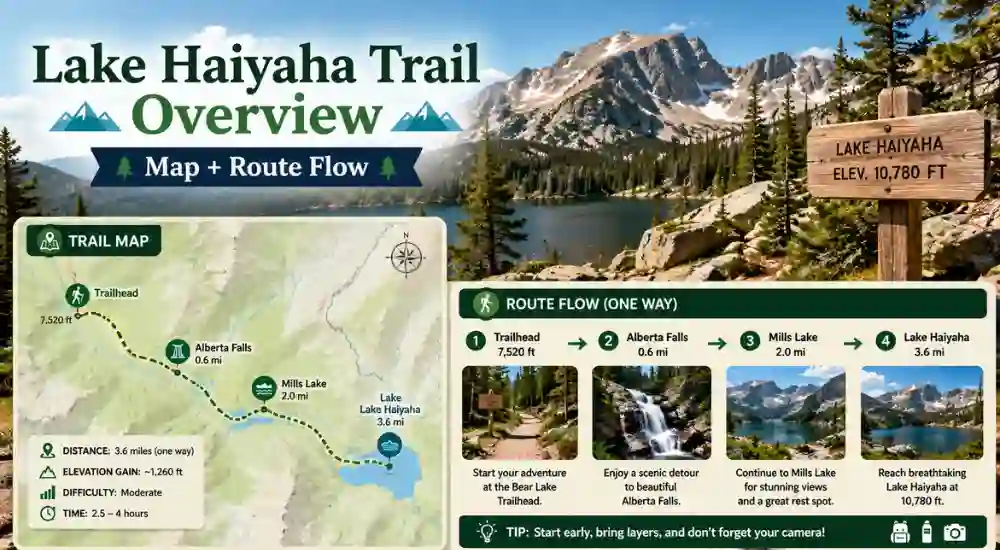
The typical route follows this sequence:
Bear Lake → Nymph Lake → Dream Lake → Lake Haiyaha split → Boulder field → Lake Haiyaha
This structure is important because it creates confusion for many hikers. The first half of the hike feels like a standard, well-marked trail to Dream Lake. After that point, the path toward Lake Haiyaha becomes less obvious and more rugged.
One of the most common Lake Haiyaha hike guide mistakes is assuming the trail continues as smoothly marked as before. In reality, signage becomes less frequent after Dream Lake, and hikers must pay close attention to trail junctions and subtle markers.
Unlike some easier Colorado hiking trails, this route requires awareness, especially after the Dream Lake section, where the terrain begins to change.
Step-by-Step Lake Haiyaha Hiking Guide
Bear Lake to Nymph Lake
The hike begins at the Bear Lake trailhead, one of the busiest starting points in RMNP. This section is wide, well-maintained, and very easy to follow, making it a comfortable warm-up for most hikers.
Early in the morning, the trail is peaceful, but crowds increase quickly during peak hours, especially in summer. Despite being busy, the atmosphere is calm and scenic, with forest views and gentle elevation gain.
Nymph Lake to Dream Lake
As you continue from Nymph Lake, the trail becomes more visually impressive. Nymph Lake is known for its lily pads, especially in summer, giving the area a quiet and peaceful feel.
From here, the path gradually climbs toward Dream Lake, one of the most photographed spots in RMNP. This section is often considered the most beautiful part of the early hike, with alpine views, open scenery, and clear mountain reflections.
Most casual hikers stop here, which is why the trail beyond this point becomes less crowded.
Dream Lake to Lake Haiyaha Split
After reaching Dream Lake, the trail begins to change in both direction and difficulty. This is the key turning point for the Lake Haiyaha, Colorado hike.
Many hikers miss the split because the main trail continues forward toward more popular destinations. The turn toward Lake Haiyaha is less obvious and requires careful attention to trail signs and faint paths leading away from the main route.
Once you pass this junction, the maintained trail starts to fade, and the environment becomes more rugged and natural.
The Boulder Field Section
This is the most surprising and challenging part of the Lake Haiyaha hike difficulty.
Instead of a clear walking path, hikers enter a large boulder field section where navigation becomes slower and more physical. You will often need to climb over rocks, step carefully between uneven surfaces, and choose your own path forward.
This section requires:
- Careful foot placement
- Slower hiking pace
- Route-finding awareness
Many hikers underestimate this part because the earlier trail feels easy. This sudden change in terrain is what makes the hike feel much harder than expected.
Final Approach to Lake Haiyaha
As you move past the boulder field, the terrain begins to level out again. The trees open up, and the sound of water becomes more noticeable.
Then, suddenly, Lake Haiyaha, Colorado, appears.
The first view of the lake is often a quiet moment for hikers. The turquoise water, surrounded by rocky alpine terrain, creates a strong contrast with the difficult path just completed. This arrival is what makes the entire Lake Haiyaha trail experience feel rewarding and memorable.
Lake Haiyaha Difficulty Explained
The Lake Haiyaha hike difficulty is often misunderstood because the beginning of the trail feels easy and well-maintained. Many hikers assume it will stay that way, especially after passing Dream Lake, but the reality changes quickly once you approach the upper section of the route.
Although the hike is usually listed as moderate, it often feels closer to moderate-to-hard for many people. The main reason is the boulder field section, where there is no clear walking path. You have to climb over rocks, balance carefully, and constantly choose your own route. This slows down progress and increases physical effort.
In terms of fitness, you don’t need advanced hiking experience, but you should be comfortable walking uphill for long periods and handling uneven terrain. Beginners can complete the hike, but they should expect it to feel more challenging than other Colorado alpine lake hikes like Dream Lake.

Trail Conditions & Seasonal Reality
The conditions on the Lake Haiyaha trail change a lot depending on the season, which directly affects both difficulty and safety.
In summer, the trail is at its most accessible. The path is mostly clear, and the boulder section is dry, making it easier to navigate. This is also the busiest time, as many hikers come to explore the Rocky Mountain National Park hikes during peak season.
In fall, the hike becomes quieter and more scenic. The surrounding trees change color, creating a beautiful contrast with the alpine landscape. However, mornings and evenings can be colder, and conditions start to become less predictable.
During spring and early summer, snow patches and melting ice can still be present, especially near higher elevations. This makes the boulder field more slippery and harder to cross.
The biggest challenge year-round is the weather in the Rockies, which can change very quickly. Even on a clear morning, afternoon storms can develop, bringing rain, wind, or lightning, so timing your hike early in the day is very important.
How Long Does the Lake Haiyaha Hike Take?
The total time for the Lake Haiyaha hike from Bear Lake depends on your pace, fitness level, and how long you spend at the lake itself.
On average:
- Most hikers take 2.5 to 4 hours round trip
- Fast hikers can complete it in about 2 to 2.5 hours
- Beginners or photo-focused hikers may take 4 to 5 hours
The first part of the trail up to Dream Lake is relatively quick, but the time increases significantly after the split toward Lake Haiyaha due to the boulder field section.
If you enjoy photography or rest breaks, you should add extra time because the scenery encourages you to stop often, especially around the alpine lake areas.
Overall, this hike is short in distance but can feel longer because of terrain difficulty and elevation changes along the Lake Haiyaha trail.
Parking, Permits & Entry Strategy
Planning your Lake Haiyaha hike in Rocky Mountain National Park (RMNP) is not just about the trail—it also depends heavily on parking and entry rules. This area is part of the highly regulated Bear Lake Corridor, which uses a timed entry permit system during peak seasons.
To access the trail, you will usually need a Bear Lake timed entry permit, especially in summer and early fall. Without it, entry is not allowed during restricted hours, even if you have transportation.
Parking is one of the biggest challenges here. The Bear Lake parking lot fills up extremely early, often before sunrise on busy days. Because of this, many hikers prefer arriving very early in the morning or using the shuttle system when it is operating.
You have two main options:
- Driving yourself: Best if you arrive before peak hours, but parking is limited
- Shuttle system: A good alternative when parking is full, especially during busy weekends
The best arrival strategy for the Lake Haiyaha trail is to start early in the morning, ideally right at or before sunrise. This helps you avoid both crowds and parking stress, and also gives you cooler temperatures for hiking.
Best Time to Hike Lake Haiyaha
The best time to hike Lake Haiyaha depends on both safety and experience quality. Morning hours are generally the most recommended because the weather is more stable, the trail is less crowded, and lighting conditions are ideal for photography.
In the morning, the trail feels peaceful, and you can enjoy clear views at Dream Lake and along the alpine sections before crowds arrive. This is also the safest time because afternoon storms are common in the Rockies.
In the afternoon, temperatures may rise slightly, but the weather becomes less predictable. Sudden rain, wind, or lightning can occur, especially in higher elevations, which is important to consider for the Lake Haiyaha Colorado, hike.

Seasonally, summer offers the most stable conditions, while fall provides beautiful colors and fewer crowds. However, spring can still have snow patches, and winter hiking requires advanced preparation and experience.
For photography, early morning light is best because it creates soft reflections on the lake and highlights the turquoise color of Lake Haiyaha in Rocky Mountain National Park.
Crowd timing also matters. Starting early not only improves your experience but also helps you enjoy quieter sections of the trail before peak traffic builds up.
What to Pack for Lake Haiyaha Hike
Packing correctly for the Lake Haiyaha hike guide route is important because the trail combines easy walking paths with a challenging boulder field. Your gear can directly affect your comfort and safety.
First, proper hiking shoes with strong traction are highly recommended. The boulder section requires stable footing, and slippery rocks can become risky without good grip. Regular sneakers are not ideal for this hike.
You should also carry enough water and hydration. Even though the hike is not extremely long, elevation gain and uneven terrain can make you tire faster than expected.
A layered clothing system works best because weather in RMNP can change quickly. Start with a light base layer and bring a warm jacket or windbreaker, especially if you plan to stay near the lake.
Trekking poles are optional but very helpful, especially for the boulder field section. They improve balance and reduce strain on your knees during uneven climbs.
Finally, always pack weather protection, such as a light rain jacket or windproof layer. Afternoon weather in the Rockies can shift quickly, even on clear mornings, so being prepared is essential for a safe and comfortable Lake Haiyaha Colorado hiking experience.
Safety Tips for Lake Haiyaha Trail
Safety is an important part of planning the Lake Haiyaha hike in Rocky Mountain National Park, especially because the trail combines altitude, changing weather, and uneven terrain.
One of the first things to be aware of is altitude sickness. Since the hike takes place at high elevation, some hikers may feel headaches, dizziness, or shortness of breath. It is important to go at a steady pace, drink water regularly, and take breaks when needed.
Another major factor is afternoon thunderstorms, which are very common in the Rockies. Even if the weather looks clear in the morning, storms can develop quickly later in the day. This is why starting early is strongly recommended for the Lake Haiyaha Colorado hike.
Wildlife is also part of the experience. You may encounter animals such as elk, moose, or even bears in RMNP. While sightings are not common on the trail itself, it is important to stay alert, keep distance, and never feed wildlife.
The boulder field section is another safety concern. Many minor injuries happen here due to loose rocks and uneven footing. Wearing proper hiking shoes and moving carefully can greatly reduce risk.
Lastly, always be prepared. Carry enough water, a light jacket, and know basic emergency steps. Cell service may be limited in parts of the Lake Haiyaha trail, so being self-sufficient is important.
The Lake Haiyaha Experience
Reaching Lake Haiyaha Colorado feels like a reward after a challenging journey. The moment you step past the final rocky section, the landscape suddenly opens up, and the lake appears surrounded by rugged alpine scenery.
The first view of the turquoise water is often the most memorable part of the entire Lake Haiyaha hike guide experience. The color stands out sharply against the gray rocks and mountain backdrop, creating a calm and almost surreal feeling after the effort of the climb.
What surprises many hikers is the contrast between effort and reward. The trail starts easy, becomes challenging in the middle, and then suddenly delivers one of the most beautiful lake views in Rocky Mountain National Park hikes.
The atmosphere at the lake also changes throughout the day. In the morning, it feels quiet and peaceful with fewer people around. Later in the day, more hikers arrive, and the shoreline becomes more active and social. This mix of solitude and crowd energy adds a unique character to the Lake Haiyaha trail experience.
Why is Lake Haiyaha Water Turquoise?

The unique turquoise color of Lake Haiyaha Colorado, is one of its most interesting natural features. This color is mainly the result of geological changes that happened after a major rockslide in the area.
The rockslide introduced fine mineral sediments into the water. These particles remain suspended in the lake and reflect sunlight in a way that creates the bright turquoise appearance. This is similar to other glacial lakes found in high alpine environments.
The color of the lake is not always exactly the same. It can change depending on seasonal conditions, weather, and sunlight angle. During sunny days, the turquoise shade becomes more vibrant, while cloudy conditions can make it appear deeper or more muted.
This natural variation is part of what makes Lake Haiyaha Rocky Mountain National Park such a visually unique destination compared to other nearby alpine lakes like Dream Lake or Emerald Lake.
Photography Guide for Lake Haiyaha
The Lake Haiyaha hike in Rocky Mountain National Park is one of the most photogenic alpine lake experiences, especially because of its unique turquoise water and dramatic rocky surroundings.
The best viewpoints around the lake are usually found along the shoreline where the rocky edges open up toward the mountains. These natural framing spots help capture both the lake and the alpine backdrop in a single shot.
For reflection photography, the best results come on calm mornings when the water is still. Early hours reduce wind disturbance, allowing the surface to act like a mirror for surrounding peaks and sky.
Lighting plays a big role in the final image. Sunrise offers soft golden tones and fewer crowds, making it ideal for peaceful shots. Midday light, on the other hand, makes the turquoise color of Lake Haiyaha Colorado, more vibrant but can create harsher shadows.
For social media and Instagram-style photos, look for rocky foregrounds, layered mountain backgrounds, and angles that highlight the contrast between water color and stone texture. These natural compositions make the Lake Haiyaha trail experience visually stand out compared to other Colorado alpine lake hikes.
Common Mistakes Hikers Make
Many hikers underestimate the Lake Haiyaha hike’s difficulty, which leads to avoidable mistakes during the journey.
One of the most common issues is missing the trail split after Dream Lake. The signage becomes less obvious, and hikers often continue on the main trail without realizing they have passed the turnoff.
Another major mistake is underestimating the boulder field section. This part of the hike requires slow movement, balance, and attention. Many hikers are surprised by how physically demanding it becomes.
Starting the hike too late is also a frequent error. Afternoon weather in the Rockies can change quickly, increasing the risk of storms and reducing safety on the return journey.
Footwear is another critical factor. Wearing improper shoes can make the rocky terrain uncomfortable and even risky, especially in uneven sections of the Lake Haiyaha trail.
Finally, many hikers overlook weather conditions. Even on clear mornings, conditions can shift rapidly in Rocky Mountain National Park hikes, so preparation is essential.
Lake Haiyaha vs Other RMNP Lakes
Dream Lake vs Lake Haiyaha
Dream Lake is easier to reach and more accessible, with a smoother trail and lighter effort. In contrast, Lake Haiyaha Colorado requires more physical effort due to the boulder field but rewards hikers with a more rugged and unique alpine experience.
Emerald Lake vs Lake Haiyaha
Emerald Lake offers a more polished and straightforward hiking path, while Lake Haiyaha feels more adventurous and less predictable. Haiyaha is better for those who enjoy exploration and physical challenge.
Nymph Lake vs Lake Haiyaha
Nymph Lake is a short and easy stop with minimal effort required. Lake Haiyaha, on the other hand, is a full hiking experience with significantly higher difficulty and scenic reward.
Optional: Sky Pond Comparison Extension
Compared to Sky Pond, Lake Haiyaha is slightly less technical but still challenging due to its boulder field. Sky Pond feels more intense overall, while Haiyaha offers a balance between effort and accessibility.
Is Lake Haiyaha Worth It?
The Lake Haiyaha hike guide experience is often considered one of the most rewarding in Rocky Mountain National Park, but it may not be for everyone.
Pros
- Unique turquoise alpine lake
- Less crowded past Dream Lake
- Beautiful mix of forest, alpine, and rocky terrain
- Strong sense of adventure and reward
Cons
- Boulder field can be physically demanding
- Navigation becomes less clear after Dream Lake
- The weather can change quickly
- Requires more effort than nearby lakes
Who Should Hike It
- Hikers looking for a moderate challenge
- People who enjoy less-maintained, natural trails
- Photographers seeking unique alpine scenery
- Visitors wanting a step beyond easy lake hikes
Who Should Skip It
- Absolute beginners with no hiking experience
- Anyone uncomfortable with rocky or uneven terrain
- Hikers unprepared for changing mountain weather
Overall, Lake Haiyaha Colorado, is best for those who want a mix of beauty, effort, and adventure in a single hike.
Hidden Insights Most Guides Don’t Tell You
Most Lake Haiyaha hike guides focus on distance and scenery, but there are a few real on-trail details that often surprise hikers once they enter Rocky Mountain National Park (RMNP).
One of the biggest hidden issues is trail confusion moments. Even though the route is popular, the section after Dream Lake becomes less intuitive. Many hikers hesitate at junctions because the markings are not as clear as earlier parts of the Lake Haiyaha trail, leading to uncertainty about the correct direction.
Another important factor is boulder fatigue. The rocky section is not just physically challenging—it is mentally tiring as well. Constantly stepping, balancing, and choosing paths slows momentum and makes the hike feel longer than expected.
At junction areas, you will also notice crowd behavior changes. Most hikers split here—some continue toward Lake Haiyaha, while many turn back toward Dream Lake. This creates sudden shifts in crowd density along the route.
Finally, weather surprises are common. Clear skies can quickly turn into wind or rain, especially in the afternoon, which is a typical pattern in the Colorado alpine lake hikes region.

Beginner-Friendly Alternatives in RMNP
If the Lake Haiyaha Colorado hike feels too challenging, there are several easier and equally beautiful alternatives nearby in the Rocky Mountain National Park hikes.
Easier Hikes Near Bear Lake
- Nymph Lake: Very short and beginner-friendly
- Dream Lake: Moderate effort with high scenic reward
Scenic Alternatives to Haiyaha
- Emerald Lake: Slightly longer but easier trail flow
- Bear Lake Loop: Flat, simple, and accessible for all levels
Progressive Difficulty Hikes
If you want to build up toward Lake Haiyaha:
- Start with Nymph Lake
- Move to Dream Lake
- Then attempt Emerald Lake
- Finally, try Lake Haiyaha once comfortable with elevation and terrain
These progressions help beginners safely adapt to the Lake Haiyaha hike difficulty level over time.
FAQs
How hard is the Lake Haiyaha hike?
It is generally considered moderate to hard, mainly because of the boulder field section after Dream Lake.
How long does it take?
Most hikers complete the Lake Haiyaha hike from Bear Lake in about 2.5 to 4 hours round trip.
Is it suitable for beginners?
Yes, but only for beginners who are comfortable with uphill hiking and uneven rocky terrain.
Do you need a permit?
Yes, during peak seasons you typically need a Bear Lake timed entry permit to access the trail.
Is it crowded?
The lower section is often crowded, but it becomes less busy after Dream Lake as fewer hikers continue to Lake Haiyaha.
Final Thoughts
The Lake Haiyaha hike guide offers one of the most balanced hiking experiences in Rocky Mountain National Park. It combines scenic forest trails, alpine lakes, and a challenging boulder section that makes the journey feel adventurous and rewarding.
While it is not the easiest hike in Colorado, it is one of the most unique. The mix of beauty, effort, and changing terrain is what makes Lake Haiyaha Colorado stand out from other nearby lakes like Dream Lake and Emerald Lake.
If you are looking for a hike that is more than just a walk and offers a real sense of accomplishment, Lake Haiyaha is absolutely worth it.