
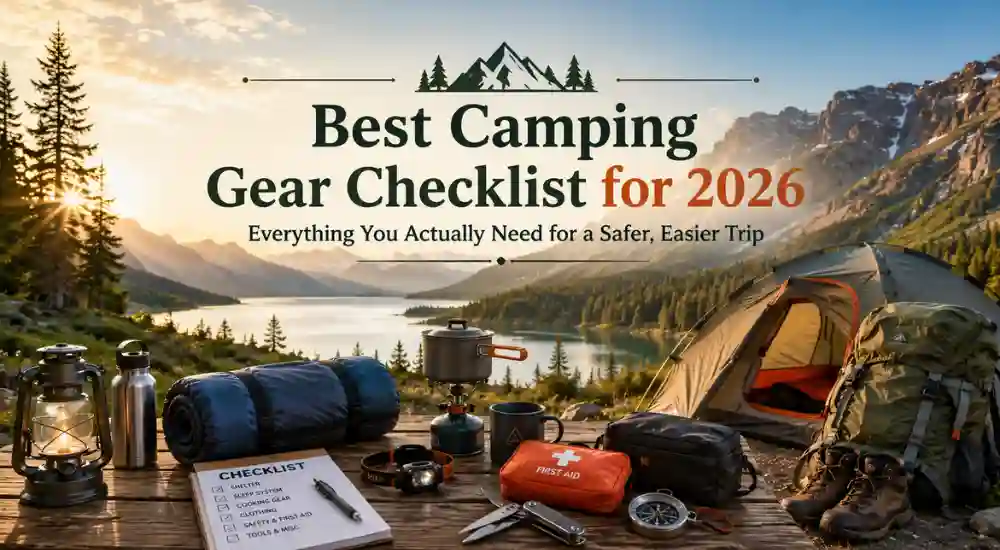
Most camping trips go wrong for predictable reasons. Campers underestimate cold nighttime temperatures, forget simple essentials like lighting or dry storage, overpack unnecessary gadgets, or arrive at camp without a reliable setup plan. A strong camping gear checklist solves those problems before you leave home.
This guide combines practical campground experience, modern outdoor best practices, weather-based planning, and beginner-friendly advice into one complete resource for 2026. Whether you’re planning a weekend state park trip, a national park vacation, a family campground stay, or your first car camping adventure, this article will help you pack smarter, stay safer, and enjoy camping more.
You’ll learn:
- what camping gear actually matters
- what experienced campers prioritize first
- what beginners commonly forget
- how to pack for different weather conditions
- how to avoid overspending on unnecessary gear
- which items improve comfort the most
Quick Answer: What Camping Gear Do You Need?
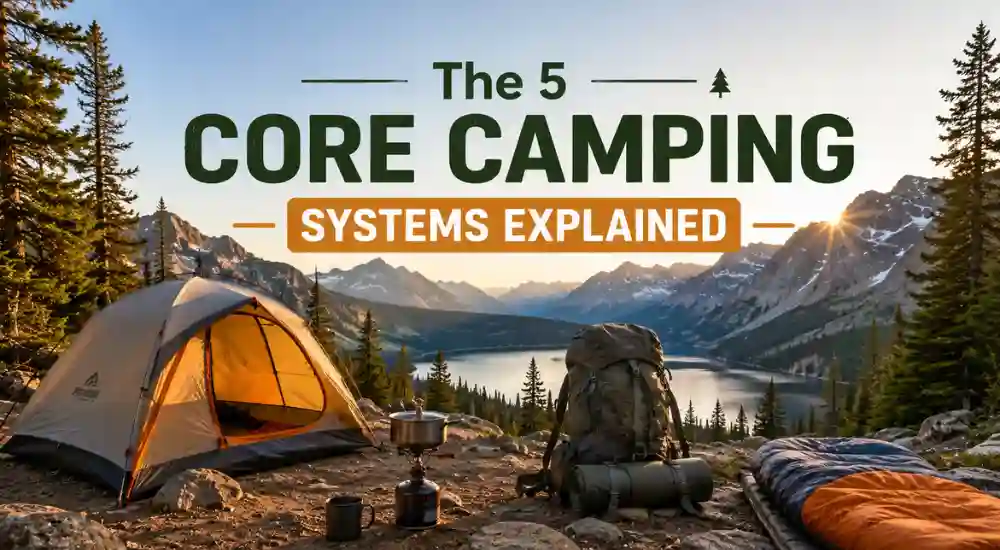
Every camper should pack five core systems:
- Shelter system — tent, tarp, stakes, rain protection
- Sleep system — sleeping bag, sleeping pad, pillow, insulation
- Cooking system — stove, cookware, water storage, food containers
- Clothing system — layered clothing, rain gear, hiking footwear
- Safety system — first aid kit, lighting, navigation, emergency supplies
Most experienced campers agree on one thing:
Reliable sleep, dry gear, and weather protection matter far more than expensive gadgets.
Why a Camping Checklist Matters
Camping looks simple online. In reality, small mistakes create most outdoor problems.
Forgetting a spoon is annoying.
Forgetting waterproof layers during a storm can end a trip early.
A camping checklist helps prevent:
- overpacking
- missing safety gear
- food storage mistakes
- poor weather preparation
- uncomfortable sleeping setups
- campsite organization problems
It also saves money because campers buy fewer unnecessary items.
Many beginners overspend on trendy gear before improving essentials like sleeping pads, rain protection, and warm clothing.
The 5 Core Camping Systems Explained
Experienced campers usually organize gear into systems rather than random categories.
This approach makes packing easier and prevents forgotten items.
Shelter System
What It Is
Your shelter system protects against:
- rain
- wind
- insects
- cold air
- sun exposure
Why It Matters
Weather changes faster outdoors than most beginners expect.
Even summer campgrounds can experience:
- overnight cold
- strong wind
- sudden thunderstorms
- heavy condensation
Essential Shelter Gear
- Waterproof tent
- Rainfly
- Ground tarp or footprint
- Tent stakes
- Guy lines
- Small repair kit
- Shade tarp or canopy
Expert Tip
A larger tent improves comfort dramatically during bad weather.
Many experienced campers size up:
- 2-person tent for solo camping
- 4-person tent for couples
- 6-person tent for families
Sleep System
What It Is
Your sleep system includes everything related to warmth, insulation, and overnight comfort.
Why It Matters
Poor sleep ruins camping trips faster than almost anything else.
Most beginner complaints come from:
- cold ground
- thin sleeping pads
- incorrect sleeping bag ratings
- poor layering
Essential Sleep Gear
- Sleeping bag
- Insulated sleeping pad
- Pillow
- Thermal layers
- Extra blanket
- Sleeping bag liner
Real-World Observation
Campers frequently underestimate how cold the ground feels overnight.
An insulated sleeping pad often matters more than a thicker sleeping bag.
Cooking System
What It Is
Your cooking system includes food preparation, water storage, cleanup, and meal organization.
Why It Matters
Complicated camp meals create:
- stress
- extra cleanup
- water waste
- food storage problems
Simple meals usually improve camping experiences.
Essential Cooking Gear
- Portable stove
- Fuel
- Cookware
- Water containers
- Cooler
- Food storage containers
- Trash bags
- Cleaning supplies
Best Practice
One-pot meals reduce cleanup time and campground water use.
Clothing System
What It Is
Outdoor clothing manages:
- temperature
- moisture
- wind
- rain
- sun exposure
Why It Matters
Weather changes quickly outdoors, especially in mountain regions and national parks.
Essential Clothing
- Moisture-wicking shirts
- Mid-layer fleece
- Waterproof shell
- Hiking pants
- Wool socks
- Camp shoes
- Hat and sunglasses
Common Mistake
Cotton becomes uncomfortable and dangerous when wet in cold conditions because it dries slowly and loses insulation.
Safety System
What It Is
Your safety system helps manage emergencies, weather changes, injuries, and navigation problems.
Essential Safety Gear
- First aid kit
- Headlamp
- Extra batteries
- NOAA weather radio
- Multi-tool
- Emergency blanket
- Water purification tablets
- Portable charger
- Printed maps
Why It Matters
Small problems become larger outdoors when:
- weather changes suddenly
- batteries die
- campsites lose visibility after dark
- navigation becomes difficult
Complete Camping Gear Checklist for Beginners
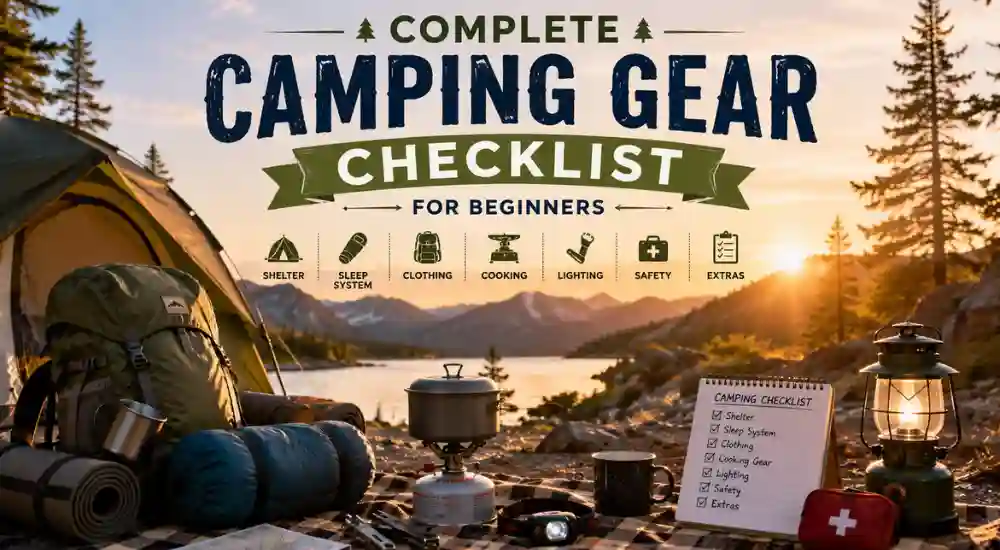
Shelter and Campsite Setup
- Waterproof tent with full rainfly
- Ground tarp or tent footprint
- Tent stakes and backup stakes
- Rubber mallet
- Camping chairs
- Foldable table
- Campsite rug
- Pop-up canopy
- Rope or paracord
- Tent repair patches
- Small broom or brush
- Storage bins
Sleeping Essentials
- Sleeping bag rated below expected temperatures
- Sleeping pad or air mattress
- Pillow
- Thermal layers
- Extra blanket
- Earplugs
- Eye mask
- Battery-powered fan
- Sleeping bag liner
- Compression sack
Camp Kitchen Essentials
- Portable camp stove
- Fuel canisters
- Lighter and waterproof matches
- Cooking pots and pans
- Reusable utensils
- Plates and bowls
- Cooler with ice packs
- Water jug
- Coffee maker or kettle
- Food containers
- Trash bags
- Dish soap
- Paper towels
Clothing Checklist
- Moisture-wicking shirts
- Hiking pants
- Rain jacket
- Fleece layer
- Wool socks
- Hiking boots
- Camp sandals
- Gloves
- Warm hat
- Sun hat
- Sunglasses
- Swimsuit
Safety and Emergency Gear
- First aid kit
- Headlamp
- Lantern
- Emergency whistle
- Portable battery pack
- Multi-tool
- Sunscreen
- Bug spray
- Printed campground map
- Water filter or purification tablets
Camping Gear Beginners Forget Most Often
Most camping mistakes involve small forgotten items rather than major equipment.
Frequently Forgotten Gear
- Extra batteries
- Tent repair tape
- Campfire gloves
- Dry bags
- Can opener
- Wet wipes
- Extra socks
- Water containers
- Headlamp
- Camp pillows
- Backup tarp
- Trash bags
Why These Matter
A missing flashlight becomes a major problem after sunset.
A forgotten tarp becomes a major problem during rain.
Small items often have the biggest real-world impact outdoors.
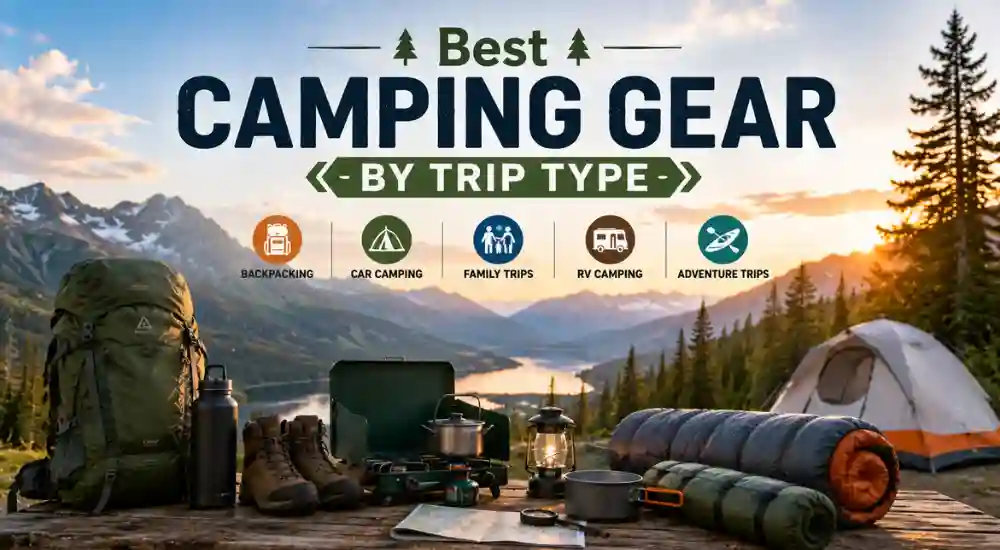
Best Camping Gear by Trip Type
Car Camping Essentials
Car camping allows larger, heavier comfort items because weight matters less.
Best Gear for Car Camping
- Large cooler
- Thick sleeping pad
- Folding table
- Portable power station
- Large lantern
- Campsite rug
- Camp kitchen setup
- Extra blankets
- Folding wagon
- Large water containers
Best For
- beginners
- families
- road trips
- state park campgrounds
Backpacking and Lightweight Camping
Backpacking prioritizes:
- low weight
- compact storage
- multi-use equipment
Best Lightweight Gear
- Ultralight tent
- Compact sleeping bag
- Inflatable sleeping pad
- Titanium cookware
- Mini stove
- Water filter
- Trekking poles
- Lightweight rain shell
- Compression sacks
Common Beginner Mistake
Many campers buy expensive ultralight gear before learning basic outdoor systems.
Comfort and warmth still matter.
RV Camping Essentials
RV travelers usually forget utility-related gear rather than shelter equipment.
Important RV Gear
- Sewer hose support
- Water pressure regulator
- Surge protector
- Leveling blocks
- Wheel chocks
- Extension cords
- Freshwater hose
- Flashlights
- Tool kit
- Backup drinking water
Camping Clothes Checklist for Every Season
Summer Camping Checklist
Hot-weather camping creates:
- dehydration risk
- sun exposure
- heat exhaustion
- bug problems
Summer Essentials
- Breathable shirts
- Cooling towels
- UV sunglasses
- Sun hat
- Lightweight socks
- Bug spray
- Electrolyte packets
- Extra water bottles
- Portable fan
Summer Camping Tip
Most campers need more water than expected.
A common recommendation is at least:
- 1 gallon of water per person daily
That amount increases during hiking or extreme heat.
Winter Camping Checklist
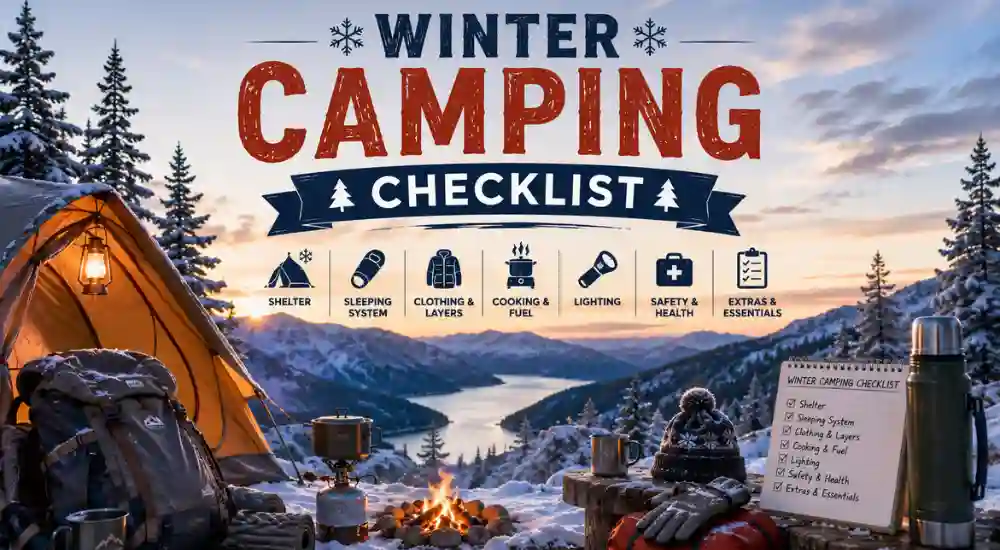
Cold-weather camping requires more preparation than summer camping.
Winter Essentials
- Four-season tent
- Cold-rated sleeping bag
- Insulated sleeping pad
- Thermal base layers
- Insulated jacket
- Waterproof gloves
- Insulated boots
- Hand warmers
- Emergency blanket
- Backup dry clothing
Winter Safety Warning
Wet clothing becomes dangerous quickly in freezing temperatures.
Always keep backup dry layers sealed in waterproof bags.
Best Camping Gear Worth Spending More Money On
Not every camping item deserves premium pricing.
Some upgrades create far bigger improvements than others.
Gear Worth Investing In
| Gear Category | Why It Matters |
| Sleeping pad | Improves warmth and sleep quality |
| Waterproof tent | Prevents weather-related trip problems |
| Sleeping bag | Critical for overnight warmth |
| Hiking footwear | Prevents blisters and foot fatigue |
| Rain gear | Essential during changing weather |
| Cooler | Improves food safety and ice retention |
Gear Beginners Can Save Money On
- camp utensils
- folding tables
- basic cookware
- storage bins
- simple lanterns
- campsite decorations
Camping Safety Tips Most People Ignore
Always Check Weather Before Leaving
Mountain weather changes quickly.
NOAA forecasts are especially important for:
- national parks
- high elevations
- remote campgrounds
Never Leave Food Exposed Overnight
Improper food storage attracts:
- bears
- raccoons
- rodents
- insects
Many national parks now require:
- bear-resistant food containers
- secure vehicle storage
- designated food lockers
Keep Lighting Accessible
Many campsite injuries happen after dark.
Keep:
- headlamps
- lanterns
- flashlights
within easy reach.
Avoid Overpacking
Overpacked campsites create:
- clutter
- setup stress
- forgotten gear
- slower cleanup
Experienced campers usually bring fewer unnecessary gadgets over time.
National Park Camping Tips
Camping in national parks often requires more planning than private campgrounds.
Popular parks like:
- Yellowstone
- Yosemite
- Glacier
- Zion
can book months ahead during summer.
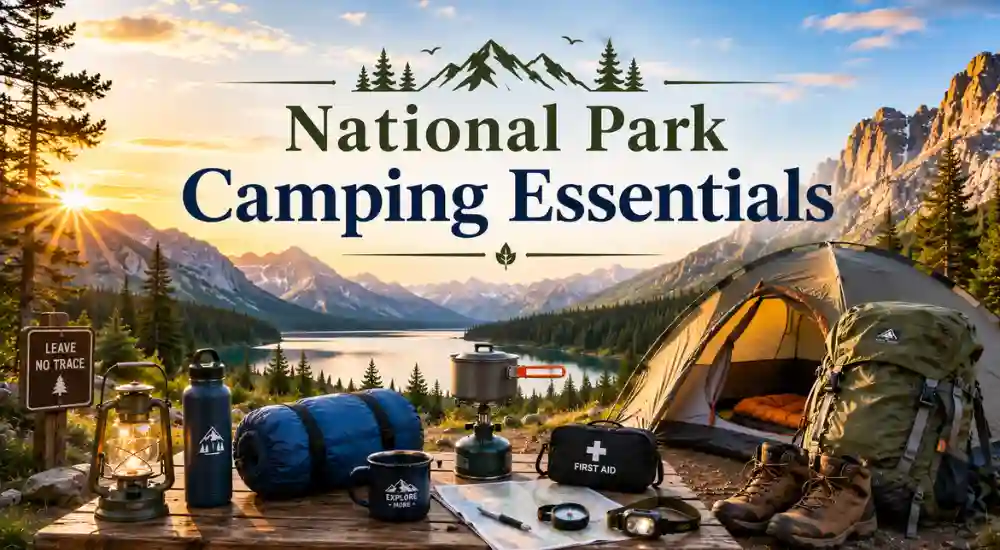
National Park Camping Essentials
- Printed reservations
- Bear-safe food storage
- Layered clothing
- Hiking shoes
- Trail maps
- Refillable water bottles
- Portable charger
- Daypack
- Trekking poles
Expert Observation
Many western parks experience temperature swings of 20–30°F between daytime and nighttime conditions.
Campers should always prepare for colder evenings.
Camping Gear Comparison Table
| Camping Type | Best For | Main Advantage | Biggest Challenge |
| Car Camping | Beginners | Comfort | Overpacking |
| Backpacking | Hiking trips | Lightweight travel | Limited comfort |
| RV Camping | Long trips | Convenience | Utility management |
| Tent Camping | Most campers | Flexibility | Weather exposure |
| Winter Camping | Experienced campers | Quiet campgrounds | Cold-weather safety |
How To Organize Camping Gear Efficiently
Good organization reduces:
- forgotten gear
- setup time
- campsite clutter
- cleanup stress
Simple Gear Organization System
Bin 1 — Cooking Gear
Store:
- stove
- cookware
- utensils
- fuel
- cleaning supplies
Bin 2 — Shelter Gear
Store:
- tent
- tarp
- stakes
- rope
- repair supplies
Bin 3 — Safety Gear
Store:
- first aid kit
- batteries
- lanterns
- emergency supplies
Bin 4 — Clothing and Bedding
Store:
- sleeping bags
- blankets
- jackets
- towels
Pro Tip
Lay out all equipment at home before departure.
This reduces forgotten items dramatically.
Key Takeaways
- Focus on shelter, sleep, cooking, clothing, and safety systems first
- Better sleep improves camping more than expensive gadgets
- Weather protection matters year-round
- Simple meals reduce stress and cleanup
- Most beginners overpack unnecessary items
- National park camping requires additional planning
- Dry clothing and lighting become critical after sunset
- Organized gear systems reduce campsite frustration
Frequently Asked Questions
What camping gear do beginners need first?
Beginners should prioritize:
- reliable shelter
- warm sleeping gear
- weather protection
- lighting
- safety equipment
Comfort and warmth matter more than luxury accessories.
What is the most important camping gear?
A dependable sleep system is often the most important part of camping comfort.
Poor sleep affects:
- warmth
- energy
- recovery
- overall trip enjoyment
How much water should campers bring?
A common recommendation is:
- at least 1 gallon per person daily
Additional water may be necessary for:
- cooking
- cleanup
- hiking
- hot weather
What clothing should you avoid while camping?
Avoid heavy cotton clothing during cold or wet conditions.
Cotton dries slowly and loses insulation when wet.
Is expensive camping gear worth it?
Some gear upgrades create major improvements, especially:
- sleeping pads
- tents
- sleeping bags
- hiking footwear
Many smaller accessories can remain budget-friendly.
What camping gear helps families most?
Family campers usually benefit most from:
- larger tents
- organized storage systems
- comfortable sleeping setups
- easy campsite cooking systems
- kid-friendly lighting
Conclusion
The best camping gear checklist is not about bringing the most equipment. It’s about bringing the right equipment for your weather, destination, trip length, and comfort needs.
Reliable shelter, quality sleep, weather protection, safe food storage, and smart organization consistently matter more than trendy gadgets.
Whether you’re planning your first campground weekend or preparing for a longer national park adventure, a well-planned camping setup helps you stay safer, pack smarter, and enjoy the outdoors far more comfortably.