
Cold rain changes a hike fast. One exposed ridgeline, soaked base layers, and steady mountain wind can turn an easy trail miserable within minutes. The best waterproof hiking pants keep you dry without trapping heat during steep climbs, muddy switchbacks, or long backpacking days.
After testing rain shells during wet Pacific Northwest hikes, windy alpine trails in Colorado, and shoulder-season national park trips, one thing became clear: breathability matters just as much as waterproofing. Some rain pants survive storms but feel sweaty and restrictive after an hour of climbing. Others pack tiny but tear quickly against rocks and brush.
This guide breaks down the best waterproof hiking pants for 2026, including ultralight backpacking shells, durable Gore-Tex options, budget-friendly rain pants, and breathable hiking layers for humid weather. You’ll also learn how waterproof ratings work, which features actually matter on trail, and how to choose the right pair for your hiking style.
Quick Answer: What Are the Best Waterproof Hiking Pants?
For most hikers, the best waterproof hiking pants combine:
- Reliable rain protection
- Breathable waterproof membranes
- Comfortable mobility
- Low packed weight
- Long-term durability
Best Waterproof Hiking Pants at a Glance
| Category | Best Pick | Best For |
| Best Overall | Patagonia Torrentshell 3L | All-around hiking and travel |
| Best Budget | REI Co-op Rainier | Affordable trail protection |
| Best Ultralight | Rab Phantom Pull-On | Backpacking and thru-hiking |
| Best Premium | Arc’teryx Beta Pant | Alpine and mountain weather |
| Best Breathability | Mountain Hardwear Stretch Ozonic | Humid hiking and steep climbs |
| Best Winter Hiking | Outdoor Research Foray | Layering and cold-weather use |
Why Waterproof Hiking Pants Matter on Real Trails
Many hikers only pack rain gear after getting caught in bad weather once. Mountain conditions change quickly, especially in places like Olympic National Park, Glacier National Park, and the Rocky Mountains.
Waterproof hiking pants do far more than block rain. Quality rain shells also:
- Reduce wind chill on exposed ridges
- Keep insulation layers dry
- Prevent cold rain from soaking hiking pants
- Protect against wet brush and muddy trails
- Improve comfort during long backpacking trips
During spring hikes in Washington’s Cascade Range, lightweight waterproof shells made a major difference once temperatures dropped near freezing. Wet hiking pants combined with wind created noticeable heat loss during exposed climbs.
What Makes Hiking Pants Truly Waterproof?
Not every pair marketed as “waterproof” performs equally well in sustained rain. Understanding the basics helps avoid buying gear that fails during real storms.
Waterproof Membranes
The membrane is the barrier that blocks rain while allowing sweat vapor to escape.
Common waterproof technologies include:
- Gore-Tex
- eVent
- Pertex Shield
- Proprietary polyurethane membranes
Premium membranes usually breathe better during active hiking.
Hydrostatic Head Ratings Explained
Hydrostatic head measures how much water pressure fabric can resist before leaking.
| Waterproof Rating | Trail Performance |
| 5,000 mm | Light rain and casual hiking |
| 10,000 mm | Moderate rain and day hiking |
| 20,000 mm+ | Heavy storms and mountain weather |
For backpacking and alpine hiking, most experienced hikers prefer at least 10,000–20,000 mm waterproof protection.
Breathability Ratings Matter Too
A waterproof shell that traps sweat eventually feels wet from the inside.
Breathability is often measured using:
- MVTR ratings
- RET ratings
Higher breathability matters most during:
- steep climbs,
- humid weather,
- fast hiking,
- and backpacking with heavy loads.
Best Waterproof Hiking Pants Overall
Patagonia Torrentshell 3L
The Patagonia Torrentshell 3L remains one of the best all-around waterproof hiking pants because it balances durability, comfort, storm protection, and long-term reliability.
Unlike many ultralight shells, the Torrentshell feels durable enough for repeated backpacking trips while still packing reasonably small.
What Stands Out
- Reliable 3-layer waterproof construction
- Fully taped seams
- Strong wind resistance
- Better durability than minimalist rain shells
- Comfortable layering fit
Drawbacks
- Slightly heavier than ultralight options
- Warmer during humid summer hiking
Best Use Cases
- National park hiking
- Multi-season backpacking
- Wet shoulder-season travel
- Mountain weather
Expert Observation
During wet spring hikes near Mount Rainier, the Torrentshell stayed comfortable during extended drizzle and blocked cold ridge-top wind effectively. Breathability remained decent even during steady uphill climbing.
Best Ultralight Waterproof Hiking Pants for Backpacking
Rab Phantom Pull-On
Ultralight backpackers care about every ounce. The Rab Phantom Pull-On remains one of the lightest legitimate waterproof hiking pants available in 2026.
At roughly 3–4 ounces, these pants almost disappear inside a backpack.
Why Backpackers Love Them
- Extremely compact packed size
- Minimal weight penalty
- Fast emergency weather protection
- Excellent for thru-hiking
Tradeoffs
- Less durable against rough rock
- Not ideal for bushwhacking
- Limited abrasion resistance
Best For
- Appalachian Trail hikes
- Pacific Crest Trail thru-hiking
- Fastpacking
- Summer alpine trips
Real-World Limitation
Ultralight rain shells work best for maintained trails and lighter backpacking styles. Repeated contact with granite, wet brush, or sharp rocks shortens lifespan noticeably faster than heavier Gore-Tex shells.
Best Breathable Waterproof Hiking Pants
Mountain Hardwear Stretch Ozonic
Many waterproof pants feel clammy during long climbs. The Stretch Ozonic series stands out because the fabric feels softer, quieter, and less restrictive than many traditional hardshell pants.
Why Breathability Changes Comfort
During steep hiking, trapped sweat becomes a bigger comfort problem than external rain for many hikers.
Breathable waterproof pants:
- reduce internal condensation,
- improve comfort during uphill climbs,
- and prevent overheating during humid weather.
Features That Improve Ventilation
- Full-length side zippers
- Stretch waterproof fabric
- Lightweight shell construction
- Mechanical venting options
Best Conditions
- Humid summer hiking
- Fast-moving day hikes
- Warm-weather backpacking
- Steep mountain climbs
Expert Tip
Hikers often overestimate how much waterproofing they need and underestimate how important ventilation becomes during active movement.
Best Budget Waterproof Hiking Pants
REI Co-op Rainier Rain Pants
Budget waterproof hiking pants often fail because of poor seam construction, cheap zippers, or weak coatings. The REI Rainier series avoids many of those problems while staying relatively affordable.
Why They Offer Strong Value
- Reliable weather protection
- Comfortable fit
- Better durability than many entry-level rain shells
- Good pocket placement
- Easy layering
Best For
- Weekend hikers
- National park vacations
- Casual backpacking
- Beginner hikers
What Budget Buyers Should Avoid
- Untaped seams
- Non-breathable coatings
- Heavy PVC-style rain shells
- Weak ankle zippers
Budget Buying Reality
Most hikers do not need expedition-level Gore-Tex shells. Spending wisely matters more than buying the most expensive option available.
Are Gore-Tex Hiking Pants Worth It?
For frequent hikers, Gore-Tex rain pants are often worth the extra cost because they usually provide better long-term durability and more consistent weather protection.
However, casual hikers may not notice enough difference to justify premium pricing.
Advantages of Gore-Tex
- Excellent storm protection
- Strong wind resistance
- Long lifespan
- Better breathability than many cheaper membranes
Downsides
- Higher cost
- Slightly stiffer feel
- Sometimes noisier fabric
Best Gore-Tex Hiking Pants
| Product | Best Use |
| Arc’teryx Beta Pant | Alpine hiking |
| Outdoor Research Foray | Backpacking |
| Mammut Convey Tour | Trekking and travel |
Waterproof vs Water-Resistant Hiking Pants
Many hikers discover the difference during their first serious storm.
Water-Resistant Hiking Pants
Water-resistant softshell pants handle:
- light drizzle,
- wind,
- and cool temperatures.
But they eventually soak through during extended rain.
Waterproof Hiking Pants
Waterproof rain pants use:
- sealed membranes,
- taped seams,
- and protective shell fabrics.
They perform far better during:
- backpacking,
- mountain storms,
- cold-weather hiking,
- and wet national park trips.
Simple Rule
If the forecast includes steady rain or mountain weather, fully waterproof hiking pants are usually the safer option.
Best Waterproof Hiking Pants for Winter Hiking
Winter hiking creates different problems than warm-weather rain hiking. Wet snow, freezing wind, and slushy trails require stronger protection and better layering systems.
Features That Matter Most
- Room for thermal layers
- Windproof shell fabric
- Reinforced cuffs
- Full side zippers
- Durable lower-leg construction
Recommended Winter Models
- Outdoor Research Foray
- Arc’teryx Beta AR
- Patagonia Storm Shift
Winter Hiking Insight
During cold hikes in Colorado and the Cascades, breathable waterproof shells often feel warmer overall because they reduce sweat buildup inside insulation layers.
Softshell vs Hardshell Hiking Pants
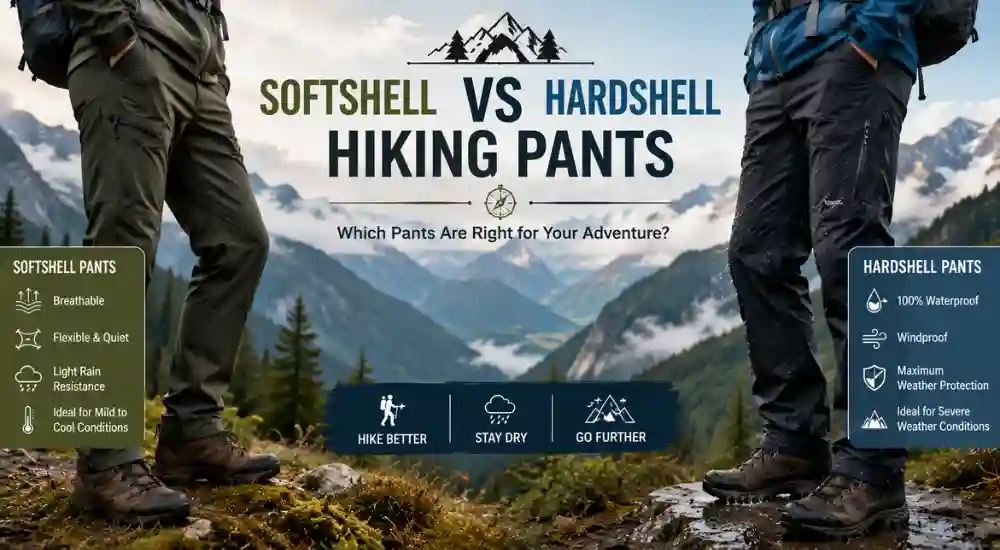
This is one of the most common outdoor gear questions.
Softshell Hiking Pants
Best For
- Dry cold weather
- Mild snow
- Wind protection
- Shoulder seasons
Advantages
- Better flexibility
- Quieter fabric
- Improved comfort
- Higher breathability
Downsides
- Limited rain protection
Hardshell Waterproof Pants
Best For
- Heavy rain
- Wet brush
- Snowstorms
- Alpine weather
Advantages
- Full waterproofing
- Better storm resistance
- Stronger weather protection
Downsides
- Less breathable
- Slightly stiffer feel
Most backpackers combine lightweight hiking pants with waterproof hardshell layers.
How Waterproof Hiking Pants Should Fit
Fit affects comfort more than many hikers expect.
Pants that fit too tightly trap moisture and restrict movement during climbs. Pants that fit too loosely create extra fabric noise and snag more easily on brush.
Ideal Fit Guidelines
- Enough room for base layers
- Comfortable knee articulation
- Adjustable waistband
- Easy movement uphill
- Compatibility with hiking boots
Common Sizing Mistake
Many hikers buy slim-fitting rain shells and later discover they cannot comfortably layer over insulated pants during cold-weather hikes.
Common Mistakes Hikers Make When Buying Rain Pants
Choosing Cheap Non-Breathable Coatings
Low-cost waterproof coatings often feel sweaty and uncomfortable after even moderate activity.
Ignoring Side Zippers
Side zippers improve:
- ventilation,
- layering,
- temperature control,
- and boot access.
Buying Ultralight Shells for Rugged Terrain
Minimalist backpacking shells save weight but tear faster against rough rock and dense brush.
Skipping Maintenance
Even premium waterproof membranes lose performance without occasional cleaning and DWR renewal.
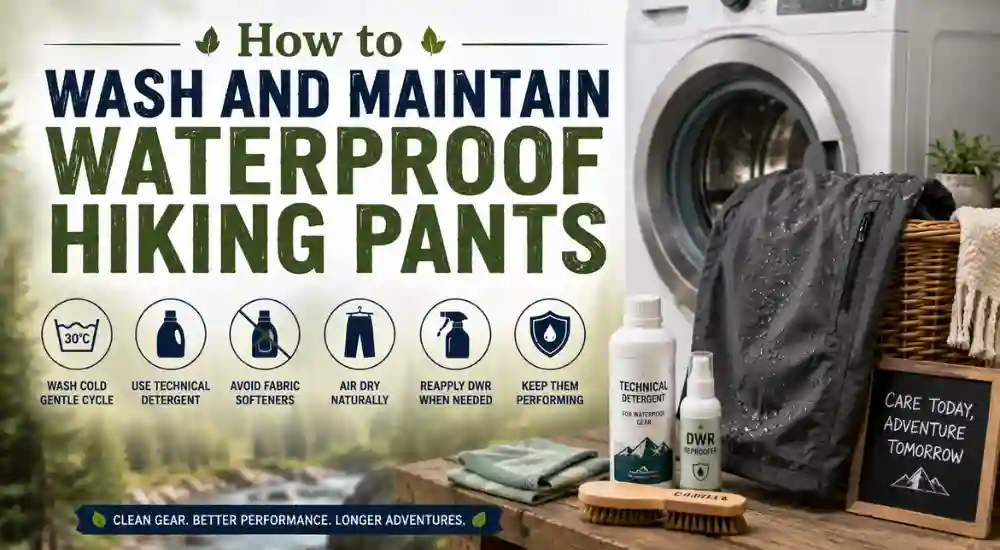
How to Wash and Maintain Waterproof Hiking Pants
Proper care dramatically extends the lifespan of waterproof gear.
Cleaning Tips
- Wash muddy gear after major trips.
- Use technical fabric cleaner.
- Avoid fabric softeners.
- Rinse thoroughly.
When to Reapply DWR
If water stops beading on the surface, the DWR coating likely needs refreshing.
Signs Your Rain Pants Need Maintenance
- Fabric darkens quickly
- Water absorbs into the shell
- Breathability decreases
- Pants feel damp externally
Storage Tips
- Store completely dry
- Avoid long-term compression
- Keep away from direct heat
Waterproof Hiking Pants Comparison Table
| Product | Weight | Waterproof Rating | Best For | Main Strength |
| Patagonia Torrentshell 3L | ~13 oz | 20,000 mm | All-around hiking | Durability |
| Rab Phantom Pull-On | ~3.5 oz | 7,000 mm | Ultralight backpacking | Packed size |
| Arc’teryx Beta Pant | ~11 oz | 28,000 mm | Alpine weather | Storm protection |
| REI Rainier | ~10 oz | 10,000 mm | Budget hiking | Value |
| Stretch Ozonic | ~11 oz | 15,000 mm | Humid hiking | Breathability |
Key Takeaways
- Breathability matters as much as waterproofing during active hiking.
- Most backpackers benefit from lightweight packable rain shells.
- Gore-Tex performs best for repeated mountain use and harsh weather.
- Budget rain pants work well if seams and ventilation are solid.
- Side zippers significantly improve comfort and versatility.
- Regular DWR maintenance extends waterproof performance.
Frequently Asked Questions
Are waterproof hiking pants worth carrying year-round?
For mountain hiking and unpredictable weather, yes. Lightweight rain pants add minimal weight but provide important protection during storms, cold wind, and wet brush.
Many experienced backpackers carry ultralight waterproof shells even during summer trips.
What waterproof rating is best for hiking?
For most hikers, 10,000–20,000 mm waterproof protection works well.
Alpine hikers and heavy backpackers often prefer higher-rated shells for severe weather.
Can waterproof hiking pants overheat during summer?
Yes. Poor ventilation traps sweat quickly during warm-weather climbs.
Breathable membranes and side zippers significantly reduce overheating.
How long do waterproof hiking pants last?
Quality rain pants often last 3–7 years, depending on terrain, usage, and maintenance.
Rugged backpacking trips shorten lifespan faster than casual hiking.
Are expensive waterproof hiking pants really better?
Premium shells usually provide:
- better durability,
- stronger membranes,
- improved breathability,
- and longer-lasting performance.
However, occasional hikers may not need expensive alpine-level gear.
What’s the difference between 2.5-layer and 3-layer waterproof pants?
2.5-layer shells prioritize lower weight and packability.
3-layer waterproof pants generally feel more durable and comfortable during long-term use.
Final Thoughts
The best waterproof hiking pants keep hikers comfortable when mountain weather changes quickly. Good rain gear blocks wind and rain without turning steep climbs into sweaty, uncomfortable slogs.
For most hikers, breathable waterproof shells with reliable seam sealing, good ventilation, and enough room for layering offer the best long-term value. Focus on real trail conditions, climate, and hiking style before choosing your next pair.