
Away from the busy beaches and nightlife of Paros, Lefkes offers a calmer side of the island. This historic mountain village is known for its whitewashed houses, marble lanes, traditional churches, local cafés, and countryside views.
This Lefkes Paros travel guide explains what to see, how to arrive, how long to stay, and how to walk the Byzantine Road. You will also find practical advice about parking, food, weather, accessibility, nearby villages, and different itinerary options.
Quick Answer: What Is Lefkes Best Known For?
Lefkes Paros is best known for its traditional Cycladic architecture, peaceful pedestrian streets, mountain setting, and the impressive Church of Agia Triada. It is also the starting point of the historic Byzantine Road, which connects Lefkes with Prodromos and other eastern villages.
Visitors usually come here to walk through the old lanes, photograph colourful doors and bougainvillea, enjoy a slow café break, shop for handmade products, and experience a quieter atmosphere than Parikia or Naoussa.
TL: DR
- Lefkes is a traditional mountain village in the heart of Paros Island, Greece.
- Famous for Cycladic architecture, marble streets, and peaceful village life.
- Visit Agia Triada Church, one of the village’s top landmarks.
- Walk part or all of the historic Byzantine Road to Prodromos.
- Spend 2–4 hours for the best experience, or combine it with nearby villages for a full-day trip.
- Arrive early morning or late afternoon to avoid summer heat and crowds.
- Explore local cafés, tavernas, artisan shops, and scenic viewpoints.
- Parking is available outside the pedestrian village centre, followed by a short walk.
- Piso Livadi, Marpissa, and Prodromos are excellent nearby places to include in your itinerary.
- Lefkes is ideal for couples, photographers, culture lovers, and slow travellers, but less suitable if you’re looking for beaches or nightlife.
Is Lefkes the Right Place for Your Paros Itinerary?
Lefkes deserves a place in your itinerary when you want culture, architecture, walking, food, and a break from crowded coastal towns. It works especially well as a two-hour stop, a relaxed half-day trip, or the beginning of a longer village route.
Visit Lefkes if You Enjoy Slow Travel
Lefkes suits travellers who enjoy wandering without a strict schedule. Its quiet side streets, traditional homes, small shops, shaded cafés, and hillside views reward visitors who explore slowly rather than rushing between landmarks.
Lefkes May Not Suit You if You Want Beaches and Nightlife
Lefkes has no beach and limited nightlife. Travellers mainly interested in swimming, beach clubs, harbour restaurants, or late-night entertainment may prefer Naoussa, Parikia, or the eastern coast.
First Impressions of Lefkes Village

Lefkes feels different as soon as you approach it. Instead of arriving beside a harbour, you enter a green inland landscape surrounded by hills, olive groves, and traditional homes. The historic centre is best explored on foot, where narrow lanes pass beneath arches and between whitewashed buildings.
The church towers of Agia Triada rise above the village, helping visitors understand its hillside layout. Although parts of Lefkes attract day-trippers, quieter lanes can still feel peaceful and residential.
The Best Way to Explore Lefkes
The best way to explore Lefkes is without trying to follow every street in a fixed order. Start near the village centre, walk toward Agia Triada, and allow yourself to turn into smaller lanes along the way.
Look for marble paving, traditional doorways, flowering plants, old courtyards, windmills, and countryside views. Plan at least one relaxed stop for coffee, lunch, or dessert. Lefkes is not a destination where you need to complete a long checklist. Much of its appeal comes from slowing down and noticing small details.
A Self-Guided Walking Route Through Lefkes
A simple walking route lets you see the village’s main highlights without feeling rushed.
Start Near the Main Village Entrance
Leave your car in a suitable parking area outside the narrow centre or enter from the bus stop. Save the location on your phone so you can return easily.
Walk Toward the Historic Lanes
Follow the pedestrian streets toward the heart of the village. Take short detours through quieter lanes to see houses, arches, small squares, and local shops.
Continue to Agia Triada Church
Walk toward Agia Triada, one of the village’s most important landmarks. Pause around the church area to enjoy its architecture and elevated position.
Pause at the Best Viewpoints
Look for open spaces where you can see rooftops, surrounding hills, olive groves, and parts of the Parian countryside.
Finish at a Café or Bakery
End your route with Greek coffee, fresh juice, a pastry, dessert, or a simple local meal.
What You Should Not Miss in Lefkes
The main places and experiences to include are:
- Agia Triada Church
- The historic marble and stone lanes
- The main village square
- Traditional windmills
- The entrance to the Byzantine Road
- Small craft and souvenir shops
- Rooftop and countryside viewpoints
- A traditional café or taverna
You do not need to visit every street to enjoy Lefkes. Focus on a few important landmarks while leaving enough time to explore without constantly checking directions.
Agia Triada Church: The Landmark Above Lefkes

The Church of Agia Triada, also called the Holy Trinity Church, is the most recognisable landmark in Lefkes. Its marble construction, twin bell towers, and elevated position make it an important architectural and religious site.
Visitors should dress respectfully and avoid disturbing services or private religious moments. Access to the interior may depend on opening conditions, so do not assume it will always be open. Even when entry is unavailable, the exterior architecture and surrounding views make the church worth seeing.
The Quiet Streets Beyond the Main Route
The busiest path through Lefkes only shows part of the village. Smaller side streets reveal old stairways, faded doors, stone walls, flowering courtyards, and ordinary residential life.
Explore these lanes quietly because many attractive buildings are private homes rather than tourist attractions. Do not block entrances or photograph residents without permission. Moving beyond the most popular streets can make your visit feel more personal, but respecting the people who live there is more important than capturing a perfect photograph.
The Byzantine Road Experience
The Byzantine Road is an old walking route beginning around Lefkes and continuing through the countryside toward Prodromos. Parts of the path are paved with marble and pass through olive groves, old walls, farmland, and open landscapes.
What You See Along the Trail
Expect rural views, traditional stonework, uneven paving, low vegetation, hills, and changing views of inland Paros.
Who Will Enjoy the Walk
It suits active travellers, hikers, photographers, couples, and visitors interested in history and village-to-village routes.
Who Should Skip the Full Route
People with limited mobility, poor balance, unsuitable footwear, or low heat tolerance may prefer a short section.
Shorter Alternatives to the Full Hike
Walk part of the road, enjoy the scenery, and return to Lefkes before the route becomes uncomfortable.
How to Return After Walking to Prodromos or Marpissa
Before beginning a one-way hike, decide how you will return. Walking back is the simplest option, but it doubles your total distance. A taxi may work when booked in advance, while public buses depend on seasonal schedules and route times.
The official Paros KTEL network serves Lefkes and several eastern villages, but services can change throughout the year. Check the current timetable on the day of your walk and avoid relying on an old screenshot or blog post.
Planning Lefkes Based on Your Available Time
Lefkes in 60 Minutes
Walk through the central lanes, see Agia Triada, take a few photographs, and enjoy one viewpoint.
Lefkes in Two Hours
Add a café stop, visit local shops, explore quieter streets, and see the beginning of the Byzantine Road.
Lefkes in Half a Day
Enjoy a full village walk, lunch, shopping, and a short hike toward Prodromos.
Lefkes as Part of a Full-Day Village Route
Combine Lefkes with Prodromos, Marpissa, Piso Livadi, or Logaras for a balanced inland and coastal day.
The Best Lefkes Experience for Non-Hikers

You can enjoy Lefkes without completing the Byzantine Road. Focus on the village lanes, Agia Triada, the main square, traditional windmills, local stores, cafés, and accessible viewpoints.
Walk only the opening section of the historic route when conditions are comfortable, then return to the village. This option is ideal for families, older travellers, people visiting during hot weather, and anyone who prefers architecture and food over long outdoor activities.
The Best Lefkes Experience for Hikers
Hikers should arrive early, explore the village briefly, and begin the Byzantine Road before the strongest midday heat. Carry more water than you think you will need, wear secure walking shoes, and use sun protection.
The path can include exposed areas, uneven stones, vegetation, and steeper sections. Visitor reports particularly recommend good footwear, water, a hat, and careful balance.
Continue toward Prodromos only when you have enough time and a clear return plan.
The Best Lefkes Experience for Photographers
Early morning offers quieter lanes, cooler conditions, and fewer people around popular buildings. Late afternoon creates softer light across the whitewashed houses, church towers, stone stairways, and surrounding hills.
Photograph Agia Triada from different streets rather than only from its entrance. Look for bougainvillea, blue and green doors, old arches, marble paving, village rooftops, and distant countryside. Avoid entering private courtyards or moving personal items to improve a composition. Lefkes is a living village, not an outdoor photography set.
The Best Lefkes Experience for Food Lovers
Plan enough time for a slow lunch rather than treating food as a quick stop. Look for traditional tavernas serving Greek meze, chickpea dishes, local cheese, vegetables, pastries, desserts, and regional wine.
A café or bakery also works well for travellers with limited time. Restaurant hours and seasonal openings can change, particularly outside summer. Check recent information before making a special journey to one named business. A simple family-run place with a short menu may provide a more memorable experience than a restaurant chosen only for its view.
The Best Lefkes Experience for Families
Lefkes can be enjoyable for families because many central lanes have little or no normal vehicle traffic. Children may enjoy colourful streets, windmills, pastries, ice cream, and short countryside walks.
However, parents should expect hills, steps, polished stones, and uneven surfaces. A lightweight stroller is easier than a heavy model, although some routes may still be difficult. Avoid long hikes during intense heat, carry water, schedule regular breaks, and supervise children near steep paths and stairways.
How to Reach Lefkes From Where You Are Staying
From Parikia
Lefkes is served by routes connecting Parikia with settlements on the eastern and southern sides of Paros. Driving gives the greatest flexibility for combining villages.
From Naoussa
A rental car or taxi is often the simplest choice. Bus connections may require checking current routes carefully.
From Piso Livadi or Marpissa
These eastern locations are close enough to combine with Lefkes during a village and beach itinerary.
From Southern Paros
Travellers staying near Drios or Golden Beach can drive or use applicable KTEL routes, depending on the seasonal schedule.
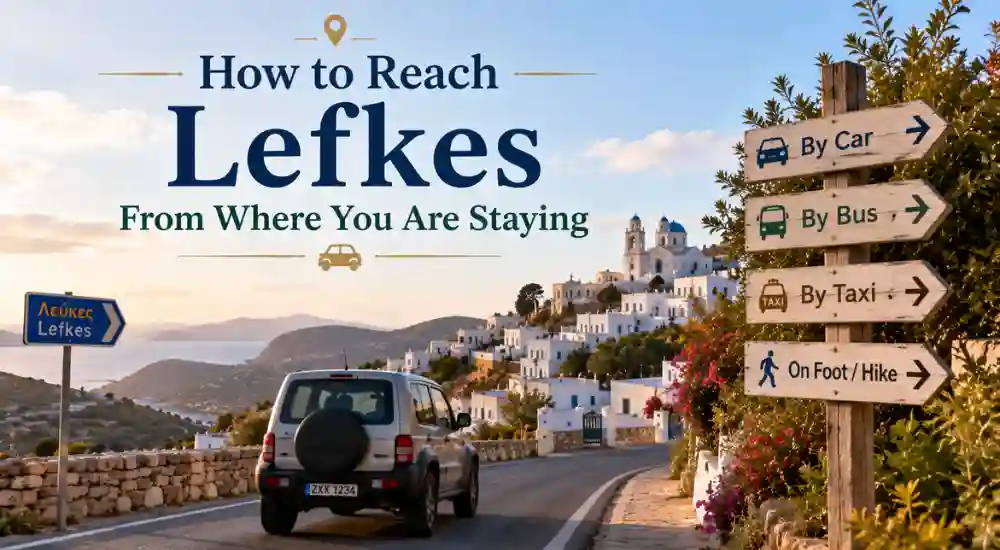
Choosing Between Car, Bus, Taxi, and Tour
A rental car offers the greatest freedom and works best for a multi-stop island itinerary. A bus is more affordable but requires careful schedule planning. A taxi is convenient for a direct visit, although the return should be arranged during busy periods.
A guided island tour suits visitors who do not want to manage routes, parking, or transport. However, tours may provide less free time. Choose based on your budget, confidence, available time, and whether Lefkes is your only stop.
What Driving to Lefkes Is Really Like
The drive to Lefkes takes you away from the coast and into the island’s hilly interior. Main approach roads are easier than the narrow streets inside the old village.
Do not try to drive deep into the pedestrian centre. Follow local signs, use a suitable parking area, and complete the final part on foot. Navigation apps can be useful, but they may direct drivers toward streets that are too narrow or inappropriate. During peak summer, arriving earlier can reduce parking stress.
Parking Without Stress in Lefkes
Choose an established parking space outside the historic centre rather than searching for a spot beside the main attractions. Expect a short uphill or downhill walk after parking.
Arrive early during July and August, save your parking location, and never block gates, private homes, turning spaces, or access roads. Parking conditions can change, so avoid publishing or following overly specific claims without recent confirmation. A slightly longer walk is better than creating problems for residents.
Walking Conditions Visitors Often Underestimate
Lefkes is beautiful, but it is not completely flat. Visitors may encounter slopes, stairs, uneven marble, polished stone, and narrow paths. Surfaces can become slippery after rain.
Wear shoes with reliable grip rather than smooth sandals. During summer, heat can make even a short uphill route feel tiring. Carry water, stop in shaded areas, and avoid planning every attraction back-to-back. Travellers with limited mobility should focus on a shorter route near the most accessible streets.
Best Month to Visit Lefkes
April and May offer greener scenery and comfortable walking conditions, although some seasonal businesses may not yet operate daily. June brings warmer weather before the busiest part of summer.
July and August offer the widest range of services but also stronger heat and more visitors. September is an excellent choice for warm weather with fewer peak-season crowds, while October can feel quieter and cooler. Winter provides a local atmosphere, but visitors should expect reduced transport, limited restaurant choices, and less predictable weather.
Morning, Afternoon, or Evening: When Should You Visit?
Morning is best for cool walking, quiet photography, and hiking. Some shops or restaurants may open later.
Midday offers more dining options, but the heat and strong light can make walking uncomfortable.
Late afternoon provides softer light, a relaxed atmosphere, and pleasant café time. It may be too late for a long hike.
Evening is suitable for dinner and a gentle walk, although visitors relying on buses must confirm the final return service.
What Lefkes Is Like During Peak Summer
During July and August, Lefkes receives more day visitors, particularly around the main streets, Agia Triada, and popular cafés. Parking may require more patience, while exposed walking routes can become uncomfortable during the hottest hours.
Visit early in the morning or later in the afternoon. Make restaurant plans ahead when a particular place matters to you, carry water, and avoid starting the Byzantine Road at midday. Despite summer activity, quieter side lanes can still provide a calmer experience.

What Lefkes Is Like Outside Summer
Outside the main season, Lefkes feels quieter and more residential. Cooler temperatures can make village walks and hiking more comfortable, especially in spring and early autumn.
The trade-off is that some cafés, shops, accommodation, and transport services may operate on reduced schedules. Rain can also make marble and stone streets slippery. Off-season visitors should check opening times and bus information before travelling. Come for peaceful streets and local atmosphere rather than expecting the full range of summer services.
Eating in Lefkes Without Choosing the Wrong Place
Decide what type of meal you want before choosing a restaurant. A café works for coffee, pastries, breakfast, or a light snack. A traditional taverna is better for a longer lunch with meze and cooked dishes.
Do not choose only by the view or social-media popularity. Read recent menus and reviews, check whether the business is currently open, and ask about local or seasonal dishes. During busy summer evenings, reserving a table can prevent disappointment.
What to Order in Lefkes
Good options may include Greek meze, chickpea fritters, local cheese, vegetable dishes, grilled seafood, salads, spanakopita, pastries, baklava, orange cake, Greek coffee, lemonade, and local wine.
Menus vary by restaurant and season, so treat these as ideas rather than guaranteed dishes. Sharing several small plates is a practical way to taste more than one flavour. Ask the staff what is made locally or prepared that day instead of ordering only familiar international food.
Shopping for Something Made in Paros
Small shops in Lefkes may sell ceramics, artwork, jewellery, clothing, textiles, decorative pieces, and local food products. Look for information about where an item was made and whether it comes from a local artist or workshop.
Handmade products usually cost more than mass-produced souvenirs, but they create a stronger connection with the destination. Browse respectfully, avoid handling fragile work without permission, and support small businesses when something genuinely appeals to you.
Local Festivals and Cultural Events
The Festival of Karavolas is one of Lefkes’ best-known cultural events. It traditionally takes place on the first Saturday after August 15 and includes local food, music, dancing, and community celebration.
Event dates, entry conditions, and programmes should always be confirmed for the year of travel. Visitors should remember that this is a local cultural celebration, not simply a tourist performance. Respect village rules and expect larger crowds than on an ordinary evening.
A Lefkes and Prodromos Half-Day Route
Begin early in Lefkes with a walk through the old lanes and a visit to Agia Triada. Stop for coffee, then enter the Byzantine Road toward Prodromos.
Spend time exploring Prodromos, rest in the village, and return using your pre-planned method. You can walk back, arrange a taxi, or use a suitable bus connection when available. This route combines architecture, countryside, history, and two traditional villages without requiring a full day.
A Lefkes, Marpissa, and Piso Livadi Full-Day Route
Start with a morning visit to Lefkes, then continue toward Prodromos and Marpissa by car or along an appropriate walking route. Explore Marpissa’s traditional lanes before travelling to the coastal settlement of Piso Livadi.
Have lunch beside the water or continue to a nearby beach such as Logaras. This itinerary balances inland villages with a coastal finish. Drivers have the most flexibility, while bus users should build the day around current KTEL departure times.
Should You Stay Overnight in Lefkes?
Staying in Lefkes suits travellers looking for quiet evenings, traditional surroundings, early-morning photography, and a slower rhythm. It can also provide easy access to inland walking routes.
However, Lefkes offers less nightlife, fewer late transport options, and no immediate beach. Visitors who want a broad restaurant selection, port access, or evening entertainment may prefer Parikia or Naoussa. An overnight stay works best for couples, hikers, photographers, and slow travellers with a rental vehicle.
Lefkes or Naoussa: Which Is Better for You?
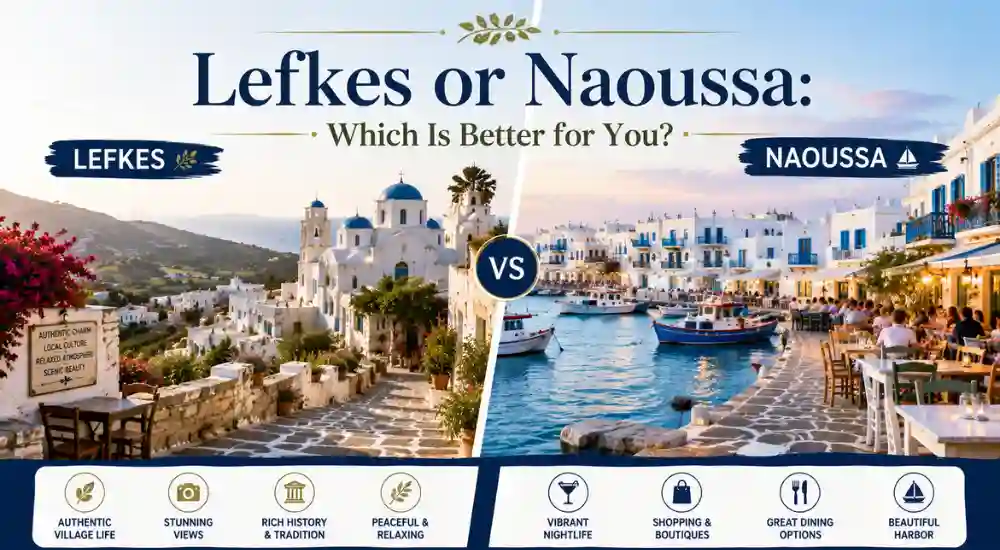
Choose Lefkes for traditional streets, mountain views, quiet cafés, hiking, and a peaceful village atmosphere. Choose Naoussa for harbour scenery, nightlife, boutique shopping, a larger restaurant selection, and easier access to northern beaches.
The two places provide very different experiences, so visiting both is better than treating them as direct substitutes. Lefkes may need only a few hours, while Naoussa can support a longer stay.
Lefkes or Parikia: Which Should You Prioritize?
Parikia is the island’s main port and offers transport connections, shops, restaurants, historic sites, and practical services. Lefkes is smaller, quieter, more scenic, and focused on traditional inland village life.
Travellers with only a few hours after arriving by ferry may find Parikia easier. Those building a broader Paros itinerary should make time for Lefkes. The strongest plan is to use Parikia as a transport base while visiting Lefkes as a half-day trip.
Lefkes or Marpissa: Do You Need Both?
Lefkes is larger and better known for Agia Triada, the Byzantine Road, cafés, shops, and mountain views. Marpissa offers another traditional village atmosphere and works naturally with Prodromos and the eastern coast.
You do not have to choose only one. Travellers with half a day can focus on Lefkes, while those with a full day can comfortably combine both. The villages share Cycladic character but offer different layouts, landmarks, and photography opportunities.
What Visitors Commonly Get Wrong About Lefkes
Common mistakes include believing Lefkes is a separate island, expecting to find a beach, assuming the village is flat, or treating it only as a quick photography stop.
Other mistakes include hiking during midday heat, wearing slippery sandals, driving into narrow streets, failing to check return buses, and ignoring nearby villages. Visitors also sometimes focus only on the main square and miss the quieter residential lanes that give Lefkes much of its character.
What to Do When Your Plans Change
When It Is Too Hot to Hike
Skip the full trail, explore short shaded routes, visit cafés, and return later in the day.
When It Starts Raining
Avoid slippery steep streets, spend time in cafés or shops, and continue only when surfaces feel safe.
When the Bus Schedule Does Not Fit
Use a taxi, guided tour, rental vehicle, or shorten the itinerary.
When You Only Have One Hour
See the central lanes, Agia Triada, one viewpoint, and the Byzantine Road entrance.
Essential Lefkes Packing Checklist
Bring:
- Comfortable shoes with grip
- Drinking water
- Sun cream
- A hat
- Light clothing
- A small evening layer
- Phone or offline map
- Portable charger
- Camera
- Small snack
- Some cash
- Any personal medication
Hikers should carry extra water and avoid relying on finding supplies along the Byzantine Road. Pack lightly because steep lanes become more tiring with a heavy bag.
Lefkes Travel Tips Locals and First-Time Visitors Appreciate
Arrive early, wear sensible shoes, and allow time for an unplanned café stop. Check current transport and opening information instead of depending on older travel guides.
Explore residential streets quietly, avoid blocking doorways, and ask before photographing people. Carry water even when planning a short visit. Do not rush directly from the parking area to Agia Triada and leave. The village becomes more rewarding when you notice its smaller lanes, local businesses, and everyday atmosphere.

Frequently Asked Questions About Lefkes Paros
Is Lefkes a Village or an Island?
Lefkes is a traditional inland village located on Paros Island in Greece. It is not a separate island.
Is Lefkes Worth Visiting if You Do Not Hike?
Yes. The village offers churches, architecture, cafés, shops, viewpoints, windmills, and peaceful walking streets without requiring a full hike.
How Long Should You Stay in Lefkes?
Allow around two hours for the main village or half a day when adding food, shopping, and a short walk.
Is Lefkes Accessible Without a Car?
Yes. Public buses, taxis, and guided tours can reach Lefkes, although schedules should be checked carefully.
Does Lefkes Have Restaurants and Cafés?
Yes, but availability and opening periods may vary by season.
What Is the Closest Beach to Lefkes?
Piso Livadi and Logaras are practical eastern-coast options to combine with a Lefkes visit.
Final Verdict: Should Lefkes Be on Your Paros Itinerary?
Lefkes should be on your itinerary when you want to experience more than the beaches and harbour towns of Paros. Its historic streets, mountain views, Agia Triada Church, local food, and Byzantine Road create a rewarding half-day visit.
Come early for cooler walks, wear comfortable shoes, and allow at least two hours. Whether you hike toward Prodromos or simply enjoy coffee among the whitewashed lanes, Lefkes Paros offers a quieter and more traditional side of the island.