
Compare Europe’s top cities, islands, mountain regions, road trips, and cultural escapes by travel style, ideal stay, season, transportation, and budget so you can build a trip that actually fits you.
Table of Contents
Europe is easy to overplan. Paris makes sense for art and a classic first trip, Santorini works for an island escape, while the Jungfrau Region is a better choice when mountains matter more than museums.
This guide compares 20 of the best places to visit in Europe by travel style, ideal trip length, season, transportation, relative cost, and standout experiences. The goal isn’t to race across the continent. It’s to choose places that genuinely fit your trip.
Where Should You Go in Europe?
For a first trip, Paris, Rome, London, Barcelona, Amsterdam, and Florence are strong starting points because they combine famous attractions with simple visitor infrastructure.
For scenery, look toward South Iceland, Switzerland, Lofoten, Slovenia, or the Scottish Highlands. Couples may prefer Santorini, Paris, Vienna, or Dubrovnik.
TL;DR
- Best first trip: Paris, Rome, London
- Best for art: Florence, Paris, Vienna
- Best value: Budapest, Prague, Slovenia
- Best nature: Switzerland, Iceland, Lofoten
- Best island: Santorini
- Best road trips: Iceland and Highlands
How to Choose the Right European Destination
The “best” destination depends more on your travel style than popularity. Museum lovers, food travelers, hikers, couples, families, and road-trippers all need different shortlists.
Use this comparison to cut 20 choices down to three or four. Cost levels are relative; airfare and hotel prices can change significantly by season.
| Destination | Best For | Ideal Stay | Cost | Car? | Strongest Season |
|---|---|---|---|---|---|
| Paris | First trips, art, food | 4–5 days | $$$ | No | Spring / fall |
| Rome | History, food | 4–5 days | $$–$$$ | No | Spring / fall |
| London | Museums, families | 4–6 days | $$$ | No | Late spring–fall |
| Barcelona | Architecture, coast | 3–4 days | $$–$$$ | No | Spring / fall |
| Lisbon | Food, views, value | 3–4 days | $$ | No | Spring / fall |
| Amsterdam | Museums, canals | 3 days | $$$ | No | Spring / fall |
| Florence | Art, Tuscany | 3–4 days | $$–$$$ | No | Spring / fall |
| Berlin | History, nightlife | 3–4 days | $$ | No | Late spring–fall |
| Prague | Architecture, value | 3 days | $$ | No | Spring / fall |
| Vienna | Palaces, music | 3–4 days | $$–$$$ | No | Spring / winter |
| Budapest | Baths, nightlife | 3–4 days | $$ | No | Spring / fall |
| Copenhagen | Design, food | 3–4 days | $$$ | No | Late spring–summer |
| Athens | Ancient history | 2–3 days | $$ | No | Spring / fall |
| Santorini | Couples, island views | 3–4 nights | $$$ | Optional | Late spring / fall |
| Dubrovnik | History, coast | 2–3 days | $$–$$$ | No | Late spring / fall |
| Jungfrau | Mountains, hiking | 4–5 days | $$$ | No | Summer / winter |
| Highlands | Road trips | 5–7 days | $$–$$$ | Usually | Late spring–fall |
| South Iceland | Waterfalls, geology | 5–7 days | $$$ | Helpful | Summer |
| Julian Alps | Lakes, hiking | 4–5 days | $$ | Helpful | Late spring–fall |
| Lofoten | Arctic scenery | 4–7 days | $$$ | Helpful | Summer / fall |
Best European Destinations by Travel Style
You don’t need the same destination shortlist as everyone else. Matching the place to your interests often produces a better trip than following a universal ranking.
Start with your strongest priority, then choose destinations that connect logically.
First-Time Europe Trips
- Paris — art and landmarks
- Rome — history and food
- London — museums and easy navigation
- Amsterdam — compact city break
Couples
- Santorini — caldera scenery
- Paris — food and neighborhoods
- Vienna — cafés and music
- Dubrovnik — historic Adriatic setting
Nature & Adventure
- Jungfrau Region
- South Iceland
- Lofoten Islands
- Scottish Highlands
Better-Value Choices
- Budapest
- Prague
- Slovenia
1. Paris, France — Best for a Classic First Europe Trip
Paris works when you want the recognizable Europe trip without being limited to famous landmarks. The Louvre, Eiffel Tower, Seine, Montmartre, parks, markets, and neighborhood cafés easily support four or five days.
Its biggest advantage is flexibility. A museum-heavy morning can become a long lunch, riverside walk, or evening in another neighborhood without needing a car.
2. Rome, Italy — Best for Ancient History and Food
Rome feels less like a preserved museum than many travelers expect. Ancient ruins, fountains, churches, apartments, cafés, and busy streets exist together.
The Colosseum, Roman Forum, Pantheon, Vatican Museums, St. Peter’s Basilica, and Trevi Fountain matter, but quieter time in Trastevere or Monti often makes the trip feel less rushed.
3. London, England — Best for Museums, Families, and Variety
London can support completely different trips. Build yours around museums, royal history, theater, football, markets, parks, neighborhoods, or a mix of them.
Public transportation reaches nearly every major visitor area, so a rental car generally adds more hassle than value during a city stay.
4. Barcelona, Spain — Best for Architecture With a Mediterranean Edge
Barcelona lets travelers combine landmark architecture with outdoor time. You can move from Gaudí’s buildings and medieval streets to food markets and the Mediterranean waterfront in the same day.
The Sagrada Família remains one of the city’s major draws, so reserving popular architecture visits ahead is wise during busy periods.
5. Lisbon, Portugal — Best for Food, Views, and Easy Day Trips
Lisbon suits travelers who enjoy exploring without a giant checklist. Alfama, Baixa, Belém, tiled buildings, viewpoints, cafés, and the Tagus waterfront create enough variety for a long weekend.
The main planning issue is terrain. Lisbon’s hills and stone streets can make a short route on a map feel more demanding in real life.
6. Amsterdam, Netherlands — Best for a Compact Car-Free City Break
Amsterdam works especially well for travelers with limited time. Canals, museums, parks, markets, and historic neighborhoods sit inside a relatively compact urban area.
You don’t need to cycle to enjoy the city. Walking, trams, metro services, ferries, and buses give visitors plenty of alternatives.
7. Florence, Italy — Best for Renaissance Art and Tuscany
Florence gives travelers extraordinary cultural depth without the scale of Rome. The Uffizi, Accademia, Duomo, Palazzo Pitti, bridges, churches, and piazzas sit within a highly walkable center.
It is also one of the easiest city bases for connecting museums with the landscapes and towns of Tuscany.
8. Berlin, Germany — Best for Modern History and Nightlife
Berlin belongs on this list because it feels very different from the palace-and-cathedral image many travelers have of Europe.
Berlin Wall history, Museum Island, Brandenburg Gate, parks, contemporary art, restaurants, and nightlife reward travelers who enjoy both history and modern culture.
9. Prague, Czechia — Best for a Short Romantic City Break
Prague provides a strong visual payoff without requiring a long trip. Prague Castle, Charles Bridge, Old Town, Gothic towers, and the riverfront form a satisfying two- or three-day itinerary.
Its compact center also makes Prague easy to place inside a wider Central Europe route.
10. Vienna, Austria — Best for Palaces, Music, and Cafés
Vienna blends imperial architecture, major art collections, classical music, formal parks, markets, and coffeehouses without being difficult to navigate.
Its public transportation makes a rental car unnecessary for a normal central-city trip.
11. Budapest, Hungary — Best for Thermal Baths and Value
Budapest feels distinct because the Danube divides the experience so clearly. Buda brings hills and castle views, while Pest delivers boulevards, restaurants, nightlife, markets, and urban energy.
Historic thermal bathing also gives Budapest a travel experience few major European capitals can match.
12. Copenhagen, Denmark — Best for Design, Food, and Easy City Living
Copenhagen suits travelers who care about how a city feels as much as its attractions. Nyhavn, Tivoli, royal sites, food markets, waterfront districts, cycling culture, and modern architecture fit naturally into a short stay.
The tradeoff is cost. Copenhagen is better chosen for quality and ease than for bargain travel.
13. Athens, Greece — Best for Ancient History and Neighborhood Life
Athens deserves more than being treated as an airport stop before the islands. The Acropolis, museums, ancient sites, Plaka, Monastiraki, Koukaki, and modern food scene can support several rewarding days.
Hot-season travelers should put exposed archaeological sightseeing earlier in the day and leave afternoons more flexible.
14. Santorini, Greece — Best for Couples and Caldera Scenery
Santorini earns its place because its volcanic caldera landscape creates an island experience very different from a standard beach vacation.
Oia and Fira draw the largest crowds, but vineyards, villages, archaeological sites, volcanic beaches, and boat trips give travelers good reasons to stay several nights.
15. Dubrovnik, Croatia — Best for Historic Adriatic Scenery
Dubrovnik combines a fortified historic center with the Adriatic coast, harbor views, nearby islands, and beaches.
It works especially well for travelers who want cultural sightseeing without giving up water and coastal scenery.
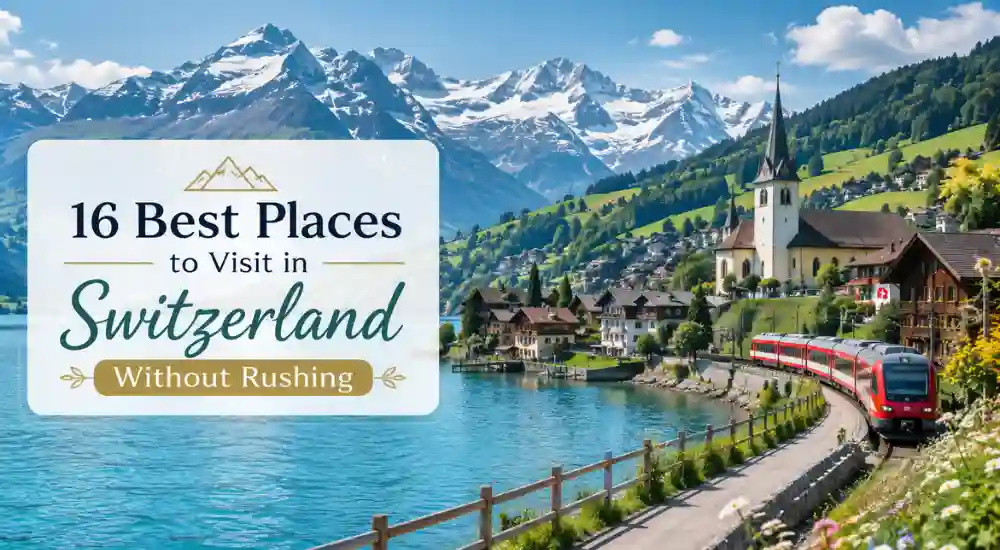
16. Jungfrau Region, Switzerland — Best for Car-Free Alpine Scenery
Choose the Jungfrau Region when mountains are the trip, not merely the background. Lauterbrunnen, Wengen, Mürren, Grindelwald, waterfalls, hiking trails, and mountain railways can fill several days.
Its biggest practical advantage is that many major visitor bases can be reached without depending on a car.
17. Scottish Highlands — Best for a Scenic Road Trip
The Highlands are for travelers who want open landscapes instead of constant city sightseeing. Lochs, mountains, castles, coastlines, glens, and small communities reward a slower pace.
A car or organized tour becomes much more useful once you move beyond Scotland’s major transport hubs.
18. South Iceland — Best for Waterfalls, Glaciers, and Geology
South Iceland is one of Europe’s strongest nature-focused routes. Waterfalls, geothermal areas, glaciers, black-sand beaches, lava landscapes, and coastal villages create constant variety.
Conditions can change quickly, so checking official road and weather information should be part of normal trip planning.
Planning an aurora-focused trip instead? Read the Northern Lights in Iceland guide .
19. Lake Bled and the Julian Alps — Best for a Quieter Alpine Trip
Slovenia offers an Alpine trip that feels different from Switzerland. Lake Bled, Lake Bohinj, Triglav National Park, the Soča River, forests, and mountain communities make it particularly useful for outdoor travelers.
Don’t stop at Lake Bled alone. Bohinj and the wider Julian Alps deserve several days.
20. Lofoten Islands, Norway — Best for Arctic Landscapes
Lofoten looks different from almost every destination above. Sharp mountains rise from the sea while fishing villages, beaches, hiking trails, cabins, and small harbors line the islands.
It works best when northern Norway is a major part of the vacation rather than a rushed add-on to a city-heavy Europe route.
Best Time to Visit Europe
There is no single best month for the whole continent. Europe includes Mediterranean, Atlantic, Alpine, continental, and Arctic climates.
For many classic city trips, late spring and early fall offer a useful mix of sightseeing weather and daylight. Beach, skiing, hiking, and Arctic travel follow different seasonal patterns.
Spring
March–May
- Good for Paris and Rome
- Useful for Lisbon and Athens
- Mountain trails may still have snow
Summer
June–August
- Strong for Iceland and Norway
- Good Alpine hiking period
- Mediterranean cities may be hot
Fall
September–October
- Strong city-trip season
- Good for Greece and Croatia
- Weather gets less predictable later
How Many European Destinations Should You Visit?
The fastest way to weaken a Europe vacation is to count countries rather than usable travel days. Every hotel change consumes more time than the train or flight schedule suggests.
Pack, check out, reach the station, travel, navigate to the next hotel, and check in. A “two-hour journey” can easily use a large part of the day.
7-Day Europe Trip
Choose one country or two nearby bases.
- Paris + Amsterdam
- Rome + Florence
- Prague + Vienna
- Athens + Santorini
10-Day Europe Trip
Two or three bases usually work best.
- Prague → Vienna → Budapest
- London → Paris → Amsterdam
Europe by Train, Plane, or Car?
Transportation should influence your destination shortlist before you book accommodation. Choosing geographically sensible combinations gives you more actual vacation time.
Compare total door-to-door time rather than looking only at the scheduled flight or train journey.
Choose Trains
- Paris + Amsterdam
- Rome + Florence
- Berlin + Prague
- Prague + Vienna
- Vienna + Budapest
Choose Flights
- London to Santorini
- Paris to Iceland
- Spain to Greece
- Central Europe to northern Norway
Rent a Car
- Scottish Highlands
- South Iceland
- Lofoten Islands
- Parts of Slovenia
2026 Europe Entry Information for U.S. Travelers
Entry rules depend on nationality, trip purpose, destination, and length of stay. Always confirm current official requirements close to departure.
Common Europe Planning Mistakes to Avoid
Trying to See Too Many Countries
Every transfer costs time. Reduce hotel changes and spend more usable hours at each destination.
Ignoring Route Logic
Check transportation before choosing your final destination combination.
Assuming Walk-In Entry
Popular museums, mountain trips, archaeological sites, and landmarks may require advance reservations.
Treating Europe as One Climate
Santorini, London, Switzerland, and Lofoten can have completely different conditions on the same date.
Frequently Asked Questions
What are the best places to visit in Europe for the first time?
Paris, Rome, London, Barcelona, Amsterdam, and Florence are strong first-trip choices because they combine major attractions with useful transport and tourism infrastructure.
What is the best country in Europe to visit?
There is no single best country. Choose Italy for history and food, France for culture, Greece for islands, Switzerland for mountains, or Iceland for geology and road trips.
What is the most beautiful place in Europe?
For natural landscapes, the Jungfrau Region, Lofoten Islands, South Iceland, Santorini, Scottish Highlands, and Julian Alps are among the strongest choices.
Which European destinations are best without a car?
Paris, London, Amsterdam, Barcelona, Vienna, Prague, Budapest, Copenhagen, Florence, and Rome all work well without a rental car.
Which European destinations are best for couples?
Santorini, Paris, Vienna, Dubrovnik, Prague, and Florence are strong choices, depending on whether you prefer beaches, food, art, history, or city atmosphere.
What are some more affordable places to visit in Europe?
Budapest, Prague, and parts of Slovenia can be worth comparing with higher-cost destinations such as London, Copenhagen, Switzerland, and Santorini.
Is two weeks enough for Europe?
Yes. Two weeks can create an excellent Europe vacation when you choose three or four well-connected bases instead of changing cities every day.
What is the best month to visit Europe?
May, June, and September are useful starting points for many city trips, but mountain hiking, skiing, beaches, northern lights, and Arctic trips require different timing.
Do Americans need ETIAS for Europe in 2026?
As of August 12, 2026, ETIAS is not yet operational. Because the implementation timeline is changing, check the official EU travel requirements close to your departure date.
Final Thoughts
The best places to visit in Europe aren’t simply the destinations with the most famous landmarks. Your best choice depends on your time, travel pace, budget, interests, and how much transportation you want between stops.
Start with three destinations that genuinely match your travel style, then remove the one that creates the weakest route. Two well-chosen places will usually give you a better vacation than four rushed countries.
If your travel dates are flexible, compare our warm places to visit in October or best places to travel in December before choosing your final route.