
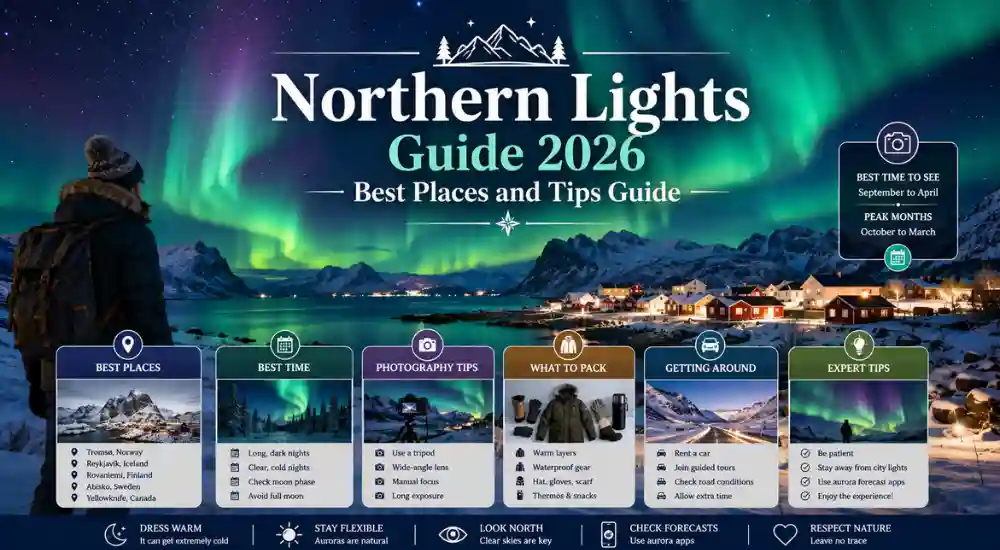
The northern lights are one of the most magical sights on Earth. Also called the aurora borealis, they fill the night sky with green, purple, pink, and sometimes red waves of light. For many travelers, seeing the aurora is not just a trip. It is a true bucket-list experience.
In 2026, interest in northern lights travel is even higher because solar activity is expected to stay strong. That means travelers may have better chances to see bright auroras in places like Norway, Iceland, Finland, Sweden, Canada, and Alaska.
This guide will help you understand the best time to see northern lights, the best places to see northern lights, how to use a northern lights forecast, and simple tips to plan your trip with confidence.
Quick Answer
The best places to see the northern lights are usually Norway, Iceland, Finland, Sweden, Canada, and Alaska because they sit close to the auroral oval, where aurora activity is strongest. For most travelers, Tromsø in Norway is one of the easiest and most reliable places to experience the aurora borealis.
The best time to see northern lights is from late September to March, especially during dark and clear winter nights. The best viewing hours are often between 10 PM and 2 AM, although the aurora can appear earlier or later.
To improve your chances, stay at least 3 to 5 nights, avoid areas with light pollution, and check the northern lights forecast and weather forecast daily. In 2026, strong solar activity may also increase the chance of brighter aurora displays in many Arctic destinations.
What Are the Northern Lights?
The northern lights, also called the aurora borealis, are bright waves of light that appear in the night sky near the Arctic region. They can look like soft green curtains, glowing clouds, or dancing ribbons above snowy landscapes.
These lights are most common in places close to the Arctic Circle, such as Norway, Iceland, Finland, Sweden, Alaska, and Canada. People also call them polar lights because they happen near the Earth’s poles.
For travelers, the northern lights are more than a natural event. They are a dream experience. The quiet winter sky, dark surroundings, and sudden colors make the aurora feel almost unreal. That is why many people plan a full northern lights trip just to see them once.
What Causes the Northern Lights?
The northern lights happen when energy from the sun reaches Earth. The sun sends out tiny particles through solar wind. When these charged particles hit Earth’s magnetic field, they are pulled toward the polar areas.
High in the atmosphere, these particles meet gases like oxygen and nitrogen. This creates glowing colors in the sky. Green is the most common color, but you may also see purple, pink, red, or blue during strong solar activity.
So, when people ask what causes northern lights, the simple answer is: the sun, Earth’s magnetic field, and gases in the atmosphere work together. A strong geomagnetic storm can make the aurora brighter and visible in more places than usual.
Why 2026 Is a Great Year to See the Northern Lights

The year 2026 is a strong time for northern lights travel because solar activity is still high around the current solar cycle. When the sun is more active, it can send stronger energy toward Earth. This can create brighter and more frequent auroras.
This does not mean the lights are guaranteed every night. You still need clear skies, darkness, and a good location. But strong solar activity can improve your chances, especially in top aurora areas.
If you have been waiting to plan a northern lights vacation, 2026 is a smart year to consider. Places like Tromsø, Iceland, Finnish Lapland, Abisko, Fairbanks, and Yellowknife are expected to stay popular with aurora travelers.
Best Time to See the Northern Lights
The best time to see northern lights is usually during the darker months of the year. In most aurora destinations, the season runs from late September to March or early April. These months have longer nights, which gives you more time to watch the sky.
Winter is popular because the nights are dark and long. However, autumn and early spring can also be good because the weather may feel less harsh. The key is not only the month. You also need darkness, clear weather, and active aurora conditions.
Try to stay at least a few nights in your chosen destination. A longer stay gives you a better chance because clouds, snow, or weak solar activity can affect visibility.
Best Months for Northern Lights
The best months are often October, November, December, January, February, and March. September and April can also work in some places if the nights are dark enough.
For a classic winter trip, December to March is popular. For fewer crowds and softer weather, September, October, and March can be better.
Best Time of Night
The best time of night is often between 10 PM and 2 AM, but auroras can appear earlier or later. Stay flexible, check the aurora forecast, and be ready to wait outside in warm clothes.
Best Places to See the Northern Lights
The best places to see northern lights are usually dark, cold, and close to the auroral oval. This is the area where auroras appear most often. Good destinations also need clear skies, low light pollution, and easy access to viewing spots.
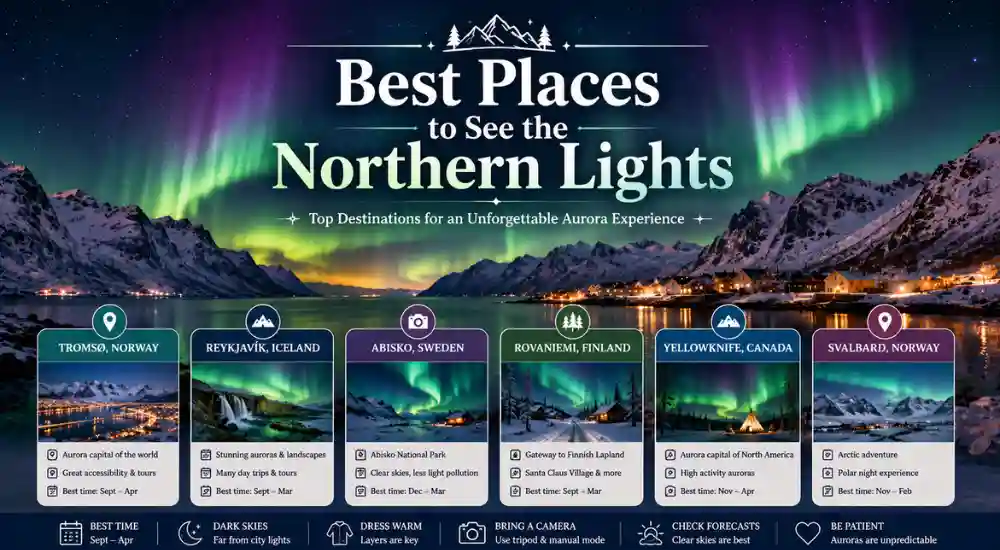
Popular countries include Norway, Iceland, Finland, Sweden, Canada, and Alaska. Each place offers a different style of trip. Some are best for tours, some for road trips, and some for luxury stays.
If this is your first aurora trip, choose a place with good travel services and guided tours. If you are more experienced, a remote cabin or self-drive route can give you more freedom. Below are the top regions to consider.
Norway
Norway northern lights trips are famous because the country has strong aurora zones and beautiful Arctic scenery. Tromsø is great for first-timers, while Lofoten, Alta, and Svalbard offer dramatic landscapes.
Iceland
Iceland northern lights trips are perfect if you want waterfalls, glaciers, hot springs, and aurora viewing in one journey. Reykjavik is easy for tours, while the South Coast offers darker skies.
Finland
Finland northern lights trips are popular for cozy winter stays. Finnish Lapland, Rovaniemi, and Saariselkä are known for snowy forests, glass igloos, and romantic aurora hotels.
Sweden
Sweden northern lights travel is best in places like Abisko and Kiruna. Abisko is especially loved because it often has clearer skies than many other Arctic areas.
Canada and Alaska
For North American travelers, Fairbanks in Alaska, Yellowknife in Canada, and the Yukon are strong options. These places are cold, remote, and often excellent for aurora viewing.
Best Northern Lights Destination by Traveler Type
The best northern lights destination depends on your travel style. For first-timers, Tromsø, Norway is one of the easiest choices because it has many tours, hotels, restaurants, and airport access.
For families, Rovaniemi in Finland is a great option because it combines aurora viewing with winter activities and Santa Claus Village. For couples, Saariselkä and Finnish glass igloos feel romantic and peaceful.
For photographers, Lofoten, Abisko, Iceland, and Fairbanks are strong choices because they offer dramatic landscapes and dark skies. Budget travelers may prefer Iceland in the shoulder season or parts of Finnish Lapland. Luxury travelers can choose glass igloos, Arctic lodges, or private aurora tours.
This section helps match the trip to the traveler, which makes the guide more useful.
How to Increase Your Chances of Seeing the Northern Lights
To improve your chances of seeing the aurora borealis, plan carefully. First, stay at least 3 to 5 nights in a good aurora location. One night is risky because clouds or weak activity can ruin the view.
Second, get away from city lights. Dark skies make the northern lights easier to see. Choose rural hotels, cabins, lakes, beaches, mountains, or guided viewing areas.
Third, check the northern lights forecast, cloud forecast, and local weather. A high KP index helps, but clear skies are just as important.
Also, dress warmly and be patient. The aurora can appear suddenly, fade away, and return later. Sometimes the best show happens after hours of waiting.
Northern Lights Forecast: What to Check Before You Go
A northern lights forecast helps you understand your chances before heading outside. The most common tool is the KP index, which measures geomagnetic activity. A higher KP number can mean stronger aurora activity.
But the KP index is not everything. You also need to check the cloud forecast. Even a strong aurora can be hidden if the sky is cloudy. Local weather apps, aurora apps, and tour alerts can help you choose the best time and place.
The auroral oval is also important. If your destination sits under or near this zone, you may see auroras even when the KP number is not very high.
Use forecasts as helpful guides, not promises. Nature can change quickly.
Northern Lights Tour vs Self-Guided Trip
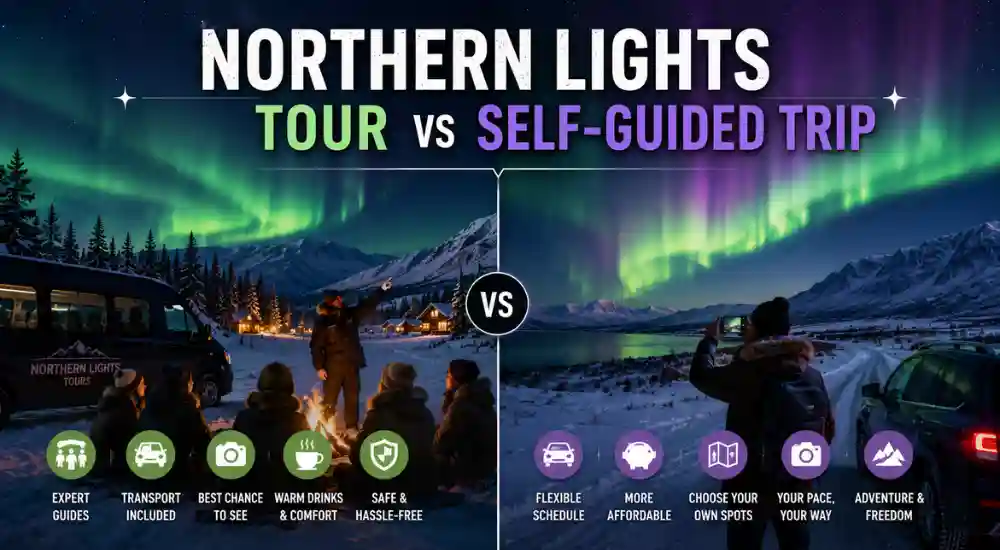
A northern lights tour is a good choice for beginners. Local guides know dark viewing spots, weather patterns, road conditions, and safe places to wait. Many tours also provide warm suits, hot drinks, photos, and transport.
A self-guided trip gives you more freedom. You can drive to quiet places, wait as long as you want, and avoid group schedules. It may also cost less if you already have a rental car.
However, DIY travel is not always easy in winter. Snow, ice, darkness, and remote roads can be dangerous. If you are not used to winter driving, a tour is safer.
For most first-time travelers, one guided tour plus some self-viewing nights is a smart mix.
How Much Does a Northern Lights Trip Cost?
The cost of a northern lights trip depends on the country, season, hotel style, and tours. A budget trip may include basic guesthouses, public transport, and one or two group tours. Iceland, Finland, and Alaska can work for budget travelers if booked early.
A mid-range trip usually includes comfortable hotels, guided aurora tours, winter activities, and better transport. This is the best choice for most travelers.
A luxury northern lights vacation can include glass igloos, private tours, Arctic lodges, hot tubs, and premium experiences. These trips can be expensive, especially in Finland and Norway.
Do not forget hidden costs like winter clothing, boots, camera gear, airport transfers, meals, and extra tours.
How Many Days Do You Need for a Northern Lights Trip?
For a good northern lights itinerary, plan at least 3 nights in an aurora destination. This gives you more than one chance if the sky is cloudy or the aurora activity is weak.
A better plan is 4 to 7 nights. This gives you time to enjoy winter activities during the day and wait for the aurora at night. It also makes the trip feel less rushed.
If seeing the northern lights is your main goal, do not book only one night. Even in the best places, sightings are never guaranteed. The weather can change quickly, and clouds can block the sky.
More nights mean better odds, less stress, and a more enjoyable Arctic travel experience.
What to Pack for a Northern Lights Trip
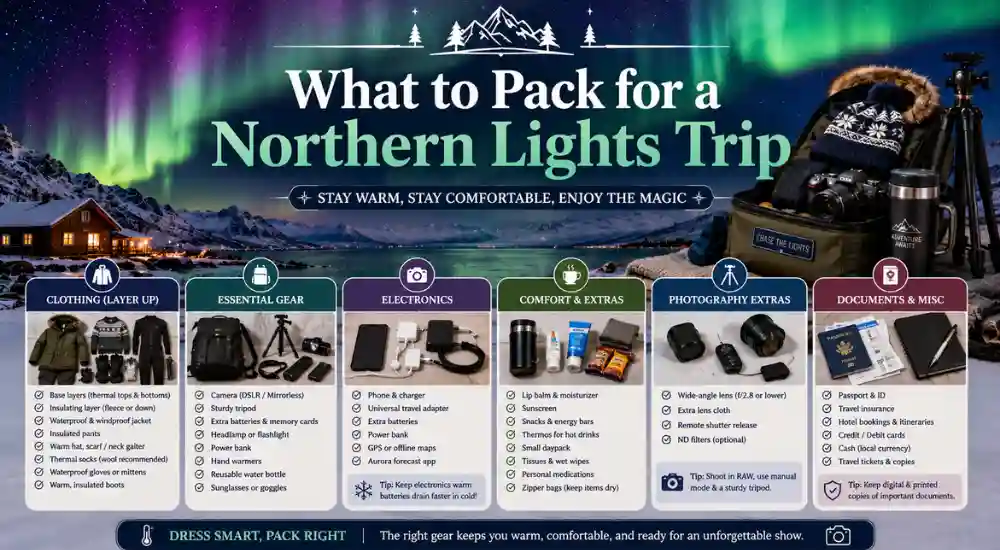
A good northern lights packing list can make your trip much more comfortable. You may wait outside for hours in freezing weather, so warm clothing is very important.
Pack thermal base layers, a warm middle layer, a winter jacket, waterproof boots, wool socks, gloves, a hat, and a scarf. Hand warmers are helpful, especially for long viewing nights.
For photography, bring a tripod, camera, extra batteries, memory cards, and a power bank. Cold weather drains batteries quickly, so keep spares inside your jacket.
Also pack snacks, water, lip balm, and a small flashlight. If you stay warm and prepared, you can wait longer and enjoy the aurora without feeling miserable.
How to Photograph the Northern Lights
Northern lights photography is easier when you prepare before the aurora appears. A tripod is very important because the camera needs to stay still during long exposure shots.
If using a camera, try manual mode, a wide aperture, high ISO, and a slow shutter speed. The exact settings depend on how bright the aurora is. Use manual focus and focus on a distant light or star.
For phone photography, use night mode if available. Keep the phone steady with a tripod or stable surface. Avoid using flash because it will not help the sky.
Keep batteries warm in your pocket. Cold weather can drain them fast. Take many shots because the aurora changes every few seconds.
Common Northern Lights Mistakes to Avoid
Many travelers make simple mistakes during a northern lights trip. The biggest mistake is staying only one night. Even in the best aurora destinations, clouds can block the sky.
Another mistake is staying in a bright city center and expecting a perfect view. You need dark skies and low light pollution. Booking during the summer is also a problem because northern regions may not get enough darkness.
Some people only check the aurora forecast and forget the weather forecast. Clear skies matter just as much as solar activity.
Also, do not underdress. Waiting outside in Arctic weather can feel much colder than expected. Warm clothes, patience, and flexible plans make a big difference.
Are the Northern Lights Guaranteed?
No, the northern lights are not guaranteed. Even if you visit the best places, you still need the right mix of solar activity, darkness, clear skies, and location.
This is why honest planning matters. A strong aurora forecast can improve your chances, but clouds can still hide the lights. Sometimes the aurora appears for a few minutes. Other times, it dances for hours.
The best approach is to plan a full winter trip, not only one aurora night. Choose a destination with other activities, such as dog sledding, hot springs, snowmobiling, or fjord tours.
That way, your trip still feels special even if the lights are shy.
Best Activities to Combine With a Northern Lights Trip
A northern lights vacation becomes better when you add daytime winter activities. Since aurora viewing usually happens at night, you can use the day for Arctic adventures.
Popular options include dog sledding, snowmobiling, reindeer farm visits, snowshoeing, ice hotels, fjord cruises, and hot springs. In Finland, you can stay in a glass igloo or visit Santa Claus Village. In Iceland, you can add waterfalls, glaciers, and geothermal pools.
In Norway, fjord trips and Sami cultural experiences are great choices. In Sweden, the Icehotel and Abisko mountain scenery are popular. These activities make the trip more complete and help you enjoy the destination even before the aurora appears.

FAQs About the Northern Lights
What is the best month to see the northern lights?
The best months are usually October to March, when nights are long and dark. February and March are often popular because there is still darkness, but the weather may feel a little easier than deep winter.
Which country is best for northern lights?
There is no single best country for everyone. Norway is great for first-timers, Finland for cozy stays, Sweden for clear skies, Iceland for road trips, and Canada or Alaska for North American travelers.
Can you see northern lights with the naked eye?
Yes, you can see the northern lights with the naked eye, but they may look softer than camera photos. Cameras often capture stronger colors because they collect more light.
How long do northern lights last?
The aurora can last a few minutes or several hours. Sometimes it appears, fades, and returns later in the night. This is why patience is important.
Can clouds block the northern lights?
Yes, clouds can fully block the aurora. Even strong geomagnetic activity will not help if the sky is covered. Always check the cloud forecast.
Are northern lights always green?
No, but green is the most common color. During stronger activity, you may also see purple, pink, red, blue, or white tones.
Can you see northern lights in summer?
In most Arctic areas, summer is not ideal because the sky is too bright. The best season is from late September to March or early April.
Is Norway or Iceland better for northern lights?
Norway is often better for focused aurora trips, especially in Tromsø. Iceland is better if you want waterfalls, glaciers, hot springs, and aurora hunting together.
Conclusion
Yes, a northern lights trip is worth it if you plan with realistic expectations. The aurora is never guaranteed, but the experience of traveling through snowy Arctic landscapes, watching dark skies, and waiting for natural lights is unforgettable.
For the best chance, travel during the dark season, stay several nights, choose a location with low light pollution, and check the northern lights forecast. Good planning makes a big difference.
The best overall places include Norway, Iceland, Finland, Sweden, Canada, and Alaska. For 2026, strong solar activity makes aurora travel even more exciting. If you want a magical winter journey, the northern lights should be high on your travel list.