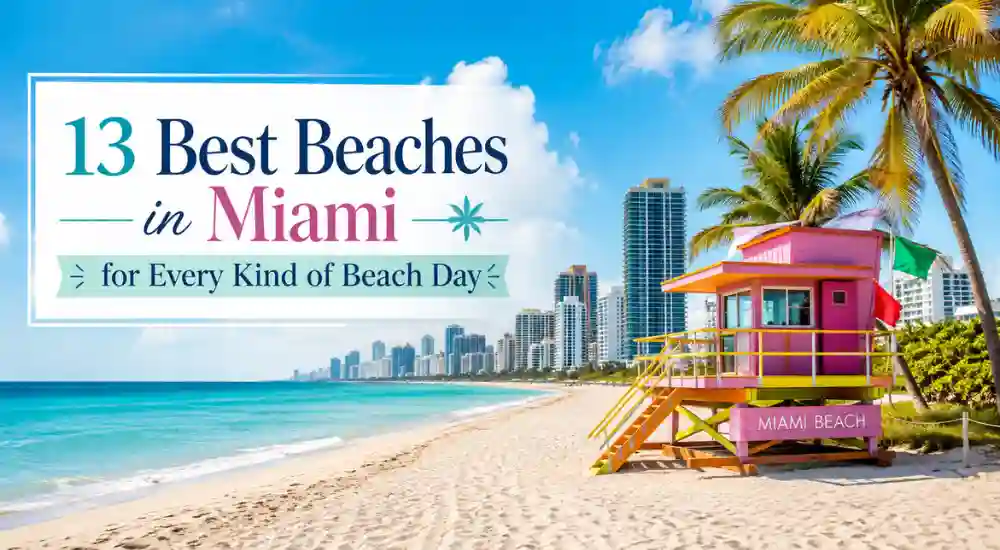
Miami may be famous for South Beach, but stopping there means missing some of the area’s best shoreline experiences. Drive north and the atmosphere becomes quieter. Head toward Key Biscayne and Virginia Key, and hotel towers give way to parks, history, shallow water, and outdoor recreation.
This guide compares 13 of the best beaches in Miami by atmosphere, family appeal, swimming, transportation, parking, accessibility, and nearby experiences. The goal isn’t to name one universal winner. It’s to help you choose the beach that makes sense for your kind of Miami day.
Quick Answer: Which Miami Beach Should You Choose?
For a first trip, start with South Beach and Lummus Park. Families should look closely at Crandon Park, while Surfside and North Beach suit travelers who want less noise. Choose Bill Baggs Cape Florida State Park for nature and history, Hobie Beach for wind-powered water sports and dogs, and Haulover for the widest mix of specialized beach experiences.
If you have several beach days, don’t simply visit the three most famous names. Pick beaches from different parts of Greater Miami so each day feels noticeably different.
Miami Beaches at a Glance
| Beach | Best For | Overall Feel | Car Most Useful? | Good Visit Length |
| South Beach & Lummus Park | First-time visitors | Busy, iconic, urban | No | 2–4 hours |
| South Pointe Park Beach | Couples, families, views | Scenic, polished | No | 2–4 hours |
| Mid-Beach | Resort stays | Relaxed, hotel-focused | No | Half day |
| North Beach Oceanside Park | Families, quieter days | Local, laid-back | No | Half day |
| Surfside Beach | Couples, walking | Calm, small-town feel | Helpful | Half day |
| Bal Harbour Beach | Quiet upscale trips | Refined, peaceful | Helpful | 2–4 hours |
| Haulover Beach Park | Dogs, naturists, recreation | Open, varied | Yes | Half day |
| Sunny Isles Beach | Resort travelers | Residential, relaxed | Helpful | Half day |
| Crandon Park Beach | Families | Spacious, park-like | Yes | Half/full day |
| Bill Baggs Cape Florida | Nature, history | Natural, slower-paced | Yes | Half/full day |
| Historic Virginia Key Beach | History, culture | Quiet, meaningful | Yes | 3–5 hours |
| Hobie Beach | Dogs, paddle sports | Casual, active | Yes | 2–4 hours |
| Matheson Hammock | Younger families | Sheltered, park-like | Yes | 2–4 hours |
Planning tip: Miami Beach itself is relatively easy to explore without a car. Key Biscayne, Virginia Key, and Matheson Hammock are generally easier to reach when you have a car or rideshare.
First, Know the Difference Between Miami and Miami Beach
Miami Beach is a separate city from Miami, connected to the mainland by causeways. South Beach is the southern neighborhood of Miami Beach, while Mid-Beach and North Beach continue farther north.
This guide uses “Miami beaches” in the way travelers commonly use the phrase. It includes Miami Beach plus nearby Greater Miami coastal areas such as Surfside, Bal Harbour, Sunny Isles Beach, Virginia Key, Key Biscayne, and Coral Gables.
That distinction matters when planning your day. Beaches that look close on a regional map can belong to different cities or park systems, with different parking rules, transit options, and access policies.
How These Miami Beaches Were Chosen
A useful “best beaches” list should do more than rank sand and water. These recommendations were selected because each offers a distinct reason to visit, not simply because it appears on other travel lists.
The comparison considers public access, atmosphere, facilities, family usefulness, transportation, accessibility, recreation, cultural value, and how different the experience feels from nearby alternatives. Changing details were checked against official local sources rather than assumed from older travel guides.
The 13 Best Beaches in Miami
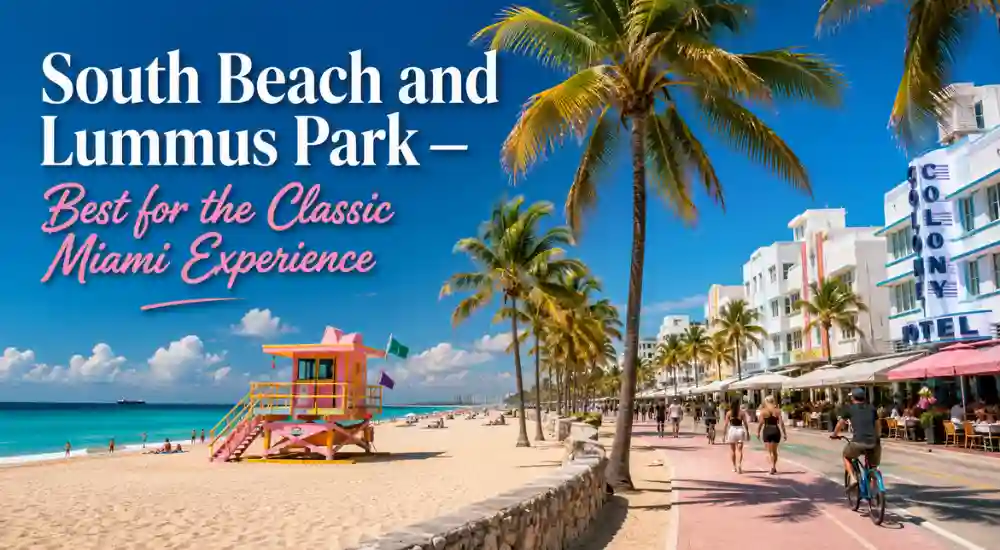
South Beach and Lummus Park — Best for the Classic Miami Experience
Best for: First-time visitors, people-watching, architecture, photography, and travelers staying in South Beach.
If Miami exists in your imagination as turquoise water, colorful lifeguard towers, palms, and pastel Art Deco hotels, this is where that image comes together. Lummus Park runs beside the beach and Ocean Drive, making it easy to move between sand, cafés, architecture, and the beachfront path.
The park includes public restrooms, paved walking and biking paths, a playground, and outdoor fitness facilities. Its location also means you can enjoy a full Miami experience without spending much of the day in a car.
The tradeoff is obvious: this isn’t where to go for solitude. Visit earlier in the morning if you want a calmer walk, easier photographs, and cooler temperatures before the busiest part of the day.
Choose South Beach if: You have only one Miami beach day and want the city’s most recognizable coastal experience.
Skip it if: Quiet sand and a low-key atmosphere matter more than restaurants, architecture, and people-watching.
South Pointe Park Beach — Best for Beach Plus Park Space
Best for: Couples, families, scenic walks, photographers, and travelers who want more than sand.
At the southern tip of Miami Beach, South Pointe Park feels more open than the central South Beach shoreline. Beach access sits beside lawns, walking paths, waterfront viewpoints, and park facilities, so your entire visit doesn’t have to revolve around swimming.
Families have access to a playground and splash area, while beachgoers can find restrooms and outdoor showers nearby. The beach also has lifeguard towers, and the setting is popular for paddleboarding, volleyball, and other recreation. Pets are not allowed on the beach itself.
One of the best ways to use South Pointe is to arrive for a few hours on the sand, then walk the waterfront instead of immediately leaving.
Choose South Pointe if: One person wants the beach and another would rather walk, photograph the waterfront, or relax in a park.
Mid-Beach — Best for a Resort-Focused Miami Stay
Best for: Couples, hotel guests, resort travelers, and visitors who want a calmer base than South Beach.
Mid-Beach sits between South Beach’s high-energy streets and the quieter northern end of the island. Large oceanfront hotels shape much of the experience, giving this part of Miami Beach a more resort-oriented feel.
Its biggest practical advantage is location. You remain connected to the continuous Miami Beachwalk, which spans Miami Beach and provides a car-free route for walking and cycling along the oceanfront. The city’s trolley also connects the South, Middle, and North Beach areas.
Mid-Beach makes the most sense when the beach is part of your hotel stay rather than a sightseeing stop you need to “complete.”
Choose Mid-Beach if: You want to wake up close to the ocean but don’t need Ocean Drive outside your door.
North Beach Oceanside Park — Best for a Quieter Miami Beach Day
Best for: Families, repeat visitors, picnics, relaxed beach days, and travelers avoiding South Beach crowds.
Keep heading north and Miami Beach starts to feel less like a nonstop visitor district. North Beach Oceanside Park pairs Atlantic beach access with green space and a more neighborhood-centered atmosphere.
North Beach also remains connected to the city’s broader transportation network. The current North Beach trolley loop runs daily from 8 a.m. to 11 p.m. with approximately 20-minute average service frequency, while the Beachwalk helps connect the neighborhood to the rest of Miami Beach without driving.
For families, the extra park space is a meaningful advantage. Children don’t have to spend an entire outing sitting on open sand, and adults get a less intense alternative to South Beach.
Choose North Beach if: Your priority is a straightforward, comfortable beach day rather than checking off famous Miami landmarks.
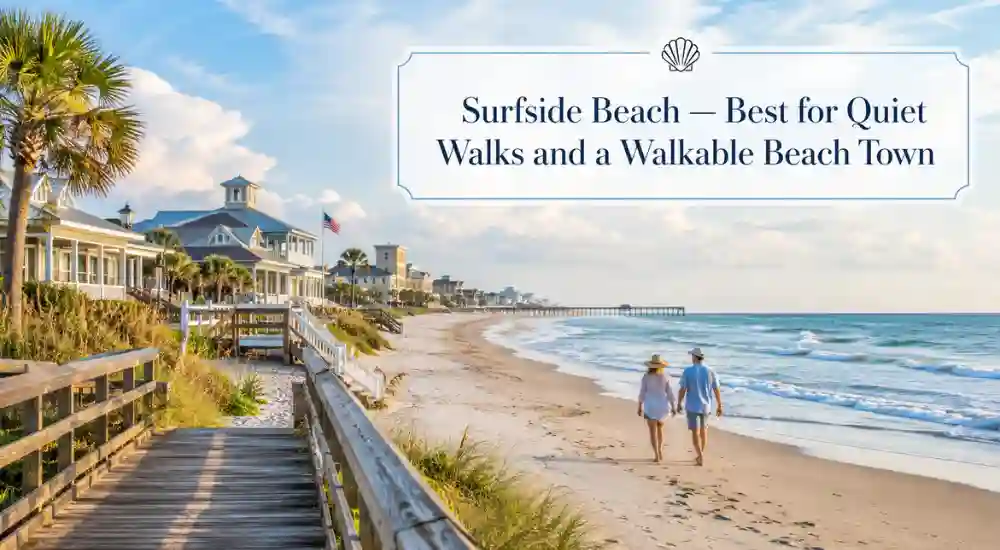
Surfside Beach — Best for Quiet Walks and a Walkable Beach Town
Best for: Couples, families, morning walkers, and visitors who want restaurants nearby without South Beach intensity.
Directly north of Miami Beach, Surfside occupies a narrow oceanfront community between North Beach and Bal Harbour. Its roughly mile-long beachfront sits beside a compact, walkable town center, creating a very different experience from central Miami Beach.
The official tourism bureau highlights Surfside’s walkable downtown, family-friendly character, beachfront hotels, and mile of shoreline. That makes it easy to spend the morning on the beach, clean up, and walk inland for coffee or lunch rather than driving somewhere else.
Surfside isn’t the place for beach clubs or nonstop entertainment. That is precisely why many visitors prefer it.
Choose Surfside if: You want a beach neighborhood that feels manageable on foot and calmer after dark.
Bal Harbour Beach — Best for a Quiet, Upscale Setting
Best for: Couples, luxury travelers, long shoreline walks, and visitors staying in Bal Harbour.
Continue north from Surfside and the atmosphere becomes more polished. Bal Harbour Beach is associated with luxury oceanfront resorts and an understated beachfront environment rather than the activity-heavy scene farther south.
The official Greater Miami destination organization describes Bal Harbour as a tranquil enclave known for luxury resorts, white-sand beaches, and Bal Harbour Shops.
The appeal here isn’t an enormous menu of activities. It is simplicity: beach, walking, resort time, dining, and shopping in a compact upscale area.
Choose Bal Harbour if: You value a quiet setting and premium surroundings more than beach entertainment.
Choose Surfside instead if: You want a similar northern location with more of a small-town, walkable neighborhood feel.
Haulover Beach Park — Best for Variety, Dogs and Clothing-Optional Beachgoing
Best for: Travelers wanting a large county park, designated dog access, clothing-optional beachgoing, surfing, and longer recreation days.
Haulover Beach Park is one of the most distinctive entries on this list because different sections serve different visitors. Miami-Dade currently maintains year-round lifeguarded swimming areas, concessions, picnic facilities, and a designated clothing-optional section.
As of August 2026, the clothing-optional area occupies the northern one-third between lifeguard towers 12 and 16. Dog beach access is provided in a designated area rather than across the entire shoreline, so follow current signs and park rules.
Parking pressure is worth planning around. Miami-Dade specifically warns that summer Sundays and holiday weekends can become especially busy, with peak visitation around 11 a.m. to 3 p.m.
Choose Haulover if: You want a full recreational park rather than a simple strip of sand.
Sunny Isles Beach — Best for a Long, Relaxed Resort Day
Best for: Families, resort guests, couples, and travelers staying north of Miami Beach.
North of Haulover, Sunny Isles Beach combines a long Atlantic shoreline with high-rise hotels, condominiums, and oceanfront parks. The experience feels residential and resort-oriented rather than nightlife-driven.
Samson Oceanfront Park adds a playground, shaded picnic space, and public restrooms near beach access, which makes Sunny Isles more practical for families than its skyline of luxury towers may suggest.
This is a good choice when you want an easy beach day near your hotel rather than a long list of nearby attractions. The tall buildings can also create changing patterns of shade along parts of the shoreline as the day progresses.
Choose Sunny Isles if: You’re staying in northern Greater Miami and don’t want to travel south simply because South Beach is more famous.
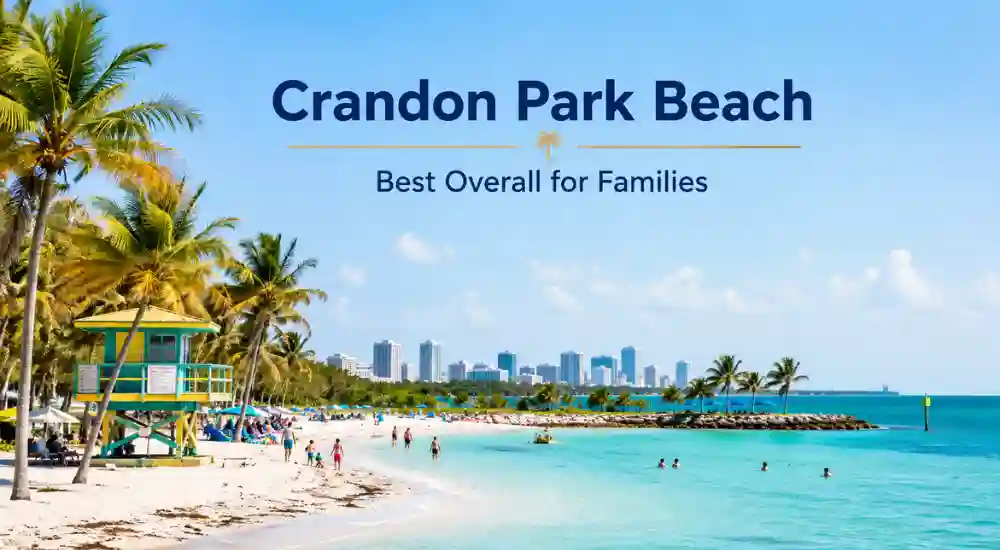
Crandon Park Beach — Best Overall for Families
Best for: Families, picnics, longer beach days, visitors with mobility needs, and travelers who want space.
On Key Biscayne, Crandon Park offers a two-mile beach backed by a much larger recreation area. The shoreline is known for an offshore sandbar that can reduce some direct wave energy, although its shape changes with currents and storms.
What makes Crandon especially useful is infrastructure. The park has picnic areas, concessions, significant parking capacity, and special beach wheelchairs for visitors with mobility impairments. Miami-Dade says beach wheelchairs are available on a first-come, first-served basis.
Current parking is $7 plus tax Monday through Thursday and $10 plus tax Friday through Sunday. Pets are prohibited except for service animals.
Crandon works best when you give it several hours rather than treating it as a quick photo stop.
Choose Crandon if: You want one of the easiest Miami beach days to organize around children, picnics, and a longer stay.
Bill Baggs Cape Florida State Park — Best for Nature and History
Best for: Nature lovers, couples, families, cyclists, photographers, and anyone wanting a beach day with a historic landmark.
At the southern end of Key Biscayne, Bill Baggs Cape Florida State Park replaces dense development with coastal vegetation, trails, picnic areas, and the historic Cape Florida Lighthouse.
The lighthouse was first completed in 1825, and the rebuilt tower is the oldest standing structure in Miami-Dade County.
As of August 2026, the park is open 8 a.m. until sundown, 365 days a year. Standard vehicle admission is $8 for vehicles carrying two to eight people, though fees can change and should be checked before your trip.
Current lighthouse tours run Thursday through Monday from 10 a.m. to noon, and access requirements apply to climbing the tower.
Choose Bill Baggs if: You’d be disappointed spending an entire day doing nothing except lying on sand.
A half or full day here can combine beach time, walking, cycling, picnicking, and history without leaving the park.
Historic Virginia Key Beach Park — Best for Miami’s Coastal History
Best for: History-focused travelers, families, cultural travelers, picnics, and people looking for a quieter waterfront park.
This is the beach on the list where the history matters as much as the water. Historic Virginia Key Beach Park was established in 1945 for African Americans during segregation, following a civil-rights “wade-in” protest demanding beach access for Miami’s Black community.
That history transforms a beach visit into something deeper. The park represents an important part of Miami’s Black cultural and civil-rights story, while still providing waterfront recreation and natural surroundings.
Current published park information lists seasonal operating hours and vehicle admission fees, so check the park’s official page before arriving.
Don’t rush this stop solely to swim. Give yourself time to understand why the site exists and what it represented to generations of Miami residents.
Choose Virginia Key if: You want your beach day to connect with Miami’s history rather than focusing only on resort scenery.
Hobie Beach — Best for Windsurfing, Paddle Sports and Dogs
Best for: Active travelers, dog owners, paddleboarders, windsurfers, and skyline views.
Hobie Beach, also called Windsurfer Beach, sits along the Rickenbacker Causeway rather than facing the open Atlantic. That gives it a completely different personality from South Beach or Surfside.
The area is known for windsurfing, kiteboarding, kayaking, paddleboarding, shallow water, and designated off-leash dog-friendly areas. Current destination information also notes roadside parking and equipment or lesson options.
Don’t interpret shallow water as risk-free water. Wind, weather, lightning, equipment, and changing conditions still matter, especially for beginners.
Hobie also delivers something the Atlantic beaches cannot: broad views back toward the Miami skyline.
Choose Hobie if: You want to do something on the water rather than spend the whole day sunbathing.
Matheson Hammock Park — Best for a Sheltered Family Outing
Best for: Parents with younger children, picnics, calm park days, and travelers who prefer a sheltered waterfront setting.
Matheson Hammock Park in Coral Gables isn’t a classic Atlantic beach. Its signature feature is a man-made atoll pool beside Biscayne Bay, surrounded by tropical parkland.
That distinction is important. Choose Matheson because you specifically want a contained lagoon-style setting rather than rolling ocean surf.
As of August 2026, Miami-Dade says the lagoon operates seven days a week, while lifeguards are staffed on weekends and holidays. Operating conditions can change because of water quality, wildlife, or severe weather.
Current car parking is $7 plus tax on weekdays and $10 plus tax on weekends and holidays. Pets are not allowed.
Choose Matheson if: Your family values a sheltered waterfront park more than the classic open-ocean Miami beach experience.
Best Miami Beaches by Trip Type
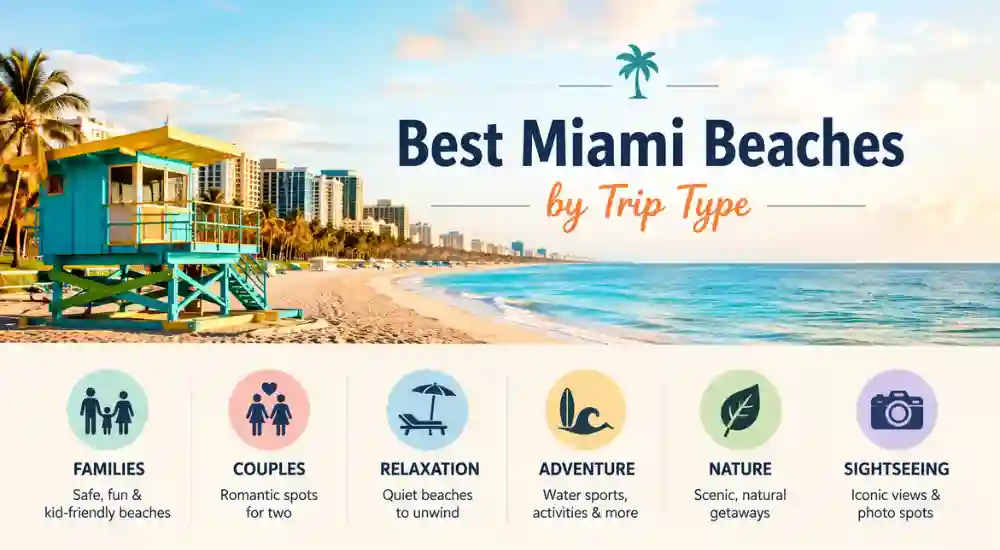
There is no useful answer to “What’s Miami’s best beach?” without knowing why you’re going.
Use these matches as a shortcut:
• Best for first-time visitors: South Beach and Lummus Park
• Best for families: Crandon Park Beach
• Best for younger children: Matheson Hammock Park
• Best for couples: Surfside or South Pointe
• Best for a quiet day: Surfside or North Beach
• Best for luxury: Bal Harbour
• Best for nature: Bill Baggs Cape Florida State Park
• Best for Miami history: Historic Virginia Key Beach Park
• Best for dogs: Hobie Beach or designated Haulover areas
• Best for water sports: Hobie Beach
• Best resort-style beach: Mid-Beach
• Best for iconic Miami photos: South Beach
• Best beach-and-park combination: South Pointe
• Best clothing-optional option: Designated Haulover Beach section
Which Miami Beaches Are Best Without a Car?
If you’re staying on Miami Beach, you can plan a strong beach vacation without renting a car. South Beach, Mid-Beach, and North Beach are connected by public transportation and the oceanfront Beachwalk.
The free Miami Beach trolley currently operates 8 a.m. to 11 p.m., seven days a week, with approximately 20-minute average service frequency on most routes. The city also connects its South, Middle, and North Beach neighborhoods through the trolley network.
A car or rideshare becomes more useful for:
• Crandon Park
• Bill Baggs Cape Florida State Park
• Historic Virginia Key Beach Park
• Hobie Beach
• Matheson Hammock Park
A practical strategy is to group beaches geographically. Don’t spend a short vacation repeatedly crossing Greater Miami simply to check beaches off a list.
Current Beach Parking and Entry Costs Worth Knowing
Prices are among the fastest-changing details in a travel guide. The figures below were verified August 16, 2026 and should still be checked shortly before travel.
| Location | Current Published Cost |
| Crandon Park | $7 + tax Mon–Thu; $10 + tax Fri–Sun |
| Haulover Park | $7 cars Mon–Thu; $10 weekends/holidays; some north lots add $1 |
| Matheson Hammock | $7 + tax weekdays; $10 + tax weekends/holidays |
| Bill Baggs Cape Florida | $8 vehicle with 2–8 people |
| Historic Virginia Key Beach Park | $5 vehicle Mon–Thu; $10 Fri–Sun; $12 holidays |
These published rates come from the respective park authorities.
For Miami Beach street and garage parking, rates and restrictions vary by location. Check current signs or official parking information rather than assuming every beach entrance has free parking.
Best Time to Visit Miami Beaches
Miami can support beach days throughout the year, but winter and spring usually provide the easiest combination of warmth and lower humidity. Summer brings hotter conditions, frequent afternoon thunderstorms, and greater tropical-weather awareness.
The official Atlantic hurricane season runs from June 1 through November 30. That doesn’t mean a Miami trip during those months will encounter a storm, but travelers should watch official forecasts as their dates approach.
Winter
December through February is a strong period for long walks, outdoor dining, and spending more time outside without peak summer heat.
Spring
Spring brings warm beach weather and strong visitor demand. It’s also when seasonal Sargassum becomes a more relevant consideration.
Summer
Expect heat, humidity, strong sun, and regular storm potential. Morning beach time is often easier than spending the hottest part of the afternoon exposed on open sand.
Fall
Warm beach weather continues, but tropical-weather awareness remains important during the Atlantic hurricane season.
What About Sargassum on Miami Beaches?
Seaweed conditions can change dramatically from one day or beach to another. Miami-Dade identifies March through October as its typical Sargassum season, with accumulation influenced by wind, currents, and tides.
That means photos from yesterday—or reviews written last month—cannot reliably tell you what today’s shoreline will look like.
If clear-looking water and clean sand matter greatly to you:
• Check current beach reports close to your visit.
• Avoid choosing a beach solely from old photographs.
• Keep a second beach option available.
• Remember that Sargassum is a natural marine phenomenon, not evidence that an entire destination is permanently dirty.
Miami Beach Safety: Check the Flags Before Swimming
The ocean can look calm from shore while currents remain hazardous. Always check warning flags before entering the water and favor staffed swimming areas when possible.
Miami-Dade uses Florida’s standardized beach-warning system:
• Green: Lower hazard and calmer conditions
• Yellow: Moderate surf or currents
• Red: High hazard from strong surf or currents
• Double red: Water closed to swimmers
• Purple: Potentially dangerous marine life present
A green flag means lower risk, not zero risk.
Lightning is another major concern in South Florida. If storms approach, leave the beach and exposed waterfront areas rather than waiting until rain begins.
Miami Beach also publishes current Ocean Rescue conditions that can include flags, surf conditions, tides, wind, and lifeguard-tower information. Conditions may change during the day.
Accessibility at Miami Beaches
Accessibility varies by beach and park, so travelers with mobility needs should research the specific entrance they plan to use.
Miami-Dade currently provides beach wheelchairs at Crandon Beach and Haulover Beach, available on a first-come, first-served basis. The county advises calling ahead to reduce waiting, but a call does not reserve the chair.
South Pointe and other Miami Beach parks also provide accessible park facilities, but sand access, distances, and equipment availability can differ by location.
For accessibility-critical trips, verify current details directly before leaving your accommodation.
First-Time Miami Beach Mistakes to Avoid
A better beach day often comes from avoiding a few simple planning mistakes.
• Don’t assume South Beach is all of Miami’s coastline. Quieter options begin only a few neighborhoods away.
• Don’t rely on yesterday’s water conditions. Surf, flags, storms, and Sargassum change.
• Don’t arrive at popular county parks at peak time without a parking plan.
• Don’t assume every dog-friendly park allows dogs everywhere on the beach. Follow designated-area signs.
• Don’t treat a green flag as a safety guarantee. Conditions can still change.
• Don’t cram Key Biscayne and northern Miami beaches into one rushed outing. Group your stops by area.
• Don’t forget shade and water during summer. Open sand can become uncomfortable quickly.
• Don’t choose solely by fame. Match the beach to the kind of day you actually want.
FAQs About the Best Beaches in Miami
What is the nicest beach in Miami?
For most first-time visitors, South Beach is the most complete introduction because it combines the Atlantic shoreline with Ocean Drive, Art Deco architecture, restaurants, and strong walkability.
For a calmer day, Crandon Park, Surfside, or Bill Baggs may be better choices. The “nicest” beach depends more on atmosphere than sand alone.
Which Miami beach is best for families?
Crandon Park Beach is one of the strongest all-around family choices because it combines a long beach with picnic space, concessions, extensive parking, and beach-wheelchair availability.
Families with younger children who prefer a sheltered lagoon-style setting should also consider Matheson Hammock Park.
Which Miami beach has the clearest water?
There is no Miami beach that can guarantee the clearest water every day. Water appearance changes with weather, currents, tides, storms, and Sargassum.
Instead of choosing based on a permanent “clearest water” ranking, check same-day conditions and keep a nearby backup option.
Are beaches in Miami free?
Many public shoreline areas do not charge a separate beach admission fee, but parking, state-park admission, and some county-park access can cost money.
Crandon, Haulover, Matheson Hammock, Bill Baggs, and Historic Virginia Key publish their own current fees.
Is South Beach the same as Miami Beach?
No. Miami Beach is the city, while South Beach is its famous southern neighborhood.
Mid-Beach and North Beach are different parts of Miami Beach and offer noticeably different atmospheres.
Do you need a car for Miami beaches?
Not necessarily. South Beach, Mid-Beach, and North Beach are easier to explore without a car because Miami Beach has a free trolley system and a continuous Beachwalk.
A car or rideshare is more convenient for Key Biscayne, Virginia Key, Hobie Beach, and Matheson Hammock.
What is the quietest beach near Miami?
Surfside, North Beach, and Bal Harbour generally suit travelers seeking a calmer atmosphere than central South Beach.
Crowds still change with weekends, holidays, events, and weather, so arriving earlier remains useful.
Can dogs go on Miami beaches?
Dogs are not permitted on every beach. Hobie Beach has dog-friendly areas, while Haulover provides designated dog beach access. Miami Beach also maintains specific bark beaches and parks.
Always follow posted boundaries and current leash rules rather than assuming an entire shoreline is dog-friendly.
Final Thoughts
The best beaches in Miami aren’t interchangeable. South Beach is the right answer when you want iconic Miami energy, while Crandon Park makes family logistics easier. Surfside slows the pace, Hobie puts you on the water, and Bill Baggs combines the Atlantic with one of the area’s most important historic landmarks.
Choose your beach by atmosphere, activities, transportation, and who you’re traveling with, then check weather, beach flags, access, and current park information shortly before leaving. A little planning makes it much easier to spend your Miami beach day enjoying the coast instead of dealing with the wrong location, traffic, or unexpected conditions.