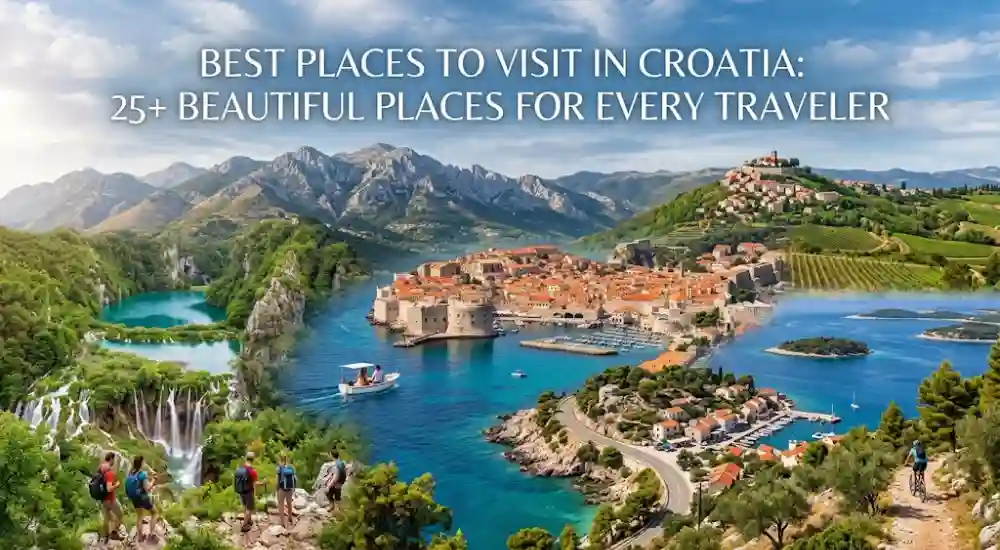
Croatia packs an impressive amount of variety into one destination. You can walk through medieval Old Towns, swim in clear Adriatic waters, explore dramatic waterfalls, taste regional food in Istria, and spend quiet days on islands such as Vis or Mljet. The best places to visit in Croatia range from famous destinations like Dubrovnik and Split to lesser-known towns and natural areas that many first-time visitors miss. Croatia’s long Adriatic coastline and large number of islands give travelers plenty of ways to build different kinds of trips.
The challenge is deciding where to go in Croatia when you have limited time. This guide breaks down the country’s best destinations by travel style, season, budget, and trip length. You’ll find the best Croatian cities, islands, beaches, national parks, hidden gems, itinerary ideas, transportation advice, costs, and practical tips so you can choose the places that fit your Croatia vacation rather than simply following a generic list.
Quick Answer
The best places to visit in Croatia include Dubrovnik, Split, Plitvice Lakes, Hvar, Rovinj, Zadar, Korčula, Brač, Šibenik, Vis, Mljet, and Zagreb. For a first trip, combine Dubrovnik, Split, and Plitvice Lakes for a mix of historic cities, Adriatic scenery, islands, and nature. Choose Hvar for beaches and nightlife, Rovinj and Istria for food and wine, Vis or Mljet for quiet island escapes, and Brač for family-friendly beaches and outdoor activities. The best time to visit is generally May–June or September for pleasant weather and fewer crowds.
TL;DR
- Best overall: Dubrovnik
- Best for history: Dubrovnik and Split
- Best for nature: Plitvice Lakes
- Best island: Hvar for nightlife, Vis for peace, Korčula for culture
- Best beaches: Brač and Hvar
- Best for couples: Rovinj, Dubrovnik, Hvar, and Korčula
- Best for families: Brač, Istria, and Zadar
- Best hidden gems: Vis, Mljet, Cres, and Šibenik
- Best for food and wine: Istria and Rovinj
- Best for budget travelers: Zagreb, Zadar, and Šibenik
- Best first-time itinerary: Dubrovnik → Split → Plitvice Lakes
- Best time to visit: May, June, or September
- Ideal trip length: 7–10 days for major highlights; 14 days for a slower, more complete trip.
What Is Croatia Best Known For?
Croatia is best known for its Adriatic coastline, historic cities, beautiful islands, national parks, Roman and Venetian architecture, and clear blue water. Its attractions range from Dubrovnik’s fortified Old Town and Split’s ancient Diocletian’s Palace to the waterfalls and turquoise lakes of Plitvice. Croatia also has a strong food and wine culture, with regional differences between Dalmatia, Istria, Zagreb, and the islands.
That variety makes Croatia suitable for many types of travelers. You can build a beach vacation, cultural city break, island-hopping adventure, road trip, food-focused journey, or nature escape without leaving the country.
Best Places to Visit in Croatia at a Glance
| Destination | Best For | Ideal Stay |
| Dubrovnik | History and scenery | 2–3 days |
| Split | History and island hopping | 2–3 days |
| Plitvice Lakes | Waterfalls and nature | 1–2 days |
| Hvar | Beaches and nightlife | 2–3 days |
| Rovinj | Food, wine and romance | 2–3 days |
| Zadar | Sunsets and culture | 1–2 days |
| Korčula | History and island life | 2–3 days |
| Brač | Beaches and activities | 2–3 days |
| Šibenik | History and fewer crowds | 1–2 days |
| Vis | Seclusion and nature | 2–3 days |
| Mljet | Slow travel and nature | 2–3 days |
| Zagreb | Culture and city life | 1–3 days |
Dubrovnik — Best for History and Iconic Coastal Views
Dubrovnik is one of the best places to visit in Croatia for first-time travelers. Its UNESCO-listed Old Town, stone streets, historic buildings, and massive city walls create one of the country’s most recognizable landscapes. Spend time walking the walls, exploring Stradun, visiting historic churches, and taking the cable car toward Mount Srđ for panoramic views.
Dubrovnik works especially well for history lovers, couples, photographers, and Game of Thrones fans. The main drawback is summer crowds, particularly when cruise passengers arrive. A morning visit to the Old Town or a trip during the shoulder season can make sightseeing much more enjoyable.
Split — Best for History and Island Hopping
Split combines ancient history with a lively Mediterranean atmosphere. The center grew around Diocletian’s Palace, whose Roman walls, courtyards, and underground spaces remain part of modern city life. Split’s waterfront Riva is perfect for an evening walk, while Marjan offers greenery and coastal views.
The city is also one of Croatia’s best bases for island hopping. Ferries and boat trips connect Split with destinations including Brač, Hvar, Šolta, and Vis.
Choose Split if you want history, restaurants, nightlife, beaches, and easy day trips in one destination.
Plitvice Lakes National Park — Best for Nature
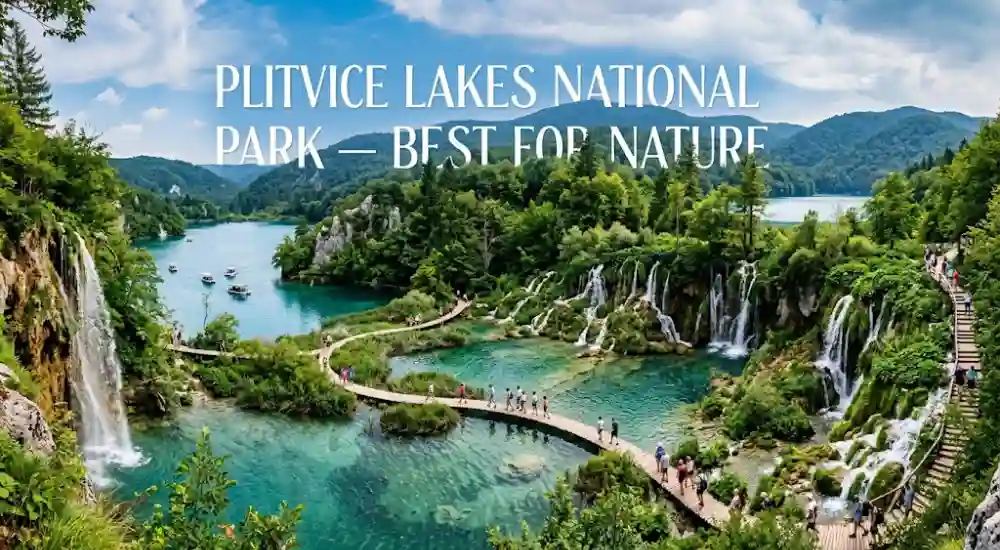
Plitvice Lakes National Park is one of the most spectacular natural attractions in Croatia. Its interconnected lakes, travertine barriers, waterfalls, forests, and wooden walking paths create a landscape unlike the country’s coastal cities. Plitvice became Croatia’s first national park in 1949 and joined the UNESCO World Heritage List in 1979.
Plan at least half a day, although a full day gives you more time to explore without rushing. Plitvice is particularly worthwhile for nature lovers, photographers, hikers, and families who enjoy outdoor attractions. Check the official park website before visiting because access, tickets, and operating conditions can change.
Hvar — Best for Beaches, Nightlife and Island Luxury
Hvar is one of Croatia’s most famous islands, combining beaches, historic streets, restaurants, nightlife, vineyards, and beautiful coastal scenery. Hvar Town is the island’s liveliest base, while the surrounding areas offer quieter landscapes and swimming spots. The island’s diverse scenery includes vineyards, lavender, olive trees, forests, and a long coastline.
Hvar suits couples, beach lovers, nightlife fans, and luxury travelers. However, summer prices can be high. If you want a quieter experience, travel outside the busiest months or stay away from the center of Hvar Town.
Rovinj and Istria — Best for Food, Wine and Romance
Rovinj is one of the most beautiful coastal towns in Istria. Its colorful Old Town, narrow streets, waterfront setting, and relaxed atmosphere make it especially appealing to couples. The wider Istrian Peninsula adds vineyards, olive groves, hilltop towns, local restaurants, and regional specialties.
Istria is one of the best areas for a Croatia road trip because you can combine Rovinj with Pula, Poreč, Motovun, and other small towns. Food travelers should look for Istrian truffles, olive oil, fresh pasta, seafood, and local wines. Choose Istria if you want a slower vacation focused on food, wine, culture, and scenery.
Zadar — Best for Sunsets and a Relaxed Coastal Break
Zadar offers history, beaches, waterfront views, and a more relaxed atmosphere than some of Croatia’s busiest cities. Explore the historic Old Town, visit the Sea Organ, and stay by the waterfront for sunset. Roman remains, medieval churches, Venetian architecture, and modern attractions all sit within a walkable area.
Zadar is also a useful base for exploring nearby natural attractions and islands. It works well for travelers who want culture without the intensity of Dubrovnik, as well as families and couples looking for a shorter coastal stay.
Korčula — Best for Old-World Island Charm
Korčula combines medieval architecture, beaches, vineyards, seafood, and relaxed island life. Korčula Town is the main highlight, with narrow stone streets and historic buildings that make it enjoyable to explore on foot.
Compared with Hvar, Korčula generally feels more focused on history, food, local culture, and slower travel than nightlife. It is a good choice for couples, families, photographers, and travelers who want an island experience with plenty to explore beyond the beach.
Brač — Best for Beaches and Outdoor Activities
Brač is an excellent choice for active travelers and beach lovers. Its best-known attraction is Zlatni Rat, the distinctive beach near Bol that extends into the Adriatic. Beyond the beach, you can hike, cycle, swim, windsurf, explore villages, and enjoy island scenery.
Brač is also convenient for travelers coming from Split, making it a practical addition to a Croatia island-hopping itinerary. Families may prefer it because it combines beaches with outdoor activities, while couples can find quieter areas away from the busiest resort zones.
Šibenik — Best for History Without the Biggest Crowds
Šibenik deserves more attention from travelers looking for an alternative to Croatia’s most famous coastal cities. Its historic center contains stone streets, medieval buildings, fortresses, and the impressive Cathedral of St. James.
The city also works well as a base for Krka National Park and nearby islands. North Dalmatia includes Šibenik, Zadar, Trogir, Krka, and Paklenica, giving travelers plenty of ways to combine culture and nature.
Choose Šibenik if you want history, coastal scenery, and a more relaxed atmosphere.
Vis — Best for Quiet Island Travel
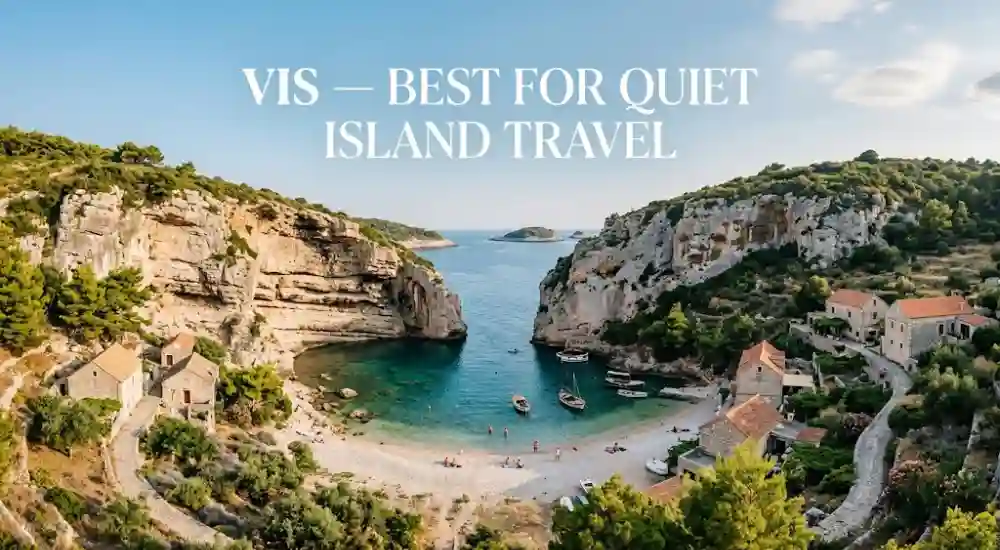
Vis is one of the best Croatian islands for travelers who want to escape the busiest tourist centers. The island’s towns, coves, beaches, vineyards, and rugged coastline create a slower experience.
Boat trips are a popular way to discover secluded swimming areas, while Stiniva Bay is one of the island’s best-known natural attractions. Vis requires more travel time than Hvar or Brač, but that distance is part of its appeal.
Choose Vis if your priorities are peace, nature, swimming, local food, and authentic island experiences.
Mljet — Best for Nature and Slow Travel
Mljet is a strong choice for travelers who want a peaceful island surrounded by nature. Much of the island’s appeal comes from Mljet National Park, with its saltwater lakes, forests, walking trails, and coastal scenery.
You can hike, cycle, swim, kayak, or simply enjoy a slower pace. Mljet works especially well for couples and nature lovers. It is less suitable for travelers who want nightlife and constant activity. Give the island at least two days if you want to experience it without turning your visit into a rushed day trip.
Zagreb — Best for Culture and City Life
Zagreb shows a different side of Croatia away from the Adriatic. The capital combines historic neighborhoods, museums, markets, cafés, parks, restaurants, and a growing cultural scene.
Explore the Upper Town, walk through the central streets, visit Dolac Market, and spend time in local cafés. Zagreb is also useful as the beginning or end of a Croatia itinerary, especially if you want to combine the city with Plitvice Lakes.
Choose Zagreb if you prefer museums, architecture, food, and city experiences over beaches and islands.
Trogir — Best for a Compact Historic Town
Trogir is an easy addition to a Dalmatian Coast itinerary. Its compact historic center features stone lanes, historic buildings, waterfront views, and the Cathedral of St. Lawrence.
Because it sits close to Split, Trogir works particularly well as a day trip from Split. You can explore the Old Town without changing hotels, then return to Split for dinner. It is a smart choice for history lovers and photographers who want another historic Croatian destination without adding complicated logistics.
Cres — Best for Off-the-Beaten-Path Travel
Cres offers a quieter island experience than famous destinations such as Hvar. Cres Town, Lubenice, Valun, and the island’s rugged landscapes provide opportunities for hiking, swimming, photography, and slow travel.
It is particularly appealing to travelers searching for hidden gems in Croatia. Cres requires more planning than the easiest island routes, but that helps keep the experience relaxed. Choose Cres when you want traditional island character, natural scenery, and fewer crowds rather than nightlife or large resorts.
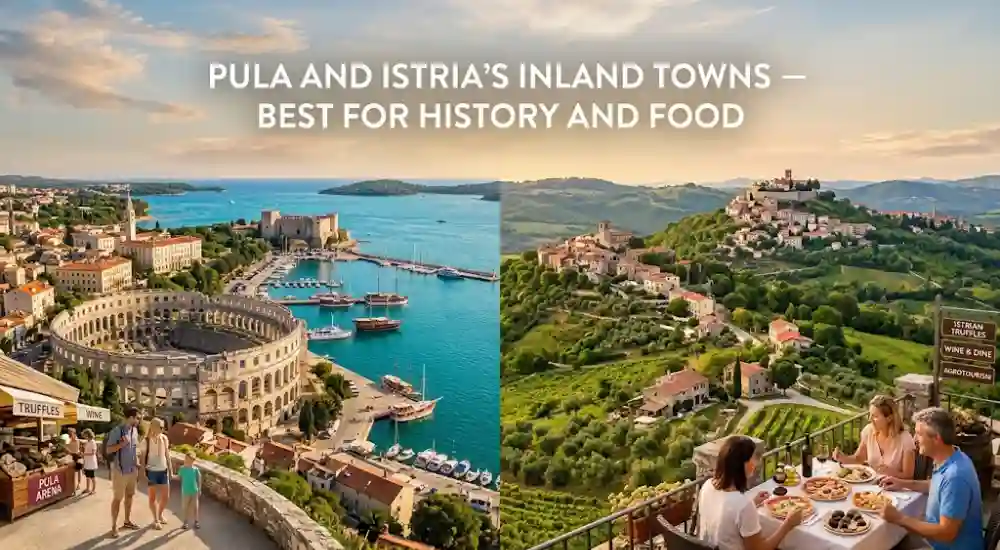
Pula and Istria’s Inland Towns — Best for History and Food
Pula adds Roman history to an Istrian itinerary, with its impressive Roman amphitheater as the main landmark. Nearby towns and villages offer another side of the region, from vineyards and olive groves to hilltop settlements such as Motovun.
This area is ideal for travelers who want to combine history, food, wine, and road-trip freedom. You can base yourself in Rovinj or Pula and explore smaller destinations by car.
Best Places in Croatia by Travel Style
The best destination depends on what you actually want from your trip.
| Travel Style | Best Choices |
| First trip | Dubrovnik, Split, Plitvice |
| Couples | Dubrovnik, Rovinj, Hvar, Korčula |
| Families | Brač, Istria, Zadar, Split |
| Beaches | Brač, Hvar, Korčula |
| Nightlife | Hvar, Split |
| History | Dubrovnik, Split, Trogir |
| Nature | Plitvice, Krka, Mljet |
| Food & wine | Istria, Rovinj, Zagreb |
| Budget | Zagreb, Zadar, Šibenik |
| Quiet travel | Vis, Mljet, Cres |
| Road trips | Istria, Dalmatia, northern Croatia |
This approach makes it easier to choose where to go in Croatia without trying to visit every destination.
The Most Beautiful Places in Croatia
If scenery is your priority, several destinations stand out. Dubrovnik combines medieval architecture with dramatic sea views, while Plitvice Lakes offers turquoise water and waterfalls. Hvar and Brač provide classic Adriatic island scenery, while Rovinj delivers colorful coastal architecture.
For quieter beauty, consider Vis, Mljet, Cres, and Istria’s countryside. The most beautiful place depends on what you prefer: natural landscapes, beaches, historic architecture, or romantic coastal towns.
Best Islands in Croatia
Croatia’s islands are not interchangeable. Each has a different personality.
| Island | Best For |
| Hvar | Nightlife and luxury |
| Brač | Beaches and activities |
| Korčula | History and food |
| Vis | Seclusion |
| Mljet | Nature |
| Cres | Off-the-beaten-path travel |
If this is your first island trip, Hvar or Brač are easy starting points. For a quieter experience, choose Vis or Mljet.
Best Beaches in Croatia
Croatia’s coastline offers everything from famous beaches to quiet rocky coves. Zlatni Rat on Brač is one of the country’s most recognizable beaches, while Stiniva on Vis is known for its dramatic setting. Dubrovnik’s Banje Beach is convenient for travelers staying in the city, while Hvar and Korčula offer many smaller swimming spots.
Remember that many Croatian beaches are pebbly or rocky rather than sandy. Water shoes can make swimming more comfortable, especially for travelers who are not used to Adriatic beaches.
Best National Parks in Croatia
Croatia has eight national parks, including Plitvice Lakes, Krka, Mljet, Kornati, Brijuni, Paklenica, Risnjak, and Northern Velebit.
| National Park | Best For |
| Plitvice Lakes | Lakes and waterfalls |
| Krka | Waterfalls and rivers |
| Mljet | Island nature |
| Kornati | Boating and marine scenery |
| Paklenica | Hiking and canyons |
| Brijuni | Islands and history |
| Risnjak | Mountain landscapes |
| Northern Velebit | Hiking and rugged nature |
Plitvice and Krka are the easiest choices for many first-time visitors, while Paklenica is especially attractive to hikers and climbers.
Hidden Gems in Croatia
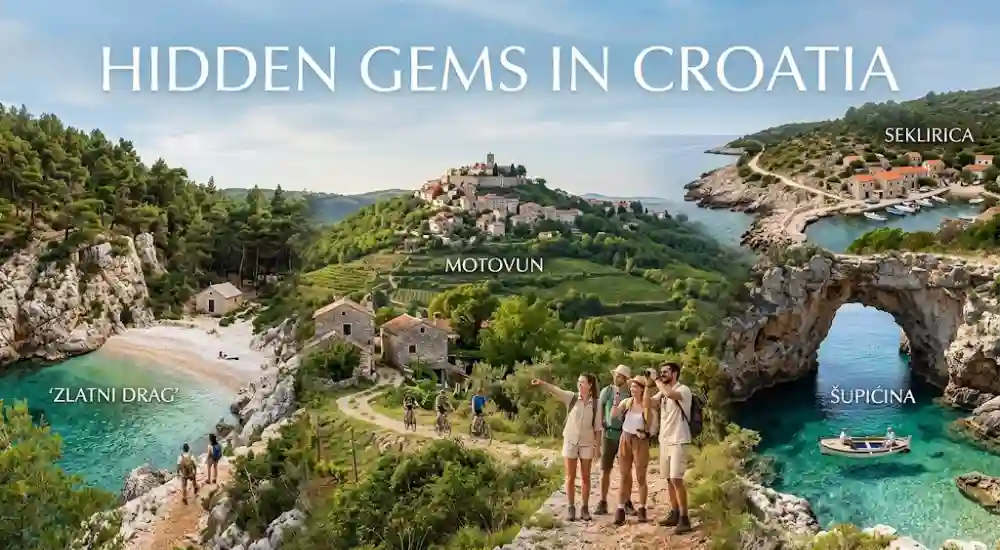
Some of the best Croatia travel experiences happen away from the most famous cities. Vis, Cres, Mljet, Šibenik, Motovun, Ston, and Zagorje can add a quieter side to your itinerary.
Ston is particularly useful on a southern Croatia route, while Motovun works beautifully as part of an Istrian road trip. Vis and Mljet are better for island escapes, and Zagorje introduces castles and countryside.
Adding one or two hidden gems in Croatia can make your vacation feel less crowded and more personal.
Where Should First-Time Visitors Go in Croatia?
If you are visiting Croatia for the first time, a combination of Dubrovnik, Split, and Plitvice Lakes is one of the easiest ways to experience the country’s highlights.
Choose Dubrovnik for historic architecture and coastal views, Split for Roman history and island access, and Plitvice for waterfalls and nature. If you have more time, add Hvar, Korčula, or another island.
Do not try to cover the entire Croatian coast in one week. Fewer destinations with more time in each usually create a better trip.
Which Part of Croatia Should You Visit?
Croatia can be divided into several useful travel regions.
Dalmatia is best for historic coastal cities and islands. Istria stands out for food, wine, hill towns, and coastal villages. Kvarner offers islands and coastal resorts, while Zagreb and northern Croatia provide museums, castles, and countryside.
If you love beaches and island hopping, focus on Dalmatia. If food and wine are your priority, choose Istria. If you want a city and cultural experience, start with Zagreb.
Best Places in Croatia for Families
Families should look for destinations that combine easy transportation, beaches, activities, and comfortable accommodation. Brač, Istria, Zadar, Split, and parts of the Dubrovnik region are strong choices.
Brač offers beaches and outdoor activities, while Istria combines coastal attractions with family-friendly inland excursions. Zadar has a walkable historic center and nearby beaches. Split works well for families who want history and easy island trips.
For younger children, consider staying longer in one place instead of changing hotels every day.
Best Places in Croatia for Couples
Couples have plenty of romantic choices. Rovinj is excellent for waterfront dinners and Istrian food, while Dubrovnik offers dramatic historic scenery. Hvar works for couples who want beaches and upscale experiences, and Korčula provides a more relaxed combination of history, wine, and island life.
For the quietest romantic escape, consider Mljet or Vis. These islands are better suited to couples who want nature and privacy rather than nightlife.
Best Places to Visit in Croatia on a Budget
Croatia can be more affordable if you avoid the busiest coastal destinations during peak summer. Zagreb, Zadar, Šibenik, and inland Croatia can offer better value than Dubrovnik or Hvar.
Traveling during May, June, September, or October can also reduce accommodation costs. Staying in apartments, eating at local restaurants, using buses, and limiting frequent ferry transfers can help control your budget.
You do not need to avoid Croatia because you are traveling on a budget; you simply need to choose destinations and travel dates carefully.
Dubrovnik vs Split: Which Is Better?
Choose Dubrovnik for dramatic architecture, city walls, history, and iconic views. Choose Split if you want a livelier city with Roman heritage, restaurants, beaches, and easier access to islands.
Split is generally more useful as a base for island hopping, while Dubrovnik works particularly well as a focused city break. If you have enough time, visiting both gives you a much more complete introduction to Croatia.
Hvar vs Korčula vs Brač vs Vis
Choose Hvar for nightlife and luxury, Brač for beaches and outdoor activities, Korčula for history and food, and Vis for quiet travel.
This is one of the easiest decisions to make once you identify your priorities. If nightlife is important, Hvar is the obvious choice. If you want peace, Vis is more suitable. Families may prefer Brač, while couples looking for culture and wine may enjoy Korčula.
Plitvice vs Krka: Which National Park Is Better?
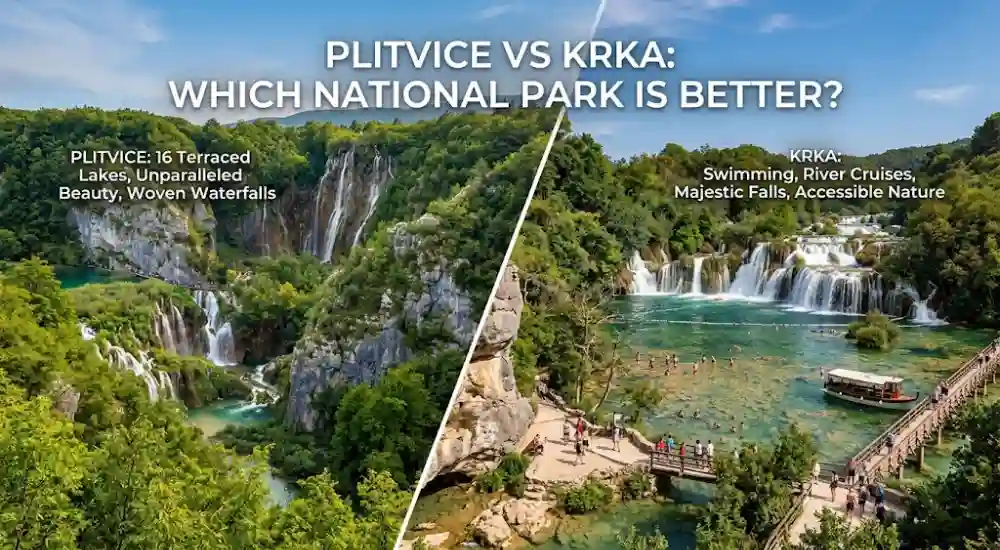
Both parks are beautiful, but they suit different trips. Plitvice Lakes offers a larger lake-and-waterfall landscape with extensive walking routes and UNESCO recognition.
Krka National Park is particularly convenient for travelers exploring the Dalmatian Coast, especially around Šibenik and Zadar. Krka features seven major waterfalls and a rich natural environment.
If you can visit only one and nature is a major reason for your trip, Plitvice is the stronger first choice.
Best Time to Visit Croatia
The best time to visit Croatia depends on your priorities.
May and June offer pleasant sightseeing weather and fewer crowds than peak summer. July and August are best for the classic hot-weather beach and nightlife experience but are also the busiest and often most expensive months. September is particularly attractive for travelers who want warm sea temperatures with a calmer atmosphere.
October can work well for road trips, food, wine, and city sightseeing, although some seasonal island businesses reduce their schedules.
How Many Days Do You Need in Croatia?
A 7-day Croatia itinerary is a good starting point for first-time visitors. With five days, focus on one region. With seven days, combine two major destinations and perhaps one island. Ten days gives you enough flexibility for Dubrovnik, Split, an island, and Plitvice.
With 14 days, you can explore more slowly and add Istria, multiple islands, or inland Croatia.
The key is not to count destinations. Count travel time, ferry connections, hotel changes, and actual sightseeing hours.
Best Croatia Itinerary Ideas
5-Day Croatia Itinerary
Spend two days in Dubrovnik and three days in Split, or focus entirely on the Split region with a nearby island.
7-Day Croatia Itinerary
Try Dubrovnik → Korčula or Hvar → Split, allowing enough time to enjoy each destination.
10-Day Croatia Itinerary
Combine Dubrovnik → Korčula → Hvar → Split → Plitvice if transportation lines up well.
14-Day Croatia Itinerary
A longer trip can include Zagreb, Plitvice, Zadar, Split, Hvar, Korčula, Dubrovnik, and Istria, although you should still avoid moving every night.
Best Day Trips in Croatia
Croatia offers plenty of easy day trips.
From Split, visit Trogir, Brač, or another nearby island. From Šibenik, explore Krka National Park. From Zadar, consider nearby islands or natural areas. From Dubrovnik, Lokrum and Cavtat are convenient additions. In Istria, use Rovinj or Pula as a base for Motovun and other hill towns.
Day trips work best when you limit long transfers and return to the same accommodation each night.
How to Get to Croatia
International travelers can reach Croatia through several airports, with Zagreb, Split, Dubrovnik, Zadar, and Pula serving different regions. Your arrival airport should match your itinerary.
For a southern coastal trip, Split or Dubrovnik can save significant overland travel. Zagreb makes more sense for northern Croatia and Plitvice. Pula is useful for Istria.
Before booking flights, compare your arrival and departure airports. An open-jaw itinerary can sometimes save you from backtracking across the country.
How to Get Around Croatia
You can travel through Croatia by bus, ferry, catamaran, rental car, train, or domestic flight. Buses are useful for many mainland routes, while ferries are essential for island hopping.
A rental car provides the most flexibility in Istria and inland Croatia. On the islands, however, a car can sometimes create extra expense and logistical problems.
For a Dubrovnik-Split-island itinerary, you can often manage without renting a car.
Can You Visit Croatia Without a Car?
Yes. You can visit many of Croatia’s most popular destinations without a car.
Stay in Dubrovnik, Split, Zadar, Zagreb, or major islands and use buses, ferries, catamarans, taxis, and organized tours. A car becomes more useful when you want to explore Istrian villages, rural areas, remote beaches, or multiple inland attractions.
For first-time visitors, skipping the rental car can make island hopping simpler and cheaper.
Croatia Road Trip: Is Driving Worth It?
A Croatia road trip is worth considering if you want flexibility and plan to visit smaller towns. Istria is especially well suited to driving because vineyards, hilltop villages, Roman sites, and coastal towns are spread across the region.
Driving becomes less convenient when your itinerary focuses heavily on islands. Summer parking in Dubrovnik, Split, and other historic centers can also be challenging.
If you rent a car, check parking rules, tolls, insurance, ferry requirements, and rental restrictions before setting off.
Where to Stay in Croatia
Choose your base according to your itinerary.
Dubrovnik: stay near the Old Town if sightseeing is your priority.
Split: the Old Town or waterfront is convenient for first-time visitors and ferry access.
Hvar: stay in Hvar Town for nightlife or choose quieter villages for relaxation.
Rovinj: the Old Town and waterfront work well for couples.
Zagreb: the central area is convenient for sightseeing and restaurants.
For longer trips, consider apartments or guesthouses, especially if you want a kitchen or more space.
How Much Does a Croatia Trip Cost?
Croatia works for budget, mid-range, and luxury travelers, but prices vary significantly by location and season.
| Travel Style | Typical Approach |
| Budget | Hostels, apartments, buses, local restaurants |
| Mid-range | Hotels, apartments, occasional tours |
| Luxury | Boutique hotels, private boats, fine dining |
Dubrovnik and Hvar tend to require a larger budget during peak summer. Traveling in the shoulder season and staying outside the most touristy areas can make a significant difference.
Hidden Travel Costs in Croatia
Remember to budget for more than hotels and flights. Ferry tickets, parking, tolls, attraction admissions, tourist taxes, luggage fees, airport transfers, and car rental extras can increase your total.
Island hopping becomes particularly expensive if you travel frequently or take a rental car onto ferries.
A simple daily budget should include accommodation, food, transportation, attractions, and miscellaneous expenses. This makes your Croatia trip easier to control financially.
Currency, Cards and Money in Croatia
Croatia uses the euro, so travelers should plan their cash and card strategy accordingly. Credit and debit cards are widely useful in hotels, restaurants, shops, and major tourist destinations, while smaller businesses and markets may still prefer cash.
Before your trip, check whether your bank charges foreign transaction or ATM fees. Carrying a small amount of cash can be useful for markets, small businesses, and unexpected situations.
Croatia Entry Requirements and Travel Documents
Entry requirements depend on your nationality, passport, visa status, and length of stay. Travelers should check the latest official Croatian and EU requirements before booking or departing because immigration rules can change.
Carry a valid passport and keep important travel documents accessible. Travel insurance is also worth considering for medical emergencies, cancellations, delays, or lost luggage.
Do not rely on old travel articles for visa information; verify requirements close to your departure date.
Internet, SIM Cards and eSIMs in Croatia
Most travelers can stay connected through hotel Wi-Fi, local SIM cards, or an eSIM for Croatia. An eSIM can be convenient because you can arrange mobile data before arrival without changing your physical SIM.
Coverage is generally useful in cities and populated coastal areas, although remote islands and mountainous areas can have weaker signals.
If you plan to use maps, ferry schedules, translation apps, and travel bookings frequently, having mobile data can make your trip much easier.
Croatian Food and Drinks to Try
Croatian cuisine changes considerably between regions. Along the coast, try grilled fish, seafood, calamari, octopus, olive oil, and local wines. Istria is famous for truffles, pasta, mushrooms, olive oil, and regional wines.
Inland Croatia offers heartier dishes, while Zagreb has a broad restaurant scene. Also look for burek, štrukli, traditional grilled meats, fresh pastries, and local cheeses.
One of the best ways to understand Croatia is to eat regionally rather than ordering the same dishes everywhere.
What to Pack for Croatia
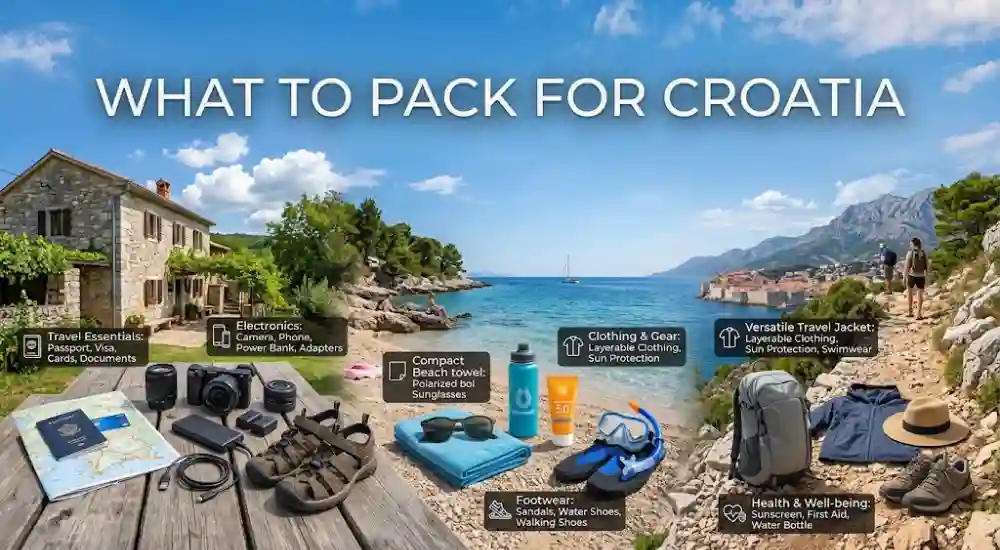
Pack for walking, swimming, warm weather, and changing conditions.
Bring comfortable walking shoes for Dubrovnik, Split, Rovinj, and other historic towns. Add swimwear, sunscreen, sunglasses, a reusable water bottle, and water shoes for rocky beaches.
A lightweight jacket can be useful during cooler evenings and shoulder-season trips. If you plan to hike in Plitvice, Paklenica, or other natural areas, bring proper footwear and a small daypack.
Pack lightly if your itinerary includes ferries and frequent hotel changes.
Is Croatia Safe for Tourists?
Croatia is generally a comfortable destination for tourists, but normal precautions still apply. Keep valuables secure in crowded areas, especially around busy Old Towns, transport hubs, and beaches.
Follow local guidance when hiking, swimming, boating, or visiting national parks. Summer heat can be intense, so carry water and protect yourself from the sun.
Travel insurance can provide useful protection for medical problems, cancellations, lost luggage, and travel disruptions.
Frequently Asked Questions About Visiting Croatia
Is Croatia worth visiting?
Yes. Croatia is particularly worthwhile if you want a combination of historic cities, islands, beaches, national parks, food, and outdoor activities in one trip.
What is the most beautiful place in Croatia?
Plitvice Lakes, Dubrovnik, Hvar, Rovinj, and the Croatian islands are among the country’s most visually impressive destinations. Your choice depends on whether you prefer nature, architecture, beaches, or coastal towns.
Where should I go in Croatia for the first time?
Start with Dubrovnik, Split, and Plitvice Lakes. Add Hvar or another island if you have enough time.
What is the best Croatian island?
There is no single winner. Choose Hvar for nightlife, Brač for beaches, Korčula for culture, Vis for quiet travel, and Mljet for nature.
Is Croatia expensive?
Croatia can fit different budgets, but Dubrovnik, Hvar, and peak summer can be expensive. Shoulder-season travel can offer better value.
Can you visit Croatia without a car?
Yes. Major cities and popular islands are connected by buses, ferries, and catamarans. A car is more useful for rural areas and road trips.
What are Croatia’s best hidden gems?
Consider Vis, Cres, Mljet, Šibenik, Ston, Motovun, and Zagorje if you want fewer crowds and more local character.
Is Croatia good for families?
Yes. Brač, Istria, Zadar, and Split offer a strong mix of beaches, activities, restaurants, and accommodation options for families.
Is Croatia good for couples?
Absolutely. Rovinj, Dubrovnik, Hvar, Korčula, Vis, and Mljet offer excellent combinations of scenery, food, beaches, and romantic experiences.
What month is best for Croatia?
June and September are particularly attractive for many travelers because they can provide warm weather while avoiding some of the intensity of peak summer. July and August are better if your priority is the full summer beach and nightlife experience.
Final Verdict: Where Should You Go in Croatia?
The best places to visit in Croatia depend on what you want from your trip. Choose Dubrovnik for history and unforgettable coastal scenery, Split for Roman heritage and island hopping, and Plitvice Lakes for waterfalls and nature. Pick Hvar for nightlife and beaches, Rovinj and Istria for food and wine, and Vis or Mljet for peaceful island escapes.
If this is your first Croatia vacation, don’t try to see everything. A carefully planned 7–10 day Croatia itinerary can combine major highlights with one island and a national park. Travelers with two weeks can explore more deeply, including Istria, smaller islands, and inland destinations.
The best Croatia trip isn’t the one with the most pins on a map. It’s the one that gives you enough time to enjoy the places that match your travel style.