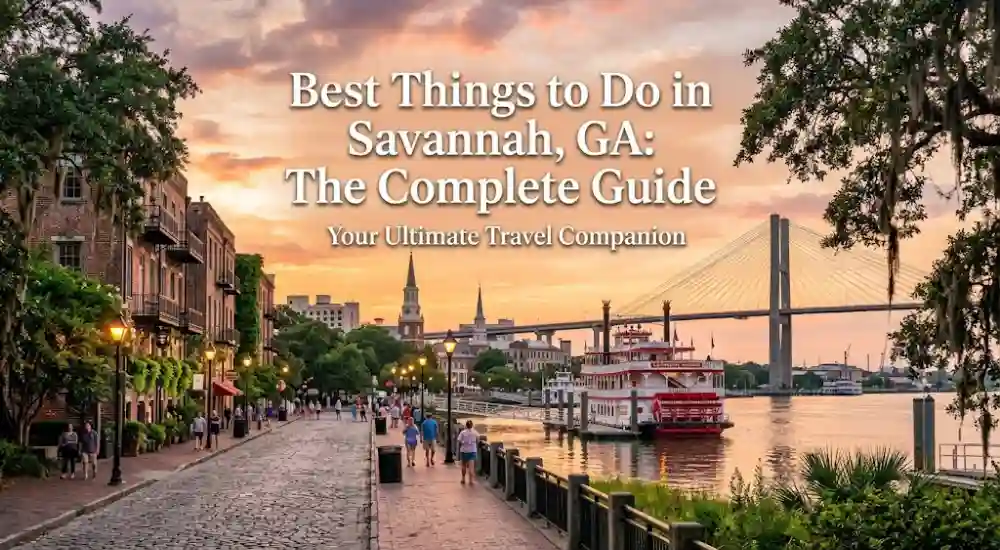
This guide is built differently than a typical attractions list. Instead of just naming landmarks, it tells you who each experience actually suits, how much time to realistically set aside, which restaurants and neighborhoods locals actually recommend, and what to verify before you travel. You’ll find sample itineraries, a where-to-stay breakdown, a season-by-season timing table, and honest answers to the questions most first-time visitors ask.
Quick Answer
The best things to do in Savannah, GA center on walking the Historic District’s squares, touring River Street and the Plant Riverside District, visiting a museum or historic home, and taking a half-day trip to Tybee Island’s beach. Add a Bonaventure Cemetery walk, a ghost tour, and a proper sit-down meal at one of Savannah’s landmark restaurants, and two to four days covers the city comfortably without feeling rushed.
Key Takeaways
- Historic District squares and River Street are the non-negotiable core of any visit
- Spring (March–May) and fall (September–November) bring the mildest weather and biggest festivals
- You don’t need a car downtown, but a car or tour helps for Tybee Island and Wormsloe
- Reserve popular restaurants, ghost tours, and Historic District hotels several days ahead in peak season
- The South Historic District is the most walkable base for first-time visitors
- Two to three days covers the essentials; four-plus days lets you add Tybee Island and slower food-focused time
Explore the Historic District’s Squares
Savannah’s Historic District is the largest National Historic Landmark District in the United States, covering roughly 2.5 square miles and built around 22 public squares, each shaded by live oaks and centered on a fountain, statue, or garden. Walking between them costs nothing and remains the single best orientation to the city.
Not all 22 squares are equally worth your time, and treating them as a checklist misses the point. A few stand out:
- Chippewa Square — home to the Revolutionary War monument and the park bench scene setting from Forrest Gump (the actual bench now sits in the Savannah History Museum, not the square itself)
- Monterey Square — the grandest of the group, ringed by Gothic and Italianate mansions, including the Mercer-Williams House made famous by Midnight in the Garden of Good and Evil
- Jones Street — technically a street rather than a square, but frequently called one of the most beautiful residential blocks in the country
- Whitefield Square — smaller, quieter, and less visited, a good stop if you want a break from crowds
- Wright Square — near several vintage and antique shops, a natural pairing with a shopping stop
Practical notes:
- Set aside a minimum of two to three hours for a genuine wander, longer if you’re stopping for photos or coffee
- Cobblestone and brick sidewalks in places are uneven; wheelchair and stroller users should stick to the paved paths through square centers rather than the surrounding streets
- Early morning (before 9 a.m.) offers the best light and thinnest crowds, especially around Chippewa and Monterey
- Free downloadable self-guided walking maps are available through local visitor resources if you want structure without a guide
Forsyth Park and Its Saturday Market
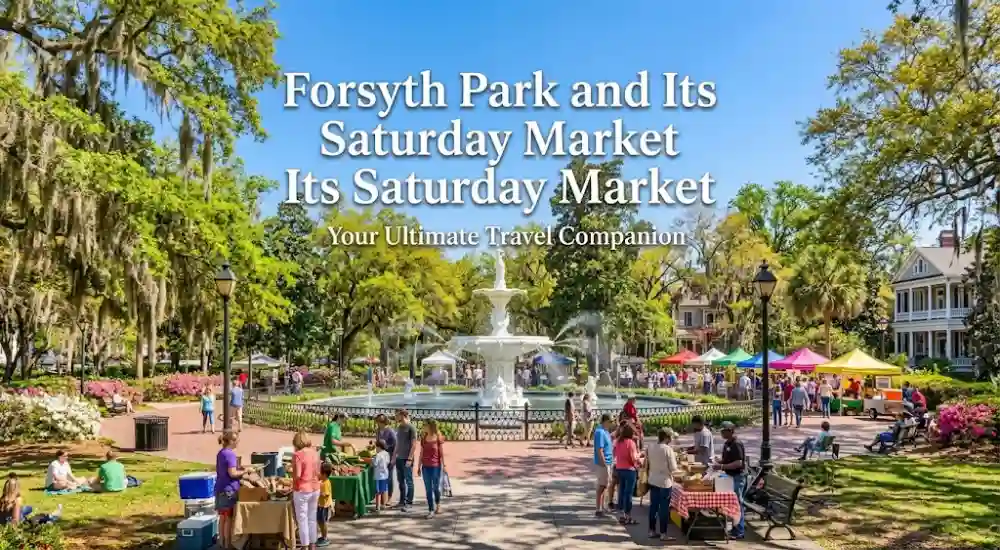
Forsyth Park, a 30-acre green space anchoring the southern edge of the Historic District, is built around the Forsyth Fountain, installed in 1858 and still the most photographed single landmark in the city. Unlike the smaller squares, this is genuinely a local gathering space — used for jogging, dog walking, and picnicking as much as sightseeing.
The park’s best-kept secret for visitors is timing: the Forsyth Farmers’ Market runs most Saturday mornings, typically 9 a.m. to 1 p.m., and gives you a far more local experience than anything on River Street.
Who this suits: Everyone. It’s flat, shaded, and equally good for a solo coffee break, a family picnic, or a slow couples’ walk.
What to know before you go:
- Confirm the market’s current schedule before planning around it, since it can shift seasonally
- The park hosts free outdoor concerts and festival stages periodically — check event calendars if you want to catch one
- Public restrooms exist near the fountain but can have lines during festivals
- The southern end near the fragrant garden is quieter than the fountain plaza
River Street and the Plant Riverside District
River Street runs along the Savannah River atop repurposed 19th-century cotton-warehouse cobblestones, now lined with shops, candy stores, and river-view restaurants. Just west, the Plant Riverside District — a former power plant converted into hotels, rooftop bars, and live music venues — gives the same stretch a newer, higher-energy alternative.
Practical notes:
- The cobblestones are genuinely uneven; skip heels and opt for flat, closed shoes
- Riverboat sightseeing and dinner cruises depart directly from River Street and are a solid option if you want the river view without the walking
- Sunset views are strongest from the western end near Plant Riverside
- Street parking is scarce and metered; the Savannah Waterfront (River Street) parking garage and other nearby public garages are more reliable than circling for a spot
- The district gets genuinely crowded on weekend evenings and during festivals — arrive earlier for dinner reservations if you want to avoid a wait
Savannah’s Best Museums and Historic Homes
Savannah’s museums and preserved homes fill in the history the pretty streets only hint at — from the city’s 1733 founding through the Civil Rights era. The Telfair Museums operate three connected sites, and several individual house museums add depth for history-focused travelers.
| Museum / Historic Home | Best For | Typical Visit Length |
| Jepson Center for the Arts | Modern and contemporary art | 1 hour |
| Owens-Thomas House & Slave Quarters Museum | Regency architecture plus the enslaved people’s history tied to the property | 45–60 minutes |
| Telfair Academy | Home of the Bird Girl statue from Midnight in the Garden of Good and Evil | 45 minutes |
| Davenport House Museum | Early 1800s domestic life | 45 minutes |
| SCAD Museum of Art | Contemporary exhibits inside a restored historic building | 1 hour |
| Ralph Mark Gilbert Civil Rights Museum | Savannah’s role in the Civil Rights Movement | 1 hour |
Money-saving tip: Combination tickets across the three Telfair Museums sites typically cost less than paying for each separately — worth it if you’re visiting more than one. Always confirm current pricing and hours directly with the museum before you go, since these can shift seasonally.
This is also your best rainy-day fallback in Savannah — budget a full afternoon if the weather turns.
Bonaventure Cemetery and Wormsloe Historic Site
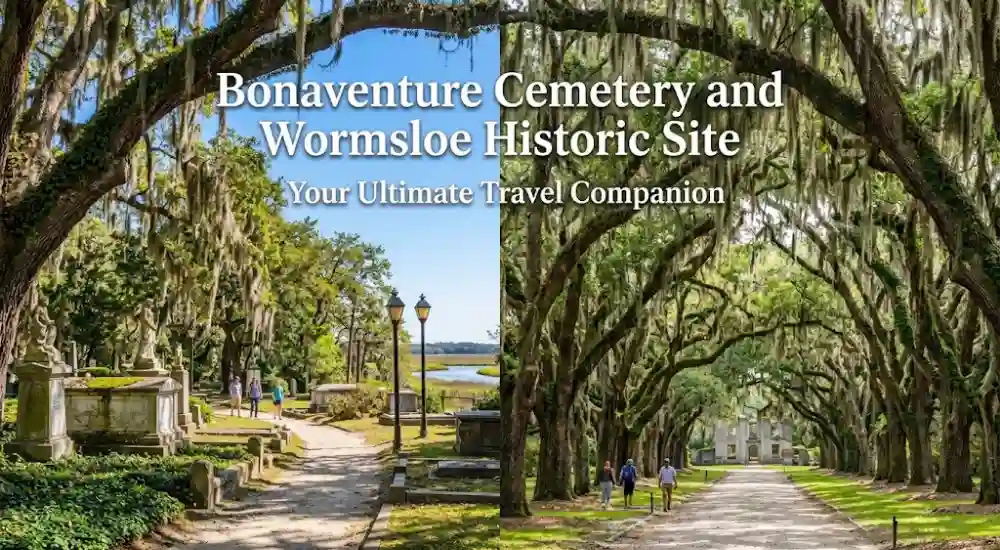
Bonaventure Cemetery, set on a bluff above the Wilmington River, is one of Savannah’s most atmospheric stops — sculpture-lined paths, moss-covered oaks, and graves belonging to notable Savannians, including songwriter Johnny Mercer. A short drive southeast, Wormsloe Historic Site centers on its famous mile-long avenue of live oaks leading to 18th-century tabby ruins, the remains of colonist Noble Jones’s 1730s estate.
These two pair naturally into a half-day trip and suit history buffs, photographers, and anyone wanting a quieter, greener side of the city.
Practical notes:
- Bonaventure Cemetery is free and open for self-guided walking during daylight hours; guided tours add historical and folklore context
- Wormsloe’s hours are typically 9 a.m. to 4:45 p.m. daily, closed Thanksgiving and Christmas — confirm before you travel, since state park hours can change
- A small vehicle admission fee applies at Wormsloe; verify the current rate before your visit rather than budgeting from an older figure
- Both sites involve walking on uneven or unpaved ground — comfortable shoes matter more here than downtown
- Morning visits avoid the worst of the afternoon heat between May and September
- Guided half-day tours bundle both sites, a scenic drive through the Isle of Hope Historic District, and often a stop at a local bakery or cookie shop
Savannah Ghost Tours: What’s Worth It
Savannah leans hard into its reputation as one of America’s most haunted cities, and evening walking or trolley tours build entire experiences around it — stories tied to specific homes, squares, and Bonaventure Cemetery itself.
Who this suits: Couples, groups of friends, and solo travelers looking for an evening activity that isn’t just dinner and drinks.
What actually differs between tour operators:
- Walking tours cover the Historic District’s squares and side streets on foot, typically 60–90 minutes
- Trolley-based tours suit travelers who’d rather sit than walk after a full day of sightseeing
- Some tours include entry into a specific reportedly haunted home or tavern — check whether this is included before booking, since it affects both price and depth
- Family-friendly versions exist with lighter storytelling for younger kids
- Guide quality varies noticeably between companies; check recent reviews rather than booking the first result
Booking tip: Reserve at least a few days ahead, and well in advance around Halloween weekends, when tours sell out. Ask about rain policies for outdoor walking tours before you pay.
Tybee Island: Beach, Lighthouse, and Fort Pulaski
Tybee Island sits about 18 miles east of downtown Savannah — roughly a 30-minute drive — giving visitors a genuine beach day without leaving the metro area. The Tybee Island Light Station, one of the oldest working lighthouses in the country, anchors the island’s north end, and Fort Pulaski National Monument sits just before the causeway crosses onto the island itself.
Who this suits: Beach lovers, families, and anyone visiting during Savannah’s hot, humid summer months who wants relief from downtown’s heat.
Practical notes:
- The main beach has lifeguard coverage during warmer-weather months only — check current coverage dates before swimming outside that window
- Climbing the lighthouse involves a steep, narrow spiral staircase; it’s not ideal for young children or anyone with mobility limitations
- Public beach parking requires a fee, and summer weekend lots fill by mid-morning — arrive early or plan to walk from a side street
- Rip currents and shifting tides are real risks; check posted flag conditions before swimming, and never swim alone in rough surf
- Kayak and paddleboard rentals operate near the pier and marsh areas
- September and October bring water still warm enough to swim, with noticeably thinner crowds than peak summer
Where to Eat: Savannah’s Landmark Restaurants
Savannah has more than 300 full-service restaurants, and the food scene runs from Lowcountry classics to nationally recognized fine dining. A few names come up again and again in local recommendations:
- The Grey — housed in a restored 1938 Streamline Moderne Greyhound bus terminal, helmed by James Beard Award-winning chef Mashama Bailey; reservations essential, book well ahead
- The Olde Pink House — an 18th-century mansion serving refined Southern classics; upstairs dining requires reservations, but the more casual downstairs tavern takes walk-ins
- Husk Savannah — Southern cooking built around what local farms deliver that week; expect a wait without a reservation
- Crystal Beer Parlor — Savannah’s oldest restaurant, open since 1933, known for its crab stew and no-frills, historic atmosphere
- Local 11ten — Southern-global fusion just off Forsyth Park, popular for special-occasion dinners
- Leopold’s Ice Cream — a Savannah institution since 1919, a near-mandatory stop regardless of season
- Green Truck Neighborhood Pub — a locally sourced, casual burger spot away from the tourist core
Practical notes:
- Reservation habits vary sharply by restaurant — some take walk-ins only, others require booking days ahead during spring festival season
- Guided food tours typically bundle four to six tasting stops over two to three hours and are a good way to sample multiple spots without committing a full meal to one
- Praline and candy shops cluster around City Market and River Street for an easy, packable gift
Where to Stay: A Neighborhood-by-Neighborhood Guide
Choosing the right base changes your whole trip. Here’s how Savannah’s main visitor-friendly neighborhoods actually compare:
| Neighborhood | Best For | Walkability to Squares | General Price Level |
| South Historic District | First-timers, couples, walkable sightseeing | Excellent — in the heart of it | Mid to high |
| North Historic District / River Street area | Nightlife, easy River Street access | Excellent | Mid to high |
| Plant Riverside District | Groups, nightlife, riverfront views | Excellent | High |
| Starland District | Art-focused, less touristy travelers | 15–20 minute walk or short drive | Mid |
| Midtown / Victorian District | Budget-conscious travelers, families | 10–15 minute walk or short drive | Low to mid |

A few honest notes:
- The South Historic District, near Forsyth Park, is widely considered the best all-around base for first-time visitors — quiet at night but walkable to nearly everything
- Plant Riverside District suits travelers prioritizing nightlife over quiet evenings
- Starland District and Midtown trade a longer walk (or a short rideshare) for noticeably lower rates and a more residential feel
- Historic bed-and-breakfasts inside converted mansions are common throughout the Historic District and add character compared to standard chain hotels
- Book Historic District hotels several weeks ahead for spring festival season, when rates climb and rooms sell out
Free Things to Do in Savannah
A meaningful share of Savannah’s appeal costs nothing beyond your time — a real advantage for budget travelers or anyone padding a longer trip.
- Wander the 22 historic squares and their surrounding architecture
- Walk Bonaventure Cemetery’s grounds and river bluff
- Browse the Saturday Forsyth Park farmers market
- Window-shop along River Street and City Market
- Follow a free self-guided walking tour using downloadable maps
- Watch the sunset from the Plant Riverside District riverfront
- Catch a free outdoor concert if the seasonal schedule includes one
- Access Tybee Island’s public beach entry points at no cost
- Photograph Jones Street and Chippewa Square, two of the most-visited spots in the city
- Step into the Cathedral Basilica of St. John the Baptist outside service hours
Family-Friendly Savannah
Savannah works reasonably well for families, thanks to flat squares and a manageable downtown footprint — but cobblestones, humidity, and long walking stretches wear kids out faster than parents often expect.
- Forsyth Park’s open lawns give kids room to run between sightseeing stops
- Tybee Island’s beach offers an easy full day for younger children
- A narrated trolley tour keeps tired legs off the cobblestones
- Riverboat cruises give kids a break from walking while still sightseeing
- Family-oriented ghost tour versions tone down intense storytelling
- Leopold’s Ice Cream doubles as both a treat and a reliable heat break
- Public restrooms are limited downtown; plan stops around parks and museums
- Reserve outdoor time for morning or early evening during summer’s peak heat
Romantic Savannah
Savannah’s mix of Spanish moss, quiet squares, and riverfront dining has made it a long-running choice for couples and honeymooners. Evenings here feel unhurried rather than packed.
- A sunset riverboat cruise pairs a meal with skyline views
- Evening walks through Monterey and Whitefield Squares feel quiet and intimate after dark
- Rooftop bars in the Plant Riverside District offer river views for a drink
- Historic bed-and-breakfast stays in the South Historic District add character over a standard hotel room
- A private or small-group ghost tour offers a more intimate pace than large-group versions
- Dinner at The Grey or The Olde Pink House suits a special-occasion meal
- A carriage ride through the squares is a classic, if touristy, choice
- Book restaurant reservations several days ahead during peak spring weekends
Outdoor Activities: Kayaking, Cruises, and Nature
Beyond the historic core, Savannah’s marshes, rivers, and nearby coastline give outdoor-minded travelers real options.
- Guided kayak tours explore marsh creeks near Skidaway Island and the Isle of Hope
- Dolphin-spotting eco cruises depart regularly from the riverfront
- Skidaway Island State Park offers hiking trails and a small nature center
- Fishing charters operate from marinas near Tybee and the Isle of Hope
- Sunset sailing trips run seasonally, weather permitting
- Bike rentals cover more ground than walking alone
- Check tide charts before kayak trips — marsh access changes significantly with the tide
- Sun protection matters even on cooler days near open water
Shopping in City Market, Broughton Street, and Starland
City Market, a compact pedestrian block just north of the main square cluster, mixes galleries, boutiques, and street performers — good for twenty minutes of browsing before a street musician pulls your attention away. Broughton Street, running through the Historic District, offers a wider mix of national retailers alongside independent shops.
For something less touristy, the Starland District (about a mile south of Forsyth Park) is where locals shop — art galleries, vintage clothing, and Graveface Records & Curiosities, a well-known vinyl and oddities shop.
- City Market — local art galleries and typical souvenir shops
- Broughton Street — the city’s main shopping corridor, chains and independents mixed together
- Starland District — vintage clothing, record shops, and independent art galleries
- Antique shops near Wright Square carry vintage furniture and local finds
- City Market is also where you’ll find Byrd Cookie Company treats and Savannah’s ubiquitous pecan pralines
- Most shopping streets are walkable from any Historic District hotel
Nightlife and Live Music
Savannah is one of the few U.S. cities with a relaxed open-container policy downtown, meaning you can legally carry a drink between certain bars in the entertainment district — a detail that shapes how compact and walkable the nightlife scene feels.
- River Street, City Market, and Plant Riverside District anchor most of the nightlife
- Rooftop bars in Plant Riverside offer river views after dark
- Enmarket Arena, about a mile west of downtown, hosts concerts and larger touring acts
- Savannah Ghost Pirates hockey games run through the winter season at Enmarket Arena
- Craft breweries and distillery taprooms around town offer tastings and tours
- Late-night food clusters near River Street and Broughton Street
- Confirm event dates and ticket requirements before planning a night around a specific show
Sample Itineraries: 1 Day, 3 Days, and 5 Days

If You Only Have 1 Day
- Morning: Walk the Historic District squares — prioritize Chippewa, Monterey, and Jones Street
- Midday: Lunch downtown, then Forsyth Park
- Afternoon: One museum (Telfair Academy or Owens-Thomas House) or a riverboat cruise
- Evening: Dinner near River Street, then a short walk through Plant Riverside for the sunset
3-Day Itinerary
Day 1: Historic District squares, Forsyth Park, an afternoon museum, dinner at a landmark restaurant Day 2: Bonaventure Cemetery and Wormsloe Historic Site in the morning, City Market and Broughton Street shopping in the afternoon, ghost tour in the evening Day 3: Full-day trip to Tybee Island — beach, lighthouse, and lunch near the pier
5-Day Itinerary
Follow the 3-day plan above, then add:
Day 4: Kayak or dolphin cruise in the morning, Starland District shopping and gallery-hopping in the afternoon, live music in the evening Day 5: A slower day — Forsyth Park farmers market (if it’s a Saturday), a food tour, and time to revisit any square or shop you loved
Best Time to Visit Savannah
Spring and fall are Savannah’s strongest windows overall, but each season has a real trade-off worth understanding before you book.
| Season | Weather | Crowds & Rates | Best For |
| Spring (Mar–May) | Mild, comfortable, azaleas in bloom | Highest crowds and rates; biggest festival lineup | First-time visitors who want peak scenery |
| Summer (Jun–Aug) | Hot and humid, highs regularly in the 90s°F | High crowds, especially on Tybee Island | Beach-focused trips, tolerance for heat |
| Fall (Sep–Nov) | Mild, driest season of the year | Noticeably lighter than spring, lower rates | Best overall value; fewer crowds, similar weather |
| Winter (Dec–Feb) | Mild by national standards, rarely freezing | Lowest crowds and rates of the year | Budget travelers, holiday lighting, quiet walks |
A few honest notes:
- Fall (mid-September through November) is frequently the best-value window: near-spring weather without spring’s crowds or pricing
- Hurricane season technically runs into the fall; if you’re booking a late-summer or early-fall trip close to your travel dates, keep an eye on storm forecasts before locking in nonrefundable plans
- Major spring festivals (including the Savannah Music Festival and the St. Patrick’s Day Parade, one of the largest in the country) drive both the heaviest crowds and the highest hotel rates of the year — book well ahead if you’re targeting this window
Savannah vs. Charleston: Which Should You Visit First?
Savannah and Charleston, South Carolina, sit roughly two hours apart by car and get compared constantly, since both are historic Southern coastal cities with cobblestone streets and strong food scenes. If you’re choosing between them — or wondering whether to combine both — here’s the honest difference:
- Savannah feels greener and more relaxed, built around its 22 shaded squares; it’s generally the more budget-friendly of the two
- Charleston feels more polished and coastal, with a stronger concentration of fine dining and a more prominent harbor-front identity
- Many travelers combine both cities in a single trip, since the drive between them is manageable in a single day
- If you only have time for one: choose Savannah for a slower, greener pace and lower costs; choose Charleston for a more refined food and shopping scene
Getting Around Savannah
The Historic District is compact and mostly flat, so walking covers most sightseeing without a car. A vehicle becomes far more useful once you want to reach Tybee Island, Wormsloe, or Skidaway Island.
- Most major Historic District attractions sit within a 20 to 30 minute walk of each other
- Hop-on, hop-off trolleys run daily narrated loops through downtown
- Rideshare services operate throughout Savannah and out to Tybee Island
- Public parking garages near River Street are generally more reliable than circling for street parking
- A car is the most practical option for Tybee Island, Wormsloe, and Skidaway Island
- Savannah/Hilton Head International Airport (SAV) sits a short drive northwest of downtown
- Bike rentals suit travelers comfortable riding on brick and cobblestone streets
- Traffic and parking get noticeably tighter during major festivals and holiday weekends
Frequently Asked Questions
Is Savannah, GA worth visiting?
Yes. The combination of walkable historic architecture, a genuinely strong food scene, and an easy beach day trip to Tybee Island gives most visitors enough to fill several days without repeating themselves.
How many days do you need in Savannah?
Two to three days covers the Historic District, a museum or two, and a Tybee Island day trip comfortably. Add a fourth or fifth day if you want to slow down, take a food tour, or explore Bonaventure Cemetery and Wormsloe more fully.
Do you need a car to visit Savannah?
Not for the Historic District itself — it’s walkable and well served by trolleys and rideshare. A car (or a guided tour) helps significantly for Tybee Island, Wormsloe, and Skidaway Island, all of which sit outside easy walking range.
Is Savannah walkable?
Yes, notably so. The Historic District is flat and compact, and most major attractions sit within a 20–30 minute walk of each other. Uneven cobblestones in places are the main accessibility consideration.
What is the best month to visit Savannah?
October and April are frequently the strongest picks — both offer mild weather and festival activity, with October generally bringing thinner crowds than the spring peak.
Is Savannah family-friendly?
Yes, with some pacing adjustments. Flat squares and Forsyth Park work well for kids, but cobblestones and summer heat can tire younger children out faster than expected, so plan shorter activity blocks with built-in breaks.
What are the best free things to do in Savannah?
Walking the historic squares, visiting Bonaventure Cemetery, browsing the Forsyth Park farmers market, and accessing Tybee’s public beach cost nothing — together they can fill a solid day or two on their own.
How far is Tybee Island from Savannah?
About 18 miles, roughly a 30-minute drive from downtown, making it a straightforward half-day or full-day trip without needing to change hotels.
Is Savannah safe for tourists?
Like any city, Savannah has safer and less safe areas and times of day. The Historic District is well-traveled and generally comfortable for visitors, though it’s worth checking current local conditions and using normal city precautions after dark, particularly outside the main tourist core.
Where should first-time visitors stay in Savannah?
The South Historic District, near Forsyth Park, is the most commonly recommended base — walkable to nearly everything, with a quieter feel at night than the River Street area.
Conclusion
Savannah rewards a plan that leaves room to wander. The Historic District’s squares, museums, and river walks cover the essentials, while Tybee Island, Bonaventure Cemetery, and Wormsloe round out a longer stay — and the city’s food scene alone is worth building extra time around.
Start with the 3-day itinerary above as a baseline, then adjust based on the season you’re traveling in, your budget, and how much walking you genuinely want to do. However you structure it, the best things to do in Savannah, GA tend to reward travelers who slow down enough to actually see them.