The biggest mistake first-time visitors make in Los Angeles isn’t picking the wrong attractions. It’s trying to see too many of them in one trip.
This city covers nearly 500 square miles, and the drive from the beach to Downtown can eat an hour of your day before you’ve done anything. The traffic-and-sprawl reputation is earned. But once you stop trying to “do LA” as one place and start treating it as five or six smaller cities stitched together, the trip gets a lot easier — and a lot more fun.
This guide breaks down the best things to do in Los Angeles by neighborhood, budget, and trip type, with the unglamorous details most guides skip: what parking actually costs, which Metro line to take, and which beaches still have limited access after the 2025 wildfires. Whether you have a weekend or a full week, you’ll leave with a plan that fits how this city actually works.
Quick Answer
The best things to do in LA combine one or two iconic stops (Griffith Observatory, the Hollywood Walk of Fame), a beach afternoon in Santa Monica or Venice, and at least one free world-class museum like the Getty Center or The Broad. Most first-time visitors need three to five days to cover the highlights without rushing, and a car or rideshare helps for anything outside the Metro rail corridor.
TL;DR
- Griffith Observatory is free and closed only on Mondays; planetarium shows cost about $10–12
- Metro’s TAP card covers rail and bus at $1.75 per ride or $7 for an unlimited day pass
- Spring (March–May) and fall (September–November) offer the mildest weather and thinner crowds
- Santa Monica, Hollywood, and Downtown LA are directly connected by Metro rail
- Some Malibu coastal areas and PCH sections still have limited access following the January 2025 wildfires
- Budget 3–5 days for a first LA trip; 7+ days if you want to add Catalina Island or Joshua Tree
Top Iconic Attractions in Los Angeles
These are the landmarks most people picture when they think of LA. They earn the hype, but each one rewards a little planning — book ahead, go early, or expect to share the view.
What makes this list different: every entry below includes what it actually costs and how long to budget, not just why it’s popular.
| Attraction | Cost | Time Needed | Best For |
| Griffith Observatory | Free (planetarium ~$10–12) | 1–3 hours | Views, sunset, families |
| Hollywood Walk of Fame | Free | 30–60 min | First-timers, photos |
| Universal Studios Hollywood | ~$115+ (varies by date) | Full day | Families, thrill rides |
| Santa Monica Pier | Free to walk (rides cost extra) | 1–2 hours | Beach day, sunset |
| The Getty Center | Free (parking ~$25) | 2–4 hours | Art, architecture, gardens |
| Grand Central Market | Free entry, pay per item | 1 hour | Food, lunch stop |
| Venice Beach Boardwalk | Free | 1–2 hours | People-watching, street art |
| TCL Chinese Theatre | Free to view forecourt | 15–30 min | Photos, Walk of Fame add-on |
Practical tip: Don’t try to hit more than two of these in a single day. Traffic between, say, Universal Studios and Santa Monica can run 45–60 minutes even off-peak, and closer to 90 during rush hour (roughly 7–10 a.m. and 4–7 p.m.).
Best Free Things to Do in Los Angeles
LA has more free museums than any other major US city — a genuine point of civic pride here, not marketing spin. The catch: “free” often still means a reservation.
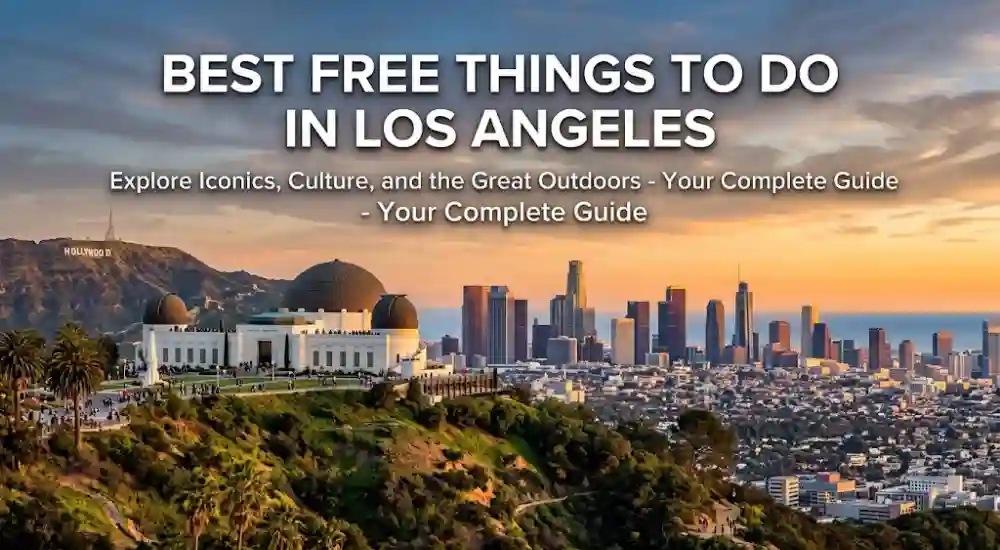
Timed-entry systems exist even at no-cost venues specifically to manage crowds, so booking a slot online the week of your visit saves real waiting time.
- The Broad — free contemporary art museum in Downtown LA; timed tickets required, book 1–2 weeks ahead for weekends
- California Science Center — free, hands-on exhibits in Exposition Park; special traveling exhibits cost extra
- Griffith Park and Observatory — no entrance fee anywhere in the park; only the planetarium charges
- Every LA County beach — Santa Monica, Venice, and Manhattan Beach have zero entrance fees
- Dockweiler State Beach — free fire pits, first come, first served (bring your own wood)
- LACMA — free for LA County residents with valid ID; out-of-county visitors pay standard admission
- Third Street Promenade — free open-air pedestrian strip with street performers most evenings
- Venice Canals — quiet residential walkways a few blocks inland from the boardwalk
- The Original Farmers Market — no cost to browse; food stalls charge per item
- MOCA (Museum of Contemporary Art) — free general admission across all three Downtown locations
Local insight: The single best free experience most visitors skip is simply parking at the Greek Theatre lot in Griffith Park and riding the DASH Observatory shuttle the rest of the way up — it avoids the paid $10/hour lot right at the observatory entirely.
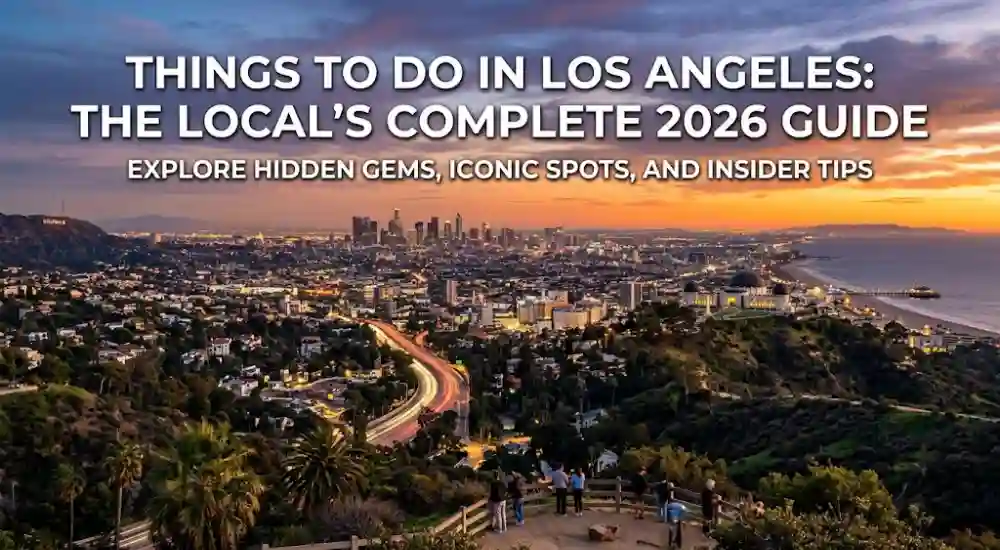
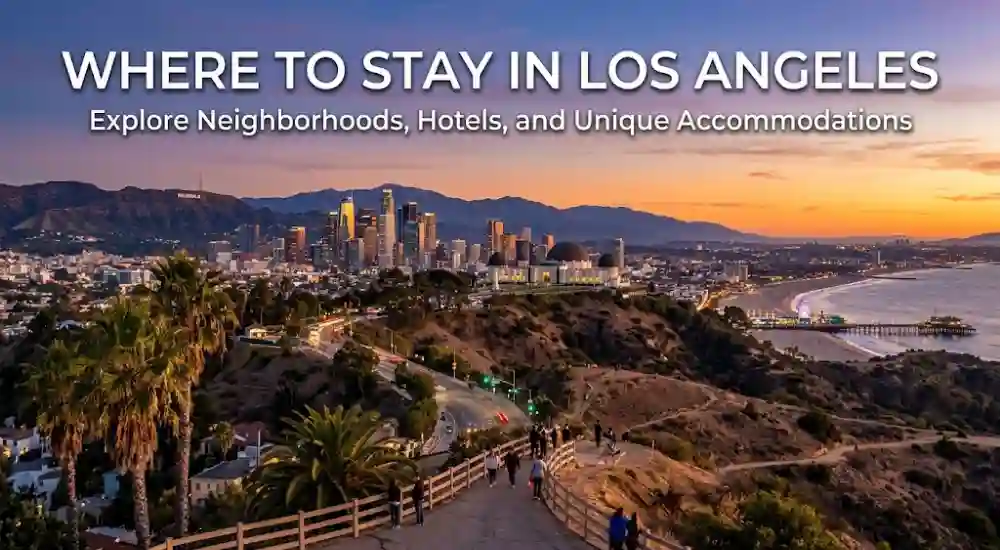
Griffith Park and Griffith Observatory
Griffith Park is one of the largest municipally owned urban parks in the country, and the observatory sitting on its southern slope is the single most photographed free attraction in the city.
Hours, Cost, and Access
The observatory is open Tuesday through Friday, noon–10 p.m., and Saturday–Sunday, 10 a.m.–10 p.m. It’s closed every Monday for maintenance. Building and grounds admission is free; only the Samuel Oschin Planetarium shows carry a ticket price, generally $10–12 per person. Guided tours run separately, starting around $29–35.
Parking directly at the observatory costs roughly $10 per hour, credit card only. The workaround locals use: park free at the Greek Theatre lot and ride the short DASH shuttle up.
What to Do There
- Watch the sunset from the observatory’s front terrace over the Los Angeles Basin
- Use the free public telescopes on clear evenings (weather permitting)
- Photograph the Hollywood Sign from Lake Hollywood Park, a short drive away, for the least-obstructed view
- Hike the paved and dirt trails ranging from easy loops to steeper climbs with real elevation gain
- Visit the park’s carousel, pony rides, and picnic areas if traveling with young kids
- Bring water and sun protection — much of the park has little shade, and summer highs regularly reach the 80s Fahrenheit
When to go: Weekday mornings right at opening are quietest. Weekend evenings around sunset are the most crowded — and the most spectacular.
Hollywood and the Walk of Fame
Hollywood remains one of the most-visited neighborhoods in LA, and it works best as a half-day visit, not a full one — the core sights sit within easy walking distance of each other.
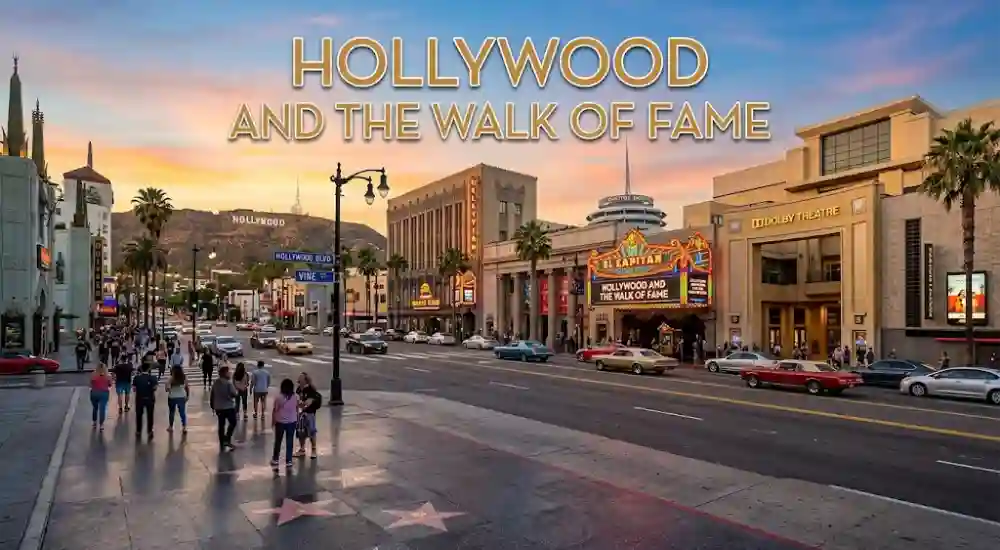
Beyond the boulevard, the surrounding hills offer hiking and quiet residential streets worth a short detour.
- Walk the Hollywood Walk of Fame between Vine Street and La Brea Avenue
- Photograph the TCL Chinese Theatre’s forecourt of celebrity handprints and footprints
- Catch a summer concert at the Hollywood Bowl if the schedule lines up with your visit
- Hike Runyon Canyon for skyline views and a genuinely popular local workout spot
- Ride the DASH Beachwood Canyon route toward Hollywood Sign viewpoints
- Expect heavy foot traffic and some persistent street vendors along the main strip — normal, not dangerous
- Metro’s B Line (Red Line) stops directly at Hollywood/Highland and Hollywood/Vine
- Parking structures near Hollywood/Highland run cheaper than street-level lots nearby (often with a validation deal if you make a purchase)
Santa Monica and Venice Beach
These two beach neighborhoods sit next to each other but feel distinct. Santa Monica leans polished and family-friendly. Venice keeps its bohemian, slightly grittier edge.
Both are walkable once you arrive, and a paved beach path connects them directly — roughly a 45-minute walk or 15-minute bike ride end to end.
- Walk or bike the beach path between Santa Monica Pier and Venice Boardwalk
- Browse Third Street Promenade for shops, restaurants, and street performers
- Watch skaters and pickup basketball at Venice’s Muscle Beach courts
- Stroll the Venice Canals, a few blocks inland, for a quieter pace
- Shop Abbot Kinney Boulevard for boutiques, galleries, and cafes
- Rent a bike or e-scooter to cover more ground along the coast
- Metro’s E Line ends three blocks from Santa Monica Pier — a genuine alternative to driving and paying for parking
- Sunset draws the biggest crowds to both the pier and the boardwalk
Best Beaches Near Los Angeles
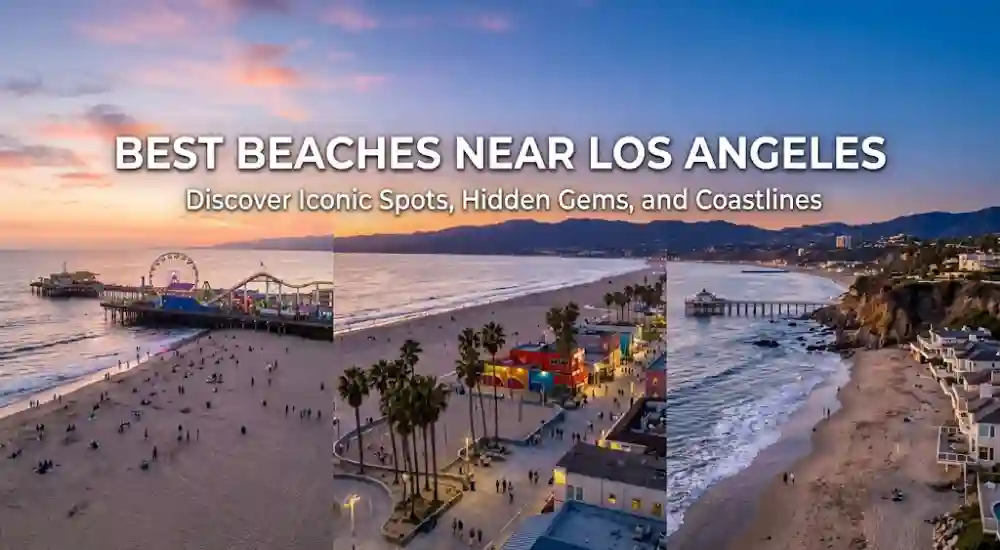
LA County has roughly 75 miles of public coastline, and every beach town has its own personality. Some are wide and family-friendly; others suit surfers or a quieter afternoon alone.
Important 2026 update: Coastal access near parts of Malibu has been limited since the January 2025 wildfires, and recovery is ongoing in some areas. Check current conditions through official county sources before planning a Malibu-focused day.
| Beach | Vibe | Best For | Note |
| Santa Monica State Beach | Wide, classic, busy | First-timers, no car | Easiest Metro access |
| Venice Beach | Boardwalk energy | People-watching, surf near the breakwater | Can get crowded fast |
| Manhattan Beach | Upscale, quieter | Volleyball, jogging | Limited free parking |
| Hermosa Beach | Walkable pier strip | Casual dining, relaxed pace | Good sunset spot |
| Zuma Beach | Wide, less crowded | Space to spread out | Malibu — check PCH access |
| El Matador State Beach | Dramatic rock formations | Photography, smaller crowds | Stairs down to sand |
| Dockweiler State Beach | Open, fire pits | Bonfires, easier parking | Near LAX flight path |
| Redondo Beach | Marina views | Families, seafood dining | Less touristy overall |
Downtown LA and the Arts District
Downtown LA blends historic architecture, contemporary museums, and a genuinely strong food scene. It rewards visitors who explore on foot once they’re off the train or parked.
The Arts District next door has evolved from warehouses into galleries, breweries, and design-forward restaurants over the past decade — one of the fastest-changing pockets of the city.
- Browse Grand Central Market for tacos, coffee, and produce stalls under one roof
- Visit The Broad for free contemporary art, with timed tickets booked online
- Walk through Little Tokyo for shops, temples, and Japanese comfort food
- Ride Angels Flight, the world’s shortest funicular, linking Hill Street to Bunker Hill
- Explore Olvera Street and El Pueblo for LA’s early Mexican-era history
- Wander the Arts District for street murals, galleries, and warehouse cafes
- Catch a performance at the Walt Disney Concert Hall if the schedule allows
- Use Metro’s A, B, D, or E Lines to skip Downtown’s expensive parking structures entirely
Best Museums and Art Galleries
LA’s museum scene rivals any city in the country, and several major institutions charge no admission at all. Others require advance timed tickets even when entry itself is free.
| Museum | Admission | Known For | Reservation Needed? |
| The Getty Center | Free (parking fee) | Art, architecture, gardens | Parking reservation recommended |
| LACMA | Free for LA County residents | Broad art collection | No |
| The Broad | Free | Contemporary/installation art | Yes, timed tickets |
| Academy Museum of Motion Pictures | Paid | Film history | Yes |
| California Science Center | Free | Hands-on science | No (special exhibits vary) |
| Natural History Museum | Paid | Dinosaurs, California ecosystems | No |
| Getty Villa | Free (parking fee, timed entry) | Ancient Greek/Roman art | Yes, required |
| MOCA | Free | Contemporary art | No |
| Autry Museum | Paid | American West history/art | No |
Planning tip: Visit one major museum per day, not two. Most of these reward a slow pace, and several close on Mondays or Tuesdays — confirm hours before you build your schedule.
Hidden Gems and Underrated Spots
Tour buses don’t stop at most of these, which is exactly why they’re worth the detour. These are the spots residents send visiting friends to when Hollywood Boulevard starts to feel like a theme park.
- Micheltorena Stairs — a heart-painted public staircase in Silver Lake
- Baldwin Hills Scenic Overlook — quiet skyline and ocean views, far fewer visitors than Griffith Park
- Bradbury Building — a Downtown LA interior famous for its ironwork atrium and film history
- Watts Towers — hand-built sculptural towers, one of the most distinctive folk-art landmarks in the country
- Self-Realization Fellowship Lake Shrine — a peaceful garden in Pacific Palisades
- Eastern Columbia Building — a turquoise Art Deco landmark in Downtown LA
- Bronson Canyon Cave — an easy Griffith Park hike past a cave used in classic film and TV shoots
- Battleship IOWA — a museum ship docked in San Pedro’s harbor
- La Brea Tar Pits observation area — free outdoor viewing of an active fossil excavation
Best Things to Do in LA With Kids
Families do best mixing high-energy stops with slower, indoor breaks — LA’s size wears kids out faster than parents expect.
- Aquarium of the Pacific — marine life exhibits in nearby Long Beach
- California Science Center — free, hands-on, and stroller-friendly throughout
- Los Angeles Zoo — inside Griffith Park with a wide range of animals
- Universal Studios Hollywood — rides and Super Nintendo World for older kids
- Santa Monica Pier — beach access plus a small, low-key amusement park
- Griffith Park pony rides and carousel — shorter, gentler activities for younger kids
- Natural History Museum — dinosaur halls are consistently a family favorite
- The Grove and Original Farmers Market — easy strolling, food variety, open space
Accessibility note: Stroller access varies significantly by location — sandy beaches and hillside trails are harder going than paved downtown routes. Call ahead if mobility is a concern; several major museums (including Griffith Observatory) offer ramps and elevators throughout.
Romantic Things to Do for Couples

LA has plenty of scenic, slower-paced options for couples, especially around sunset. Timing matters more here than at family attractions.
- Watch sunset from Griffith Observatory’s front terrace
- Walk the Venice Canals in early evening for a quiet, scenic stroll
- Drive Mulholland Drive for city and valley overlooks
- Book a wine tasting in Malibu or the nearby Santa Monica Mountains
- Stroll the Getty Center’s gardens before catching sunset over the coastline
- Share a meal at Grand Central Market, then walk Downtown’s historic Broadway theater district
- Reserve dinner ahead for weekend evenings — Malibu and Santa Monica waterfront tables book up fast
Best Outdoor Activities and Hiking Trails
LA’s dry climate supports hiking, biking, and water activities nearly year-round. Trail difficulty varies widely, so match your pick to fitness level and the day’s heat.
- Runyon Canyon — popular, moderately steep, skyline views near Hollywood
- Temescal Canyon — shaded canyon hike ending near a seasonal waterfall
- Solstice Canyon — easier Malibu trail with a historic ruin along the route
- Kenneth Hahn State Recreation Area — shorter trails with panoramic city views
- Marina del Rey — calm-water kayaking and paddleboarding, beginner-friendly
- Bronson Canyon — an easy Griffith Park hike past a well-known film-location cave
- Surf lessons at Malibu or Manhattan Beach — beginner-friendly breaks with instructors
- Angeles National Forest — higher elevation, cooler temperatures in summer
Safety note: Avoid midday hikes during heat advisories, especially on exposed trails with little shade. Some areas remain closed following wildfire recovery efforts — check trail status before you go.
Food, Markets, and Local Flavor
You can’t talk about things to do in LA without talking about food — it’s arguably the city’s strongest cultural export after film.
- Grand Central Market — Downtown’s century-old food hall; a genuine cross-section of LA’s food culture under one roof
- Koreatown — dense with barbecue restaurants, karaoke bars, and 24-hour spots
- Thai Town (East Hollywood) — one of the country’s most concentrated Thai food corridors
- Olvera Street — traditional Mexican food tied to LA’s founding-era history
- Little Tokyo — ramen, izakaya, and one of the oldest Japantowns in the US
- Original Farmers Market — dozens of stalls near The Grove, good for grazing
- Santa Monica Farmers Market (Wednesdays) — one of the best-regarded producer markets on the West Coast
- In-N-Out — a genuinely local chain worth trying once, purely for the cultural experience
Practical tip: LA’s best food is rarely in the most touristy blocks. A short rideshare into Koreatown, Thai Town, or the Arts District usually beats anything directly on Hollywood Boulevard.
Nightlife and Live Entertainment
LA’s nightlife spreads across several distinct scenes rather than one central strip.
- Sunset Strip (West Hollywood) — historic live-music clubs and rooftop bars
- Downtown LA’s Arts District — breweries, warehouse bars, and a younger crowd
- Dodger Stadium — catch a Dodgers game for a genuinely local summer-evening experience
- Crypto.com Arena and Kia Forum — major concerts, Lakers/Clippers/Kings games
- SoFi Stadium (Inglewood) — large-scale concerts and NFL games
- Hollywood Bowl — outdoor summer concerts under the stars, a bucket-list LA evening
- Rooftop bars in Downtown and Hollywood — skyline views, often with a cover charge on weekends
Timing tip: Trains get noticeably emptier after 9 p.m.; rideshare is the more reliable option for late-night travel between neighborhoods.
Shopping Districts Worth a Visit
- Rodeo Drive (Beverly Hills) — the famous luxury shopping strip, worth a walk even if you’re not buying
- Melrose Avenue — streetwear, vintage shops, and mural-heavy photo spots
- The Grove — outdoor mall next to the Original Farmers Market, free trolley between the two
- Abbot Kinney Boulevard (Venice) — boutiques, galleries, and independent design shops
- Third Street Promenade (Santa Monica) — mainstream retail with an open-air, walkable layout
Best Day Trips From Los Angeles
Several worthwhile destinations sit within a few hours of the city, making them realistic add-ons to a longer LA trip.
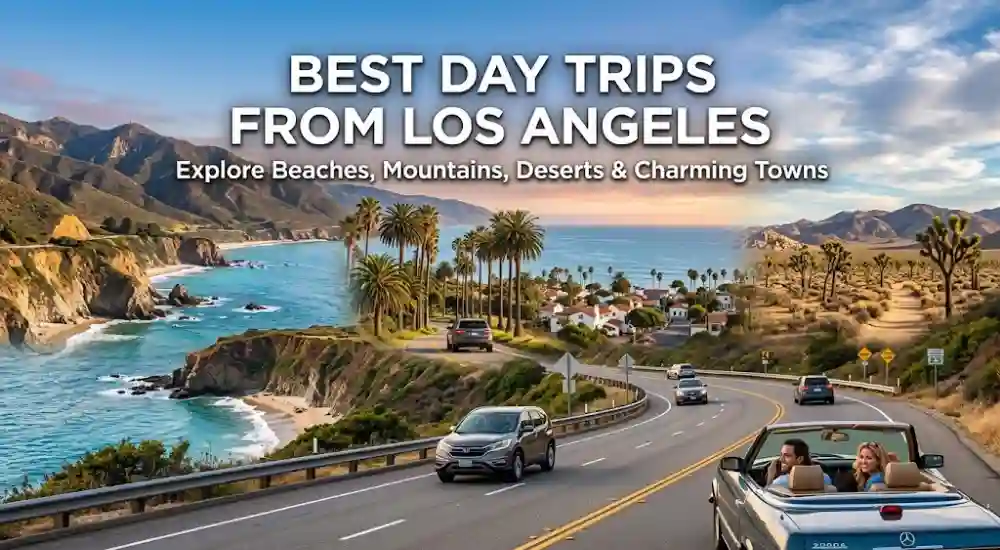
| Destination | Distance/Time | How to Get There | Best For |
| Catalina Island | ~1-hour ferry | Ferry from Long Beach or San Pedro | Full-day escape, snorkeling |
| Joshua Tree National Park | ~2.5-hour drive | Car required | Desert scenery, stargazing |
| Big Bear Lake | ~2-hour drive | Car required | Mountain scenery, cooler air |
| Huntington Beach | ~45-min drive | Car or rideshare | Laid-back beach town |
| Disneyland (Anaheim) | ~1-hour drive | Car, or Metrolink to nearby stations | Families, theme park day |
| Santa Barbara | ~2-hour drive | Car or Amtrak Pacific Surfliner | Coastal charm, wine country |
| Channel Islands National Park | Boat from Ventura | Car + boat | Full-day nature escape |
Planning tip: Fill your gas tank before heading out, and build in extra buffer time for weekend freeway traffic leaving the city — Friday afternoon departures are consistently the worst.
Best Time to Visit Los Angeles
LA has mild weather nearly year-round — there’s no genuinely bad time to visit — but the seasons shift noticeably in crowd size, temperature, and coastal fog (locally called “June Gloom“).
| Season | Weather | Crowds | Best For |
| Spring (Mar–May) | Mild, 65–78°F daytime | Moderate | Hiking, wildflowers, fewer lines |
| Summer (Jun–Aug) | Warm, 78–85°F daytime | Highest | Beach days, outdoor concerts |
| Fall (Sep–Nov) | Warm, clear, less fog | Lower | Best overall balance |
| Winter (Dec–Feb) | Mild, 64–70°F daytime | Lowest | Museums, holiday events |
Citywide temperatures typically range from the high 40s to mid-80s Fahrenheit, rarely dropping below 42°F or exceeding 93°F. September and October are widely considered the sweet spot: warm, clear days with thinner crowds than summer. Spring break weeks (late March into early April) get busier than the rest of spring, so plan around them if crowds are a concern.
Getting Around Los Angeles
Ask any Angeleno how to get around and you’ll get a sigh before an answer — this is still a driving city at heart. But if your trip sticks mainly to Hollywood, Downtown, and Santa Monica, you can genuinely skip the rental car.
| Method | Cost | Best For |
| Metro Rail (TAP card) | $1.75/ride, $7 day pass | Downtown ↔ Hollywood ↔ Santa Monica |
| Rideshare (Uber/Lyft) | Varies, surges at peak times | Gaps between Metro stops, late nights |
| Rental car | Varies + parking fees | Beach-hopping, day trips |
| DASH shuttles | ~25–50 cents | Short hops within neighborhoods |
Metro’s B Line connects Downtown to Hollywood and Universal City in about 25 minutes. The E Line runs from Downtown to Santa Monica, roughly 45 minutes end to end. A reloadable TAP card costs a one-time $2 and works across rail, bus, and DASH.
For anything off these two rail corridors — Malibu, most day trips, hillside neighborhoods — a car or regular rideshare use is genuinely the easier call. Traffic peaks roughly 7–10 a.m. and 4–7 p.m.; plan sightseeing drives outside those windows when you can.
Where to Stay in Los Angeles
Your home base shapes your entire trip, since daily long-distance commuting across LA gets exhausting fast.
| Neighborhood | Best For | Vibe |
| Hollywood | Entertainment sights, Metro access | Central, lively |
| Santa Monica | Beach-focused trips, families | Walkable, relaxed |
| Downtown LA | Museums, food, Metro hub | Urban, historic |
| Beverly Hills | Shopping, upscale dining | Polished, central |
| Venice | Beach town feel | Laid-back, artsy |
| West Hollywood | Nightlife, dining | Central, social |
| Long Beach | Quieter base, Catalina ferry | Relaxed, less touristy |
Advice from experience: For trips longer than four days, split your stay between a beach-area hotel and a central one (Downtown or Hollywood). It cuts drive time roughly in half compared to basing yourself in one spot the whole trip.
Sample 3-Day Los Angeles Itinerary
A realistic, non-rushed framework — adjust based on your interests.
Day 1 — Hollywood & Griffith Park Start at the Hollywood Walk of Fame and TCL Chinese Theatre in the morning before crowds build. Grab lunch nearby, then head to Griffith Observatory for the afternoon and stay through sunset. Cap the night with dinner in Los Feliz or Silver Lake.
Day 2 — Beach Day: Santa Monica & Venice Take the Metro E Line straight to Santa Monica Pier. Walk or bike the beach path down to Venice Beach and the canals by early afternoon. Browse Abbot Kinney Boulevard before dinner, then catch sunset from the pier or boardwalk.
Day 3 — Downtown, Arts District & a Museum Start with Grand Central Market for breakfast, then walk to The Broad (book tickets ahead) or take a rideshare to the Getty Center for the morning. Spend the afternoon in the Arts District for galleries and coffee, then close with dinner in Little Tokyo.
With extra days: Add a Catalina Island or Joshua Tree day trip, or a second beach day further up the coast toward Malibu (checking current PCH access first).
What a Day in LA Actually Costs
Rough per-person estimates for a moderate-budget day, excluding lodging:
- Budget day (free attractions, Metro, casual food): $40–60
- Mid-range day (one paid attraction, rideshare, sit-down meals): $100–150
- Splurge day (Universal Studios or a guided tour, upscale dining): $200+
Parking is the most commonly underestimated cost — budget $10–25 per stop at popular attractions if you’re driving.
Frequently Asked Questions
Is 3 days enough to see the best of LA?
Three days works well for a focused trip covering one or two neighborhoods thoroughly rather than the whole city. Most visitors pair a beach day with a Hollywood or Downtown day, plus a museum or Griffith Park visit. Longer stays of five to seven days allow for day trips like Catalina Island or Joshua Tree.
Do you need a car in Los Angeles?
Not strictly, if you’re focused on areas connected by Metro rail — Downtown, Hollywood, and Santa Monica. For beach-hopping, day trips, or hillside attractions, a car or frequent rideshare use makes things considerably easier. Factor traffic and parking costs into either choice.
Is Los Angeles walkable?
Individual neighborhoods like Santa Monica, Downtown LA, and Hollywood are walkable once you arrive. The city as a whole is spread out and car-dependent, so plan to drive, ride Metro, or take rideshares between neighborhoods rather than walking citywide.
What are the best free things to do in LA?
Griffith Observatory, the Getty Center, The Broad, and the California Science Center all offer free admission, along with every public beach in LA County. Many require advance timed-entry reservations even though entry itself costs nothing.
Are Malibu beaches fully open after the 2025 wildfires?
Some coastal areas near Malibu and sections of Pacific Coast Highway have had limited access since the January 2025 wildfires, with recovery ongoing in parts of the region. Check current conditions through official county sources before planning a Malibu-focused visit.
What is the best time to visit Los Angeles?
Spring (March–May) and fall (September–November) generally offer the mildest weather and lighter crowds. Summer brings the busiest beaches and highest prices, while winter suits museum-focused, lower-crowd trips.
Is LA expensive to visit?
It can be, especially for lodging and parking, but a genuinely enjoyable day is possible for $40–60 per person using free museums, public beaches, and Metro rail. Costs rise quickly with theme parks, guided tours, and upscale dining.
Is 2 days enough for a first visit?
Two days is tight but workable if you pick one inland day (Hollywood/Griffith Park or Downtown) and one beach day (Santa Monica/Venice). Expect to skip day trips and most museums at this pace.
What should first-time visitors to LA know?
Distances that look short on a map often take much longer to drive than expected — always check real-time traffic before committing to a route. Reservations matter even for free attractions, and sun protection is worth packing regardless of season.
Conclusion
Los Angeles rewards travelers who plan around its size rather than fighting it. Picking two or three neighborhoods, checking current hours and reservation rules, and building in real travel time between things to do in LA will make the trip feel far less rushed than the sprawl suggests it should.
Start with one or two iconic stops, add a free museum or beach afternoon, and leave room for a hidden gem or day trip if your schedule allows. That balance covers what most travelers actually come to LA looking for — and it’s the same approach a local would use planning a weekend for out-of-town friends.