
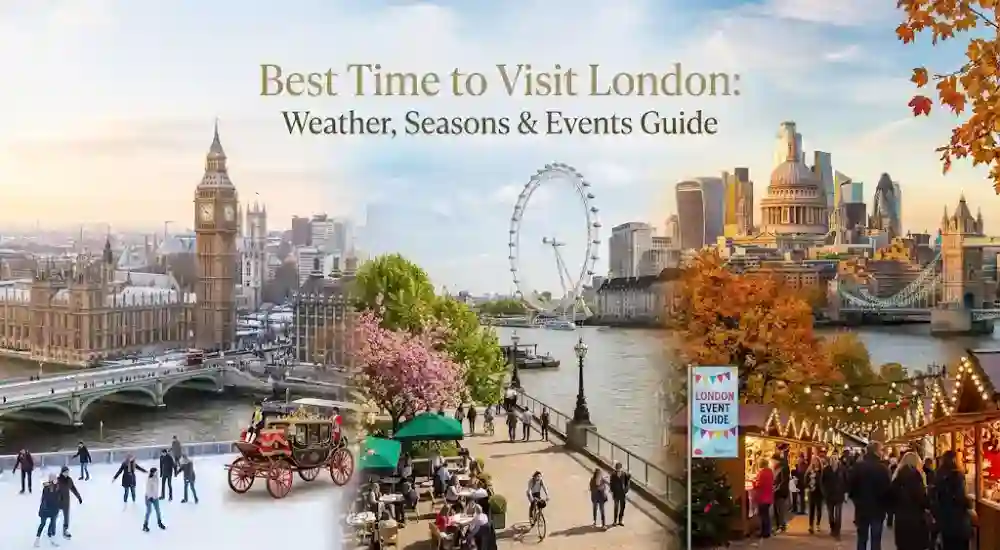
London doesn’t have brutal extremes to plan around the way some destinations do, which makes the best time to visit London less about avoiding disaster weather and more about matching your trip to crowds, prices, and what’s actually happening in the city. A May visit and a January visit are genuinely different trips.
This guide walks through London’s weather by season, when the big events and festivals land, how prices swing across the year, and which months work best for families, budget travelers, and anyone chasing blossoms, Christmas markets, or quiet museum mornings. For official event listings, check Visit London, the city’s official tourism site.
Quick Answer
The best time to visit London is late spring (April to June) or early autumn (September to October). These shoulder-season months bring mild temperatures, blooming parks, manageable crowds, and a full events calendar without the peak-summer price spike or the short, damp days of winter. Budget travelers should look at January and February instead, when flights and hotels are at their cheapest.
TL;DR
- Best overall months: May, June, September, and October
- Warmest months: July and August, but also the busiest and priciest
- Cheapest months: January and February, right after the holiday rush
- Best for festivals: Summer (Wimbledon, Notting Hill Carnival, Pride) or December (Christmas markets)
- Best for fewer crowds: November to March, outside of school half-terms and Christmas week
- Rainiest months: November and August tend to see the most rainfall, though London gets some rain year-round
- Pack for: Layers and a light waterproof jacket regardless of season
London’s Weather, Realistically
London has a temperate maritime climate, meaning it rarely sees extreme heat or bitter cold — but it also rarely guarantees a rain-free day. Summers top out around 22–24°C (72–75°F) on average, with occasional hotter spells; winters hover around 2–8°C (36–46°F) and snow is uncommon in the city center. The honest truth locals will tell you: pack layers and a compact umbrella no matter when you go, because a sunny morning can turn into a drizzly afternoon within hours.
Daylight hours swing dramatically across the year, which shapes the trip more than most visitors expect. Around the June solstice, the sun doesn’t set until roughly 9:30 PM, giving long evenings for riverside walks and outdoor dining. By late December, it can get dark by 4 PM, which shortens the practical sightseeing window and makes indoor attractions — theatres, museums, and the city’s many covered markets — a more natural focus.
Things to Do Year-Round, Whatever the Season
One advantage of London’s weather is that so much of what makes the city worth visiting doesn’t depend on sunshine. World-class museums like the British Museum, the National Gallery, and the Natural History Museum are free to enter and open daily regardless of season. The West End’s theatre scene runs a full calendar of shows year-round, and London’s food halls, covered markets like Borough Market, and countless pubs offer easy shelter on a rainy afternoon. This is part of why London genuinely works as a year-round destination — the weather affects comfort more than it limits what you can actually do.

London by Season
Spring (March to May): Blossoms and Manageable Crowds
Spring is when London’s parks put on a show. Cherry blossoms and magnolias bloom in Greenwich Park and Kew Gardens, while St James’s Park and Regent’s Park fill with daffodils and tulips. Temperatures climb gradually from a cool 8°C (46°F) in March to a comfortable 17°C (63°F) by May. Crowds are noticeably thinner than summer at major landmarks like the Tower of London and Buckingham Palace, and this is also when the city’s outdoor markets and riverside cafés reopen for the season. The main event to plan around is Easter half-term, which brings a short but noticeable bump in family crowds.
Summer (June to August): Peak Season, Peak Energy
June through August is London’s high season, and for good reason: long daylight hours (sunset near 9:30 PM in June), warm weather for outdoor dining, and a packed events calendar. Wimbledon runs in late June and early July, Pride in London fills the streets in late June, and the Notting Hill Carnival — Europe’s largest street festival — takes over west London during the August bank holiday weekend. The tradeoff is real: hotel prices peak, popular attractions require advance booking, and the Tube gets crowded at rush hour. August also brings slightly higher rainfall than you might expect for “summer,” so pack for both sun and showers.
Autumn (September to November): The Sophisticated Shoulder Season
September and October are a favorite among repeat visitors and locals alike. The summer crowds thin out as schools return, the weather stays mild through most of September, and London’s cultural calendar picks up with London Fashion Week and the London Design Festival in mid-September. October brings some of the best photography light of the year as the city’s parks turn shades of gold and amber. By November, temperatures drop and rain becomes more frequent — it’s one of the wetter months — but it’s also when Christmas lights switch on along Oxford Street and Regent Street, giving the city an early festive lift.
Winter (December to February): Budget Season with Festive Payoff
December is a paradox: it’s genuinely one of the best times to feel London’s magic, with Christmas markets, ice rinks at Somerset House and the Natural History Museum, and dazzling light displays — but it’s also priced like peak season around the holidays. For a full seasonal itinerary, see our guide to the best things to do for Christmas in London. January and February, by contrast, are London’s true low season. Flights and hotels drop noticeably after New Year’s, major sales fill the shops, and while the weather is cold and grey, museums and galleries are far less crowded. Watch out for February half-term week, which brings a small crowd bump from domestic family travel.
Month-by-Month Snapshot
| Month | What to Expect |
|---|---|
| January | Cold, quiet, and cheap; big January sales; fewer tourists at major sights |
| February | Still budget-friendly; watch for half-term crowds; cozy indoor season |
| March | First signs of spring; St. Patrick’s Day parade; milder, occasional showers |
| April | Blooming parks; mild weather; Easter holiday crowds |
| May | One of the best all-around months; long days; moderate crowds |
| June | Peak season begins; Wimbledon; Pride in London; long daylight hours |
| July | Warmest month on average; busy attractions; book ahead |
| August | Family travel peak; Notting Hill Carnival; higher rainfall than expected |
| September | Crowds ease; London Fashion Week; still-mild weather |
| October | Autumn colors; photography-friendly light; cooling temperatures |
| November | Wetter and colder; Christmas lights switch-on; quieter sightseeing |
| December | Christmas markets and ice rinks; festive but pricier around the holidays |
Best Time to Visit for Specific Travel Styles
For Budget Travelers
January and February offer the lowest flight and hotel prices of the year, plus shorter queues at major attractions. The trade-off is cold, sometimes grey weather and shorter daylight hours.
For Families
May to August gives the most daylight and mildest weather for outdoor days in London’s parks, though it also means school-holiday crowds. If you want milder crowds with similar weather, aim for late May or early June before school lets out.

For Festival and Event Lovers
Summer delivers the highest concentration of major events — Wimbledon, Pride, and Notting Hill Carnival — while December is unmatched for Christmas markets, festive lights, and seasonal shows in the West End.
For Photography and Sightseeing
April, May, September, and October combine soft light, blooming or golden parks, and thinner crowds at major landmarks like the Tower of London and Buckingham Palace.
For Shopping
June and July bring major summer sales, while late December through January is prime time for Boxing Day and New Year sales across Oxford Street and Regent Street.
For Couples and Quiet City Breaks
Late September or October offers a “sophisticated, calm” version of London: fewer families, cultural events like the London Design Festival, and golden autumn light along the Thames.
For Solo Travelers
Spring and early autumn tend to suit solo travelers best — long enough daylight hours for full sightseeing days, mild enough weather to explore on foot, and a steady flow of free walking tours and museum events that make it easy to meet people without the overwhelming crowds of peak summer.
For River Thames Activities
May through September is the best window for river cruises, paddleboarding near Richmond, and riverside pub terraces, since outdoor seating and boat tour schedules expand with the warmer, longer days.
London’s Major Annual Events at a Glance
| Event | When | Planning Tip |
|---|---|---|
| Chelsea Flower Show | Mid-to-late May | Book tickets months ahead; extremely popular with garden enthusiasts |
| Wimbledon Tennis Championships | Late June–early July | Public ballot for tickets opens months in advance; queue tickets are also available on the day |
| Pride in London | Late June/early July | Central routes get very crowded; plan transport around road closures |
| Notting Hill Carnival | August Bank Holiday weekend | Book accommodation away from the immediate route if you want a quieter stay |
| London Fashion Week | Mid-September | Mostly industry-focused, but adds buzz to the West End and Soho |
| Bonfire Night | November 5 | Firework displays across the city’s parks; check local event listings |
| Christmas Lights Switch-On | Mid-November | Oxford Street and Regent Street get very crowded on switch-on night itself |
| Winter Wonderland (Hyde Park) | Mid-November–early January | Book timed entry for popular rides and the ice rink in advance |
Practical Planning Information
How Many Days You Need
A solid first-time visit covering the major sights — the Tower of London, Buckingham Palace, the British Museum, the West End, and a couple of neighborhoods — needs at least 4 to 5 days. A week gives room to add a day trip; see our guide to the best day trips from London for options like Oxford, Bath, and Windsor.
Getting Around
The Tube, buses, and Overground cover the city thoroughly, and an Oyster card or contactless payment works across the whole network. Walking is often the best way to see central neighborhoods, since many major sights sit within a mile or two of each other.
Where to Stay
Neighborhood choice matters more than season in London, since the city is so spread out. For a full breakdown by budget and travel style, see our guide to where to stay in London.
Budget Considerations
Peak summer and the two weeks around Christmas and New Year’s carry the highest hotel and flight prices. Booking flights and centrally located hotels 2–3 months ahead is wise for a June through August or December trip; January and February trips can often be booked with more flexibility and lower rates. Many of London’s best-known museums — the British Museum, National Gallery, Tate Modern, and Natural History Museum — are free year-round, which helps offset the city’s famously high hotel and dining costs regardless of when you visit.
Booking Tickets in Advance
For the Tower of London, Warner Bros. Studio Tour, top West End shows, and the London Eye, advance booking is worth doing at any time of year, but becomes essential during summer and the two weeks around Christmas, when same-day tickets can sell out entirely.
What to Pack
Layers and a compact umbrella are non-negotiable in any season. Summer visitors should still pack a light jacket for cool evenings, while winter visitors need a proper coat, since damp cold can feel colder than the thermometer suggests.
Accessibility
London’s public transport network has expanded step-free access significantly in recent years, though older Tube stations can still involve stairs; Transport for London’s official step-free access maps are worth checking before you travel, regardless of season.
Common Mistakes to Avoid
- Packing only for sunshine. Even in July, a rain-free week isn’t guaranteed — bring a light waterproof layer.
- Visiting during a school half-term without checking dates. February and October half-terms bring noticeable domestic crowd bumps that many international visitors don’t anticipate.
- Booking Christmas week hotels late. December accommodation near the West End sells out and climbs in price weeks before Christmas.
- Skipping advance tickets for major attractions in summer. The Tower of London, Warner Bros. Studio Tour, and top West End shows often sell out days or weeks ahead in peak season.
- Underestimating how spread out London is. Trying to cram too many far-apart neighborhoods into one day leads to more time on transport than sightseeing.
Frequently Asked Questions
What is the best month to visit London?
May and September are widely considered the best all-around months: mild weather, manageable crowds, and a full events calendar without peak-summer prices.
Is London expensive to visit in summer?
Yes, relative to the rest of the year. June through August is peak season, with the highest hotel rates and busiest attractions of the year.
Does it rain a lot in London?
London gets rain fairly evenly throughout the year rather than in one dramatic wet season, though November and August tend to see slightly more. A light waterproof layer is worth packing any month you visit.
What’s the cheapest time to visit London?
January and February, right after the holiday season, typically offer the lowest flight and hotel prices, along with thinner crowds at major attractions.
Is London good to visit at Christmas?
Yes — December brings Christmas markets, ice rinks, and festive lighting that many travelers consider worth the higher prices, especially in the two to three weeks before Christmas Day.
When are the biggest crowds in London?
Summer (June to August) and the two weeks around Christmas and New Year’s bring the heaviest tourist crowds, along with February and October half-term weeks.
What should I pack for London regardless of season?
Comfortable walking shoes, layers you can add or remove, and a compact umbrella or light waterproof jacket are useful in every month.
How many daylight hours does London get in winter versus summer?
Around the June solstice, London gets roughly 16.5 hours of daylight, with sunset near 9:30 PM. By late December, daylight shrinks to around 8 hours, with it getting dark by mid-afternoon — a significant difference that’s worth factoring into your daily sightseeing plans.
Is London worth visiting in winter?
Yes, especially if budget and festive atmosphere matter more to you than warm weather. December delivers Christmas markets and lights, while January and February offer the lowest prices and thinnest crowds of the year at major museums and attractions.
Final Thoughts
There’s no single “wrong” time to visit London — the city runs on a full calendar of things to do in every season. But if you’re weighing weather, crowds, and cost together, late spring and early autumn genuinely are the best time to visit London for most travelers, offering mild days, blooming or golden parks, and a full slate of events without summer’s price spike.
If your priority is festive atmosphere or rock-bottom prices instead, December and January-February each have a strong case of their own. Whichever season you choose, pack layers, book major attractions ahead during summer and December, and plan around school half-terms if you’re hoping for a quieter trip. Once your dates are set, our guide to hidden gems in London is a good next stop for building out an itinerary beyond the obvious landmarks.