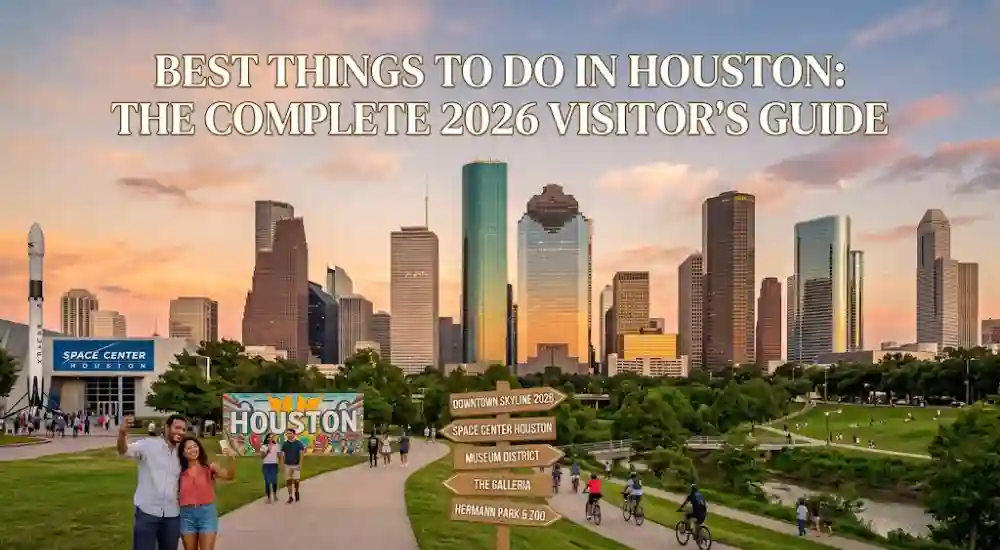
Houston doesn’t announce itself the way Austin or New Orleans does. There’s no single skyline shot that sums it up, no one neighborhood you can point to and say “that’s the city.” Instead, you get a real moon rock you can touch, a free museum with a Rothko chapel next door, and barbecue arguments that get more heated than the actual weather.
The catch: Houston is enormous. The city limits alone cover roughly 640 square miles, and the biggest mistake first-time visitors make is planning it like a walkable downtown — then losing half a day to traffic between two attractions that looked close together on a map.
This guide is built around that reality. Every section below tells you not just what to do, but where it sits, how long it actually takes, and what it’s genuinely worth your time — so you can build a trip around the city’s real geography instead of fighting it.
Quick Answer
The best things to do in Houston are Space Center Houston, the Museum District, Buffalo Bayou Park, and a coastal day trip to Galveston or Kemah Boardwalk. Most visitors need a car or a steady rideshare budget, since attractions are spread across a metro area larger than Rhode Island. Two to four days covers the highlights comfortably; add a fifth if you’re chasing the Houston Livestock Show and Rodeo or a full beach day.
Key Takeaways
- Space Center Houston is the city’s signature draw and deserves a dedicated half-day, not a quick stop
- The Museum District clusters nearly 20 institutions within walking distance — several are free
- Buffalo Bayou Park offers free trails, a Cistern tour, and an evening bat colony show
- Houston is car-dependent; budget for driving or rideshares even inside the city
- Galveston (beach day) and Kemah Boardwalk (rides and waterfront dining) are the two easiest coastal day trips
- October through May brings the most comfortable weather; summer is hot, humid, and overlaps with hurricane season
- The Houston Rodeo (early-to-late March) is one of the largest annual events in the country and worth timing a trip around
1. Space Center Houston: NASA’s Front Door
Space Center Houston is the official visitor center for NASA’s Johnson Space Center — and one detail trips up almost every first-time visitor: it’s a separate, ticketed attraction next to the actual space center, not a tour inside working NASA facilities themselves. That distinction matters because it explains why you’re allowed to touch a real moon rock and walk right up to a Saturn V rocket in ways you couldn’t at an active federal facility.
It sits about 25 to 30 miles southeast of downtown, in Clear Lake, which puts it 40 to 60 minutes away depending on traffic. Treat it as a dedicated half-day trip, not a stop you squeeze between two other things.
What’s actually worth your time here:
- Rocket Park — a genuine Saturn V rocket, one of only three remaining in the world
- Independence Plaza — a mounted space shuttle replica you can walk through
- Starship Gallery — home to an actual lunar sample you’re permitted to touch
- NASA Tram Tour — when running, this takes you past active Mission Control facilities (schedules vary, so check availability the day you visit)
- Artemis and Mars exhibits — covering NASA’s current and upcoming missions, not just Apollo-era history
Practical notes:
| Detail | What to know |
| Distance from downtown | ~25–30 miles (40–60 min drive) |
| Time needed | 3–5 hours minimum |
| Parking | Usually a separate fee from admission |
| Booking | Reserve timed general admission ahead during weekends and school breaks |
| Ticket price | Varies by season and ticket tier — check spacecenter.org before you go |
Local tip: Arrive within the first hour of opening. Tram tours and the Historic Mission Control tour (a paid add-on) can sell out by early afternoon on busy weekends, and you’ll want first pick of tram departure times.
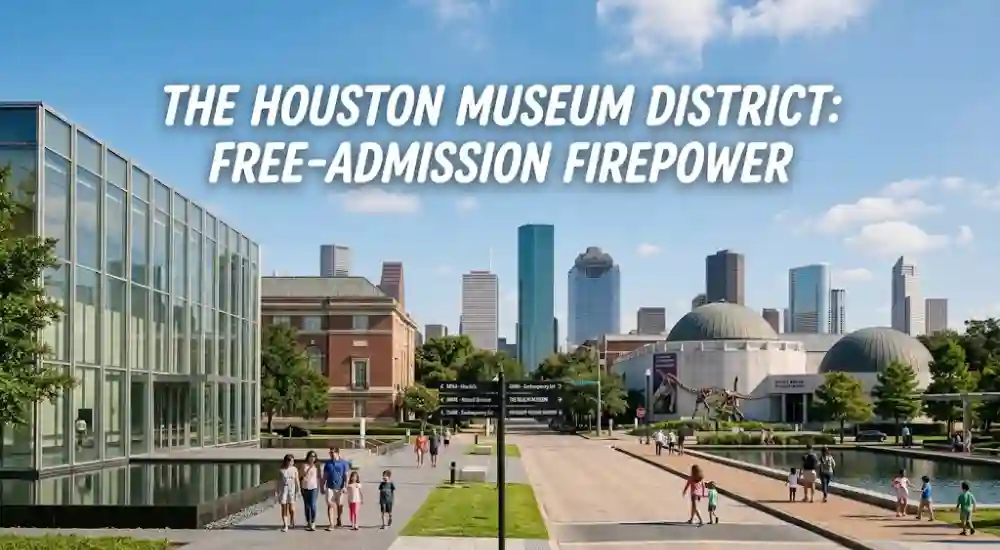
2. The Houston Museum District: Free-Admission Firepower
Most car-dependent American cities don’t have a walkable museum cluster. Houston does. The Museum District packs nearly 20 institutions into a compact, mostly walkable pocket next to Hermann Park — and several of the best ones are free.
Don’t try to “do the district.” Pick two or three museums that actually match your interests and give each real time, rather than rushing through five in a day.
Where to focus, by interest
- Science and space: Houston Museum of Natural Science — dinosaurs, a planetarium, and a rotating gem hall
- Fine art: Museum of Fine Arts, Houston — one of the largest art collections in the American South
- Families with young kids: Children’s Museum Houston — built specifically for kids under 10
- Rainy-day backup: The Health Museum — hands-on, indoor, and genuinely engaging for both kids and adults
- A quieter, specific angle: Buffalo Soldiers National Museum, which covers a slice of military history most general guides skip entirely
Getting there: METRORail’s Red Line stops directly inside the district, which removes the parking headache entirely — a real advantage in a city where parking often eats into your visit time. If you’re only doing the Museum District, skip the rental car for the day and take the train.
Time budget: A half-day covers two to three museums well. A full day covers four, but expect museum fatigue by the last stop.
3. Buffalo Bayou Park: The City’s Green Escape Valve
You can hear downtown traffic and still feel like you’ve left the city — that’s Buffalo Bayou Park’s whole trick. The park cuts along the water just west of downtown, and on a weekday morning you’ll share the trail with more herons than people.
The park itself is free. Two of its best features — the Cistern tour and guided kayak trips — require a paid, reserved ticket.
What to do here:
- Walk or bike the paved trail along the bayou for direct skyline views
- Tour the Buffalo Bayou Cistern, a 1926 underground reservoir with a genuinely eerie 17-second echo
- Book a sunset kayak tour for a completely different, water-level view of downtown
- Watch the Waugh Bridge bat colony emerge at dusk — one of Houston’s best free evening experiences, running roughly spring through fall
- Stop by the Water Works visitor center for maps, restrooms, and bike rentals
Know before you go: The Cistern tour isn’t recommended for children under about nine, and reservations fill up on weekends — book at least a few days out. Bring water and sun protection; shade is limited on the open trail sections, and Houston humidity makes even a short walk feel longer than it should.
Pair it with: POST Houston’s rooftop park, a five-minute walk away, for a second green space and a food hall in the same outing.
4. Discovery Green and Downtown
Discovery Green is a 12-acre downtown park with a small lake for pedal boating, a rotating events calendar, and enough shade to make it a legitimate midday break — not just a photo stop.
Downtown itself rewards pairing with a Discovery Green visit. The Theater District, Toyota Center, and Minute Maid Park all sit within easy walking distance, and much of downtown connects through an underground tunnel system that Houstonians use specifically to dodge the summer heat.
Worth doing downtown:
- Rent a pedal boat on Discovery Green’s lake on a warm afternoon
- Check the park’s event calendar — free concerts and seasonal markets run regularly
- Catch a performance in the Theater District, home to Houston’s permanent ballet, opera, and symphony companies (a genuine rarity among American cities)
- Watch the Astros at Minute Maid Park during baseball season
- Walk the underground tunnels between office towers if you’re downtown between June and September
5. Hermann Park and the Houston Zoo
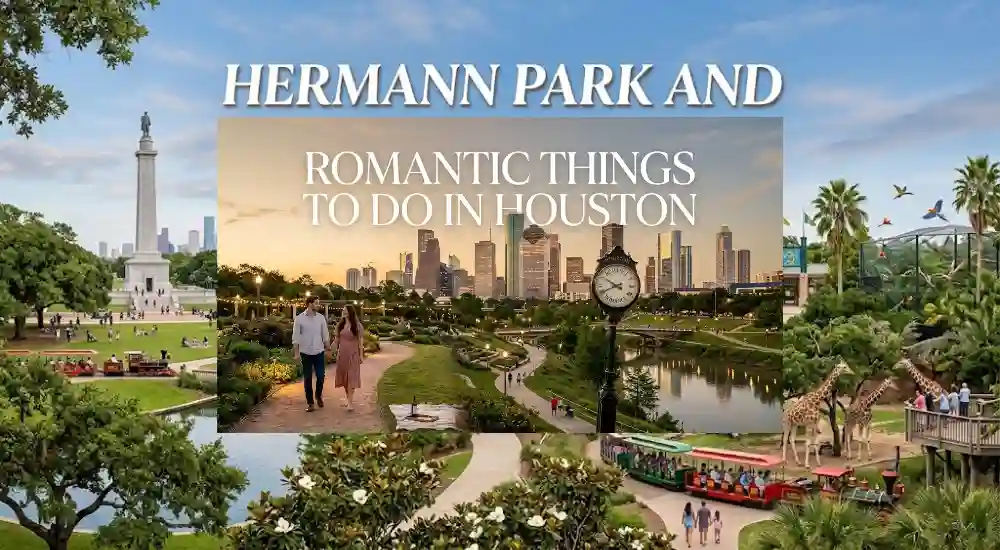
Hermann Park functions as Houston’s central green lung, sitting directly beside the Museum District. It has gardens, a lake, and a small train loop that’s genuinely fun for kids rather than a tourist gimmick.
The Houston Zoo occupies part of the park grounds and draws steady crowds year-round. Arrive before 10 a.m. in warmer months — you’ll beat both the worst heat and the longest lines.
Combine your visit with:
- The Japanese Garden, a quieter, shaded pocket most zoo visitors skip
- McGovern Lake for pedal boating
- The Hermann Park Railroad, a slow, scenic loop around the grounds
Booking tip: Zoo tickets often shift to timed entry during peak season (spring break, summer, major holidays) — book ahead rather than assuming walk-up availability.
6. Montrose and the Menil Collection
Montrose is where Houston stops feeling like a business city and starts feeling like an art one. At its center sits the Menil Collection — free to enter, but only if you book your timed slot first.
The surrounding campus includes the Rothko Chapel, a nondenominational space built specifically to house Mark Rothko’s final commissioned work, and the Cy Twombly Gallery, a single-artist building that’s rare even among major museums.
Do this in Montrose:
- Reserve a free timed visit to the Menil Collection’s main building online
- Walk to the Rothko Chapel — plan for quiet contemplation, not a quick photo
- Browse the Cy Twombly Gallery for a focused, uncrowded experience
- Wander the tree-lined Menil neighborhood’s outdoor sculptures
- Grab coffee or lunch at one of Montrose’s independent cafés along Westheimer
Know before you go: The Menil is closed Mondays and Tuesdays. Plan your Montrose day around that, since showing up on a closed day is one of the most common visitor mistakes here.
7. Free Things to Do in Houston
Houston has more no-cost attractions than its “big oil city” reputation suggests. Even where admission is free, though, parking, hours, or reservation windows can still shape your visit — so a little planning still pays off.
- Menil Collection general admission (free timed reservation required)
- Buffalo Bayou Park trails and green space
- Discovery Green’s lakeside lawns and public events
- Houston Museum of Natural Science’s rotating free-admission days (confirm the current schedule before you go)
- Rothko Chapel, open daily to the public
- Tranquility Park downtown, a quiet plaza near City Hall
- Houston Botanic Garden’s general grounds on select free days
- Sam Houston Park’s historic homes district, viewable from outside
- People-watching and window-shopping along The Heights’ 19th Street strip
8. Things to Do in Houston With Kids
Houston works better for families than its size suggests, mostly because several major kid-focused attractions cluster close together. The real planning challenge isn’t finding things to do — it’s managing heat and driving distance between them.
Best family stops:
- Space Center Houston’s kid-focused rocket exhibits and hands-on displays
- Children’s Museum Houston, built specifically for kids under 10
- Houston Zoo’s Texas wetlands boardwalk and primate house
- Downtown Aquarium — tanks, a small amusement ride area, and a train exhibit
- Kemah Boardwalk’s rides and dancing water fountains
- Hermann Park’s miniature train and pedal boats
- The Health Museum’s hands-on science exhibits
- Discovery Green’s playground and splash areas in warmer months
Practical family tip: Plan shorter activity blocks than you would at home. Houston’s heat and drive times wear kids out faster than a walkable city would, so build in downtime between big attractions rather than stacking three in one day.
9. Romantic Things to Do in Houston
Houston’s romantic side leans toward quiet gardens, art, and skyline views rather than one obvious blockbuster date spot. Evening timing matters more here than almost anywhere else in this guide — Houston at golden hour is a genuinely different city than Houston at 2 p.m. in July.
- A sunset kayak tour on Buffalo Bayou, with downtown lit up behind you
- Dinner in Montrose, followed by a walk through the Menil neighborhood’s sculpture garden
- An evening at the Theater District for ballet, opera, or a live show
- A quiet visit to the Rothko Chapel for reflection
- Rooftop time at POST Houston for skyline views without a reservation
- A slow walk through the Houston Botanic Garden’s shaded paths
- Cocktails along The Heights’ restaurant strip on 19th Street
10. Rainy-Day and Indoor Activities
Houston’s storms and summer humidity make indoor backup plans a genuine necessity, not just a nice-to-have. Several of these work as full-day plans on their own if the weather turns.
- Houston Museum of Natural Science — planetarium and butterfly center included
- Downtown Aquarium’s indoor tanks and dining
- The Health Museum’s interactive exhibits
- Museum of Fine Arts, Houston’s extensive indoor galleries
- Escape rooms in the Galleria area
- The Galleria mall itself — see Section 13 below
- National Museum of Funeral History, a genuinely offbeat but well-regarded indoor stop
- Buffalo Bayou Cistern tour, which stays dry regardless of what’s happening outside
11. Outdoor Adventures Around Houston
Beyond the central parks, Houston’s outdoor options stretch into kayaking, cycling, and nature centers scattered across the metro area. Summer heat changes the math here — mornings and evenings work far better than midday for anything physically demanding.
- Kayak or paddleboard Buffalo Bayou through downtown
- Bike the paved trail network connecting Buffalo Bayou and Memorial Park
- Houston Arboretum and Nature Center — shaded woodland trails inside Memorial Park
- Sam Houston National Forest, about an hour north, for a longer hiking day outside the city
- Stand-up paddleboarding on Clear Lake, near Kemah
- Memorial Park’s dedicated running and biking loop, one of the most-used fitness trails in the city
Safety note: Check heat advisories before any midday outdoor activity between June and September. Houston’s combination of heat and humidity makes heat exhaustion a real risk faster than many visitors expect.
12. Hidden Gems and Local Favorites
Beyond the headline attractions, Houston has a handful of lesser-known spots that locals point visitors toward once they’ve already done the obvious list.
- The Beer Can House — a folk-art home covered entirely in flattened cans, a genuinely odd Houston institution
- Waugh Bridge bat colony — a free evening show, most active spring through fall
- Eldorado Ballroom in Third Ward — a historic jazz and blues venue tied to Houston’s music history
- The Orange Show — a hand-built folk-art monument, open for tours
- Levy Park, a smaller, quieter green space near Upper Kirby
- Asia Town along Bellaire Boulevard — markets and restaurants, covered more below
- Sabine Street Studios in Montrose, for rotating local art shows
13. Shopping: The Galleria and Beyond
The Galleria is Houston’s largest shopping destination and one of the biggest shopping centers in the country, drawing tens of millions of visitors a year. It’s a legitimate half-day activity, not just a mall stop.
Why it’s worth the trip:
- Nearly 400 stores, from Neiman Marcus and Louis Vuitton to mainstream chains
- Ice at the Galleria, an indoor ice rink under the mall’s glass atrium — open year-round, a genuinely fun way to beat summer heat
- Roughly 30–50 dining options inside the complex
- About 30 minutes west of downtown by car; reachable via the #20 METRO bus if you’re skipping a rental car
Beyond the Galleria: Rice Village, near the Museum District, mixes boutique shopping with casual dining and is far more walkable than Uptown.
14. Houston Nightlife
Houston’s nightlife doesn’t cluster into one obvious strip the way some cities’ does — it spreads across a few distinct pockets, each with its own character.
- Washington Avenue Corridor — bars and lounges with a younger, high-energy crowd
- EaDo (East Downtown) — newer bars and live-music venues near the sports stadiums, popular on game nights
- Montrose — a mix of dive bars, wine bars, and LGBTQ+ nightlife along Westheimer
- Midtown — a walkable strip of bars close to downtown hotels, good if you don’t want to drive after dark
- The Theater District — for a night built around a performance rather than a bar crawl
Practical note: Rideshare, don’t drive, if you’re planning a night out — Houston’s DUI enforcement is active, and distances between nightlife areas make a designated driver or rideshare budget worth planning for in advance.
15. Food, Markets, and Local Culture
Houston is regularly ranked among the most ethnically diverse cities in the United States, and its food scene reflects that directly. This isn’t a “grab a burger” city — it’s one where naming specific places actually matters.
Barbecue: the non-negotiable stop
Texas barbecue arguments run hot, and Houston has real contenders in the conversation:
- Truth BBQ (Houston Heights) — Michelin Bib Gourmand recognition, known for 18-hour smoked brisket
- Killen’s BBQ (Pearland, just south of the city) — beef ribs and burnt ends from pitmaster Ronnie Killen
- Blood Bros. BBQ (Bellaire) — Texas barbecue merged with Chinese and Vietnamese flavors, genuinely unlike anything you’ll find outside Houston
- Gatlin’s BBQ — a longtime local favorite known for tender ribs
- Pinkerton’s BBQ (Houston Heights) — chopped beef sandwiches and glazed pork ribs
Beyond barbecue
- Asia Town, along Bellaire Boulevard, for Vietnamese, Chinese, and Korean food in one concentrated stretch
- Third Ward’s soul food restaurants, tied directly to the neighborhood’s history
- East End’s Tex-Mex and Mexican bakeries
- Bayou City Farmers Market, on weekends, for local produce and vendors
- POST Houston’s indoor food hall for sampling multiple cuisines in one stop
- Rice Village for a walkable mix of casual and sit-down dining
16. Houston Livestock Show and Rodeo
If your trip lines up with early-to-late March, the Houston Livestock Show and Rodeo should reshape your entire itinerary — not get squeezed in as an afterthought.

It’s the largest livestock show and rodeo in the world, drawing over 2.7 million attendees in recent years, held at NRG Stadium. Beyond the actual rodeo competitions, it includes a full carnival midway, a massive barbecue cook-off, livestock exhibitions, and a nightly concert featuring major touring artists.
Plan around it:
- Dates shift slightly year to year — the 2027 event runs March 2–21 at NRG Stadium; confirm current dates at rodeohouston.com
- Concert tickets for major headliners sell out fast — buy the moment they go on sale
- General grounds access (carnival, shopping, food) is available even on nights without a concert you’re interested in
- Expect hotel prices to rise across the city during rodeo dates — book well ahead if your trip overlaps
17. Day Trips: Galveston and Kemah Boardwalk
Houston’s coastal proximity makes Galveston and Kemah Boardwalk the two easiest day-trip additions to any itinerary — both are doable in a single day with an early start.
| Galveston | Kemah Boardwalk | |
| Distance from downtown | ~50 miles | ~30 miles |
| Drive time | ~1 hour | ~40–45 minutes |
| Best for | A full beach day, historic architecture | A shorter half-day, rides and waterfront dining |
| Signature spot | Seawall Boulevard, Historic Pleasure Pier | Kemah’s Ferris wheel and boardwalk restaurants |
| Public transit | None direct from downtown | None direct from downtown |
| Time needed | Full day | Half day |
How to combine them: Visit Kemah on the way to or from Galveston — they sit roughly 25 miles apart along the same general route, making a single loop day realistic if you start early.
Before you swim: Check current Gulf water conditions and any active beach advisories. Neither destination has direct public transit from downtown, so budget for driving or a guided tour.
18. Where to Stay in Houston
Where you base yourself changes how much driving your trip requires — this matters more in Houston than in most cities.
- Downtown / Midtown — best if you want METRORail access and walkable pockets like Discovery Green; good base for a first visit
- Museum District — ideal if museums and Hermann Park are your priority; several sights are walkable from here
- Montrose — best for a quieter, art-and-food-focused stay with strong nightlife access
- Galleria / Uptown — convenient for shopping-focused trips, though farther from downtown attractions
- Clear Lake — worth considering only if Space Center Houston is your main priority and you want to avoid the drive each day
19. Best Time to Visit Houston
Houston’s climate swings hard — mild, pleasant winters against summers that punish bad planning. Show up in August and you’ll spend half your trip retreating into air conditioning; show up in November and you’ll wonder what everyone was complaining about.
The short version: October through May is Houston’s sweet spot.
| Season | Temperatures | Crowds | Notes |
| Winter (Dec–Feb) | Mild, rarely near freezing | Lower | Snow is rare; comfortable for sightseeing |
| Spring (Mar–May) | Warm, pleasant | High (rodeo season) | Popular travel window; book hotels early |
| Summer (Jun–Sep) | Regularly 90–100°F+ | High | Hurricane season begins June 1 |
| Fall (Sep–Nov) | Cooling down | Moderate | Still within hurricane season through Nov 30 |
Hurricane season runs June 1 through November 30, with August and September historically the most active months. It’s been decades since Houston saw anything on the scale of the 1900 Galveston hurricane, but tropical systems do bring flooding and travel disruption most years. If you’re traveling during peak storm months, check the National Hurricane Center’s outlook before you go.
20. Getting Around Houston
Houston’s sprawl is the single biggest factor shaping every other section of this guide. Most attractions sit too far apart to walk between, and pretending otherwise is the fastest way to waste a vacation day.
By car
Driving is the most flexible option and genuinely necessary for day trips to Galveston or Kemah, since neither has direct transit. Expect rush-hour traffic on weekday mornings and evenings — plan sightseeing outside those windows when you can.
By METRORail
The Red Line connects downtown, the Museum District, and the Texas Medical Center, making it genuinely useful for that specific corridor. It won’t get you to Space Center Houston, the Galleria, or the coast.
By rideshare
Uber and Lyft are widely available and generally more convenient than hailing a taxi. Budget for this as a real line item in your trip cost, especially if you’re not renting a car.
By bus
METRO’s bus network covers more ground than the rail lines but runs on a less reliable schedule. Use a real-time app (Google Maps, Moovit, or the RideMETRO app) if you’re relying on buses.
Bottom line: If you’re staying more than two days or planning a day trip, a rental car or a realistic rideshare budget will save you more time than it costs.
Frequently Asked Questions
Is Houston worth visiting?
Yes. Houston pairs real NASA history with free world-class museums and genuine green space — a combination most visitors don’t expect from a city known mainly for its size and energy industry. The Museum District alone offers enough variety for a multi-day stay.
How many days do you need in Houston?
Two to four days covers the main highlights: Space Center Houston, part of the Museum District, and Buffalo Bayou Park. Add a fifth day if you’re including a Galveston beach day or timing your trip around the Houston Rodeo.
Do you need a car in Houston?
Most visitors benefit from a car or a reliable rideshare budget. Public transit covers downtown, the Museum District, and the Medical Center reasonably well, but it won’t reach Space Center Houston, the Galleria, or coastal day trips.
Is Houston walkable?
Not citywide, but specific pockets are — the Museum District, Montrose, and downtown all have walkable stretches. Outside the Inner Loop highway, plan on driving or rideshares for nearly everything.
Is Houston good for kids?
Yes. Several attractions are built specifically for families, including Space Center Houston, Children’s Museum Houston, and the Houston Zoo. Plan shorter activity blocks than usual and factor in the heat, especially between June and September.
What’s the best area to stay in Houston?
Downtown or Midtown puts you close to METRORail and walkable spots like Discovery Green — a strong choice for first-time visitors. The Museum District works well if museums and Hermann Park are your main priority.
What are the best free things to do in Houston?
The Menil Collection, Buffalo Bayou Park’s trails, and Discovery Green’s public spaces are all free, though the Menil requires a timed reservation. Several other museums offer occasional free-admission days worth checking before your trip.
What’s the best month to visit Houston?
Late fall through spring is Houston’s sweet spot — you’ll dodge both the worst heat and the peak of hurricane season. If you want the Houston Rodeo specifically, aim for early-to-late March.
Is Houston Rodeo worth planning a trip around?
If your dates are flexible, yes. It’s the largest event of its kind in the world, and it changes the whole city’s energy for three weeks. Just book hotels early, since prices rise citywide during rodeo season.
Final Thoughts
Houston has enough range for a fast weekend or a slow, unhurried week, but it only works well when you group your days by neighborhood instead of chasing attractions across the map. Pair Space Center Houston with a Museum District afternoon. Save Buffalo Bayou for an easy morning. Set aside a full day if Galveston or Kemah Boardwalk made your list, and check the calendar before you book — landing during the Houston Rodeo turns an ordinary trip into something bigger.
Build a car or rideshare budget into your plan from day one; it affects nearly everything else here. Start with the two or three attractions that matter most to you, then let the rest of your itinerary fill in around them — that’s how this city is actually meant to be seen.