

Every family trip has the same failure mode. It looks perfect in the photos and falls apart by 2 p.m. because nobody planned around nap time, a height requirement, or the fact that the parking lot is a 20-minute walk from anything fun.
That’s really the problem this guide solves. Not “where should we go on vacation” in the abstract, but which of these 16 places actually works for the kids you have right now — their ages, your budget, and how much planning energy you’ve got left after a full week of school pickups and packed lunches.
We tested this list against one question: would a specific age group have a genuinely good day here, not just a photogenic one? A three-year-old and a thirteen-year-old rarely want the same trip, and pretending otherwise is how families end up with a $4,000 vacation and a meltdown in line for a roller coaster nobody was tall enough to ride.
Below, you’ll find 16 U.S. destinations, organized by trip type, each with the specific age range it suits best, a realistic cost tier, what to book ahead of time, and — where it matters — the thing nobody tells you until you’re already there.
Quick Answer
If you only read one section, read this one.
- Best for theme parks: Orlando (all ages) and San Diego (toddlers through teens, milder pace)
- Best for a first national park trip: Great Smoky Mountains (free entry, gentlest trails)
- Best for wildlife and wide-open space: Yellowstone and Grand Teton (ages 7+)
- Best budget beach week: Gulf Shores, Alabama, or the Outer Banks, North Carolina
- Best for active, older kids: Rocky Mountain National Park, Lake Tahoe, or Zion
- Best for a car-free, walkable trip: New York City or Washington, D.C.
- Best for history plus theme-park thrills: Williamsburg, Virginia
- Best for a slower, low-stimulation trip: Coastal Maine or the New England lake towns
TL;DR
- Orlando and San Diego suit toddlers through teens with short flights
- National parks work best for kids ages 5 to 12 who can do Junior Ranger programs
- Gulf Coast and Carolina beaches offer the best value for a week-long trip
- Book timed-entry national park permits and Busch Gardens-style tickets early
- Shoulder season (spring, early fall) means smaller crowds and lower prices
- Mountain towns like Lake Tahoe and Estes Park suit active families best
At a Glance: All 16 Destinations Compared
This is the table competing guides skip — and it’s the fastest way to shortlist your trip before reading further.
| Destination | Best Age Range | Trip Type | Cost Tier | Car Needed? | Best Season |
| Orlando & Central Florida | All ages | Theme parks | $$$ | No (on-property) | Spring, fall |
| San Diego, CA | Toddler–teen | Theme parks + beach | $$$ | Helpful | Spring, fall |
| Great Smoky Mountains, TN | 3–12 | National park | $ | Yes | Spring, fall |
| Yellowstone, WY | 7+ | National park | $$ | Yes | Summer |
| Grand Teton, WY | 7+ | National park | $$ | Yes | Summer |
| Outer Banks, NC | All ages | Beach | $$ | Yes | Late spring, early fall |
| Gulf Shores, AL | 2–10 | Beach | $ | Helpful | Shoulder season |
| Williamsburg, VA | 5–14 | History + theme park | $$ | Yes | Spring, fall |
| Lake Tahoe, CA/NV | 6+ | Lake + mountains | $$$ | Yes | Summer |
| Rocky Mountain N.P. & Estes Park, CO | 5+ | National park | $$ | Yes | Summer |
| Myrtle Beach, SC | All ages | Beach + boardwalk | $ | No (on strip) | Spring, fall |
| Zion National Park, UT | 4+ | National park | $$ | No (shuttle) | Spring, fall |
| New York City, NY | 6+ | City | $$$ | No | Spring, fall |
| Washington, D.C. | 8+ | City (museums) | $$ | No | Spring, fall |
| Coastal Maine | 2+ | Slow-paced coast | $$ | Yes | Summer |
| New England Lakes (Winnipesaukee, George) | 2+ | Lake towns | $$ | Yes | Summer |
Cost tier key: $ = budget-friendly for a family of four including lodging and food; $$ = mid-range; $$$ = plan for premium lodging, tickets, or flights.
1. Orlando and Central Florida
Orlando works because it’s the one place built entirely around the assumption that a three-year-old and a fifteen-year-old are traveling together and need to both have a good day. Walt Disney World and Universal Orlando both group rides by height rather than by park, so you’re not choosing between “the kids’ park” and “the fun park.”
Here’s the part most guides gloss over: bring a toddler expecting Cinderella magic, and you’ll mostly get a very tired kid standing in line. Pool time and character breakfasts are the real win for that age group — save the ride marathon for when they’re old enough to remember it.

Good to know:
- Magic Kingdom skews younger; Universal’s Islands of Adventure has a 42–48″ height minimum on several signature rides, which rules it out for most kids under 7
- LEGOLAND Florida is purpose-built for ages 2–12 and is far less overwhelming than the bigger parks
- Discovery Cove is reservation-only and caps daily attendance, which makes it the calmest full-day option if your kids do better with less stimulation
- Afternoon thunderstorms are a near-daily occurrence in summer — plan outdoor time for mornings, not afternoons
- If you stay on Disney or Universal property, a car isn’t necessary; their shuttle systems cover the whole trip
Cost tier: $$$ — this is one of the most expensive destinations on this list once park tickets, on-property lodging, and food are factored in. A shoulder-season trip with off-property lodging can bring it closer to $$.
2. San Diego, California
San Diego’s advantage isn’t any single attraction — it’s that almost nothing here requires much walking or waiting relative to Orlando, and the weather removes an entire category of trip-planning risk.
The San Diego Zoo and LEGOLAND California anchor most visits, but the beaches do the real differentiating. Coronado and La Jolla Shores have calm, shallow water suited to kids under 6. Pacific Beach and Mission Beach are where the surf lessons and boogie boarding crowd goes — better for kids 8 and up.
Good to know:
- La Jolla Cove’s tide pools are a genuinely free, hands-on science lesson for school-age kids — no ticket required
- Balboa Park’s museums are the best rainy-day or heat-of-the-afternoon backup in the city
- A car helps for La Jolla and the zoo; downtown and the beach neighborhoods themselves are walkable
- Spring and fall bring meaningfully lower hotel rates than peak summer weeks — often 20–30% less
Cost tier: $$$ for lodging near the coast; can drop to $$ by staying inland and driving in.
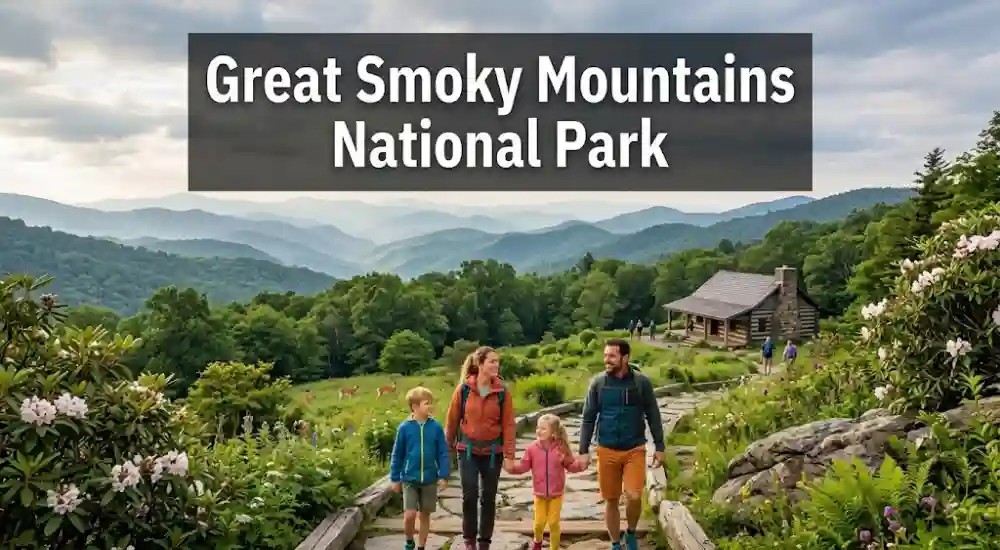
3. Great Smoky Mountains National Park
If you’re nervous about a first national park trip, start here. Great Smoky Mountains charges no entrance fee — the only major U.S. national park that doesn’t — and its trails are some of the gentlest in the entire park system.
Cades Cove, an 11-mile loop road, lets families spot black bears and deer without leaving the car, which is honestly the best wildlife-viewing setup for a three-year-old who’s not going to hike two miles for the payoff. Sugarlands Nature Trail, a flat, paved half-mile path right behind the main visitor center, is where we send first-timers with a stroller.
Good to know:
- Every vehicle parked more than 15 minutes needs a parking tag, sold by the day, week, or year — this fee replaced the old entrance fee model
- The free Junior Ranger program is available at every visitor center and genuinely holds a school-age kid’s attention for a couple of hours
- Fall brings the best foliage and the park’s heaviest crowds — if you can go in spring instead, do
- Summer afternoons bring reliable thunderstorms; schedule hikes for the morning
Cost tier: $ — this is one of the most budget-friendly national park trips on the list, especially with a rental cabin split among a larger group.
4. Yellowstone National Park, Wyoming
Yellowstone rewards patience more than any other destination on this list, which is exactly why it’s better suited to kids age 7 and up than to toddlers. Geysers erupt on their own schedule, wildlife viewing means waiting quietly at a turnout, and the distances between stops are real — this isn’t a park you “do” in an afternoon.
Old Faithful’s predictable eruption window makes it a low-stress first stop even with younger kids, since you’re not gambling on a wait. Hayden Valley is where we’ve had our best luck spotting bison and elk, usually early morning or right before dusk.
Good to know:
- Entrance fees are per vehicle and current as of 2026, but confirm before you go since rates shift
- Roads at higher elevations can stay snow-closed into May, which affects early-season trip planning
- In-park lodging books out months ahead for summer dates — this is not a “we’ll figure it out when we get there” trip
- Pack real layers, even in July; altitude and sudden weather changes are not exaggerated in the brochures
Cost tier: $$ — moderate once you factor in the drive time and gas between stops, but entrance and lodging costs are reasonable relative to Orlando or Tahoe.
5. Grand Teton National Park, Wyoming
Grand Teton gets bundled into “add-on to Yellowstone” by most guides, but it deserves its own entry — the terrain and the pace of a visit are genuinely different, and it’s an easier park for families who want dramatic scenery without Yellowstone’s longer drive times.
Jenny Lake sits about two hours south of Yellowstone’s main sites, making the two parks an easy combined trip. The boat shuttle across Jenny Lake, followed by a short walk to Hidden Falls, is one of the best low-effort, high-payoff hikes for families with younger kids on this entire list — you get the “we hiked to a waterfall” win without an actual full-day hike.
Good to know:
- Junior Ranger booklets are available at every visitor center, same as Yellowstone
- The park is far less crowded than Yellowstone at the same time of year, which matters if you’re traveling with a kid who doesn’t do well in lines
- Combine both parks in one trip only if you have at least 4–5 full days; trying to “see” both in 3 days means a lot of driving and not much actual park time
Cost tier: $$ — similar to Yellowstone; combined trips save on flights but not much else.
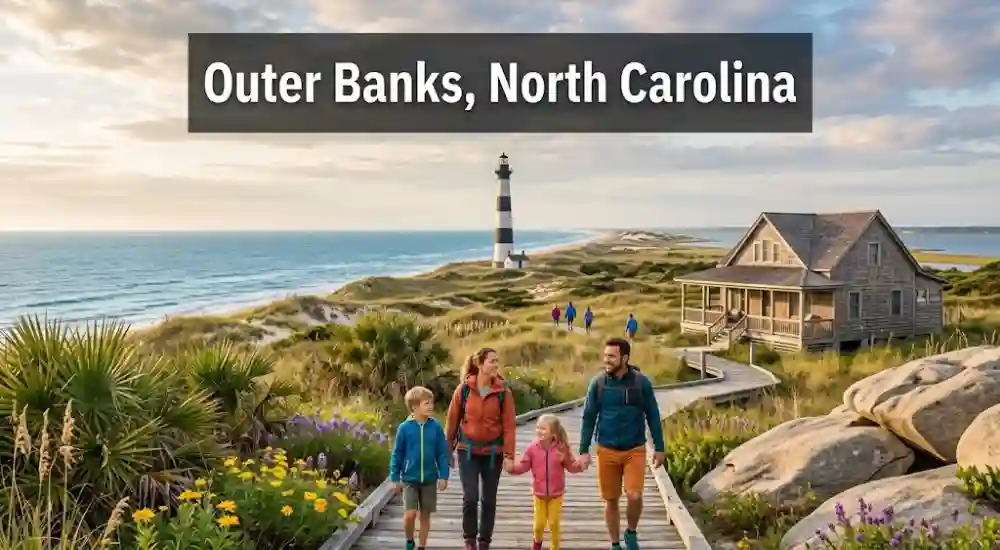
6. Outer Banks, North Carolina
The Outer Banks is for families who want a beach trip without a boardwalk. These barrier islands stretch across several distinct towns, with wide, uncrowded beaches even during peak weeks — the tradeoff is that you’ll need a car to get anywhere.
Good to know:
- Jockey’s Ridge State Park lets kids climb the tallest natural sand dunes on the East Coast for free — no ticket, no reservation
- Wild horses still roam parts of Corolla, which is a genuinely memorable sighting for kids who’ve only seen horses in a paddock
- Vacation rental homes often work out cheaper per person than hotel rooms once you’re traveling with more than four people
- Hurricane season runs through the fall, so a late-summer trip carries real weather risk worth checking before you book non-refundable stays
Cost tier: $$ — rentals aren’t cheap in peak weeks, but splitting a house among two families brings the per-person cost down considerably.
7. Gulf Shores and Orange Beach, Alabama
If Florida’s Gulf Coast is out of budget, Gulf Shores delivers the same white sand and warm, calm water for meaningfully less money. The waves here are gentle and the entry into the water is shallow, which makes it one of the better beach options for kids under 5.
Good to know:
- Gulf State Park has a long stretch of public beach with a pavilion, restrooms, and showers — no resort fee required to use it
- Many condo rentals include full kitchens, which cuts daily food costs meaningfully for a family of four
- Sand Castle University offers a hands-on beach activity for kids who tire of just swimming after day two
- Shoulder-season trips in May or September bring noticeably smaller crowds and lower rental rates than peak summer
Cost tier: $ — genuinely one of the most affordable beach weeks on this list.
8. Williamsburg, Virginia
Williamsburg solves a specific family problem: one parent wants history, the other wants roller coasters, and the kids want both. Colonial Williamsburg’s costumed interpreters turn a history lesson into something closer to interactive theater — kids can try trades, watch reenactments, and explore restored 18th-century buildings.
Busch Gardens, a few miles away, has its Sesame Street Forest of Fun area for toddlers and preschoolers plus real coasters for teens, and Water Country USA adds a water park option for the humid summer months.
Good to know:
- An annual pass to Busch Gardens often costs about the same as a two-day single ticket — worth it for anything longer than a quick visit
- Jamestown Settlement makes a good shorter, museum-style add-on if you have a spare half-day
- Arrive early for parking on peak summer days; lots fill up faster than you’d expect
Cost tier: $$ — a reasonable middle ground between a pure beach trip and a full Orlando-style theme park vacation.
9. Lake Tahoe, California and Nevada
Lake Tahoe is the rare destination that doesn’t force a choice between a lake trip and a mountain trip. Summer brings kayaking, paddleboarding, and swimming, and nearby trails range from flat lakeside walks to genuinely technical mountain biking for older kids.
Sand Harbor, on the Nevada side, has calm, exceptionally clear water that’s well-suited to younger swimmers. North Lake Tahoe tends to feel more low-key than the casino-heavy south shore, which many families with young kids prefer.
Good to know:
- Elevation sits above 6,000 feet — watch for altitude effects on younger kids, especially in the first 24 hours
- Summer weekends bring heavy boat traffic and genuinely crowded beach parking; arrive early
- Wildfire smoke has affected late-summer air quality in past seasons — check regional conditions before booking a late-August trip
- Winter turns the area into a full ski destination, with several resorts running kids’ lesson programs
Cost tier: $$$ — lodging around the lake runs high in summer; winter ski-season pricing is a separate, equally premium cost structure.
10. Rocky Mountain National Park and Estes Park, Colorado
Rocky Mountain National Park pairs genuinely alpine scenery with a walkable gateway town, which solves the biggest logistical headache of a mountain-park trip: what do you do with a tired kid at the end of the day when there’s no town nearby?
Sprague Lake’s flat, 0.8-mile loop is stroller-friendly and doesn’t require real hiking gear, which makes it a good option even for kids under 5. Bear Lake, at over 9,000 feet, has a short paved loop that’s more scenic but requires more supervision at elevation.
Good to know:
- Timed-entry permits are required during peak season for both the main park and Bear Lake Road — book through the official reservation system well ahead, since these sell out
- YMCA of the Rockies offers cabin-style lodging with a kids’ program, a genuinely budget-friendly base for the area
- Plan a slower first day; altitude affects kids differently than adults, and pushing a full hike on day one is a common mistake
Cost tier: $$ — Estes Park lodging is more affordable than most mountain-town alternatives.

11. Myrtle Beach, South Carolina
Myrtle Beach is the boardwalk-and-arcade beach trip many parents remember from their own childhood, and it delivers on that nostalgia without much planning. The wide beach and dense strip of mini-golf, water parks, and restaurants keep kids entertained with minimal itinerary-building required.
Good to know:
- Family Kingdom Amusement Park has rides sized for younger kids alongside bigger coasters for teens
- Broadway at the Beach combines an aquarium, mini-golf, and shopping in one walkable area — a solid rainy-day fallback
- Many hotels sit directly on the beach, which cuts down on daily transportation
- Rip currents do occur here; check flag warnings and stay near a lifeguard stand
Cost tier: $ — one of the most budget-friendly boardwalk-style beach trips available.
12. Zion National Park, Utah
Zion pairs some of the most dramatic canyon scenery in the National Park System with a shuttle system that removes the stress of mountain driving entirely — you park once and let the park bus handle the rest.
Riverside Walk, a flat, paved 2.2-mile round trip along the Virgin River, is the easiest real hike in the park and works for kids as young as 4. The Narrows — a hike through the river itself — is a different story entirely and suits older kids with strong footing, proper water shoes, and close supervision.
Good to know:
- Junior Ranger booklets are available for kids 4 and up
- Summer canyon heat regularly tops 100°F — plan hikes for early morning, not midday
- Never let kids near cliff edges unsupervised; several of the park’s most photographed viewpoints have steep, unguarded drops
- Nearby Springdale offers family lodging within walking distance of the park entrance, which is worth the slight premium
Cost tier: $$ — moderate; the shuttle system also saves on the hidden cost of a rental car upgrade for mountain roads.
13. New York City
New York works better for families than most parents expect, on the condition that you’re willing to embrace a walking-heavy trip. The American Museum of Natural History alone can fill a full day, and Central Park stacks multiple playgrounds, a zoo, and open lawns into one car-free afternoon.
This is a better fit for school-age kids and teens than for toddlers — strollers face real friction with subway stairs and crowded platforms, and much of the city rewards a kid’s own curiosity and independence more than a younger child’s shorter attention span.
Good to know:
- Brooklyn Bridge Park has nine separate playgrounds spread along the waterfront — genuinely one of the best free family spaces in the city
- The subway is the most efficient way to get around, but not every station has an elevator; check accessibility if you’re using a stroller
- Hotel rooms run smaller than in most U.S. cities — book a family room or suite well ahead
- Summer humidity gets intense; plan indoor museum time for the hottest part of the afternoon
Cost tier: $$$ — flights, hotels, and food in Manhattan are consistently among the most expensive on this list.
14. Washington, D.C.
Washington, D.C. deserves a spot on this list for one reason competing guides underweight: the Smithsonian museums are free, which makes it one of the very few major-city trips where you can fill 4–5 full days of genuinely engaging activity without buying a single ticket.
The National Air and Space Museum and the National Museum of Natural History are the two that hold a kid’s attention longest. The National Zoo, also free, is a full-day destination on its own. This trip suits kids 8 and up better than younger children — a lot of the value here is historical and educational rather than purely sensory.
Good to know:
- The Metro is straightforward and mostly stroller-accessible, though some older stations lack elevators
- Cherry blossom season (late March to early April) brings the year’s biggest crowds — spring without the blossoms, or early fall, is far calmer
- Most museums require free timed-entry passes during peak season; reserve them online before you go
- Hotel prices spike hard during major events and cherry blossom season — book outside those windows for meaningfully lower rates
Cost tier: $$ — the free museums make this one of the better value city trips despite mid-range hotel costs.
15. Coastal Maine
Coastal Maine suits families who want scenery and quiet over a packed itinerary. MidCoast Maine’s small towns sit along the route between Portland and Acadia National Park, making it easy to combine a coastal stop with a national park visit in one trip.
Marginal Way, a paved cliff walk in Ogunquit with benches along the route, is an easy, low-effort activity that works for tired legs of any age. Tide pools along the rocky coast give kids a genuinely engaging, entirely free nature activity at low tide.
Good to know:
- Water stays cold even in summer — pack wetsuits if your kids plan to swim for more than a few minutes at a time
- A car is necessary to move between towns in this region; there’s no substitute for it
- Summer parking near popular coastal towns fills early; arrive before mid-morning
- Lobster shacks and casual seafood spots make dining with kids simple and low-stress
Cost tier: $$ — moderate, though peak-season coastal lodging climbs quickly in July and August.
16. New England Lakes: Winnipesaukee and Lake George
Further inland, Lake Winnipesaukee in New Hampshire and Lake George in New York’s Adirondacks offer a similar slower rhythm to coastal Maine, with the added benefit of warmer swimming water.
Winnipesaukee’s Weirs Beach area has a boardwalk plus a nearby indoor water park — genuinely useful on a rainy day, which is rarer at a lake destination than a beach one. Lake George suits families who want swimming, boating, and easy hikes without the driving distances a mountain-park trip requires.

Good to know:
- Both lakes are warm enough for comfortable swimming by mid-June, unlike coastal Maine
- Boat rentals are widely available and don’t require prior experience for calm-water paddling
- A car is necessary in both regions; public transit options are minimal
- Early-summer trips (before July 4th) mean noticeably smaller crowds and lower rental rates
Cost tier: $$ — cabin and lakehouse rentals bring the per-night cost down for larger groups.
Choosing a Trip by Your Kids’ Ages
The single biggest factor in whether a family trip works isn’t the destination — it’s whether the destination fits your kids’ current stage. Here’s how we’d match trip type to age, based on what actually holds up in practice rather than what looks good in a brochure.
Infants (0–12 months): Prioritize simple logistics over sightseeing. An all-inclusive resort or a quiet beach cuts down on the packing and planning overhead, since your baby won’t remember the destination — you’re really optimizing for your own sanity.
Toddlers (1–4 years): Look for playgrounds, short walks, and flexible schedules. Skip anything built around long hikes or fine dining; both will fight your toddler’s actual capacity, not complement it.
School-age (5–12 years): This is the sweet spot for national parks. Junior Ranger programs give kids a clear, structured goal, which turns a “walk in nature” into something they’ll actually engage with.
Teens (13+): Build in real choices — a mix of city sightseeing, water activities, and unstructured free time. A single all-day theme park itinerary tends to underserve teens who want more independence and a say in the plan.
Mixed-age families: Destinations like Williamsburg or San Diego work well because they naturally separate activities by age rather than forcing one itinerary on everyone.
Multigenerational trips: Favor destinations with varied pacing — grandparents and toddlers often need surprisingly similar rest breaks, which makes a slower-paced trip like coastal Maine a better fit than a fast-moving city itinerary.
Budgeting a Family Trip: Budget, Mid-Range, and Splurge {#budget}
Budget and luxury family trips both work, but they call for different planning, and neither guarantees a better trip for the kids. A five-star resort means little to a four-year-old who mainly wants a pool and a playground.
Budget approach
- Choose destinations with free entry — a fee-free national park (Great Smoky Mountains) or a public beach
- Book condo or vacation-rental units with kitchens to cut daily food costs
- Travel shoulder season, when lodging rates can run 20–40% below peak summer pricing
Mid-range approach
- Mix a few paid attractions with free days
- Split lodging between a hotel with breakfast included and a rental with kitchen access
- Book flights 3–6 months ahead, which generally secures meaningfully better fares than last-minute booking
Splurge approach
- Look for resorts with supervised kids’ clubs, which buy parents real downtime
- Book direct flights to cut travel-day stress, especially with younger kids
- Consider private tours at high-traffic destinations to avoid the longest lines
Hidden costs to watch for: park parking fees, resort fees, and optional add-ons like character breakfasts or timed-entry booking fees can add several hundred dollars to a trip that looked affordable at the booking stage. Ask about kids-stay-free or kids-eat-free deals before you book — most major hotel chains offer some version of this, and it’s rarely advertised prominently.
Best Time of Year to Travel With Kids
| Season | What to expect | Best for |
| Spring (March–May) | Mild weather, wildflowers, lower crowds at national parks | Most destinations, especially parks and beaches |
| Summer (June–August) | Highest prices, heaviest crowds, but the only real option for school-age families | Mountain lakes, ski-town-turned-summer destinations |
| Fall (September–November) | Comfortable temperatures, foliage, thinner crowds after Labor Day | National parks, city trips |
| Winter (December–February) | Best for ski trips or warm-weather escapes; reduced park services elsewhere | Lake Tahoe (skiing), Gulf Coast beaches |
A few timing factors worth planning around specifically:

- Hurricane season (roughly June–November) affects Gulf Coast and Atlantic beach trips. Check forecasts a few days before departure rather than months ahead — long-range hurricane predictions aren’t reliable enough to plan around that far out.
- Wildfire season can affect air quality in parts of the West during late summer. Check regional air quality reports before a late-August trip to Tahoe or the Rockies.
- School holiday weeks (spring break, winter break) carry premium pricing even outside peak summer months — plan for this if your trip is locked to a school calendar.
What to Pack, by Trip Type
Packing lists get repetitive fast, so here’s the version organized by what actually changes between trip types, not a generic everything-list.
Beach trips (Outer Banks, Gulf Shores, Myrtle Beach): Reef-safe sunscreen, a rash guard for extended sun exposure, water shoes for rocky entry points, and a cheap pop-up tent for shade — beach umbrellas rarely survive real wind.
National parks (Smokies, Yellowstone, Zion, Rocky Mountain): Layers regardless of season — mountain weather changes fast. Real hiking shoes, not sandals, even for “easy” trails. A paper map as backup; cell service is unreliable in most parks.
Theme parks (Orlando, Williamsburg): A portable phone charger for photo-heavy days, a small first-aid kit for blister prevention, and refillable water bottles — most parks allow them through security and it saves real money over the day.
Cities (NYC, Washington, D.C.): A lightweight, umbrella-style stroller even for kids who normally walk — subway stairs and long museum days wear out little legs fast. Comfortable walking shoes for the whole family, non-negotiable.
High-altitude trips (Tahoe, Rocky Mountain, Yellowstone): Extra water, since dehydration hits faster at elevation. A plan for a slower first day to let kids acclimate before a full hike.
Frequently Asked Questions
What is the best age to start traveling with kids?
There’s no single right age. Many parents find travel gets easier once a baby has a steady sleep routine, often around 4 to 6 months. The stretch between roughly 9 months and 3 years tends to be the most physically demanding for parents, mainly because kids that age have mobility without much patience for waiting.
How many days should a family spend at a national park?
Two to three full days is usually enough for a first visit to a major park like Yellowstone or Zion. This allows time for a couple of easy hikes, a Junior Ranger program, and rest breaks without feeling rushed.
Is Orlando good for toddlers?
Yes, though toddlers get more value from character meet-and-greets, splash pads, and pool time than long ride lines. Plan shorter park days with a midday break back at the hotel to avoid overtiring young kids.
Do you need a car for a family beach trip?
It depends on the destination. Compact beach towns like parts of Myrtle Beach or Gulf Shores can work without one if your hotel sits near the main strip. Spread-out areas like the Outer Banks or coastal Maine generally require a car.
What’s the cheapest national park to visit with kids?
Great Smoky Mountains is the most budget-friendly major park on this list, since it charges no entrance fee at all — only a parking tag for extended stays. Combined with a rental cabin split among a group, it’s one of the least expensive multi-day trips here.
What are the best free things to do with kids on a family trip?
Public beaches, national park scenic drives, city parks, and free museum days (many major museums offer them monthly) all give kids a full activity without extra cost. Tide pools, wildlife viewing areas, and Junior Ranger programs are also free once you’re inside a park. Washington, D.C.’s Smithsonian museums are free year-round.
Is it worth booking national park timed-entry permits in advance?
Yes, for parks that require them during peak season, since some sell out weeks ahead. Rules and specific parks requiring permits have changed from year to year, so confirm current requirements on the park’s official website before your trip.
What’s the easiest type of family vacation to plan?
An all-inclusive resort or a single-base beach trip tends to require the least logistics, since meals, activities, and lodging are handled in one place. Multi-stop road trips and national park trips take more upfront planning around reservations and driving time.
Beach trip or national park — which is better for a first family trip?
If your kids are under 5, start with a beach trip; the lower planning overhead and forgiving schedule matter more at that age than scenery. Once kids are old enough for the Junior Ranger program, around 5, a national park trip tends to deliver more lasting memories per dollar spent.
Conclusion
The best places to travel with kids in 2026 come down to one decision: match the destination to the kids you actually have, not the trip you wish you could take.
A theme park trip to Orlando or San Diego offers the least logistical friction and the widest age range covered in one place. A national park like Zion or Great Smoky Mountains rewards families ready for a little more outdoor time and a slower pace. A beach week in Gulf Shores or the Outer Banks is still the easiest way to stretch a limited budget across a full week.
Whatever you choose, book the time-sensitive reservations — park permits, in-park lodging, popular ticketed attractions — as early as your plans allow, and build in at least one rest day for every three days of activity. Start with the destination that matches how your family already likes to spend a weekend at home, and the rest of the planning tends to fall into place from there.