
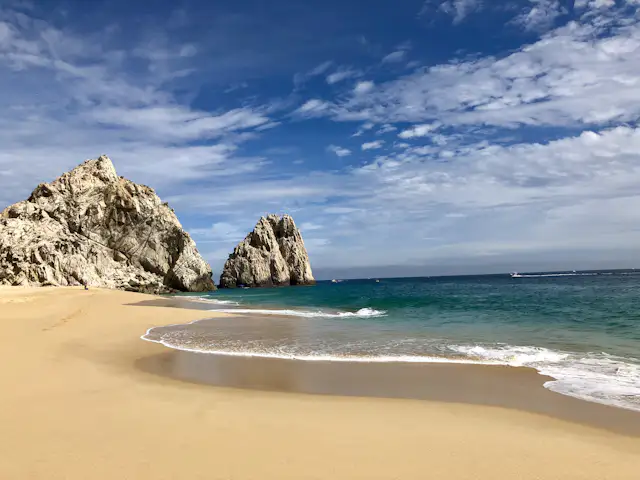
The best time to visit Cabo is November through April, when Los Cabos sees its driest, sunniest weather, with highs typically between 75–85°F (24–29°C) and virtually no rain. This window also overlaps with prime humpback and gray whale watching season, which peaks in January and February, making it the most popular — and most expensive — stretch of the year to visit.
This guide breaks Cabo San Lucas down month by month, covering peak season, whale watching timing, hurricane season risk, and the shoulder months that offer real savings without sacrificing much in the way of weather. You’ll also find guidance on how Baja California Sur’s location affects hurricane exposure differently than mainland Mexican Pacific or Caribbean destinations.
Quick Answer
The best time to visit Cabo San Lucas is November through April, the dry season with the most reliable sunshine and the best whale watching, peaking in January and February. For real savings without much weather trade-off, target May, June, October, or early November, which offer 20–30% lower prices than peak season. September is the single cheapest month, but it falls squarely within hurricane season and brings real heat and humidity.
TL;DR
- Best overall season: November through April — dry, sunny, and peak whale watching
- Peak whale watching: January and February, when humpback activity in the bay is highest
- Best value with good weather: May, June, October, and early November — 20–30% below peak pricing
- Cheapest month overall: September, with rates sometimes 40–50% below peak, but hot, humid, and within hurricane season
- Hurricane season: June 1 through November 30, with September carrying the highest statistical risk
- Busiest, priciest months: December through February, especially around New Year’s and Valentine’s Day
Cabo’s Climate and Why Its Hurricane Risk Is Different
Cabo San Lucas sits at the southern tip of the Baja California Peninsula, separated from mainland Mexico by the Gulf of California. This geography matters: unlike Caribbean or Gulf Coast destinations, Los Cabos’ hurricane risk comes from the Eastern Pacific hurricane season, and while the region is genuinely exposed to tropical storms, the peninsula’s shape and orientation mean not every storm that forms nearby makes a direct impact.
The dry season (roughly November–May) brings almost no rainfall at all, low humidity, and consistently warm, sunny days. The wet season (roughly June–October) coincides with hurricane season and brings higher humidity, occasional heavy rain, and the year’s only real chance of storm disruption.
Best Time for Whale Watching
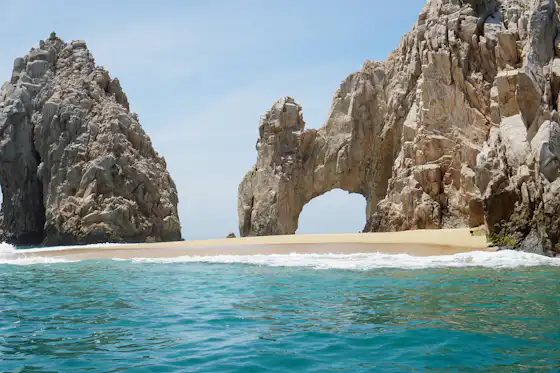
Cabo is one of the world’s top spots for humpback and gray whale watching, with the season running roughly mid-December through March. Within that window, January and February are considered peak, when humpback whale activity in the bay is at its highest and sightings from tour boats — and even some oceanfront properties — are close to a daily occurrence. Whale-watching tours book up quickly during this stretch, so reserve through a reputable local operator at least several days ahead, especially in January and February.
For a different marine spectacle, May and June bring the mobula ray aggregation, when large “fevers” of rays gather in the surrounding waters — a notable draw for divers and snorkelers outside the main whale season.
Best Time for Dry, Sunny Weather
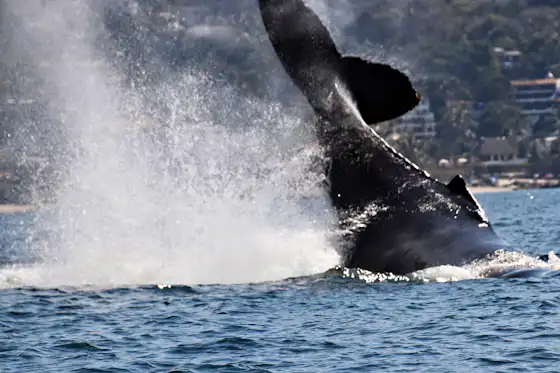
If reliable sunshine is the priority, November through April delivers Cabo’s most consistent weather: highs in the mid-70s to mid-80s°F, low humidity, and next to no rain. Within that stretch, February is often singled out as close to perfect — cool enough to be comfortable, dry, sunny, and with whale sightings still going strong — though it comes at peak pricing and requires booking two to three months ahead for good availability.
Best Time to Avoid Hurricanes
The Eastern Pacific hurricane season affecting Cabo San Lucas runs officially from June 1 through November 30, with September carrying the highest statistical risk according to patterns tracked by the National Hurricane Center. Direct hurricane hits on Los Cabos aren’t a yearly certainty, but the risk of heavy rain, rough seas, and travel disruption is real enough during this window that travel insurance covering storm-related cancellations is a sensible precaution if you’re traveling June through November.
Best Time for Value: Shoulder Season and Deep Off-Season
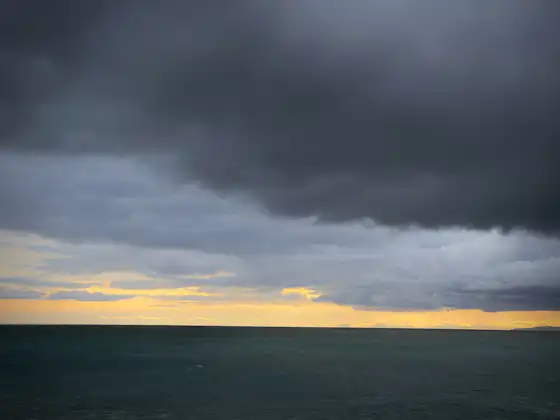
For travelers chasing savings without giving up much on weather, May, June, October, and early November are the strategic picks — expect roughly 20–30% lower prices than peak season, with still-excellent conditions and noticeably thinner crowds than the December–April rush. Early June in particular tends to feel like an extension of spring: warm, mostly dry, and before hurricane season fully ramps up.
September is the single cheapest month of the year, with luxury rental rates sometimes running 40–50% below peak season, and August comes in as the second-cheapest. Both months fall squarely within hurricane season and bring genuine heat and humidity, so this window suits deal-focused travelers and remote workers more than anyone chasing ideal beach weather.

Month-by-Month Breakdown
| Month | Weather | Hurricane Risk | Crowds | Notes |
|---|---|---|---|---|
| January | Dry, sunny, mild | None | Very high | Peak whale season begins; New Year crowds |
| February | Dry, sunny, “the perfect month” | None | Very high | Peak whale watching; book 2-3 months ahead |
| March | Dry, sunny, warming | None | Very high | Spring break crowds; whale season continues |
| April | Dry, sunny | None | High | Whale season tapers; still popular |
| May | Warm, mostly dry | Low (season starts June 1) | Medium | Strong value window; mobula ray season begins |
| June | Warm, humidity rising | Low-medium | Medium | Good value; mobula rays peak |
| July | Hot, humid | Medium | Medium-low | Warm water, occasional rain |
| August | Hot, humid | Medium-high | Low | Second-cheapest month; real heat |
| September | Hottest, most humid | Highest | Lowest | Cheapest month of the year; hurricane peak |
| October | Cooling, warm ocean | Medium (risk ends mid-month) | Low-medium | Good value; pivot month as season winds down |
| November | Dry, cooling, pleasant | None (after Nov 30) | Medium (rising) | One of the most balanced months for weather and price |
| December | Dry, festive | None | Very high | Holiday season; yacht charters and NYE events |
Weather patterns reference multiple current sources on Los Cabos seasonal conditions; conditions vary by year, so check closer-term forecasts before traveling, especially during hurricane season.
Best Time by Traveler Type
Whale watchers: January and February for peak humpback activity, or December and March for a quieter version of the same experience.
Budget travelers: September for the deepest discounts (accepting heat, humidity, and hurricane-season risk), or May/June/October/early November for a gentler value-to-weather trade-off.
Families: March aligns with many school spring breaks and adds whale watching as a bonus, though it’s one of the most crowded months — book well ahead.
Couples and honeymooners: Late April through early June offers warm, relaxed conditions with fading spring-break crowds — a favorite window for a quieter, more romantic trip.
Divers and snorkelers: May and June for the mobula ray aggregation, or the dry winter months for generally calmer, clearer water.
Remote workers and long-stay travelers: Late summer (August–September) offers the lowest rates of the year for extended stays, provided you’re comfortable with heat and some storm risk.
Anglers: Peak sport fishing season aligns with the dry winter months, when marlin and other game fish are most abundant and fishing tournaments cluster.
Common Mistakes to Avoid
- Booking February on short notice. It’s widely considered one of the best months in Cabo, and availability tightens fast — book two to three months ahead if you want this window.
- Assuming hurricane season means constant storms. Direct hits aren’t guaranteed every year, but the risk is real enough from June through November that travel insurance is worth having.
- Skipping shade planning for a summer beach day. Cabo’s beaches offer little natural shade, making midday summer sun genuinely intense without a rented umbrella or shaded area.
- Overlooking shoulder months for value. May, June, October, and early November offer real savings with only modest weather trade-offs compared to peak season.
- Not booking whale-watching tours early enough. January and February tours fill quickly, especially with reputable operators — reserve several days ahead at minimum.
- Confusing Cabo’s hurricane pattern with Caribbean hurricane season. Cabo faces the Eastern Pacific season, which runs on a similar calendar but is a geographically distinct system.
Frequently Asked Questions
What is the single best month to visit Cabo San Lucas?
February is frequently cited as the standout choice — dry, sunny, comfortably warm, and right in the middle of peak whale-watching season, though it also carries the highest prices and requires early booking.
When is whale watching best in Cabo?
January and February offer the most consistent, frequent humpback whale sightings, with the overall season running from roughly mid-December through March.
Is Cabo San Lucas affected by hurricanes?
Yes, though risk is concentrated in the Eastern Pacific hurricane season from June through November, peaking in September. Direct hits aren’t a yearly certainty, but travel insurance is a sensible precaution during this window.
What’s the cheapest time to visit Cabo?
September typically offers the lowest prices of the year, sometimes 40–50% below peak season, though it comes with heat, humidity, and the highest hurricane risk. For savings with a gentler weather trade-off, consider May, June, October, or early November instead.
Does Cabo get much rain?
Very little overall, and almost none during the dry season (November–May). Most of the year’s rainfall falls during the wet/hurricane season, roughly June through October.
Is Cabo good for a summer trip?
It can be, particularly for value-focused or remote-working travelers, but expect real heat, humidity, and limited beach shade, along with a real (if not constant) hurricane risk.
How far ahead should I book for peak season?
For January and February specifically, two to three months ahead is a reasonable target, especially for well-located resorts and in-demand whale-watching tours.
Final Thoughts
The best time to visit Cabo San Lucas comes down to what you’re optimizing for: November through April delivers the most reliable dry weather and the best whale watching, but at peak prices and with the biggest crowds, especially in January and February. If you’d rather trade a little weather certainty for real savings, May, June, October, and early November hit a strong middle ground, while September rewards travelers chasing the deepest discounts and comfortable with hurricane-season risk.
Whatever window you choose, book whale-watching tours and peak-season accommodation well ahead, consider travel insurance if you’re traveling June through November, and plan for shade if a summer beach day is part of your trip. With the right timing, Cabo delivers warm weather and dramatic Baja scenery in nearly any month.