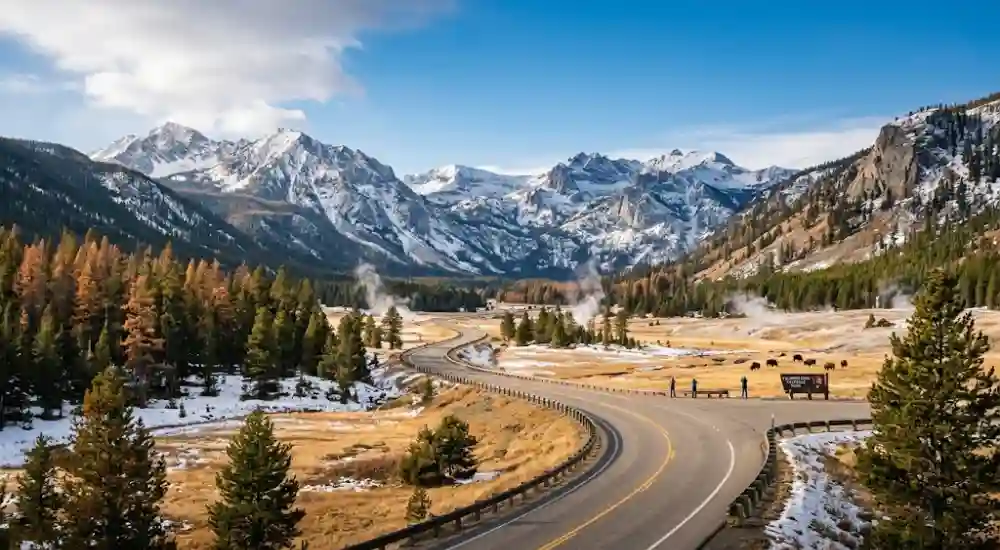
The best time to visit Yellowstone is late May through September, when all park roads are open, wildlife is active, and every attraction — from Old Faithful to the backcountry trails — is fully accessible. For fewer crowds with still-good access, aim for late May, June, or September. If you specifically want a quiet, snowy winter experience, the park is only reachable via guided snowcoach or snowmobile from mid-December through mid-March.
Quick Answer: TL;DR
- Best overall window: Late May–September (full road access)
- Best for fewer crowds with good access: Late May, June, and September
- Peak crowds: July and August
- Best for wildlife viewing: Dawn and dusk, year-round, with spring (newborn animals) and fall (elk rut) as standout windows
- Winter access: Mid-December–mid-March, guided snowcoach/snowmobile only on most interior roads
- Roads mostly closed: Early November–mid-April (except the year-round Gardiner–Cooke City road)
- Elk rut season: September–October, best near Mammoth Hot Springs and Gardiner
If you’re planning around the best time to visit Yellowstone, the single most important thing to understand first isn’t the weather — it’s road access. Most of the park’s interior roads physically close to regular vehicles for roughly six months of the year, which affects trip planning far more than temperature or crowd size alone.
This guide covers when the park is fully open, when wildlife is most visible, how to time a visit around the September–October elk rut, and what winter access actually looks like if you want to see Old Faithful in the snow. You’ll also find a road opening and closing date reference and honest notes on wildfire smoke risk in late summer.
Understanding Yellowstone’s Road Access by Season
This is the fact that shapes everything else: most of Yellowstone’s interior roads close to regular vehicle traffic in early November and don’t reopen until mid-April, with full opening typically completed by late May as higher-elevation passes clear. The only road open to cars year-round is the stretch from the North Entrance at Gardiner, Montana, through Mammoth Hot Springs to the Northeast Entrance near Cooke City.
During winter (mid-December through mid-March), the interior — including Old Faithful, the Grand Canyon of the Yellowstone, and Fishing Bridge — is only reachable by guided snowcoach or snowmobile, or through the limited non-commercially guided snowmobile permit program. Between roughly November 1 and mid-December, and again from mid-March to mid-April, most interior roads are closed entirely to any travel while crews prepare for the next season — this is genuinely the least accessible window of the year.
Best Time for Wildlife Viewing
Yellowstone offers strong wildlife viewing nearly year-round, but timing changes what you’re likely to see. Spring (April–May) is prime time for newborn bison, elk, and bear cubs emerging from hibernation, with animals concentrated at lower elevations as snow melts. Summer offers the widest range of accessible viewing areas, though animals tend to be more active at dawn and dusk and retreat from midday heat. Fall (September–October) brings the dramatic elk rut, plus active bears building up fat reserves before winter.
Regardless of season, the most reliable wildlife-viewing strategy is timing your drives for early morning and early evening, when animals are most active and temperatures are cooler. The Lamar Valley and Hayden Valley are consistently strong locations for large mammal sightings.
Best Time to Avoid Crowds
Yellowstone’s busiest season is late May through September, with July and August drawing the heaviest visitor numbers of the year. For a genuinely quieter experience without sacrificing road access, target the edges of that window: late May, early June, or mid-to-late September. Crowds thin out noticeably in October as services and roads begin closing for the season, and drop dramatically from November through April when most of the interior is inaccessible by car.
Best Time for Hiking and Waterfalls
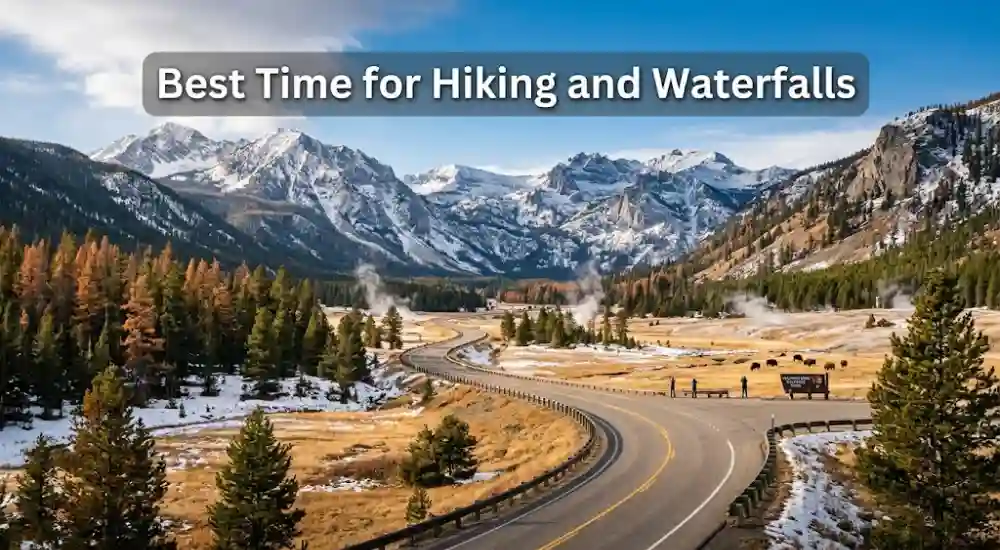
Peak hiking season runs from June through September, once high-elevation trails have cleared of snow and become passable. Waterfalls, including the Lower Falls of the Yellowstone River, run at their most powerful during the late spring snowmelt (May–June), tapering somewhat by late summer. Trail accessibility can vary significantly by elevation, so early-season hikers (May) should expect lingering snow on higher routes even while lower valley trails are clear.
Best Time for Winter Activities
Yellowstone’s winter season officially runs from mid-December through mid-March, and it’s one of the most distinctive ways to experience the park: steaming geyser basins against snow-covered landscapes, far fewer visitors, and active wildlife tracking opportunities for wolves and other cold-weather species. Access requires a guided snowcoach or snowmobile tour, or a permit through the park’s non-commercially guided snowmobile program — self-driving into the interior isn’t possible during this period. Lodging is limited to Old Faithful Snow Lodge and Mammoth Hot Springs Hotel, both of which should be booked well in advance.
The Elk Rut: A Fall Highlight Worth Timing Around
Late September into October brings Yellowstone’s elk rut, when bull elk bugle and spar to compete for mates — a genuinely dramatic wildlife spectacle best observed near Mammoth Hot Springs and Gardiner. This is a strong reason to consider a September trip specifically, though visitors should maintain a safe distance (at least 25 yards) and never approach rutting elk, which have injured visitors who got too close in the past.
Wildfire Season Considerations
Late summer, particularly August, carries an elevated wildfire risk in and around Yellowstone, which can occasionally affect air quality or, in rare cases, trail and road access. This isn’t a reason to avoid summer entirely, but travelers with respiratory sensitivities or firm sightseeing plans should check current park alerts and regional fire conditions close to their travel dates rather than assuming clear skies are guaranteed.
Road Opening and Closing Reference
| Period | Access | Notes |
|---|---|---|
| Early November–mid-December | Most interior roads closed entirely | Least accessible window of the year; only the Gardiner–Cooke City road stays open |
| Mid-December–mid-March | Guided snowcoach/snowmobile only | Interior attractions reachable only via oversnow travel |
| Mid-March–mid-April | Roads closed for spring plowing | Crews clear winter snowpack; limited to no interior access |
| Mid-April–late May | Roads reopening in stages | Lower-elevation roads open first; higher passes follow through May |
| Late May–October | All roads generally open | Full park access; conditions permitting |
| Early November | Roads begin closing again | Cycle restarts |
Confirm exact dates before traveling — the park adjusts opening and closing dates annually based on snowfall and conditions, so always check current status directly with the National Park Service ahead of a shoulder-season trip.
Best Time for Photography
Photographers get standout conditions across several windows: winter for steam-shrouded geysers against snow, spring for wildflowers and newborn wildlife, and fall for golden foliage paired with the elk rut. Early morning light in any season also tends to produce the clearest geyser-steam photography, before midday winds disperse it.
Common Mistakes to Avoid
- Planning a spring trip without checking road status — many interior roads remain closed well into April and even May
- Assuming you can self-drive in winter — most interior access requires a guided snowcoach or snowmobile
- Booking winter lodging late — only two properties operate inside the park in winter, and they fill up
- Approaching wildlife, especially during the fall elk rut — stay at least 25 yards away at all times
- Ignoring wildfire smoke risk in August without checking current conditions
- Expecting midday wildlife activity — animals are far more visible at dawn and dusk
Frequently Asked Questions
Is Yellowstone open in winter?
Yes, but access is limited to guided snowcoach or snowmobile travel from mid-December through mid-March. The road from Gardiner through Mammoth Hot Springs to Cooke City is the only route open to regular vehicles year-round.
When do Yellowstone’s roads open in spring?
Roads generally begin reopening to regular vehicles in mid-April, with full access to most of the park typically achieved by late May, depending on snowfall and conditions each year.
What is the best month to avoid crowds in Yellowstone?
Late May, June, and September offer a good balance of full road access and noticeably lighter crowds compared to the July–August peak.
When is the elk rut in Yellowstone?
The elk rut typically runs from late September into October, with strong viewing opportunities near Mammoth Hot Springs and Gardiner.
Is Yellowstone affected by wildfires?
Late summer, particularly August, carries elevated wildfire risk in the region, which can occasionally impact air quality. Check current park alerts before travel if this is a concern.
What is the best time to see wildlife in Yellowstone?
Early morning and early evening offer the best wildlife viewing year-round, with spring best for newborn animals and fall standing out for the elk rut and active bears.
Final Thoughts
The best time to visit Yellowstone comes down to matching your priorities to what’s actually accessible. For most travelers wanting full access to geysers, trails, and wildlife in one trip, late May through September is the clear answer, with June and September offering the strongest balance of good weather and manageable crowds. If a quieter, snow-covered experience appeals to you, winter (mid-December to mid-March) delivers something genuinely different — just plan around guided access and limited lodging well in advance.
Whatever season you choose, check current road status before finalizing shoulder-season plans, book winter lodging early, and keep a respectful distance from wildlife, especially during the fall rut. With the right timing, Yellowstone delivers on every front, from geothermal wonders to some of the best wildlife viewing in North America.
Related reading: Best National Parks to Visit in the USA, and Where to Travel in Summer 2026, which covers Yellowstone and nearby Grand Teton in more detail.
Source: National Park Service, Yellowstone National Park, for current road status and alerts.