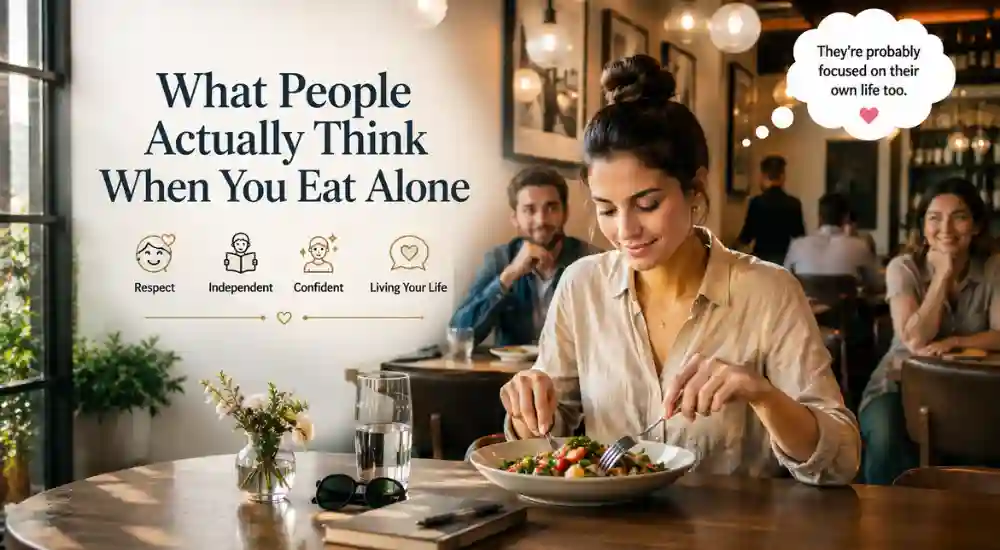
Eating alone in restaurants often feels uncomfortable for many people, even though it is completely normal. Most of us are used to social dining, so sitting alone can trigger fear of judgment, awkwardness, or the thought that others are watching. This feeling is linked to social pressure, not reality. In truth, more people today are choosing solo dining as part of a modern and independent lifestyle.
With the rise of solo travel, remote work, and self-care habits, eating alone in restaurants is becoming more common and accepted worldwide. What once felt strange is now seen as a sign of confidence and independence. Instead of avoiding it, learning to enjoy dining alone can help reduce anxiety, improve self-awareness, and create a peaceful experience. This guide will help you understand, accept, and confidently enjoy eating alone in restaurants.
Why Eating Alone in Restaurants Feels So Difficult
Many people feel uncomfortable with eating alone in restaurants because we are socially trained to believe that meals are a shared experience. From family dinners to friends’ hangouts, most dining situations involve groups. This social conditioning makes solo dining feel unusual, even when it is completely normal.
Another major reason is the fear of being judged in public spaces. People often think others are watching them or assuming they have no company. In reality, most people are focused on their own meals and experiences, not strangers.
However, this mindset is changing quickly. Around the world, solo dining is becoming more normal, especially in cities where independence is common. The rise of the independent lifestyle, solo travel culture, and self-care habits has made eating alone a regular part of modern life, not something to feel embarrassed about.
Is It Normal to Eat Alone in Restaurants?
Yes, eating alone in restaurants is completely normal today. Modern dining behavior has changed a lot, and people no longer always eat in groups. Many individuals now prefer solo dining as part of their daily routine, especially in busy cities and during travel.
Recent global trends show a clear increase in solo dining acceptance, with more people choosing independence over waiting for company. Restaurants have also adapted by creating comfortable spaces for individuals, such as counter seating, small tables, and flexible dining setups designed for solo guests.
This shift is slowly breaking the old stigma around eating alone. What once felt “awkward” is now seen as a normal and even confident lifestyle choice.
The Psychology Behind Feeling Awkward When Eating Alone
The discomfort of eating alone in restaurants is mostly psychological, not real. One major reason is fear of judgment, where people believe others are observing and evaluating them. This is often called social visibility bias, where we overestimate how much attention others actually give us.
Another common thought is the feeling that “everyone is watching me,” which is a cognitive distortion created by anxiety, not reality. In truth, most people are focused on their own meals, not strangers around them.
It is also important to understand the difference between social anxiety and introversion. Introverts simply enjoy being alone, while social anxiety involves fear of being judged. Because of this, the brain often exaggerates attention from others, making solo dining feel more uncomfortable than it really is.
Difference Between Loneliness and Solitude
Many people confuse loneliness with solitude, but they are completely different experiences. Emotional loneliness happens when someone feels disconnected or unwanted, while chosen solitude is a personal decision to enjoy time alone in a peaceful way. When you go for eating alone in restaurants, it does not mean you are lonely—it simply means you are comfortable with your own company.
Solo dining is not emotional isolation. In fact, it can be a powerful moment of self-connection, where you focus on your thoughts, food, and surroundings without distraction. Instead of feeling empty, it can feel calming and refreshing when understood correctly.
Reframing alone time as self-connection helps change your mindset. It allows you to see solo dining as a healthy lifestyle habit rather than something negative or embarrassing.
Why People Fear Eating Alone in Public
The fear of eating alone in public often comes from social norms and cultural pressure. Many societies teach that meals should be shared, so sitting alone can feel “different” or unusual even when it is perfectly normal.
Another common fear is looking “unwanted” or “friendless”. This thought is not based on reality but on internal insecurity. People assume others are judging them, even though most individuals are focused on their own lives.
Media and social expectations also play a big role. Movies, TV shows, and social media often show group dining as the standard, which creates pressure to always be accompanied. Over time, this builds unnecessary discomfort around solo dining.
Benefits of Eating Alone in Restaurants
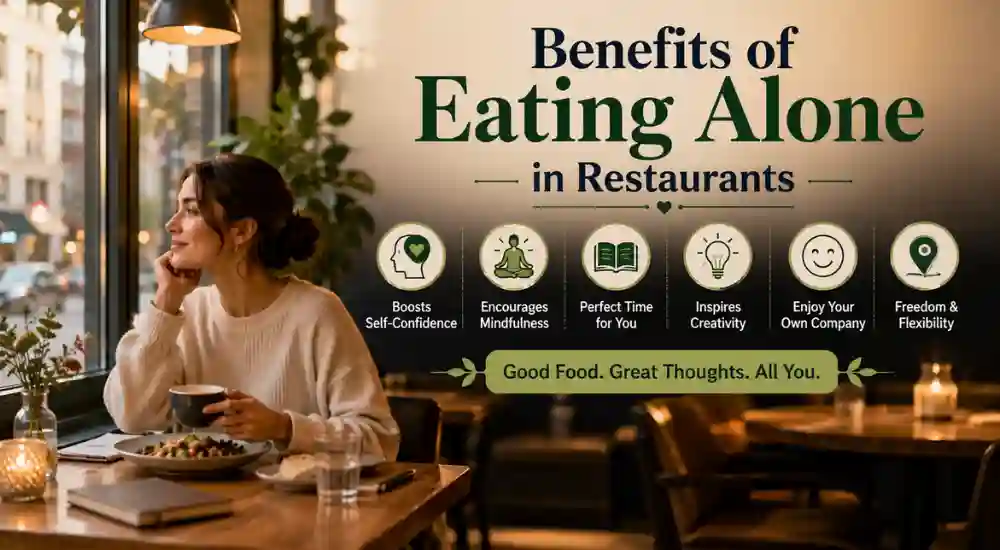
There are many powerful benefits of eating alone in restaurants that go beyond just food. One major advantage is mental clarity and emotional independence, as you get time to think freely without social distractions.
It also improves self-awareness and mindfulness, helping you enjoy your surroundings and meals more deeply. When you eat alone, you don’t have to compromise on food choices, timing, or place, giving you complete freedom of choice.
Over time, solo dining also builds confidence, especially in public settings. You become more comfortable with yourself and less dependent on others for validation. Many people also notice they enjoy their food and experience much more when dining alone.
Solo dining can be a powerful form of self-care when seen from a positive perspective. It gives your mind a break from constant social interaction and helps create a mental reset from social noise.
Eating alone allows for a more mindful eating experience, where you truly focus on taste, texture, and the moment instead of distractions. This simple act can improve relaxation and reduce stress.
It also works as a personal recharge during a busy life. Taking time for yourself in a restaurant can feel calming and grounding. Over time, it strengthens emotional independence, helping you feel more balanced and comfortable in your own presence.
How Solo Dining Is Becoming a Global Lifestyle Trend
The idea of eating alone in restaurants is no longer unusual. It is now part of a growing global lifestyle trend driven by independence and modern living. One of the biggest reasons is the rise of solo travel culture, where people explore new places on their own and naturally dine alone without hesitation.
Another major factor is the growth of digital nomads and remote work. As more people work independently from cafés, cities, and travel destinations, solo dining has become a normal part of daily life.
Urban lifestyle habits are also changing. In busy cities, people often have different schedules, making group meals less common. At the same time, there is increasing acceptance of independence in adulthood, where being alone is seen as a strength rather than something negative.
How to Overcome Fear of Eating Alone in Restaurants
Overcoming the fear of eating alone in restaurants starts with small steps. A helpful method is gradual exposure, where you begin with short solo visits to low-pressure places like cafés before trying full restaurants.
A key mindset shift is realizing that “people don’t care as much as you think.” Most individuals are focused on their own meals, not others around them. This simple thought can reduce anxiety quickly.
Building comfort through repetition is also important. The more you practice solo dining, the more natural it feels over time. Along with this, positive self-talk strategies like reminding yourself “I am comfortable on my own” can help build long-term confidence.
Practical Tips for First-Time Solo Diners
If you are new to eating alone in restaurants, start by choosing the right environment. Quiet or moderately busy places are better for beginners because they feel less overwhelming.
Your seating choice also matters. Bar seats, window tables, or corner spots are ideal because they provide comfort and a sense of personal space.
When waiting for your food, keep yourself relaxed. You can observe your surroundings, listen to music, or simply enjoy the moment instead of overthinking.
If you feel awkward moments coming up, handle them naturally. Remember, being alone is completely normal, and most people around you are not paying attention.
How to Feel Confident Eating Alone Anywhere
Building confidence in eating alone in restaurants is mostly about body language and mindset. Sit upright, stay relaxed, and avoid showing nervous habits like constantly looking around.
Using your phone or reading a book can help you feel comfortable, but do it naturally without using it as a way to “hide.” The goal is to feel at ease, not distracted.
Dressing confidently also plays a role. When you feel good about your appearance, your self-assurance increases automatically.
Most importantly, stay mentally present. Instead of overthinking how others see you, focus on your food, your thoughts, and the experience itself. Over time, this builds strong inner confidence and removes the fear of dining alone.
Solo Dining Etiquette You Should Know
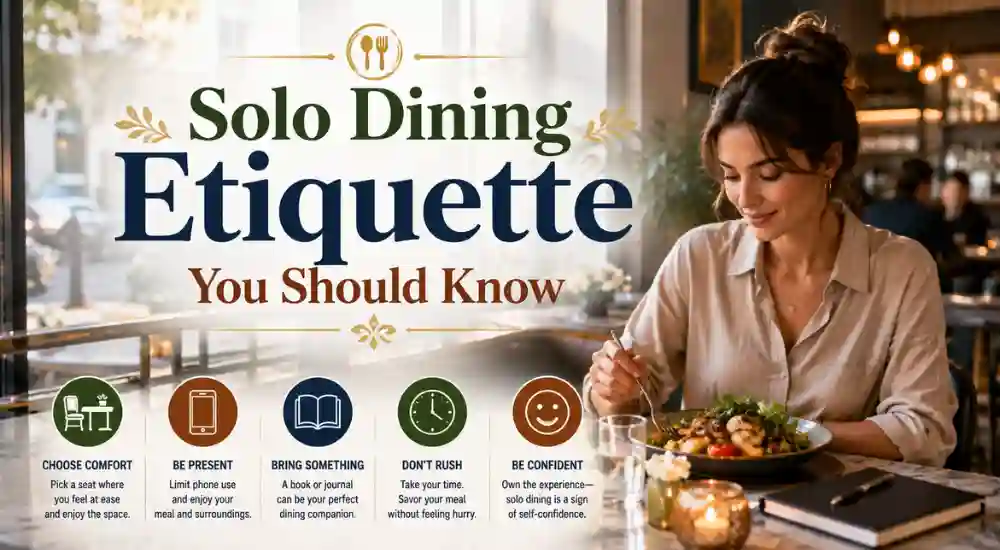
When it comes to eating alone in restaurants, good etiquette can make the experience smoother and more comfortable. First, follow simple do’s and don’ts of dining alone. Do choose a seat that makes you feel relaxed, and don’t act overly nervous or rushed, as this can increase your own discomfort.
Your interaction with waitstaff should be polite and natural. A simple smile, clear order, and respectful communication are enough. There is no need to overthink how you appear as a solo diner.
If you are using shared seating, be mindful of respectful space usage. Avoid occupying extra seats or spreading belongings unnecessarily. This keeps the environment comfortable for everyone.
Knowing when to engage or stay private is also important. You can interact casually when needed, but it is perfectly fine to enjoy your own space quietly without forcing conversation.
Many people feel uncomfortable with eating alone in restaurants because of simple mental mistakes. One common issue is overthinking social perception, where you assume others are judging you, even when they are not paying attention.
Another mistake is constant phone distraction. While using your phone is normal, relying on it too much can prevent you from enjoying the experience and increase feelings of awkwardness.
Some people also avoid eye contact excessively, which can make them feel more isolated. Natural behavior is more comfortable than trying to hide completely.
Lastly, rushing the experience is a common mistake. Eating alone should not feel like something to finish quickly—it is an opportunity to slow down and enjoy your time.
How Eating Alone Enhances Travel Experiences
Eating alone in restaurants can significantly improve your travel experience. One of the biggest benefits is the freedom to explore local food culture without compromise. You can try anything you want without adjusting to someone else’s preferences.
It also gives you more flexibility in your travel schedule. You are not dependent on group plans, so you can eat whenever and wherever you like.
Solo dining allows for better cultural observation as well. You become more aware of local behavior, food habits, and surroundings.
Interestingly, it can also help you meet people more naturally. When you are alone and relaxed, conversations often happen more organically compared to group settings.
Best Situations for Solo Dining
There are many situations where eating alone in restaurants feels completely natural and even enjoyable. One of the most common is during travel, where solo dining becomes part of exploring new places.
Work breaks are another ideal situation. Eating alone during busy days can give you a mental reset and quiet time. It is also perfect for self-care days, when you want to relax and spend time with yourself without distractions.
Trying new restaurants is another great opportunity, as solo dining allows you to focus fully on the food and experience. Lastly, exploring new cities naturally encourages solo dining, since you may not always have company while discovering new places.
Cultural Perspectives on Eating Alone Around the World
The experience of eating alone in restaurants varies widely across different cultures. In countries like Japan, solo dining is completely normal, and many restaurants even offer private booths designed specifically for individuals. In many parts of Europe, especially in busy urban cities, people often dine alone without it being seen as unusual.
On the other hand, in some cultures, especially where family and group meals are highly valued, group dining is more common, and eating alone may feel less socially typical. However, even in these places, attitudes are slowly changing.
Global behavior is evolving as independence, solo travel, and modern urban lifestyles become more common. This shift is making solo dining more widely accepted across the world.
How Restaurants Are Adapting to Solo Diners
Restaurants today are increasingly adapting to the rise of eating alone in restaurants. One of the most noticeable changes is the growth of counter seating design trends, which allow individuals to enjoy meals comfortably without needing a large table.
Many places are also introducing digital menus and self-order systems, making it easier for solo diners to order without pressure or interaction if they prefer privacy.
Another growing trend is the introduction of smaller portions or solo-friendly menus, which are perfect for individuals dining alone.
Overall, there is a clear rise in single-dining-friendly spaces, showing that restaurants are now actively welcoming solo customers instead of treating them as an exception.
What People Actually Think When You Eat Alone
When people worry about eating alone in restaurants, they often assume others are judging them. However, the reality is very different. Most people are simply focused on their own meals, conversations, or phones and are not paying attention to strangers.
From a staff perspective, solo diners are completely normal. Waitstaff are used to serving individuals and often see them as regular customers rather than anything unusual.
The feeling of being watched is mostly a social illusion, created by internal anxiety rather than real observation. In truth, most people are far less aware of others than we tend to believe.
Eating alone in restaurants can have a positive impact on mental well-being when seen in the right way. One of the biggest benefits is that it reduces social pressure, allowing you to relax without the need to perform or engage socially.
It also encourages mindfulness, as you become more present with your food, thoughts, and surroundings. This helps create a calmer and more peaceful eating experience.
Over time, solo dining improves emotional independence, helping you feel more comfortable relying on yourself. It also builds self-comfort, making solitude feel natural instead of uncomfortable.
Solo Dining Habits of Confident People
People who are comfortable with eating alone in restaurants usually share a few simple habits that make the experience feel natural. One of the most common is being okay with comfortable silence. They do not feel the need to fill every moment with distractions or conversation.
They also enjoy observing their surroundings without anxiety. Instead of worrying about what others think, they simply notice the environment, people, and atmosphere in a relaxed way.
Another key habit is enjoying presence without distraction. While they may use a phone or read something, they do not rely on it to escape discomfort. The focus remains on the experience itself.
Most importantly, they treat solo dining as a normal routine, not something unusual. This mindset makes eating alone feel natural, easy, and stress-free over time.
Mistakes That Make Solo Dining Feel Uncomfortable
Many people unintentionally make eating alone in restaurants harder than it needs to be. One common mistake is over-planning behavior, where you overthink where to sit, what to do, or how you might look in advance. This increases anxiety instead of reducing it.
Another issue is acting overly busy just to avoid attention. Constantly pretending to be occupied can actually make you feel more self-conscious.
Social comparison habits also create discomfort. When you keep looking at groups around you, you may feel isolated even when no one is focusing on you.
Finally, nervous energy projection—such as fidgeting or looking tense—can make you feel more awkward internally, even though others are unlikely to notice.
Frequently Asked Questions
Is it weird to eat alone in a restaurant?
No, it is completely normal. Many people regularly enjoy solo dining, especially in cities and during travel.
How do I stop feeling awkward eating alone?
Start by accepting that most people are not watching you. With practice, eating alone in restaurants becomes more comfortable over time.
Do people judge solo diners?
In reality, most people are focused on their own meals. Judgement is usually imagined, not real.
How can I enjoy eating alone more?
Focus on your food, surroundings, and experience instead of worrying about others.
Why do I feel anxious when dining alone?
This is often due to social conditioning and fear of judgment, not actual danger or attention.
Is solo dining becoming more common?
Yes, solo dining is becoming a global lifestyle trend, especially with the rise of solo travel and independent living.
Final Thoughts
Learning to enjoy eating alone in restaurants is not just about food—it is about mindset. Once you understand that most fears come from internal pressure rather than reality, solo dining becomes much easier.
The biggest shift is moving from anxiety to confidence and independence. Instead of seeing it as something uncomfortable, it becomes a normal and even enjoyable part of life.
With time, solo dining can turn into a lifestyle habit that supports freedom, self-growth, and emotional balance. The more you practice it, the more natural and empowering it feels.