

If you’re searching for a beginner’s guide to Mardi Gras in New Orleans, you’re probably excited—but also a little confused. Mardi Gras New Orleans is not just one day; it’s a full season of parades, traditions, and nonstop energy. For first-time visitors, it can feel overwhelming: Where should you stay? When should you go? How do Mardi Gras parades even work?
This guide is built to make things simple. You’ll learn what to expect at Mardi Gras for the first time, how to plan your trip, and how to enjoy the experience without stress. From parade tips to safety advice and local insights, everything is explained in a clear, easy way.
Quick Answer
Mardi Gras in New Orleans is a famous annual celebration known for its colorful parades, music, costumes, and street culture. It happens during the Carnival season, which builds up to “Fat Tuesday,” the main event day. For beginners, it’s important to understand that it’s not just a one-day party—it’s a full festival experience with weeks of events.
If you are planning your first visit, focus on parade schedules, where to stay, safety tips, and when to go. The best experience for beginners is usually a few days before Mardi Gras Day, when major parades are happening but crowds are slightly more manageable.
What Mardi Gras Is Really Like
If you’ve seen photos of Mardi Gras, you might expect a non-stop party—and you’re not wrong. But the real experience is a mix of crowds, energy, culture, and controlled chaos. Streets fill with people, music plays everywhere, and Mardi Gras parades roll by with colorful floats and throws. It’s exciting, but it can also feel intense if you’re not prepared.
The Atmosphere: Crowds, Energy, Chaos
During peak days, the city becomes incredibly busy. You’ll see packed sidewalks, long waits, and constant movement. The energy is high, but so is the noise and crowd level. This is why many Mardi Gras tips for beginners focus on planning ahead and knowing where to go.
Party vs Cultural Experience
There are two sides to Mardi Gras New Orleans. One is the party scene—mainly in the French Quarter. The other is the cultural side, with traditions, family-friendly parades, and local pride. Understanding both helps you shape your Mardi Gras experience.
Why It Feels Overwhelming for Beginners
First-timers often struggle because they don’t know how Mardi Gras works in New Orleans. No clear plan, large crowds, and busy schedules can make things confusing. That’s why having a simple Mardi Gras guide for beginners is so important.
What Nobody Tells You About Mardi Gras
Even though it’s famous for fun, Mardi Gras for first timers can be tiring. You’ll walk a lot, wait for parades, and deal with crowds. But with the right mindset and smart planning, it becomes one of the most unforgettable travel experiences.
What Is Mardi Gras?

Mardi Gras is a famous celebration that takes place every year before the Christian season of Lent. The name means “Fat Tuesday,” which is the final day of celebration before a period of fasting begins. For visitors, it’s known for parades, music, costumes, and food, making it one of the most exciting festivals in the world.
The celebration is not just one day—it’s part of the Carnival season, which starts on January 6 (Twelfth Night) and builds up over weeks until Mardi Gras Day. During this time, you’ll see Mardi Gras parades, cultural traditions, and events happening all across the city.
What makes Mardi Gras New Orleans so special is its deep history, unique traditions like krewes and throws, and the way the whole city comes alive. It’s not just a party—it’s a cultural experience that blends history, community, and celebration.
When Is Mardi Gras & Best Time to Visit
The date of Mardi Gras changes every year, but it always falls between February and early March. While the main day is important, the full Mardi Gras experience happens over several weeks, especially in the last 5–7 days.
Full Season vs Peak Days
If you visit early in the season, you’ll enjoy smaller crowds, easier travel, and a relaxed atmosphere. But if you come during the final days, you’ll see the biggest Mardi Gras parades, top krewes, and the most energy—along with heavy crowds.
Crowd vs Comfort Comparison
- Early season: Less crowded, easier for beginners
- Peak days: More exciting, but crowded and intense
Choosing between the two depends on your travel style and comfort level.
Best Days for First-Time Visitors
For most Mardi Gras for first timers, the best time is 3–5 days before Mardi Gras Day. You’ll experience major parades and events, but avoid the extreme chaos of the final day. This balance helps you enjoy the festival while still feeling in control of your plans.
How Mardi Gras Works
To fully enjoy Mardi Gras New Orleans, you need to understand how the system works. Once you get this, everything—from planning to watching Mardi Gras parades—becomes much easier.
Krewes Explained
Krewes are social clubs that organize parades and events. Each krewe has its own theme, floats, and traditions. Famous krewes like Rex or Zulu create some of the biggest highlights of the Mardi Gras experience.
Parade System
Parades follow specific routes and schedules across the city. They roll through areas like French Quarter and Uptown, with floats, music, and performers. Some happen during the day, while others take place at night with lights and a different vibe.
Throws (Beads, Cups, Collectibles)
“Throws” are items tossed from floats to the crowd—like beads, cups, coins, and small souvenirs. Catching them is a big part of the fun, especially for Mardi Gras for first timers.
How to Read a Parade Schedule (Most Beginners Get Confused Here)
Many beginners struggle with Mardi Gras parade schedule details. Here’s how to keep it simple:
- Check the date, start time, and route
- Arrive at least 1–2 hours early
- Pick a viewing spot along the route, not just the start
- Expect delays—parades rarely run exactly on time
Understanding this will help you plan your Mardi Gras guide for beginners more effectively.
Step-by-Step Mardi Gras Plan for First-Timers
Planning ahead is the key to a smooth and enjoyable Mardi Gras travel guide. Follow these simple steps to avoid stress.
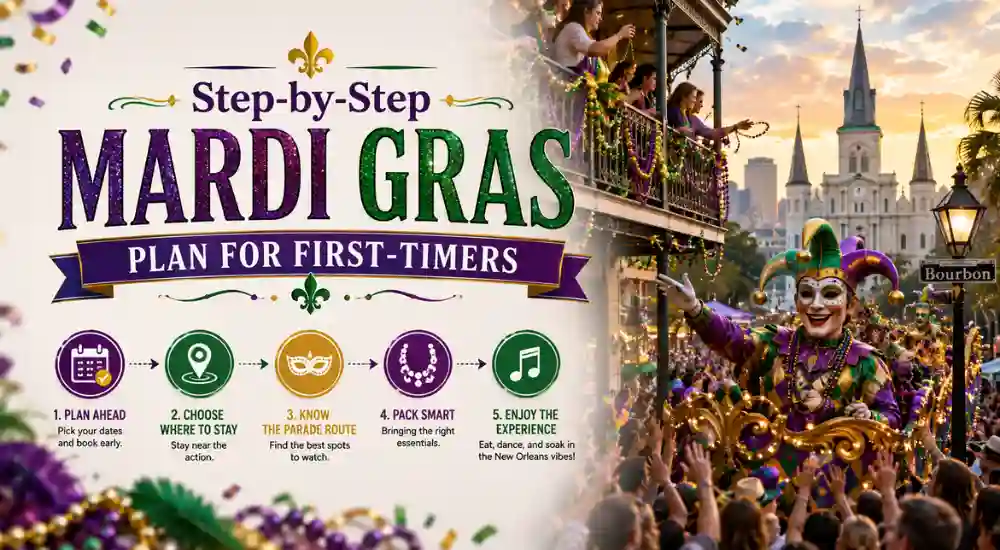
Step 1: Choose Travel Dates
Decide if you want a less crowded experience or the full peak energy. For most people, arriving a few days before Mardi Gras Day works best.
Step 2: Book Accommodation Early
Hotels fill up quickly. Choose your stay based on your style—close to parades or in quieter areas. This is one of the most important Mardi Gras tips for beginners.
Step 3: Select Parade Days
Look at the Mardi Gras parade schedule and pick the parades you really want to see. Don’t try to attend everything—focus on quality over quantity.
Step 4: Plan Daily Movement
Map out how you’ll move between locations. Walking is often the easiest way during busy days, especially when roads are closed.
If You Only Have 3 Days (Beginner Mini Itinerary)
- Day 1: Arrival + explore + small parades
- Day 2: Major parades + full experience
- Day 3: Final parades + relaxed exploration
This simple Mardi Gras itinerary for first timers keeps things manageable.
Complete Mardi Gras Travel Checklist
- Comfortable shoes
- Small bag for throws
- Water and snacks
- Portable charger
- Parade schedule saved on phone
- Weather-appropriate clothing
This checklist ensures you’re ready for your Mardi Gras planning without missing essentials.
First-Timer Timeline (From Arrival to Mardi Gras Day)
Understanding the flow of events helps you know what to expect at Mardi Gras for first time visitors.
Day-by-Day Breakdown
- Early Days: Smaller parades, easier crowds, relaxed vibe
- Mid-Week: Bigger parades start, energy increases
- Final Weekend: Peak excitement, large crowds, top krewes
- Mardi Gras Day: The biggest celebration, but also the most crowded
Build-Up to the Main Event
Each day builds more excitement. By the time Mardi Gras Day arrives, the city is at full energy with nonstop events and activities.
Visual Experience Timeline (What Happens Each Day)
Think of it like this:
- Start: Calm and easy
- Middle: Busy and exciting
- End: Intense and unforgettable
This timeline helps you plan your Mardi Gras New Orleans guide in a way that matches your comfort level and travel goals.
Where to Stay in New Orleans During Mardi Gras
Choosing the right place to stay during Mardi Gras is one of the most important decisions for a smooth trip. Your experience can change a lot depending on your location.

French Quarter (Party Hub – Pros/Cons)
The French Quarter is the most famous area. It’s full of nightlife, music, and constant activity. You’ll be close to the energy, but expect high prices, loud nights, and heavy crowds.
Uptown (Parade Access)
Uptown is popular for watching Mardi Gras parades, especially along St. Charles Avenue. It’s less chaotic than the French Quarter and gives you a more comfortable viewing experience.
Garden District (Balanced Stay)
The Garden District offers a quieter and more relaxed stay while still being close to parade routes. It’s ideal for first-time visitors who want balance.
Best Areas Based on Your Travel Style (Party vs Family vs Budget)
- Party lovers: French Quarter
- Families: Garden District
- Budget travelers: Areas slightly outside downtown
Understanding the Parade Experience
Experiencing Mardi Gras New Orleans parades in real life is very different from watching videos. It’s exciting, crowded, and full of movement.
Waiting Times
You often wait 1–3 hours before parades arrive. Locals come early to secure good spots, especially during peak days.
Crowd Behavior
Crowds are lively but dense. People cheer, dance, and compete for throws. It’s fun, but can feel overwhelming for beginners.
Catching Throws
One of the most exciting parts is catching beads and souvenirs thrown from floats. This is a big highlight of the Mardi Gras experience.
How Long Parades Actually Take (Reality vs Expectation)
Parades move slowly. What looks like a quick event online can last 2–4 hours in reality, depending on the krewe and route. Planning for this helps you avoid frustration.
Best Places to Watch Mardi Gras Parades
Choosing the right viewing spot makes a huge difference in your Mardi Gras experience as a beginner.
St. Charles Avenue
One of the best and most traditional spots. Wide streets, big crowds, and major parades pass through here.
Canal Street
A more central location with easier access to hotels and transport. It’s busy but convenient.
Local Neighborhoods
Outside the main tourist zones, you’ll find smaller crowds and a more relaxed vibe. Great for a calmer Mardi Gras New Orleans experience.
Hidden Viewing Spots Locals Use (Less Crowded + Better Experience)
Locals often choose side streets near main routes or less obvious intersections. These spots offer better visibility and fewer crowds, making them perfect for Mardi Gras for first timers who want comfort over chaos.
Navigating the City During Mardi Gras
Getting around during Mardi Gras New Orleans requires planning because the city changes completely during the festival.
Walking vs Transport
Walking is often the easiest option since many streets are closed. Public transport is limited during peak parade hours.
Road Closures
Many major roads are blocked for parades, especially near the French Quarter and Uptown areas. Always check routes in advance.
Getting Around Efficiently
Plan your day around parade routes instead of trying to cross them. Staying flexible helps you avoid delays and frustration.
Hour-by-Hour Movement Strategy (Avoid Getting Stuck in Crowds)
- Morning: Move early and secure viewing spots
- Afternoon: Stay in one parade zone
- Evening: Avoid unnecessary travel during peak crowds
- Night: Head back before streets get too congested
This simple strategy helps you enjoy Mardi Gras tips for beginners without getting stuck in heavy traffic or overcrowded areas.

What to Wear & Bring
When planning for Mardi Gras, what you wear and carry can completely shape your comfort level. Since you’ll be walking a lot and staying outdoors for long hours, smart preparation is key for any Mardi Gras for first timers.
Costumes vs Comfort
You’ll see people in full costumes, colorful outfits, or simple casual wear. Costumes are fun and part of the tradition, but comfort is more important. Choose breathable clothes and comfortable shoes so you can enjoy Mardi Gras parades without getting tired quickly.
Weather Considerations
Weather during Mardi Gras can be unpredictable—sometimes warm during the day and cool at night. Light layers work best so you can adjust easily throughout the day.
Essentials
Always carry basics like water, snacks, sunscreen, and a small bag for items you collect from floats. These small things make a big difference in your Mardi Gras experience.
Complete Mardi Gras Packing Checklist
- Comfortable walking shoes
- Light jacket or layers
- Small backpack or crossbody bag
- Water bottle
- Portable charger
- Sunscreen and sunglasses
- Cash and ID
- Phone with parade schedule saved
This simple checklist ensures your Mardi Gras New Orleans guide stays stress-free and practical.
Food, Drinks & Culture You Shouldn’t Miss
One of the best parts of Mardi Gras New Orleans is the food and culture you experience on the streets.
King Cake
A famous seasonal dessert, king cake is colorful, sweet, and tied to Mardi Gras traditions. Finding the hidden baby inside is part of the fun.
Local Dishes
You’ll also find local favorites like jambalaya, gumbo, po’boys, and beignets. These foods are a big part of the Mardi Gras experience.
Street Culture
Street music, dancing, and live performances are everywhere. The energy is constant, and it’s one of the reasons Mardi Gras parades feel so alive and unique.
Mardi Gras Budget Breakdown
Planning your budget is important because prices increase during Mardi Gras season.
Accommodation Costs
Hotels in prime areas like the French Quarter are expensive and book early. Staying further away can reduce costs significantly.
Food & Drinks
Street food is affordable, but restaurants and bars can be pricey during peak days. Budgeting for daily meals helps avoid surprises.
Transport
Walking is the most common option during parade days. Rideshares may become expensive due to high demand.
How to Experience Mardi Gras on a Budget
- Book accommodation early
- Stay slightly outside downtown
- Eat a mix of street food and casual restaurants
- Focus only on key parades instead of attending everything
This helps you enjoy Mardi Gras for beginners without overspending.
Safety & Survival Guide for First-Time Visitors
Even though Mardi Gras New Orleans is exciting, it can also be overwhelming if you’re not prepared.
Crowd Awareness
Large crowds are common, especially during peak Mardi Gras parades. Always stay aware of your surroundings and keep your group together.
Theft Prevention
Use a secure bag, avoid carrying valuables, and keep your phone safely stored when not in use.
Staying Safe at Night
Stick to well-lit areas and avoid wandering alone in crowded zones.
Crowd Survival Strategy (Real Scenario-Based Tips)
- Arrive early to secure space
- Stand near exits in crowded areas
- Take breaks away from heavy crowd zones
- Keep water with you at all times
How to Avoid Burnout During Mardi Gras (Energy Management Guide)
Mardi Gras can be physically exhausting. To enjoy it fully:
- Don’t attend every parade
- Take rest breaks during the day
- Sit out during peak crowd hours if needed
- Focus on quality experiences, not quantity
This approach helps first-time visitors enjoy Mardi Gras tips for beginners without feeling drained halfway through the trip.
Common Mistakes First-Timers Make
When planning your trip to Mardi Gras, many beginners make simple mistakes that can affect their entire experience. Avoiding these will make your Mardi Gras New Orleans guide much smoother and stress-free.
Booking Too Late
One of the biggest mistakes is waiting too long to book. Hotels near the French Quarter sell out early, and prices rise quickly during peak Mardi Gras parades season.
Staying in Wrong Areas
Choosing the wrong location can make travel difficult. Staying too far from parade routes means more walking, delays, and missed events. Always plan based on your Mardi Gras experience goals.
Ignoring Parade Schedules
Many first-timers don’t check the Mardi Gras parade schedule in advance. This leads to missed parades or long waits in the wrong locations. Knowing timing is key for Mardi Gras for beginners.
Overpacking or Under-Preparing
Some visitors bring too much, while others forget essentials like water, chargers, or comfortable shoes. Both can affect your comfort during long parade days.
Family vs Party Experience
Mardi Gras New Orleans offers two very different experiences depending on where and how you choose to celebrate.
Family-Friendly Zones
Areas outside the busiest zones, such as Uptown or quieter neighborhoods, are better for families. You can still enjoy parades without overwhelming crowds or heavy nightlife.
Party-Heavy Areas
The French Quarter is the center of nightlife and celebration. It’s loud, energetic, and perfect for adults looking for a high-energy Mardi Gras experience, but not ideal for children or those seeking calm.
Time-Based Differences
The experience also changes with time. Daytime parades are more family-friendly, while nighttime events tend to be more crowded and party-focused. Choosing the right time is part of a smart Mardi Gras planning strategy.
Insider Tips to Enjoy Mardi Gras Like a Local
To truly enjoy Mardi Gras, it helps to think like a local instead of just a tourist.
When to Arrive Early
Locals always arrive early—sometimes hours before Mardi Gras parades begin—to secure the best viewing spots. This is one of the most important Mardi Gras tips for beginners.
Where Locals Actually Go
Instead of only staying in crowded tourist zones, locals often choose less busy streets along parade routes or neighborhood areas. These spots offer a more relaxed and authentic experience.
How to Maximize Experience
- Focus on a few key parades instead of all of them
- Take breaks to avoid fatigue
- Stay flexible with your schedule
- Prioritize comfort over rushing
By following these simple strategies, your Mardi Gras New Orleans experience becomes more enjoyable, less stressful, and much more memorable.
FAQs
Is Mardi Gras free?
Yes, most of Mardi Gras is free to attend. You can watch Mardi Gras parades, enjoy street performances, and explore public areas without paying. However, you may spend money on hotels, food, and transport.
Is Mardi Gras safe for beginners?
Yes, it is generally safe for beginners if you follow basic precautions. Stay aware in crowded areas, keep your belongings secure, and avoid isolated spots at night. Many first-timers enjoy a smooth Mardi Gras New Orleans experience with proper planning.
Do you need tickets?
No tickets are required for most parades or public celebrations. Some special events or viewing areas may require paid access, but the main festival is open to everyone.
What is the best day to attend?
For Mardi Gras for first timers, the best time is usually the last 3–5 days before Mardi Gras Day. This period includes major parades, strong energy, and a complete Mardi Gras experience without the full chaos of the final day.
Can you attend with family?
Yes, but location matters. Family-friendly zones outside the busiest areas of the French Quarter are better. Uptown and daytime parades are usually more suitable for families.
Final Verdict: Is Mardi Gras Worth It for Beginners?
For most travelers, Mardi Gras is absolutely worth experiencing at least once. It is colorful, cultural, energetic, and unlike any other festival in the world.
Honest Expectation Setting
It is not a calm or organized event. You should expect large crowds, long walks, waiting times, and constant activity. If you go in with realistic expectations, the experience becomes much more enjoyable.
Who Should Go / Who Should Skip
- You should go if: you enjoy festivals, crowds, music, and cultural experiences
- You should skip if: you prefer quiet travel, low-energy environments, or highly structured sightseeing
Final Beginner Strategy
If you are planning your first Mardi Gras New Orleans guide experience, success comes down to simple preparation.
Quick Recap
- Plan early and book accommodation in advance
- Choose your parade days carefully
- Stay in the right area based on your travel style
- Follow basic safety and crowd tips
Confidence-Building
You don’t need to see everything. Even a few well-planned days can give you a complete and memorable Mardi Gras experience.
Encouragement to Plan
With the right approach, Mardi Gras for beginners becomes less overwhelming and more enjoyable. Focus on planning smart, staying flexible, and enjoying the moment—you’ll experience one of the most iconic festivals in the world.